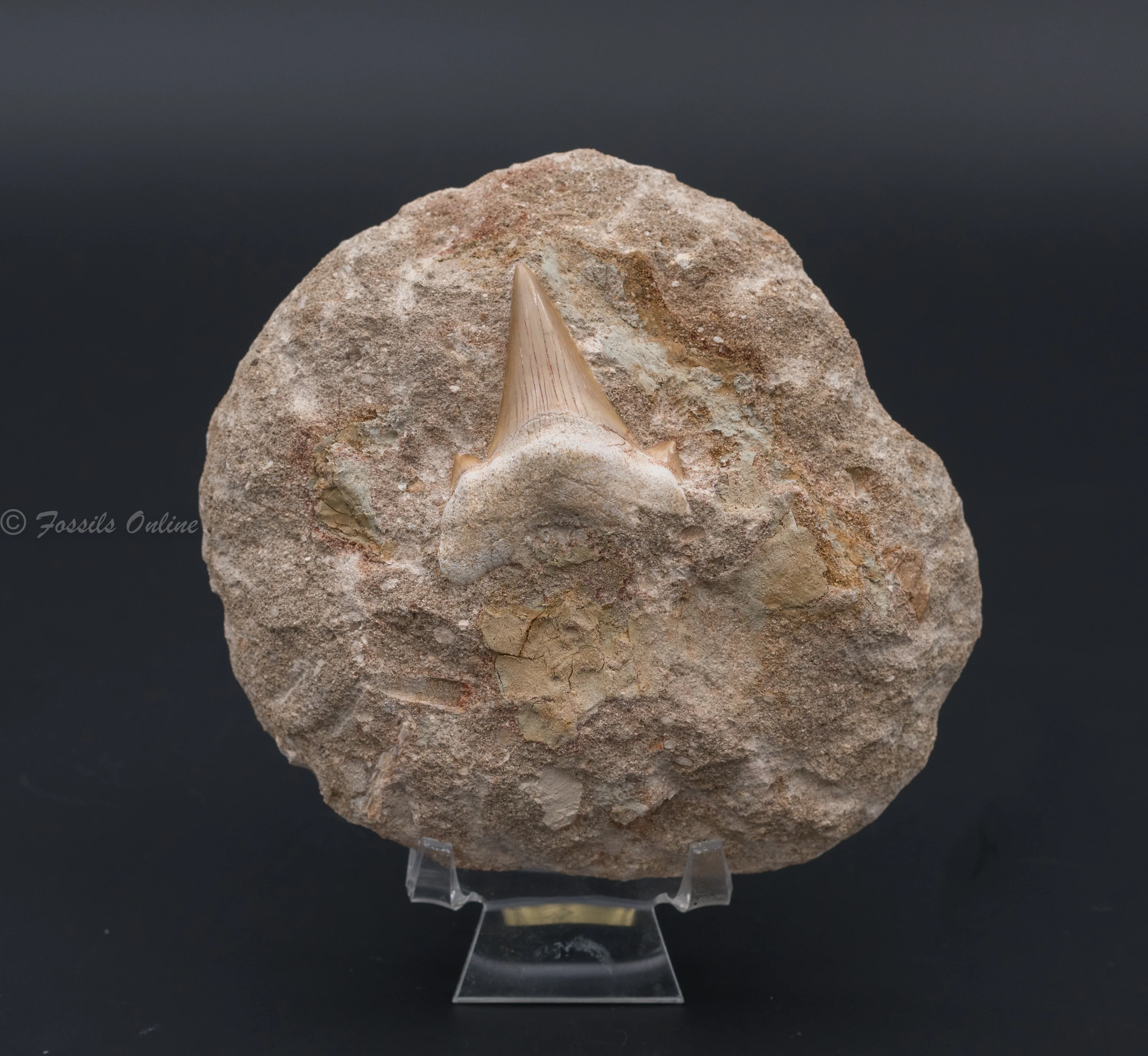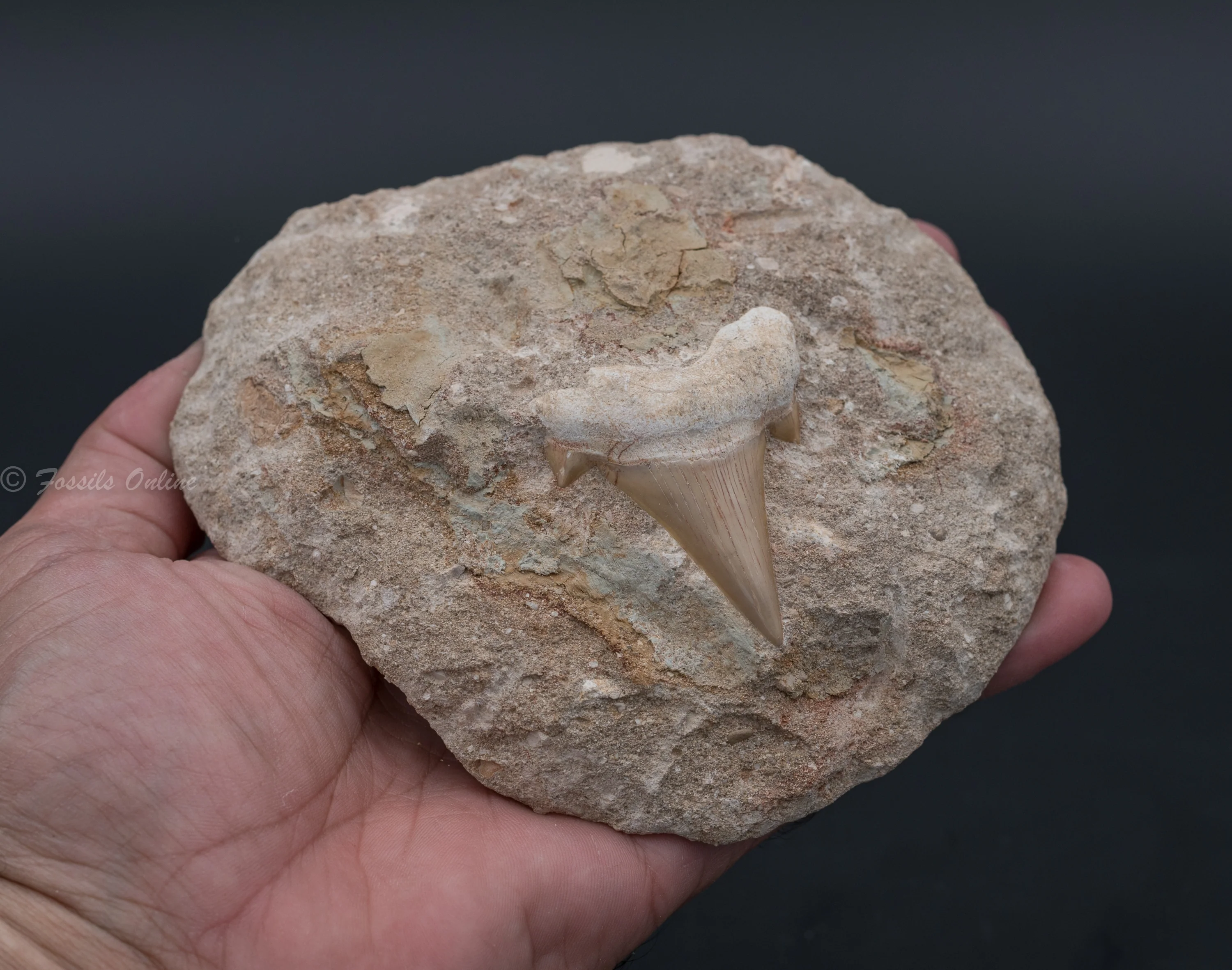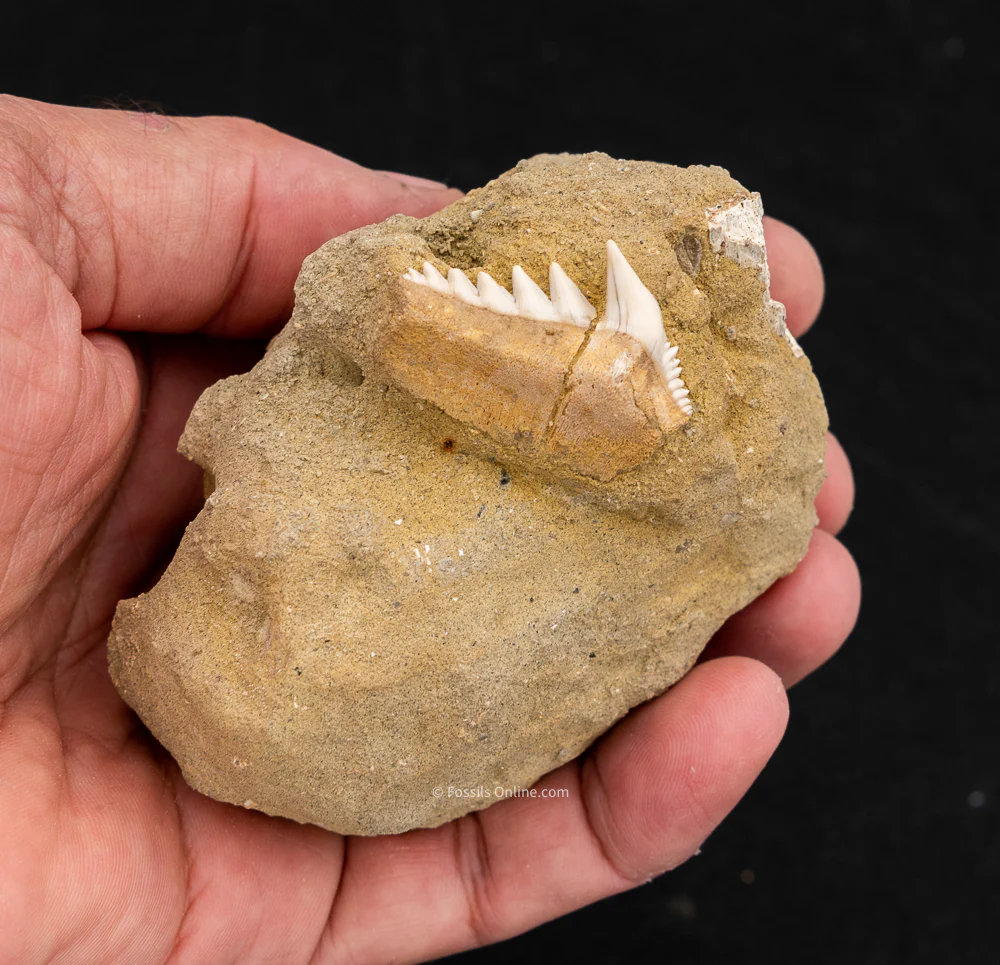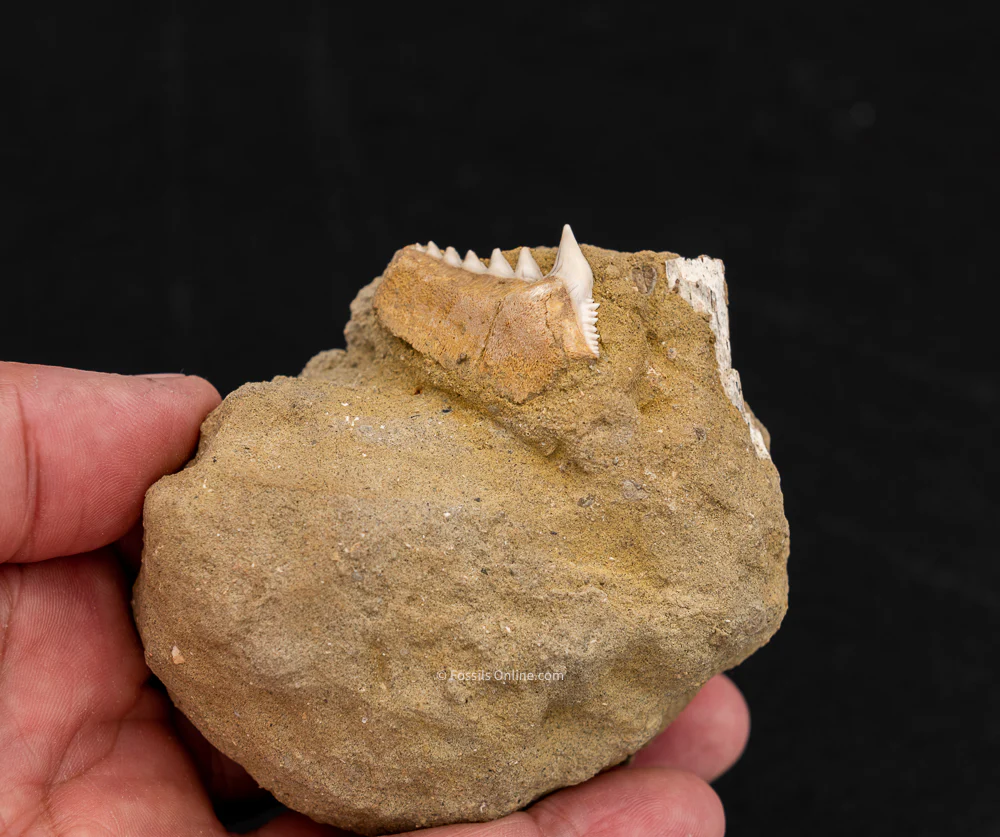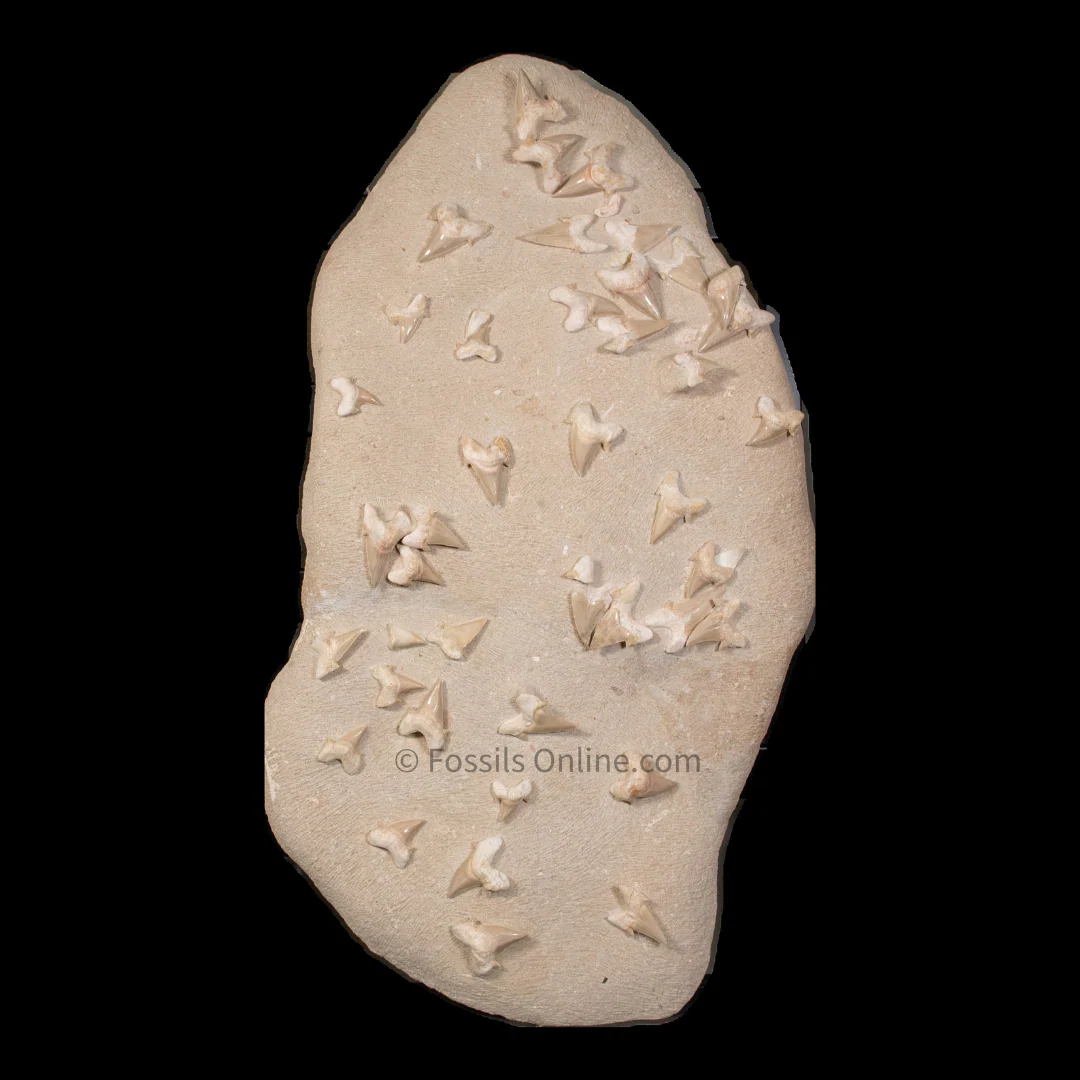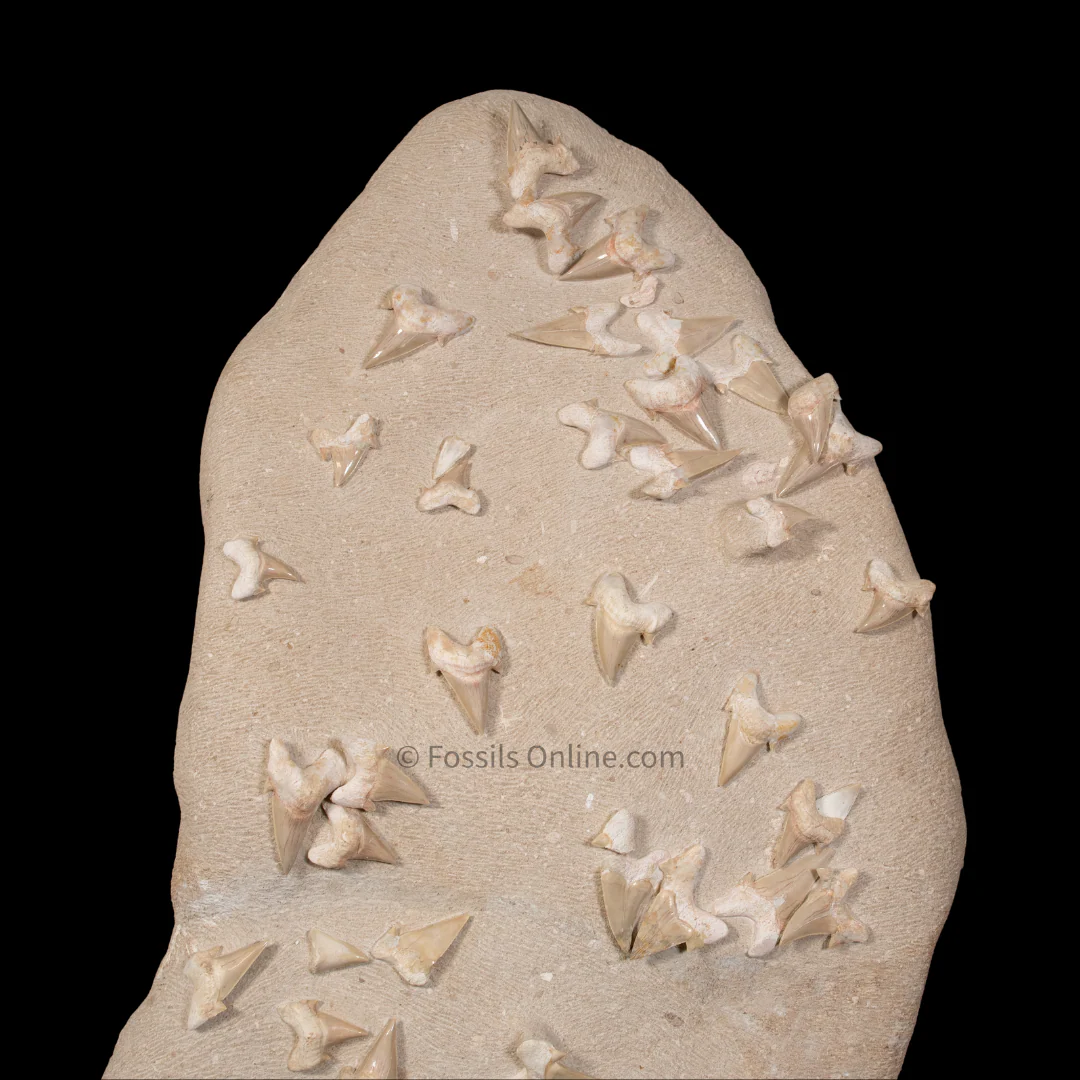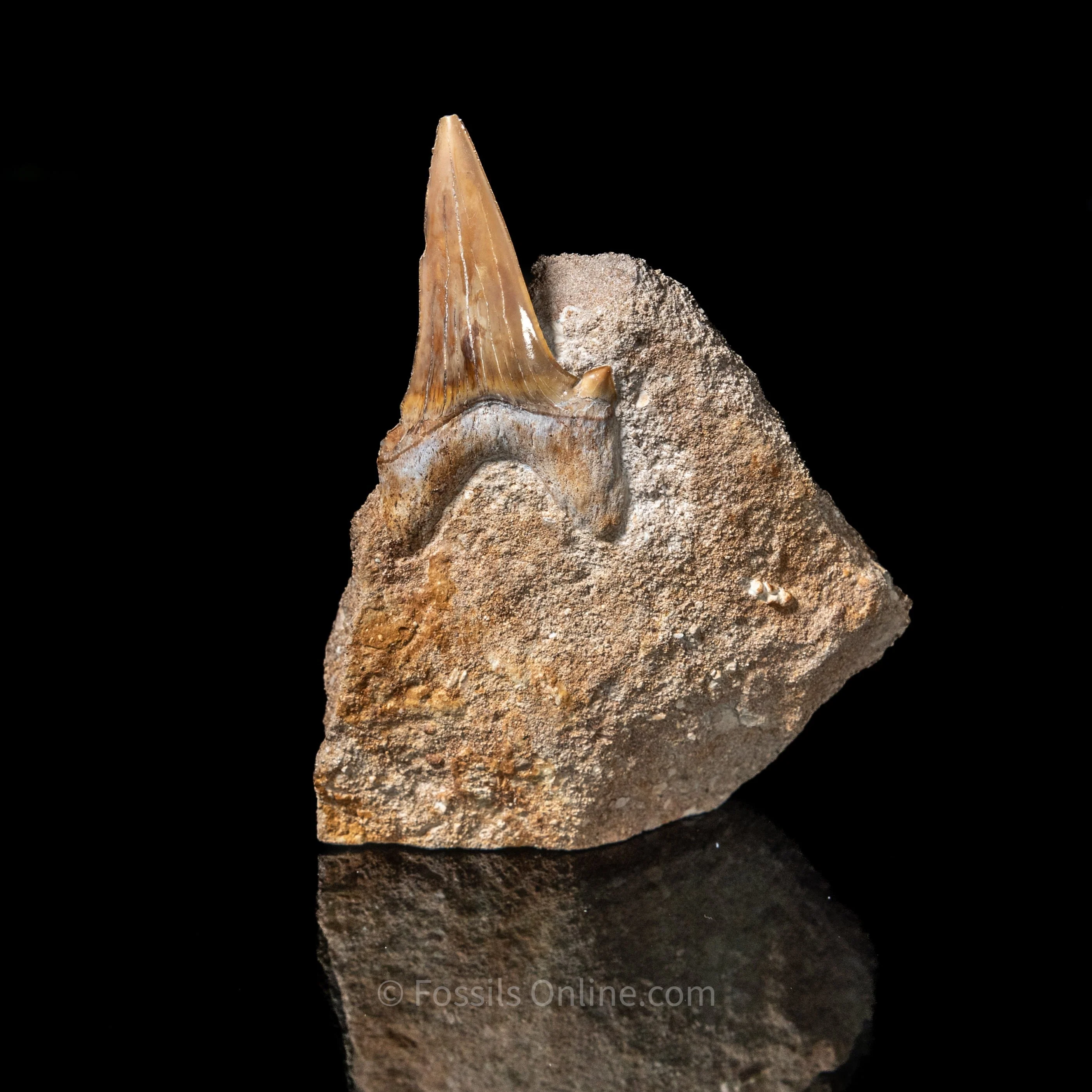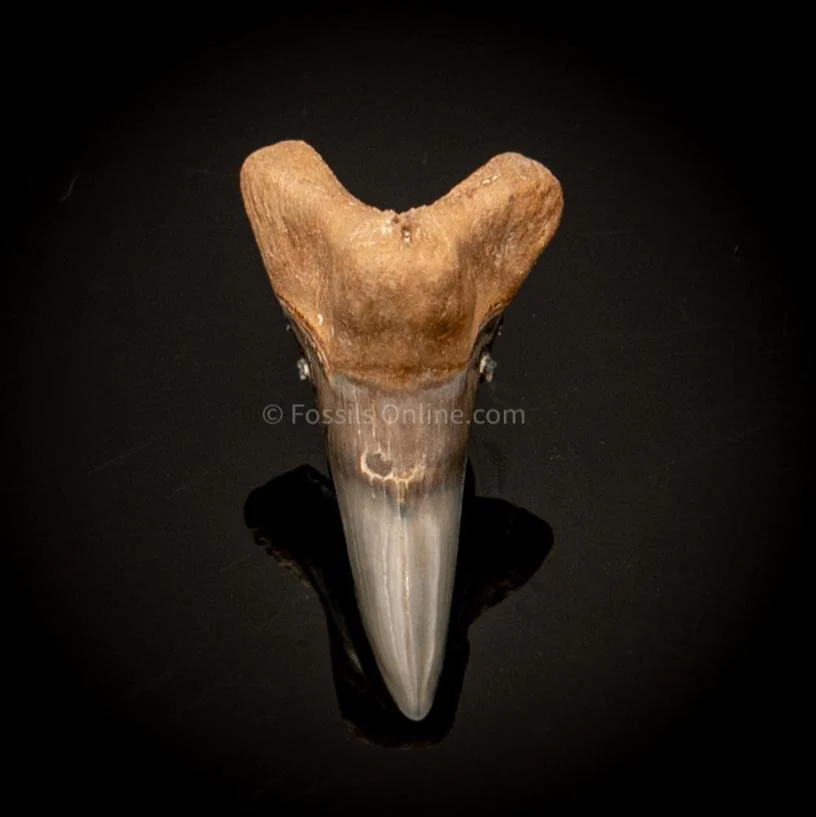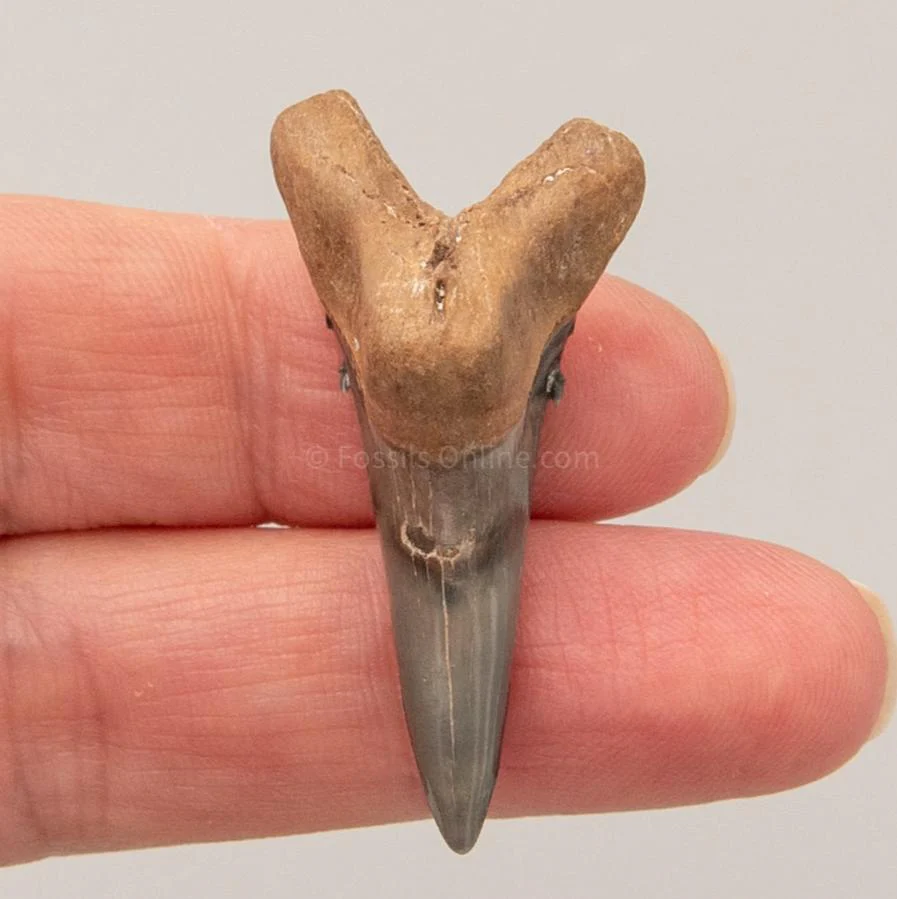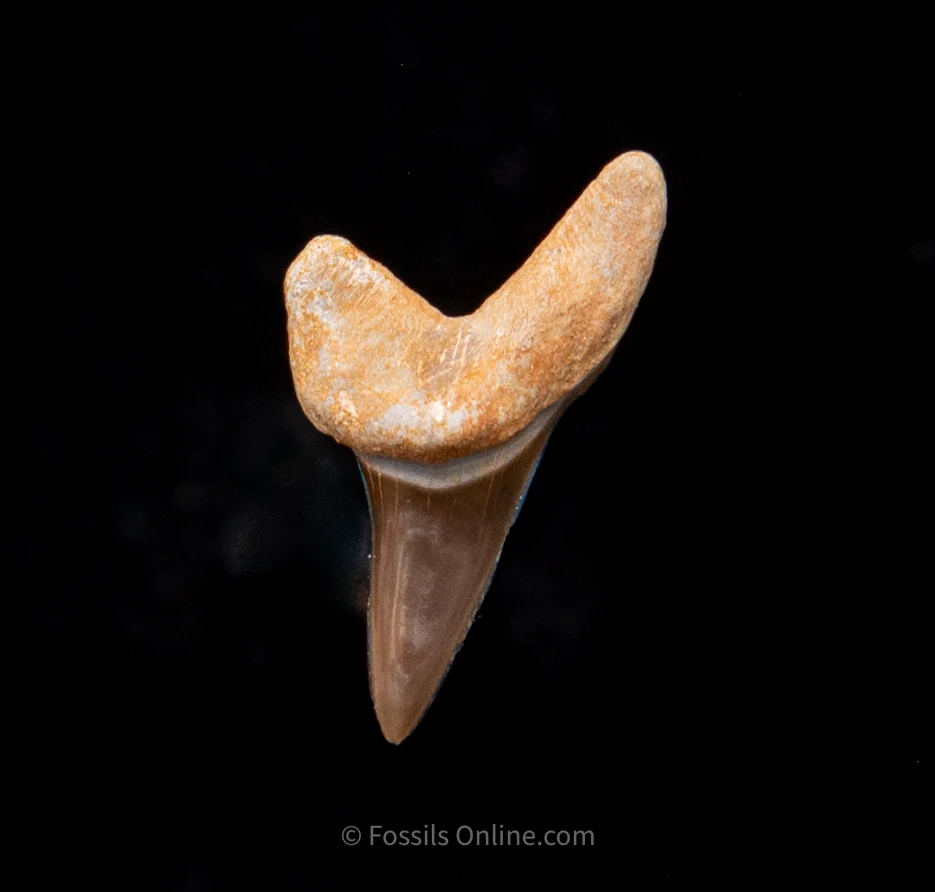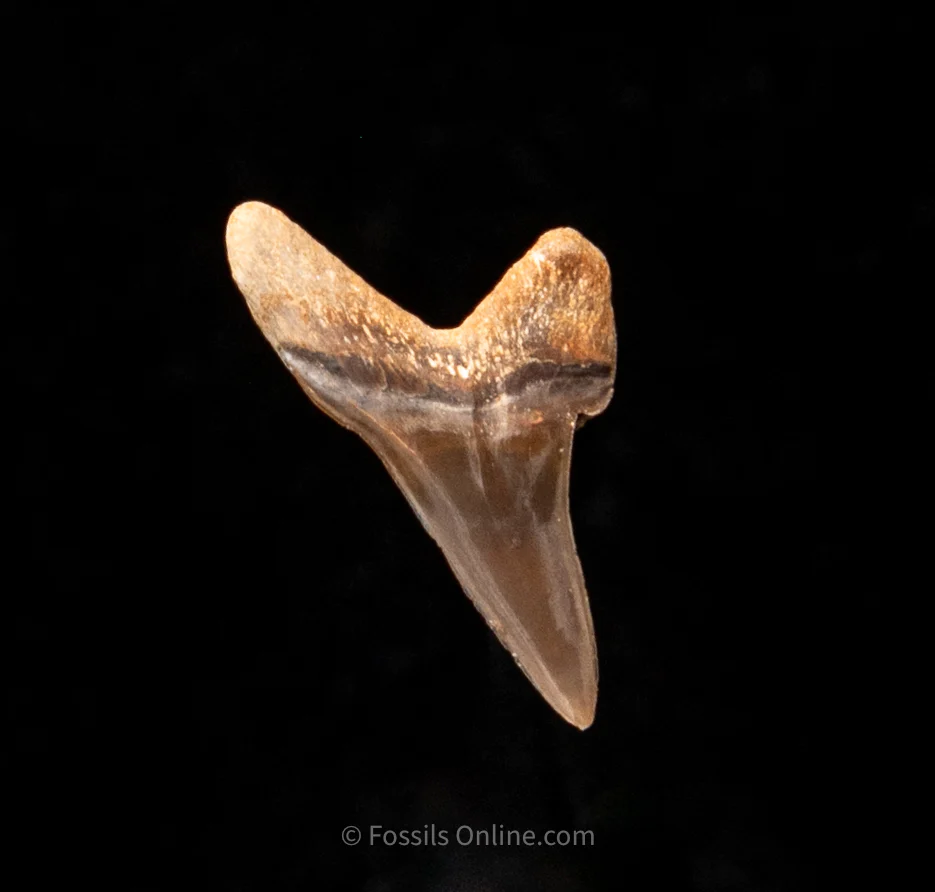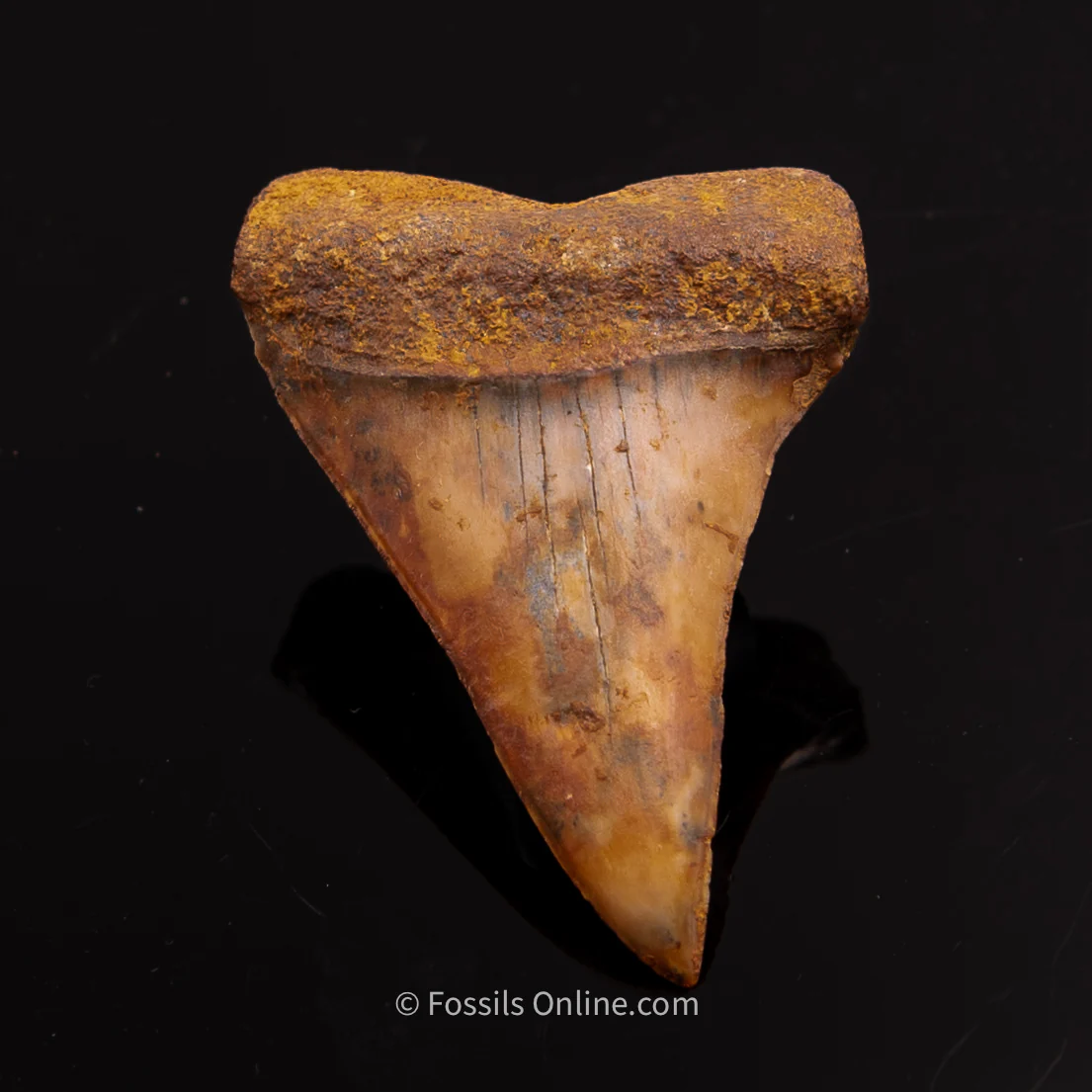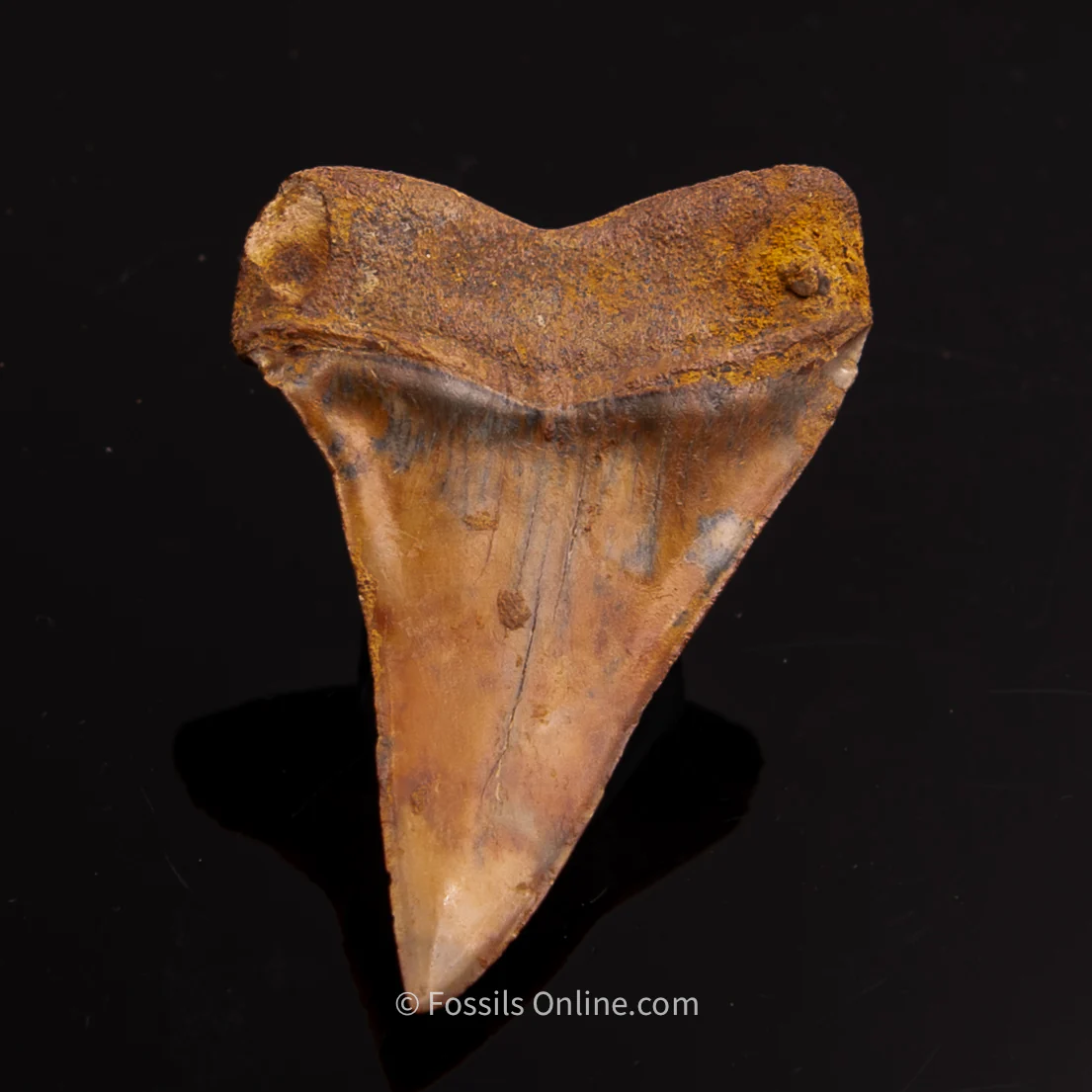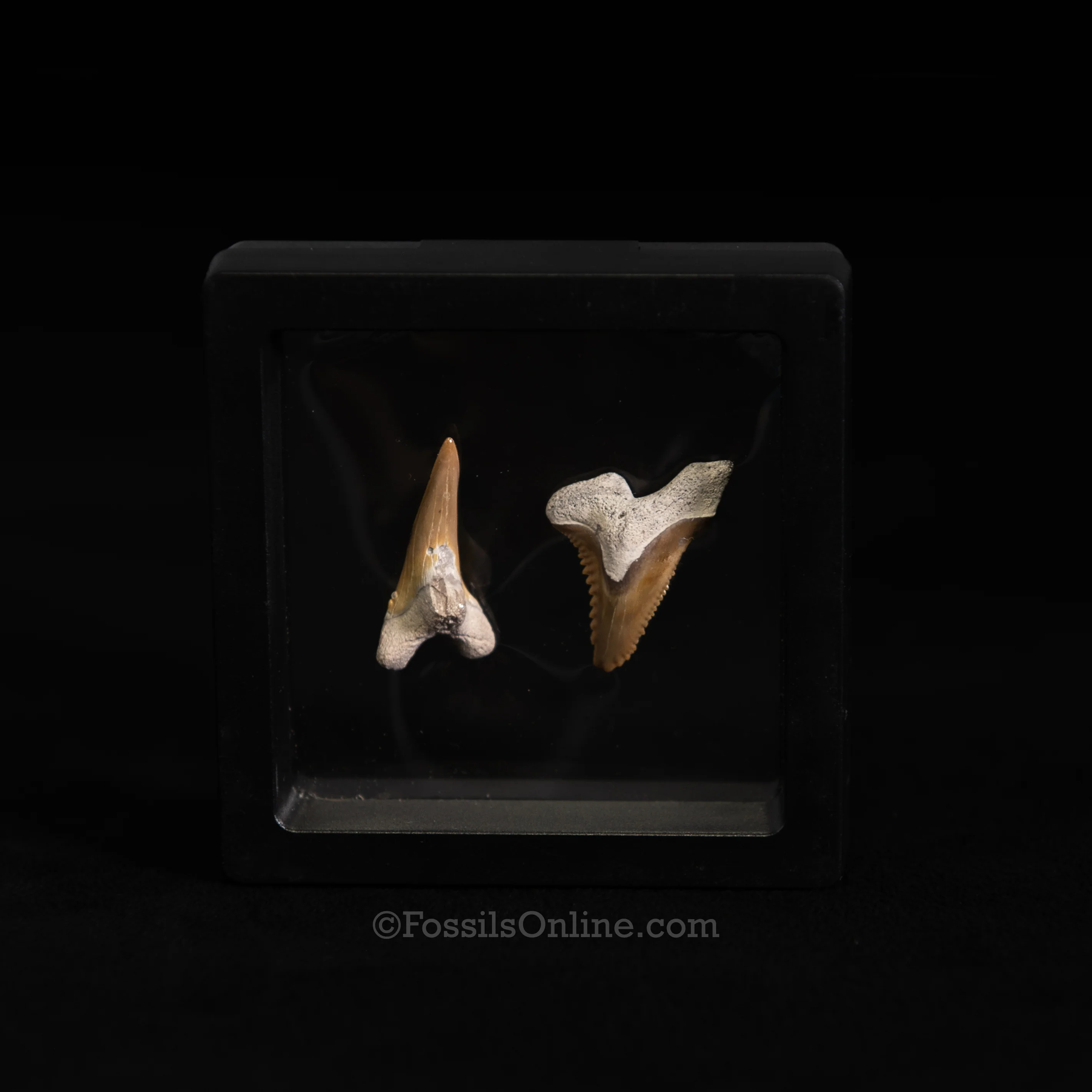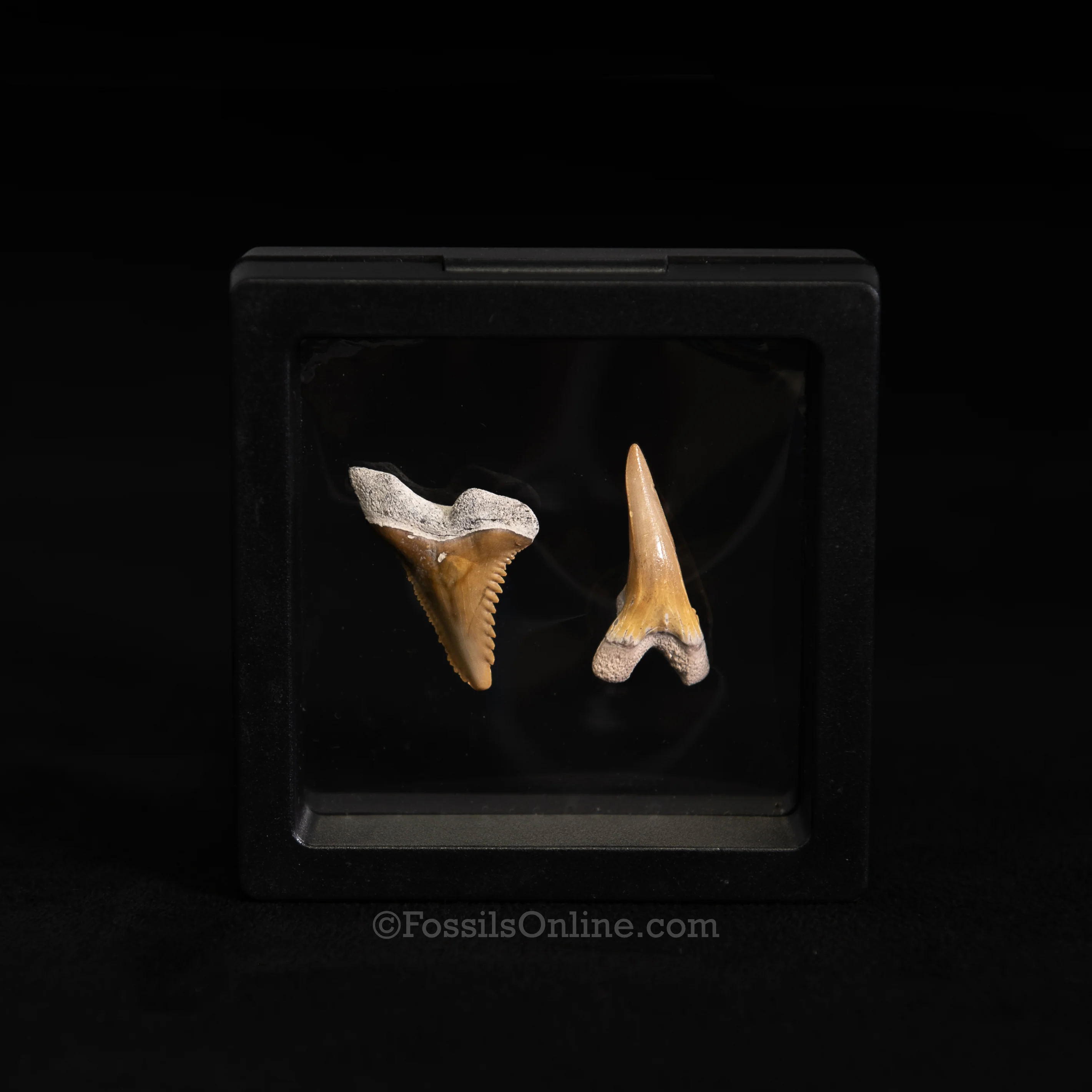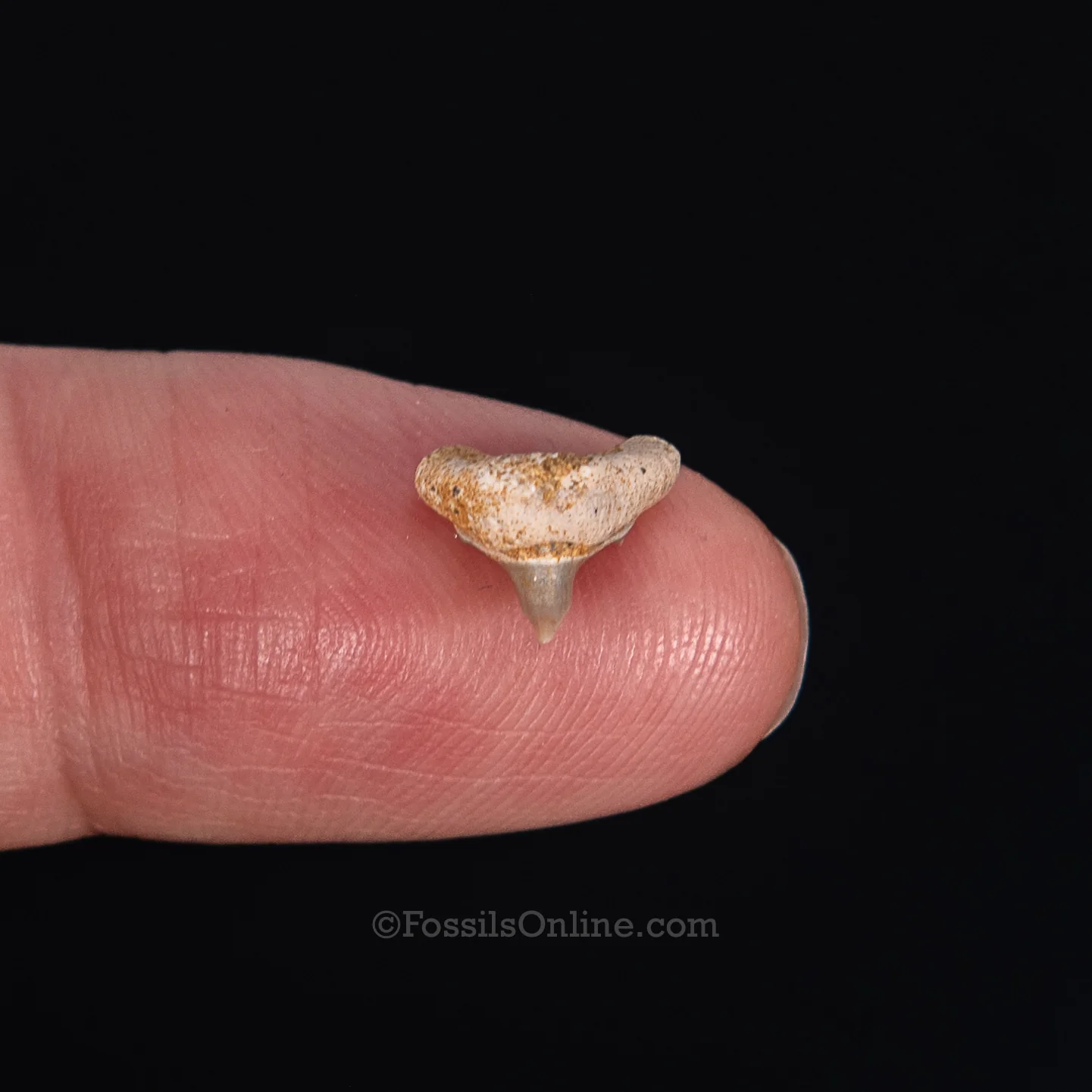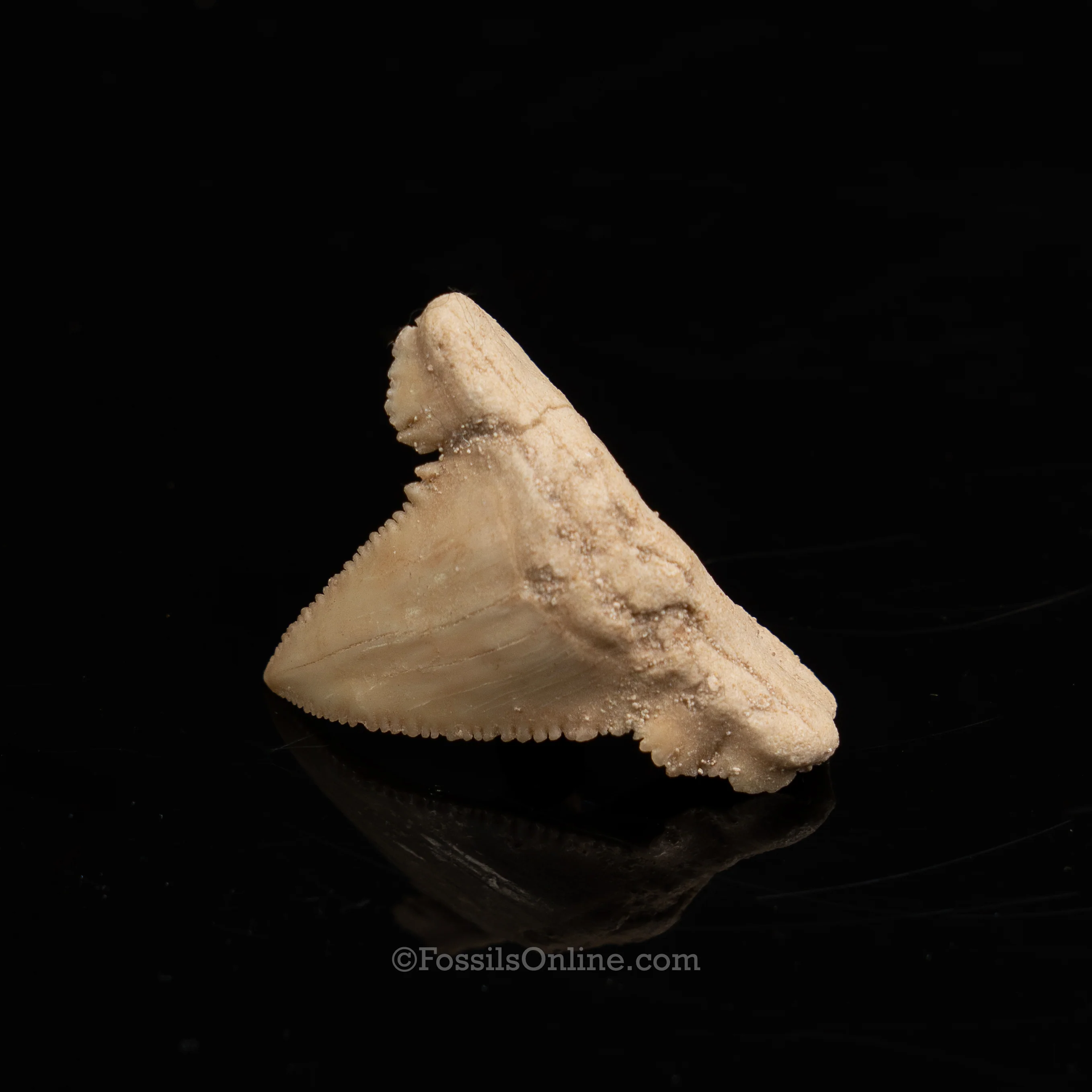
XLG Hemipristis 1.967"
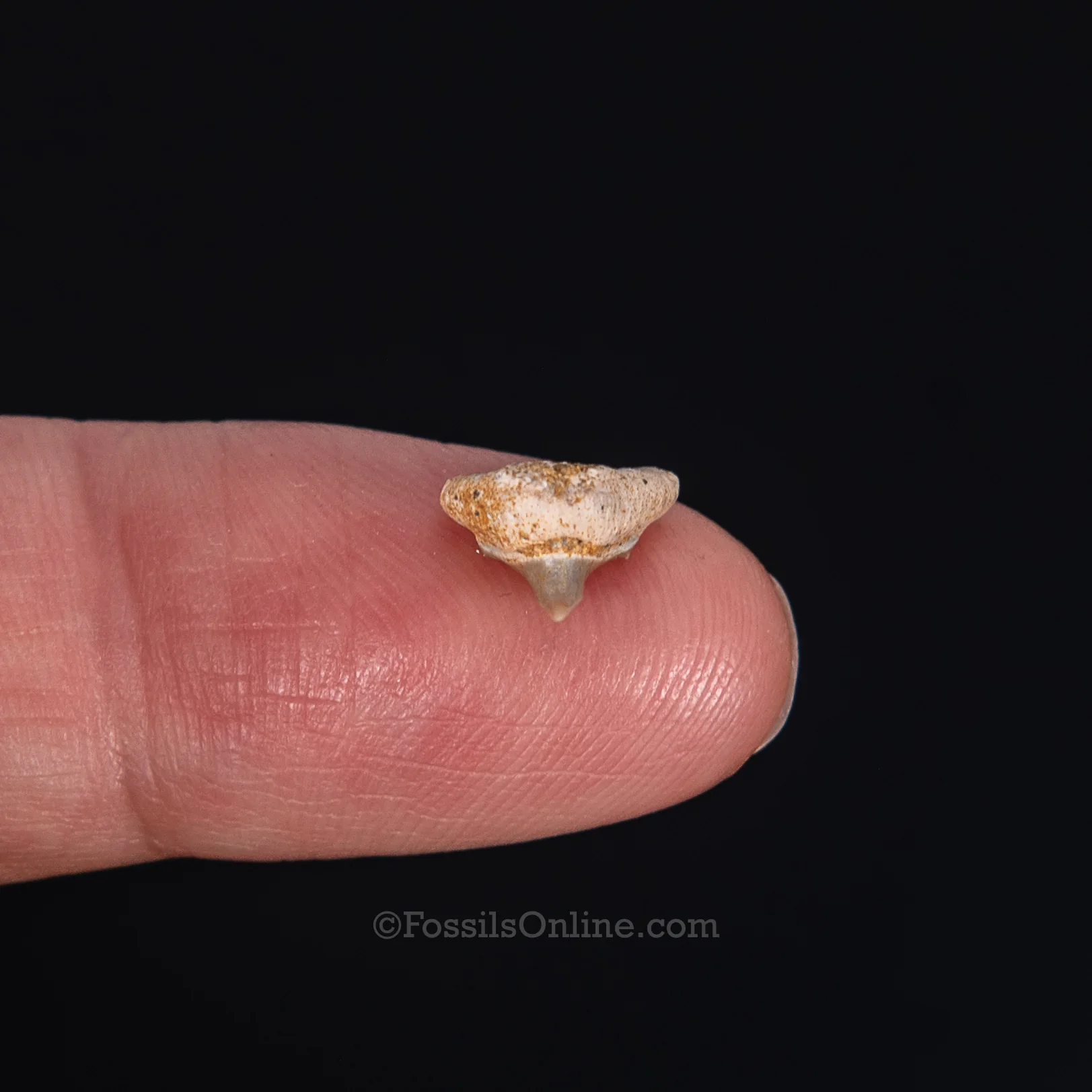
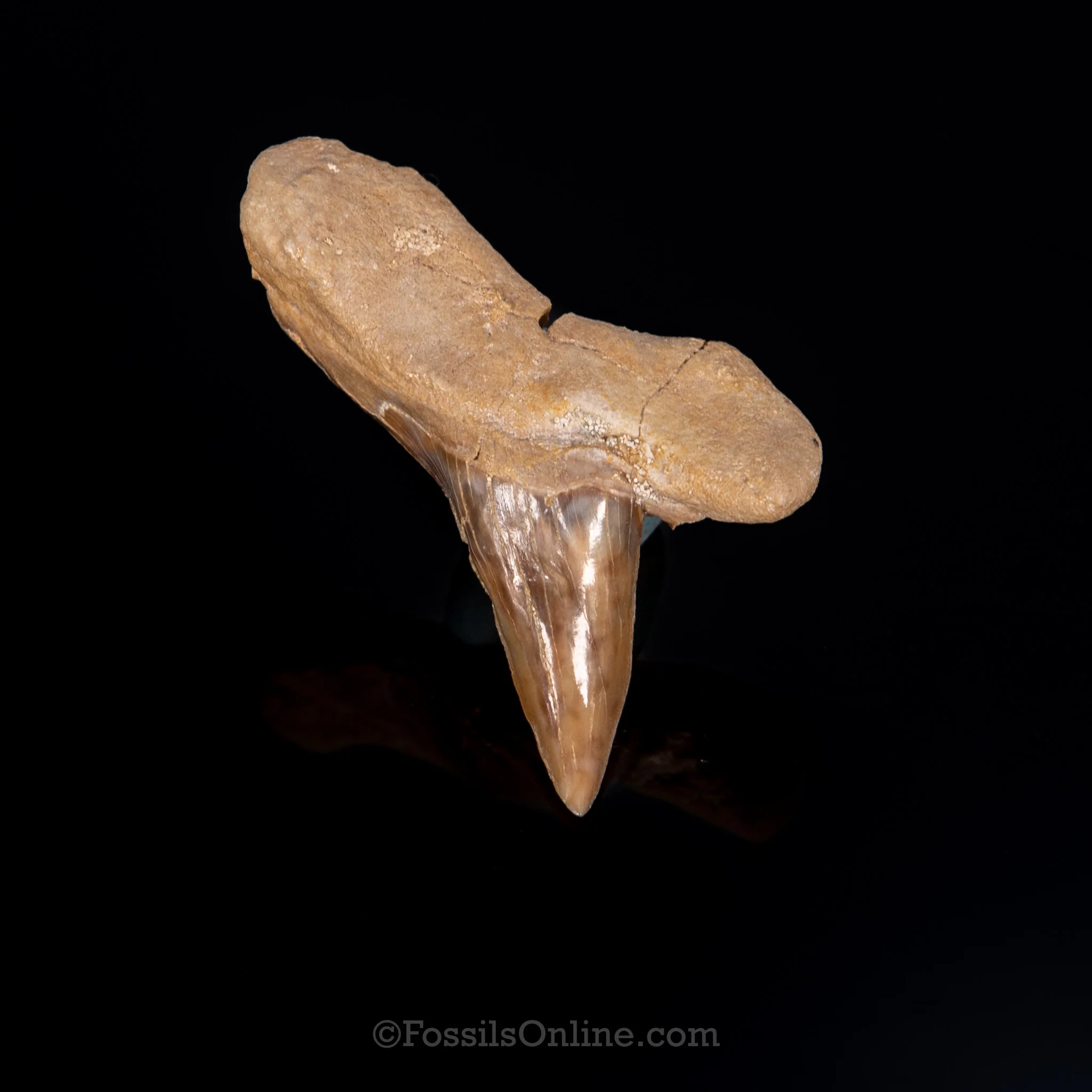
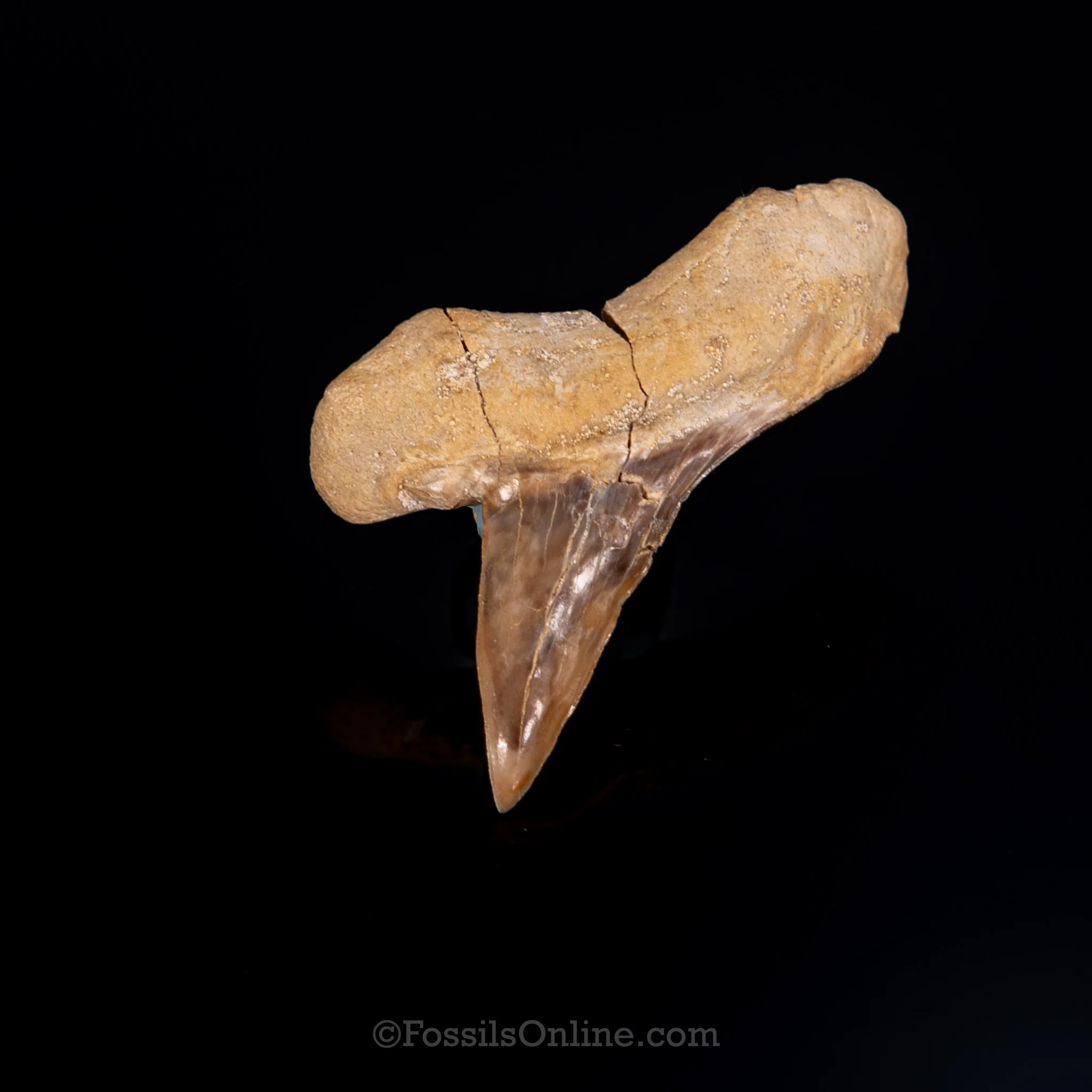
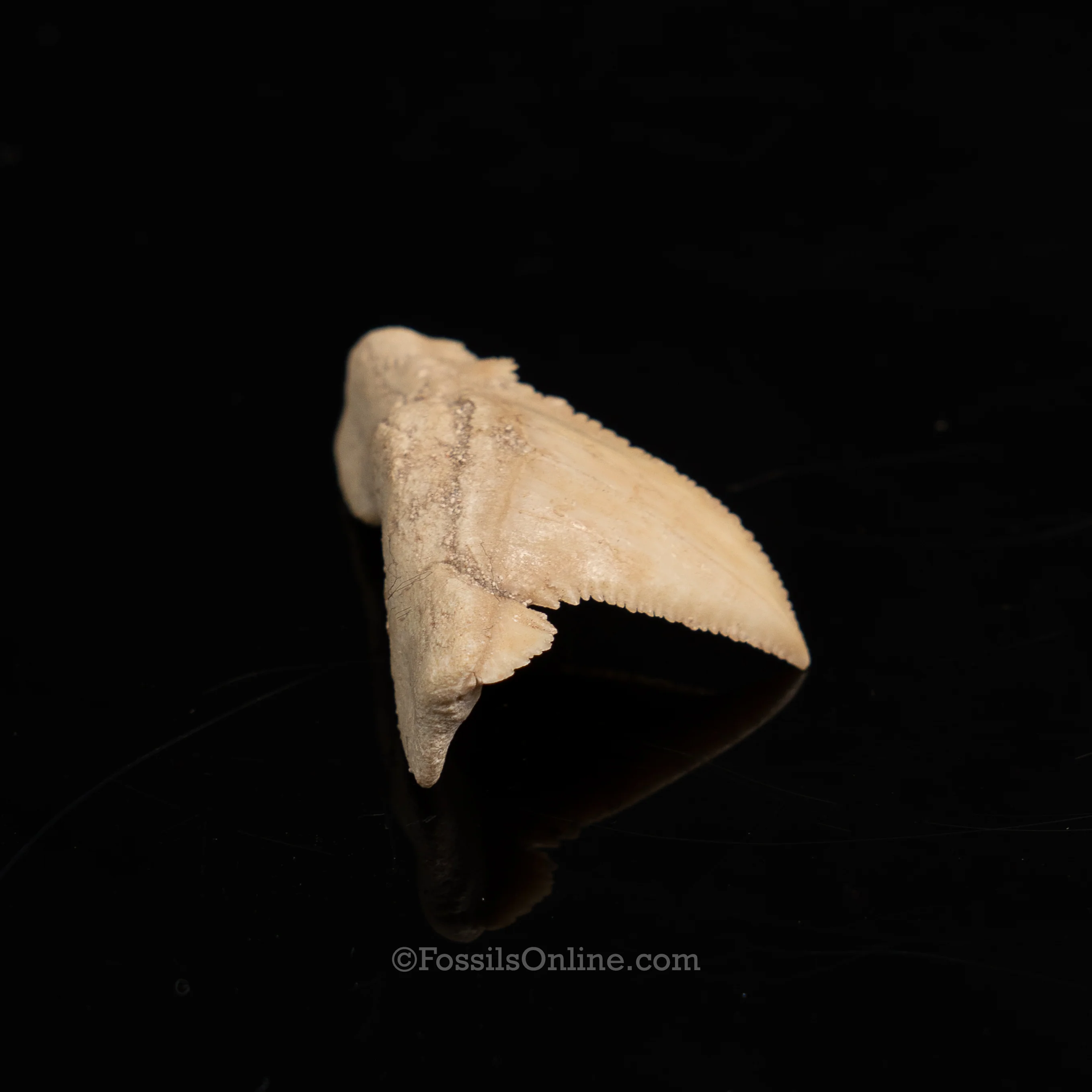
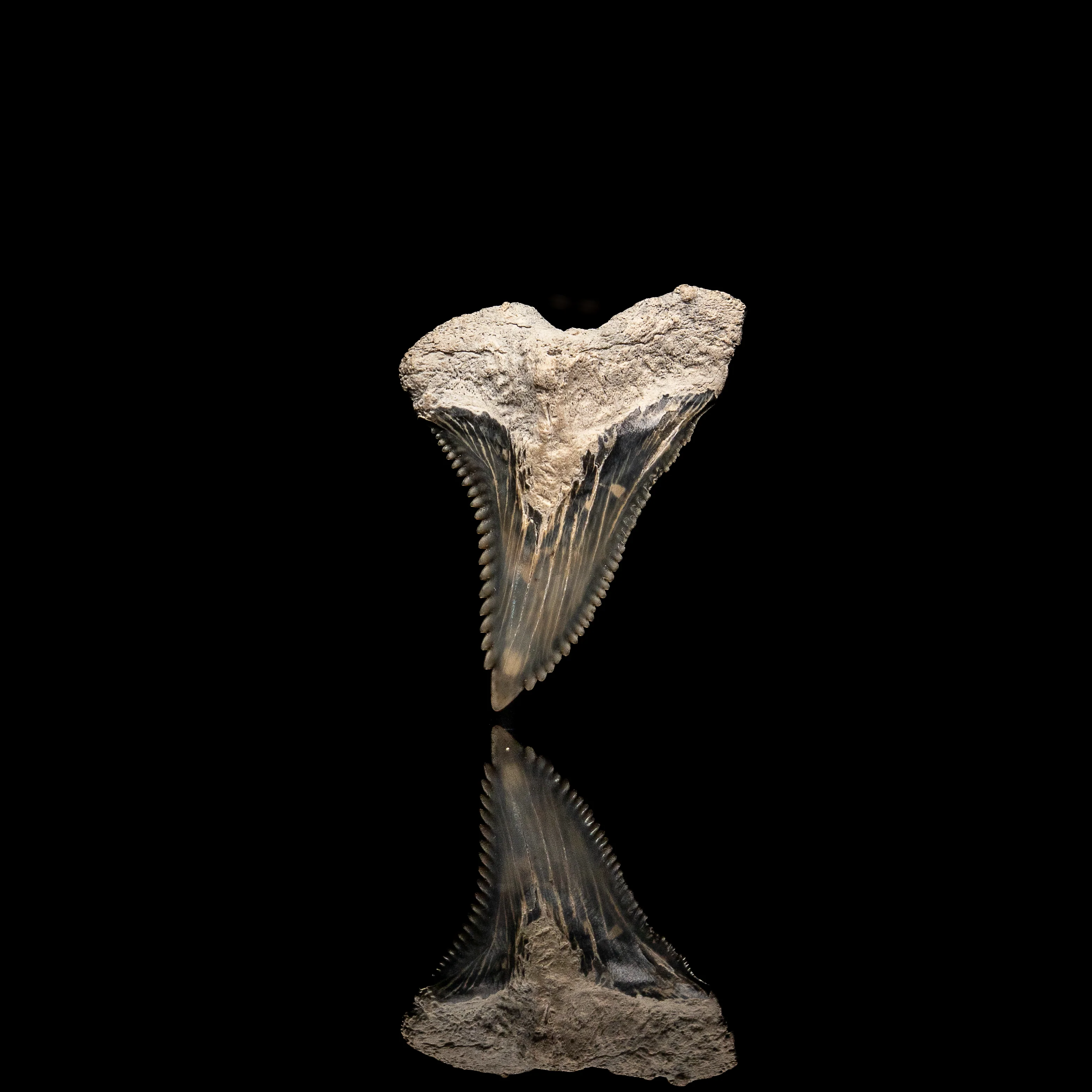
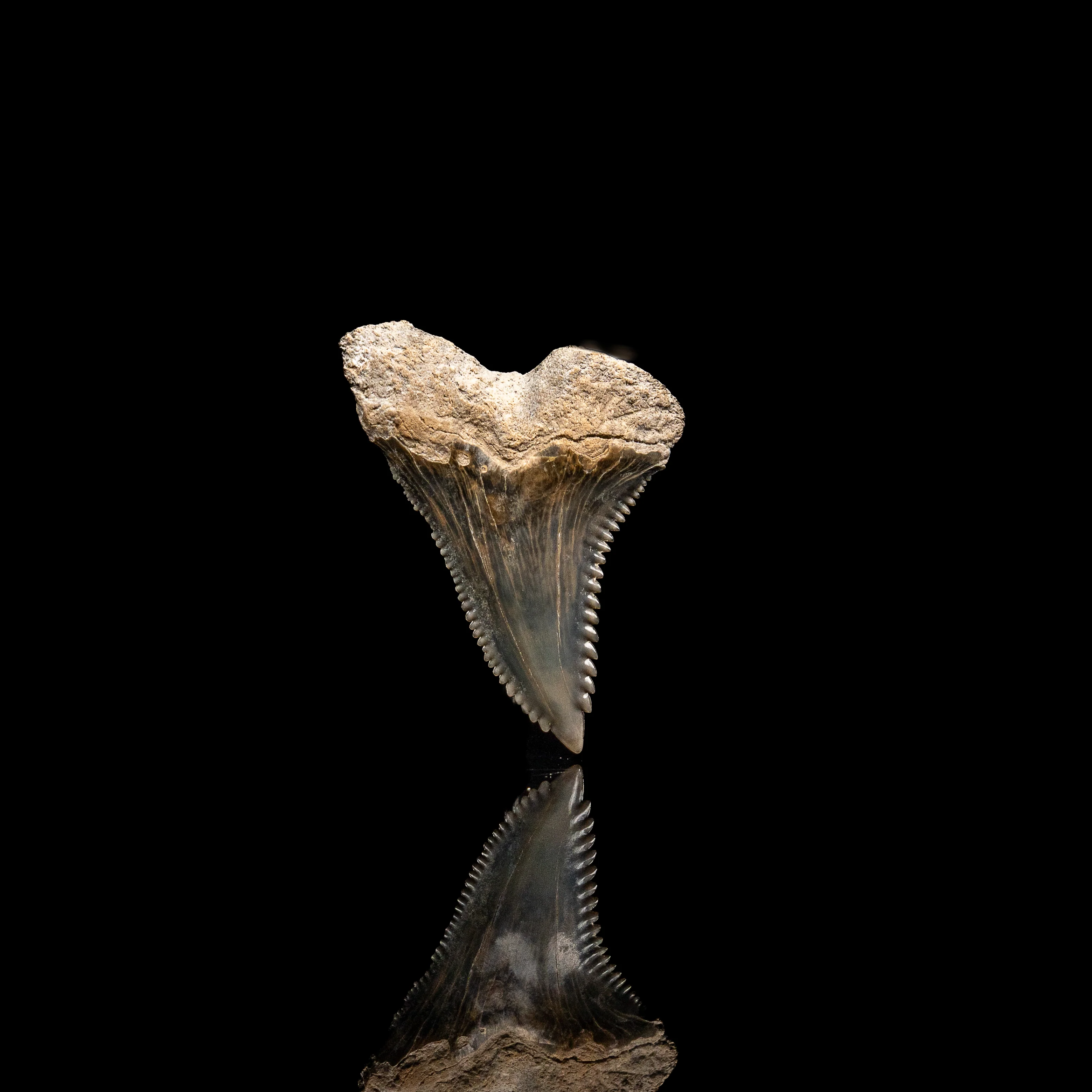
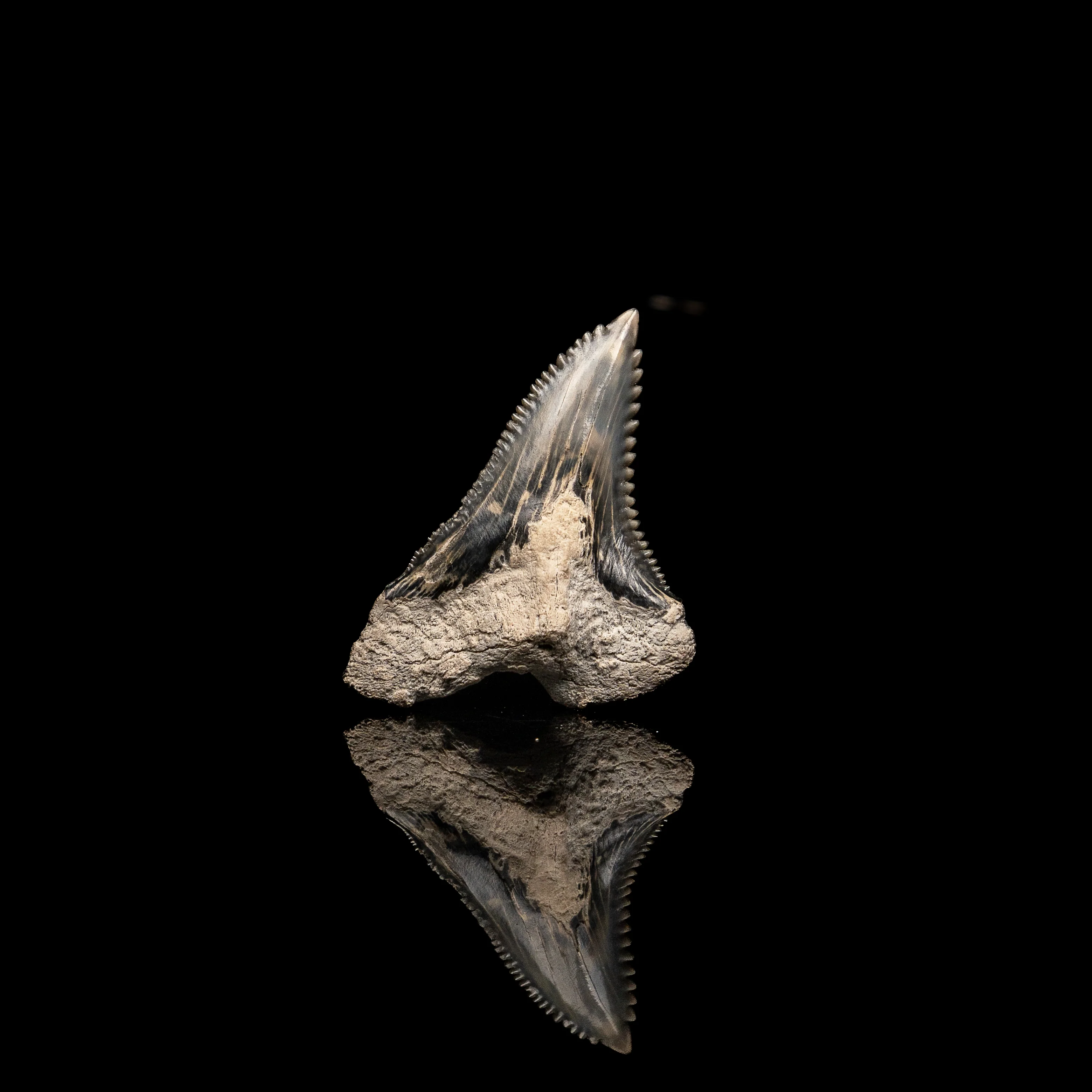
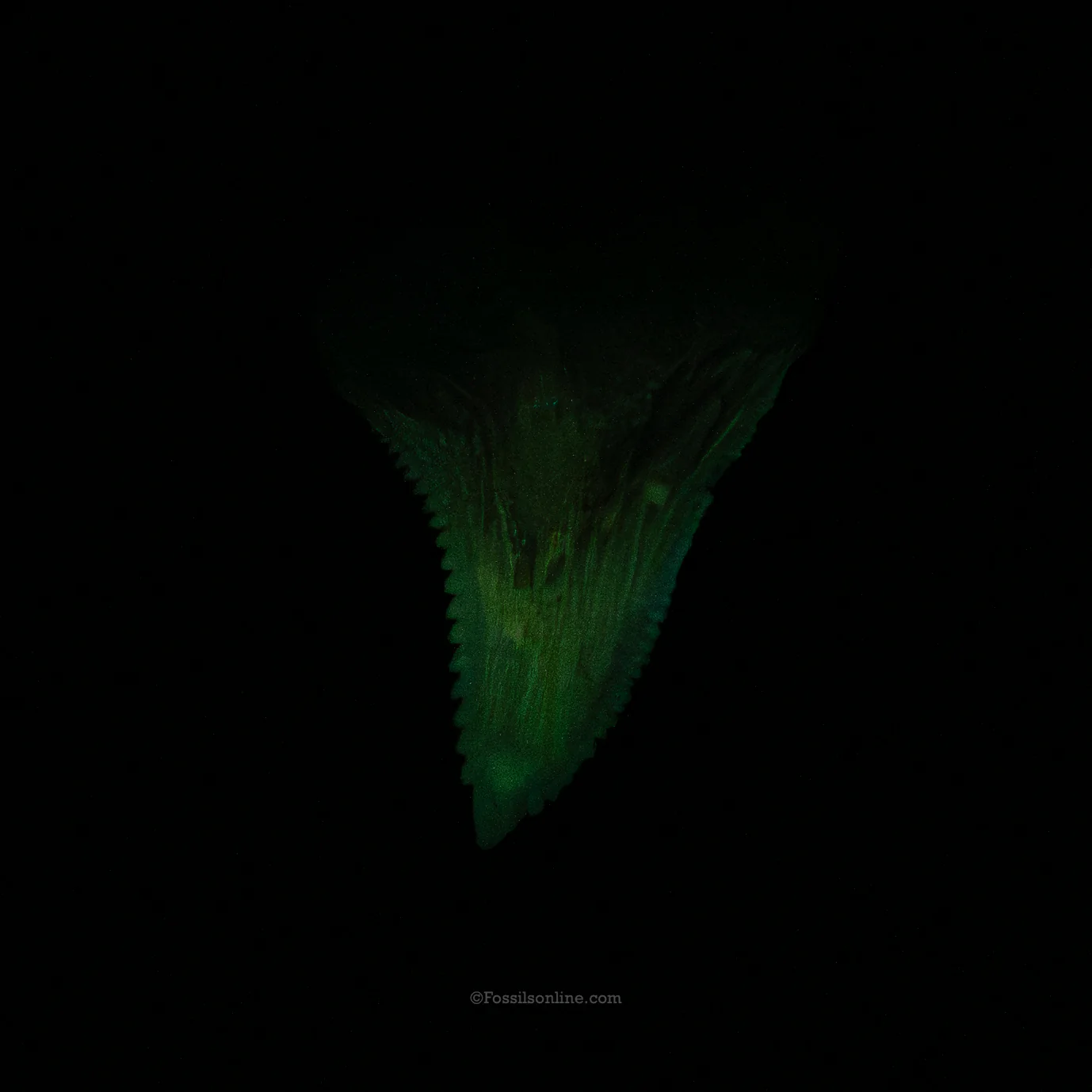
This X-large Hemi is in virtually perfect condition, with a stunning color pattern of cloudy light gray enamel. featuring sharp serrations and a light, slightly eroded root. It also phosphoresces under UV light due to high concentrations of phosphatic minerals and trace elements, which absorb UV energy and re-release it as visible light.
Why are they called snaggletooth sharks?
The name “snaggletooth” comes from the unusual shape of their teeth. In sharks like the extinct Hemipristis serra and the living Hemipristis elongata, the teeth don’t form a uniform cutting edge like in most sharks.
Instead, each tooth has one side with large, coarse serrations and the other side nearly smooth or finely serrated. This asymmetry gives the teeth a jagged, uneven appearance, which led to the name snaggletooth.
Diet and habitat
Snaggletooth sharks were active marine predators that lived in warm, shallow coastal seas. Fossils of Hemipristis serra are especially common in Miocene deposits, where marine ecosystems supported a wide range of prey.
Their diet likely included:
- Medium-sized fish
- Smaller sharks
- Other marine animals
Their tooth design suggests a grip-and-slice feeding style, allowing them to seize prey and tear flesh efficiently.
The modern Hemipristis elongata lives in similar environments today, favoring coastal waters in the Indo-Pacific.
Modern species
Today, the snaggletooth lineage is represented by Hemipristis elongata.
It is found in:
- The Indo-Pacific region
- Coastal waters of Southeast Asia, Australia, and East Africa
While smaller than Hemipristis serra, it still retains the same distinctive tooth design that defines the group.
Tooth morphology compared to other sharks
Snaggletooth shark teeth are highly specialized and show a clear distinction between upper teeth and lower teeth, each serving a different function.
Upper teeth:
- Broad and triangular
- Strongly asymmetrical
- One edge has large, coarse serrations
- The opposite edge is smoother or finely serrated
- Built primarily for slicing and tearing flesh
Lower teeth:
- Narrower and more elongated
- Often more curved or hook-like
- Serrations are smaller, finer, or more uniform
- Better suited for gripping and holding prey
This combination creates an effective feeding system where lower teeth secure prey and upper teeth do most of the cutting.
Compared to other sharks:
- Carcharodon carcharias has more uniform, triangular teeth designed for consistent slicing
- Otodus megalodon has large, symmetrical teeth built for cutting and crushing
Snaggletooth sharks stand out because of their asymmetry and division of function between upper and lower teeth, making them easy to recognize.
Why snaggletooth teeth are collectible
Teeth from Hemipristis serra are especially popular among collectors for several reasons:
- Distinctive appearance – The uneven serrations make them instantly recognizable, even to beginners
- Variety – Upper and lower teeth look noticeably different, giving collectors multiple forms to seek out
- Sharp detail – Well-preserved specimens can retain crisp serrations and fine edges
- Historical range – They come from rich Miocene deposits, tying them to a well-known prehistoric marine ecosystem
Although they are found in multiple localities, truly high-quality examples—with sharp serrations, intact tips, and minimal wear—are much harder to come by and are especially valued.
Evolutionary success and decline
The snaggletooth lineage was highly successful during the Miocene, with Hemipristis serra acting as a capable coastal predator.
Over time, environmental changes and competition likely contributed to its decline. The modern Hemipristis elongatais the last surviving representative, preserving the same unique tooth design that made its ancestors effective hunters.
Product Information
Product Information
Shipping & Returns
Shipping & Returns
XLG Hemipristis 1.967"
XLG Hemipristis 1.967"
This X-large Hemi is in virtually perfect condition, with a stunning color pattern of cloudy light gray enamel. featuring sharp serrations and a light, slightly eroded root. It also phosphoresces under UV light due to high concentrations of phosphatic minerals and trace elements, which absorb UV energy and re-release it as visible light.
Why are they called snaggletooth sharks?
The name “snaggletooth” comes from the unusual shape of their teeth. In sharks like the extinct Hemipristis serra and the living Hemipristis elongata, the teeth don’t form a uniform cutting edge like in most sharks.
Instead, each tooth has one side with large, coarse serrations and the other side nearly smooth or finely serrated. This asymmetry gives the teeth a jagged, uneven appearance, which led to the name snaggletooth.
Diet and habitat
Snaggletooth sharks were active marine predators that lived in warm, shallow coastal seas. Fossils of Hemipristis serra are especially common in Miocene deposits, where marine ecosystems supported a wide range of prey.
Their diet likely included:
- Medium-sized fish
- Smaller sharks
- Other marine animals
Their tooth design suggests a grip-and-slice feeding style, allowing them to seize prey and tear flesh efficiently.
The modern Hemipristis elongata lives in similar environments today, favoring coastal waters in the Indo-Pacific.
Modern species
Today, the snaggletooth lineage is represented by Hemipristis elongata.
It is found in:
- The Indo-Pacific region
- Coastal waters of Southeast Asia, Australia, and East Africa
While smaller than Hemipristis serra, it still retains the same distinctive tooth design that defines the group.
Tooth morphology compared to other sharks
Snaggletooth shark teeth are highly specialized and show a clear distinction between upper teeth and lower teeth, each serving a different function.
Upper teeth:
- Broad and triangular
- Strongly asymmetrical
- One edge has large, coarse serrations
- The opposite edge is smoother or finely serrated
- Built primarily for slicing and tearing flesh
Lower teeth:
- Narrower and more elongated
- Often more curved or hook-like
- Serrations are smaller, finer, or more uniform
- Better suited for gripping and holding prey
This combination creates an effective feeding system where lower teeth secure prey and upper teeth do most of the cutting.
Compared to other sharks:
- Carcharodon carcharias has more uniform, triangular teeth designed for consistent slicing
- Otodus megalodon has large, symmetrical teeth built for cutting and crushing
Snaggletooth sharks stand out because of their asymmetry and division of function between upper and lower teeth, making them easy to recognize.
Why snaggletooth teeth are collectible
Teeth from Hemipristis serra are especially popular among collectors for several reasons:
- Distinctive appearance – The uneven serrations make them instantly recognizable, even to beginners
- Variety – Upper and lower teeth look noticeably different, giving collectors multiple forms to seek out
- Sharp detail – Well-preserved specimens can retain crisp serrations and fine edges
- Historical range – They come from rich Miocene deposits, tying them to a well-known prehistoric marine ecosystem
Although they are found in multiple localities, truly high-quality examples—with sharp serrations, intact tips, and minimal wear—are much harder to come by and are especially valued.
Evolutionary success and decline
The snaggletooth lineage was highly successful during the Miocene, with Hemipristis serra acting as a capable coastal predator.
Over time, environmental changes and competition likely contributed to its decline. The modern Hemipristis elongatais the last surviving representative, preserving the same unique tooth design that made its ancestors effective hunters.
Product Information
Product Information
Shipping & Returns
Shipping & Returns
Description
This X-large Hemi is in virtually perfect condition, with a stunning color pattern of cloudy light gray enamel. featuring sharp serrations and a light, slightly eroded root. It also phosphoresces under UV light due to high concentrations of phosphatic minerals and trace elements, which absorb UV energy and re-release it as visible light.
Why are they called snaggletooth sharks?
The name “snaggletooth” comes from the unusual shape of their teeth. In sharks like the extinct Hemipristis serra and the living Hemipristis elongata, the teeth don’t form a uniform cutting edge like in most sharks.
Instead, each tooth has one side with large, coarse serrations and the other side nearly smooth or finely serrated. This asymmetry gives the teeth a jagged, uneven appearance, which led to the name snaggletooth.
Diet and habitat
Snaggletooth sharks were active marine predators that lived in warm, shallow coastal seas. Fossils of Hemipristis serra are especially common in Miocene deposits, where marine ecosystems supported a wide range of prey.
Their diet likely included:
- Medium-sized fish
- Smaller sharks
- Other marine animals
Their tooth design suggests a grip-and-slice feeding style, allowing them to seize prey and tear flesh efficiently.
The modern Hemipristis elongata lives in similar environments today, favoring coastal waters in the Indo-Pacific.
Modern species
Today, the snaggletooth lineage is represented by Hemipristis elongata.
It is found in:
- The Indo-Pacific region
- Coastal waters of Southeast Asia, Australia, and East Africa
While smaller than Hemipristis serra, it still retains the same distinctive tooth design that defines the group.
Tooth morphology compared to other sharks
Snaggletooth shark teeth are highly specialized and show a clear distinction between upper teeth and lower teeth, each serving a different function.
Upper teeth:
- Broad and triangular
- Strongly asymmetrical
- One edge has large, coarse serrations
- The opposite edge is smoother or finely serrated
- Built primarily for slicing and tearing flesh
Lower teeth:
- Narrower and more elongated
- Often more curved or hook-like
- Serrations are smaller, finer, or more uniform
- Better suited for gripping and holding prey
This combination creates an effective feeding system where lower teeth secure prey and upper teeth do most of the cutting.
Compared to other sharks:
- Carcharodon carcharias has more uniform, triangular teeth designed for consistent slicing
- Otodus megalodon has large, symmetrical teeth built for cutting and crushing
Snaggletooth sharks stand out because of their asymmetry and division of function between upper and lower teeth, making them easy to recognize.
Why snaggletooth teeth are collectible
Teeth from Hemipristis serra are especially popular among collectors for several reasons:
- Distinctive appearance – The uneven serrations make them instantly recognizable, even to beginners
- Variety – Upper and lower teeth look noticeably different, giving collectors multiple forms to seek out
- Sharp detail – Well-preserved specimens can retain crisp serrations and fine edges
- Historical range – They come from rich Miocene deposits, tying them to a well-known prehistoric marine ecosystem
Although they are found in multiple localities, truly high-quality examples—with sharp serrations, intact tips, and minimal wear—are much harder to come by and are especially valued.
Evolutionary success and decline
The snaggletooth lineage was highly successful during the Miocene, with Hemipristis serra acting as a capable coastal predator.
Over time, environmental changes and competition likely contributed to its decline. The modern Hemipristis elongatais the last surviving representative, preserving the same unique tooth design that made its ancestors effective hunters.