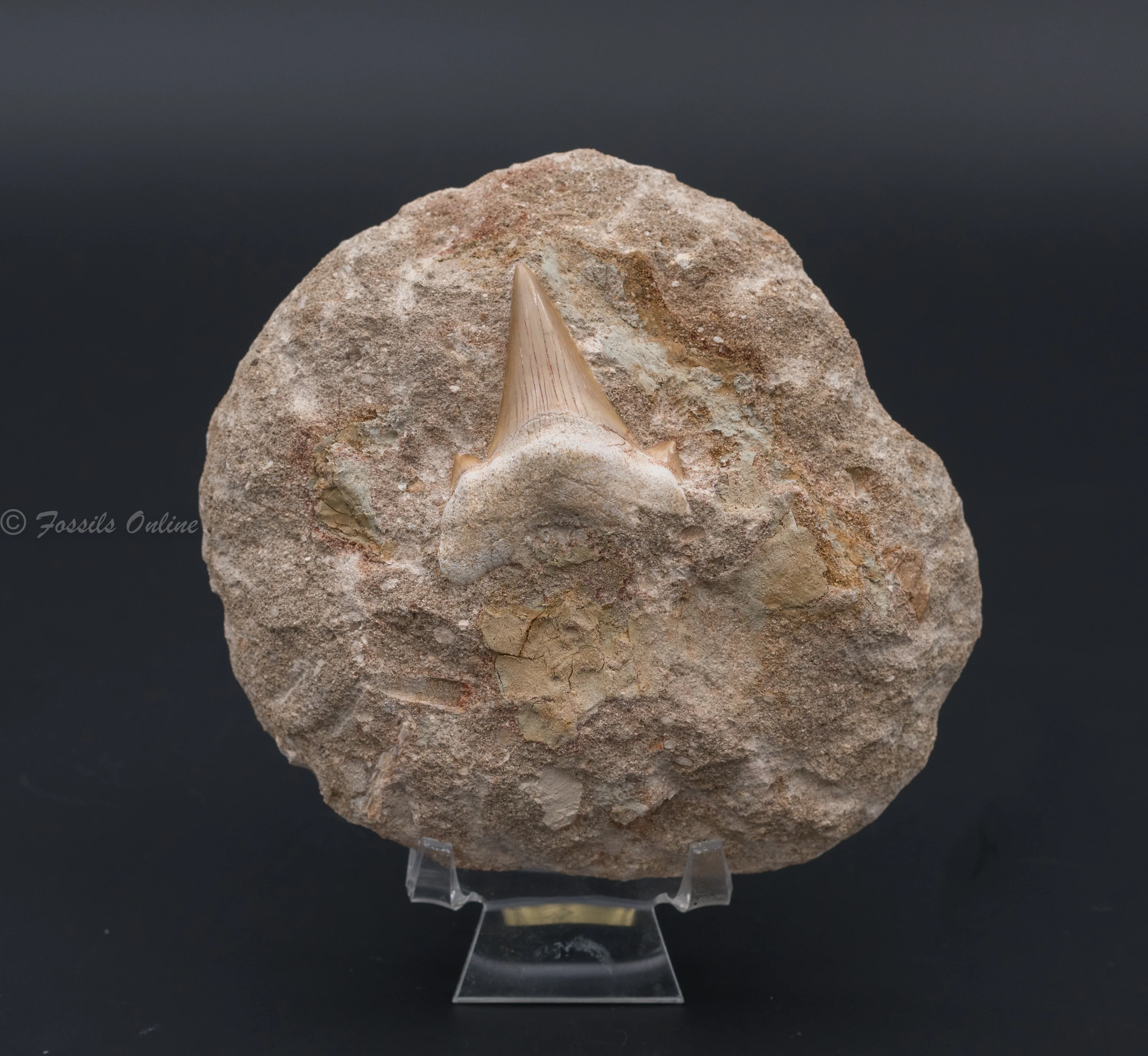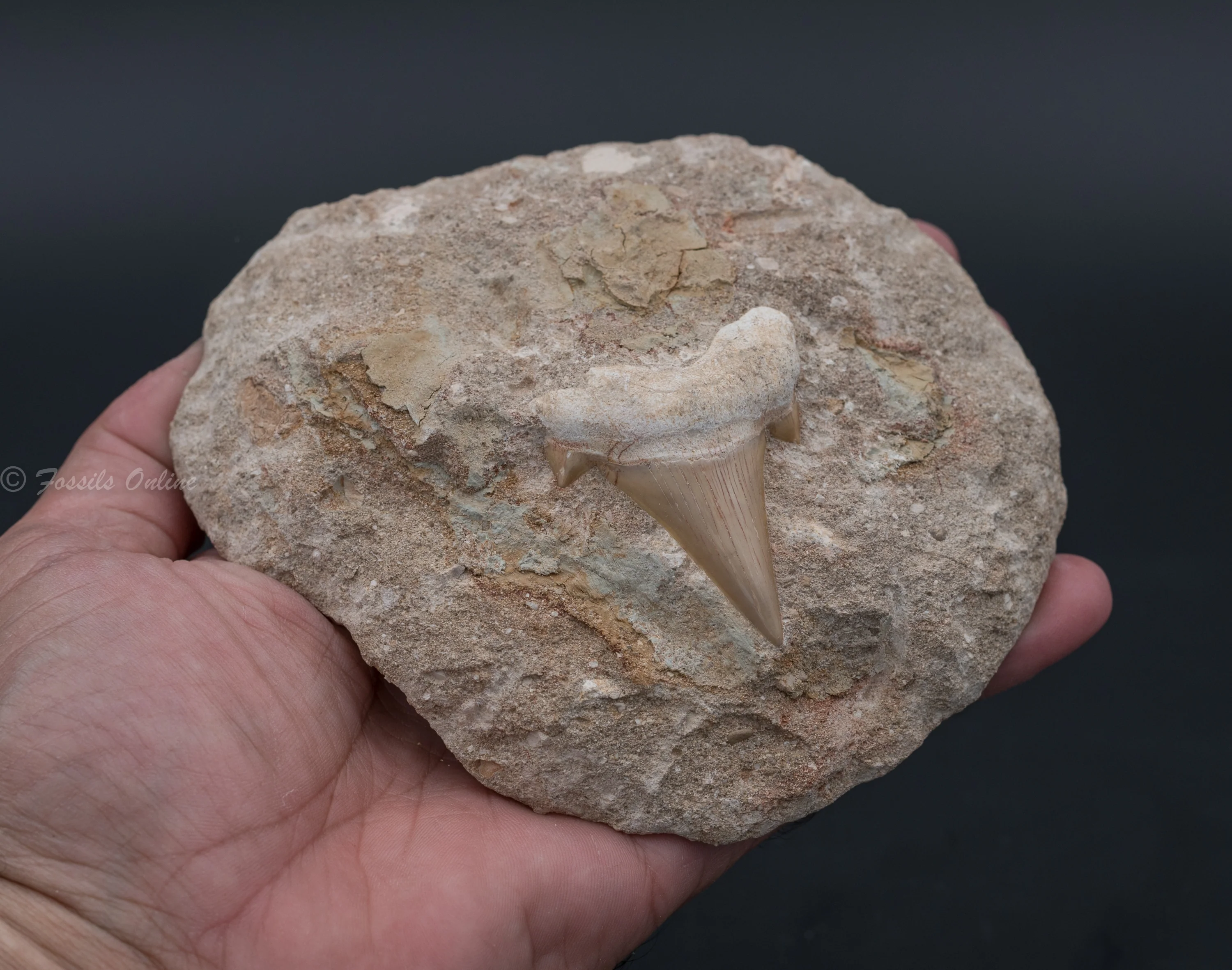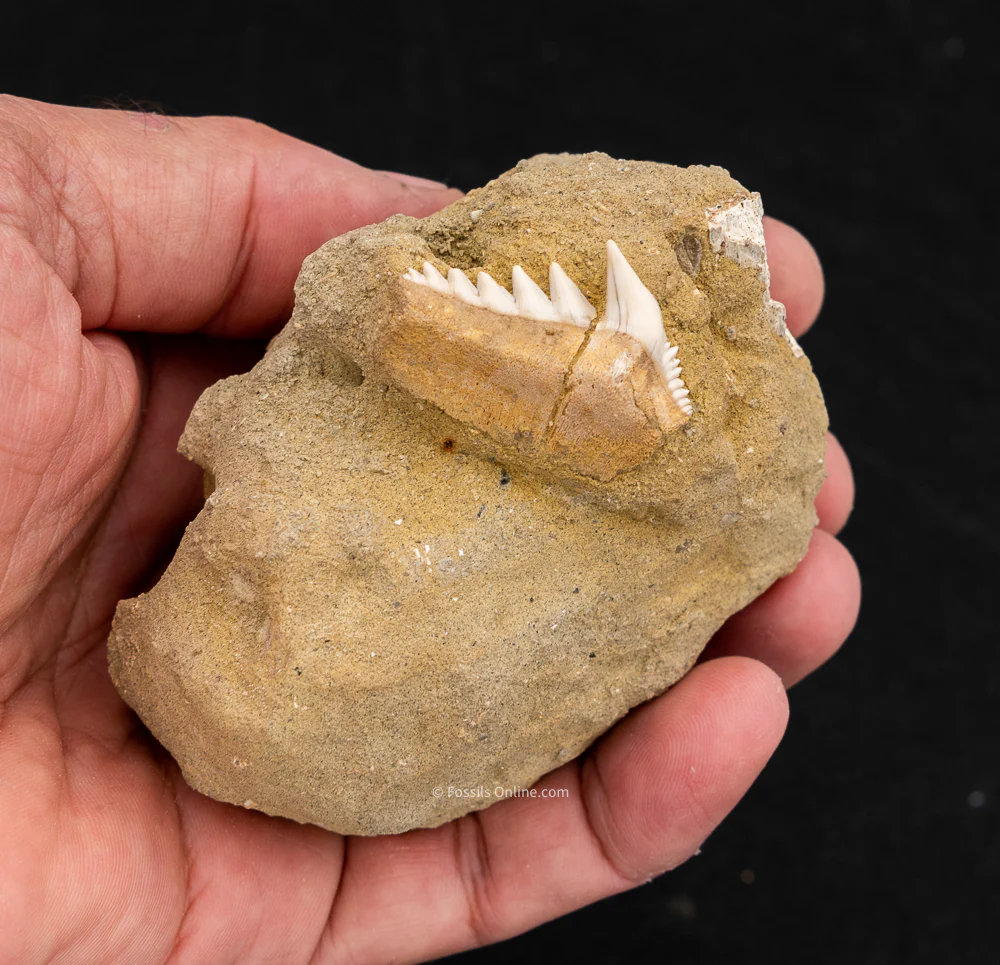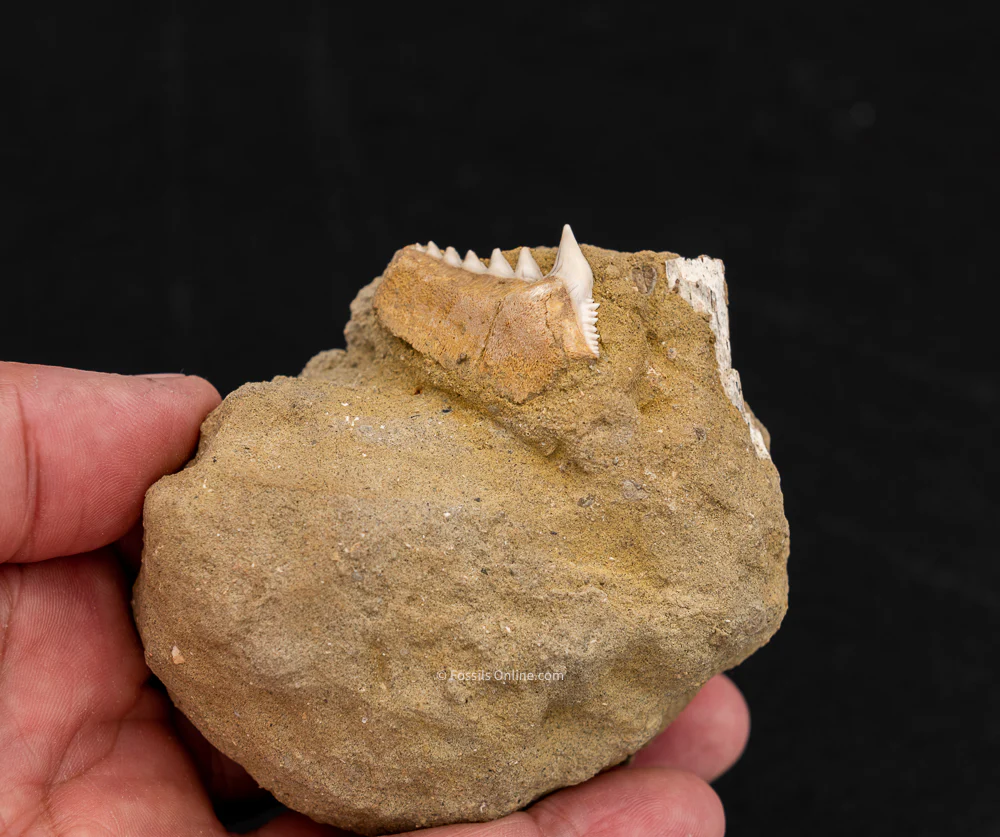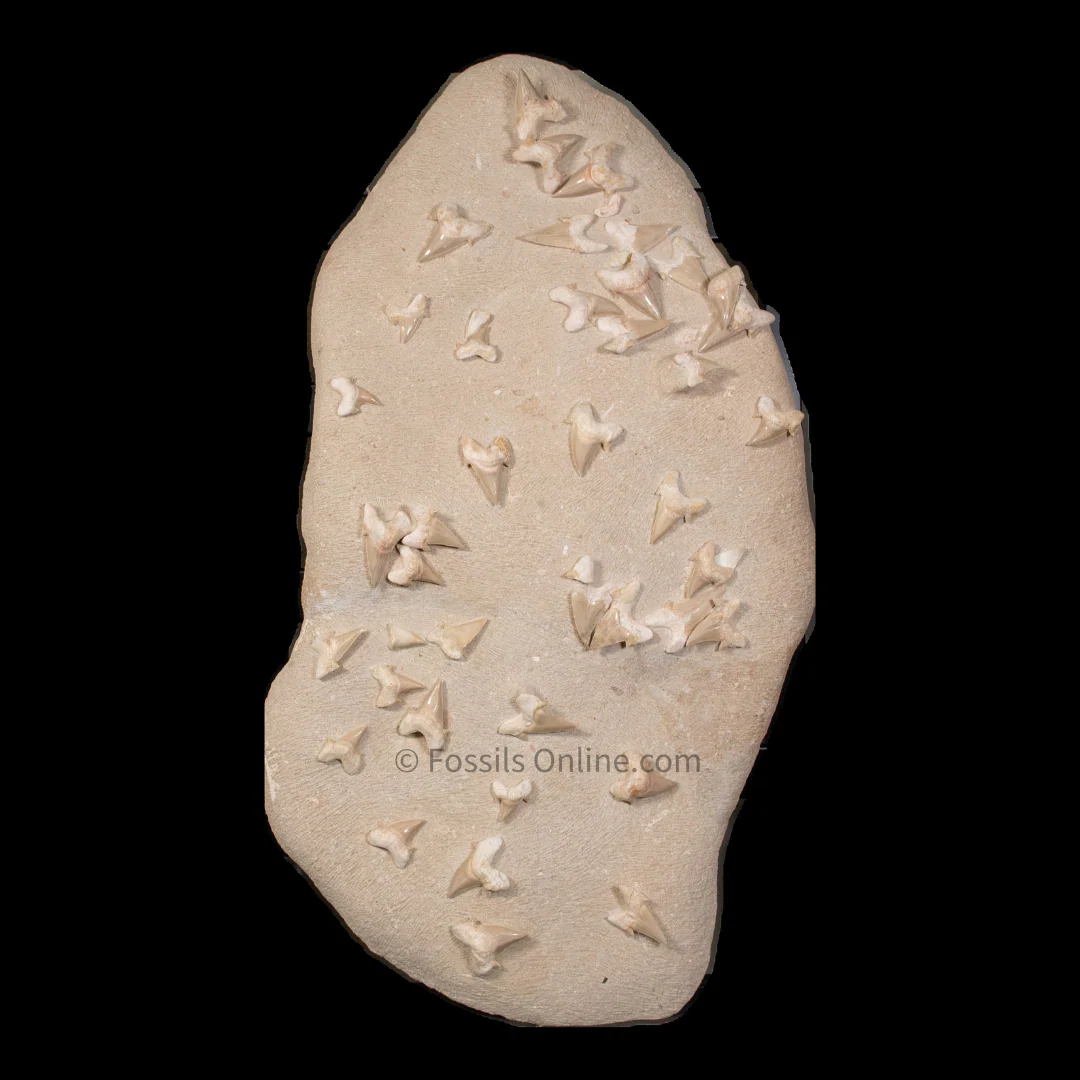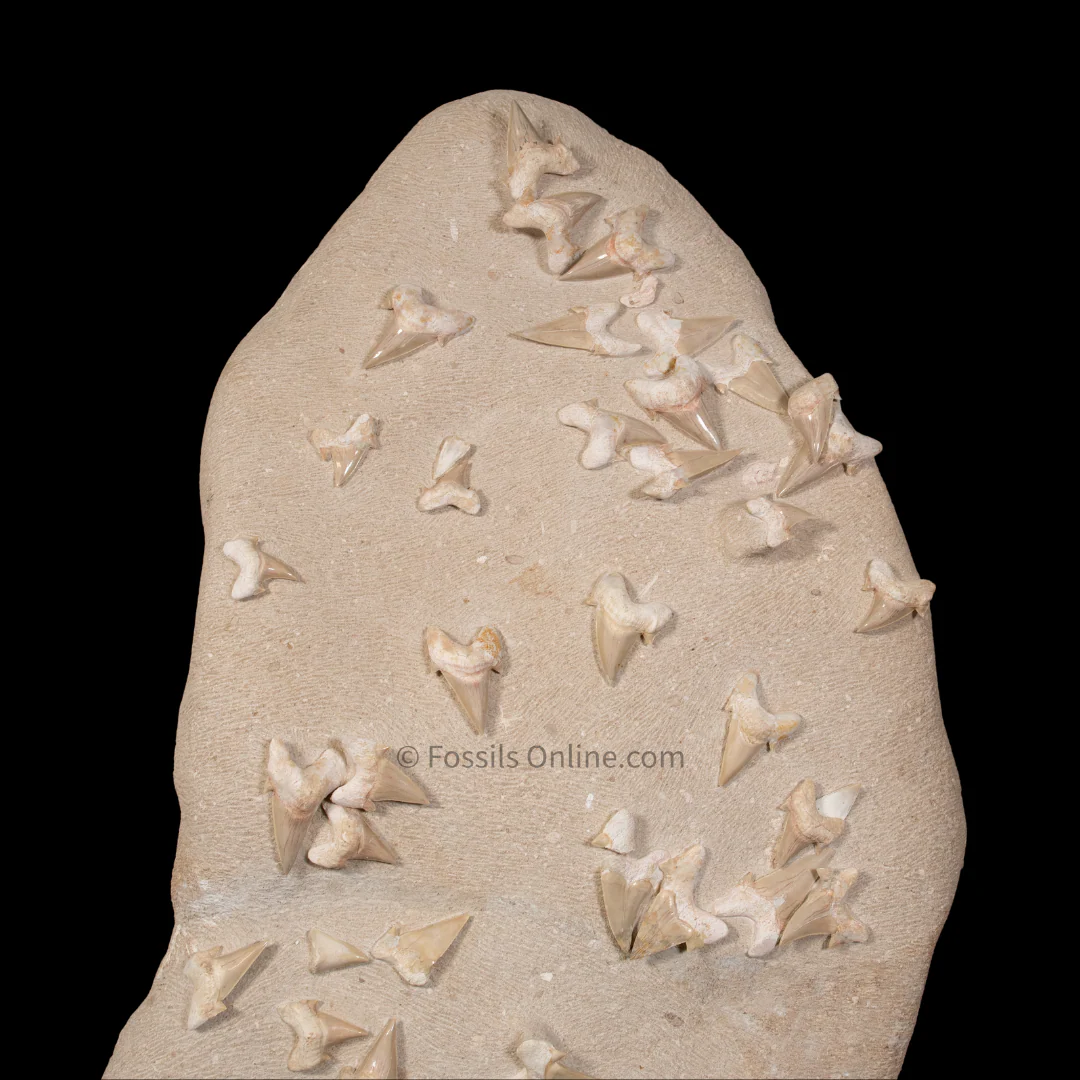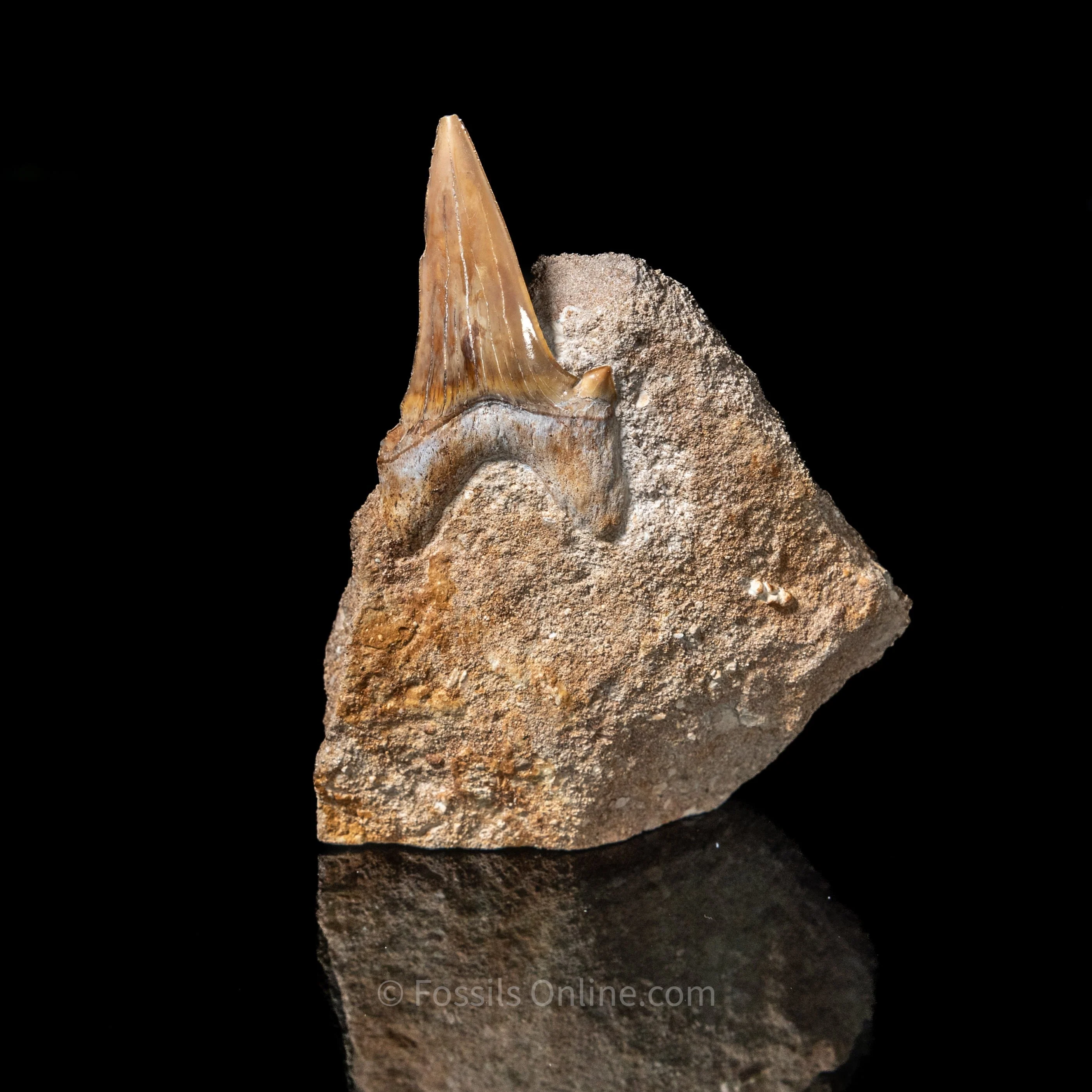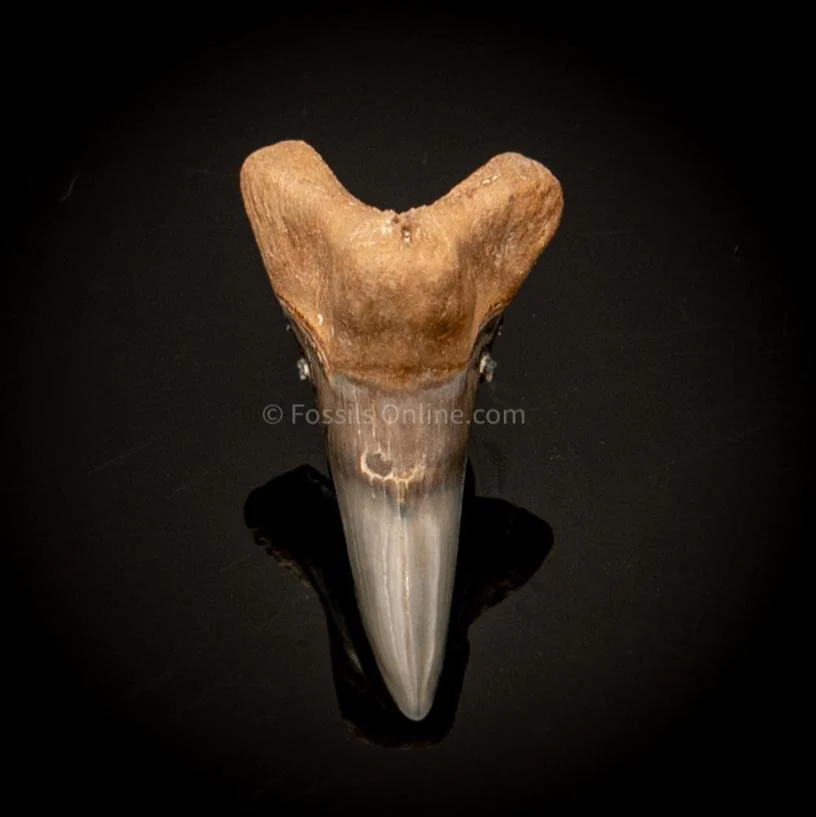
Pristine Otodus auriculatus Tooth 2.50"
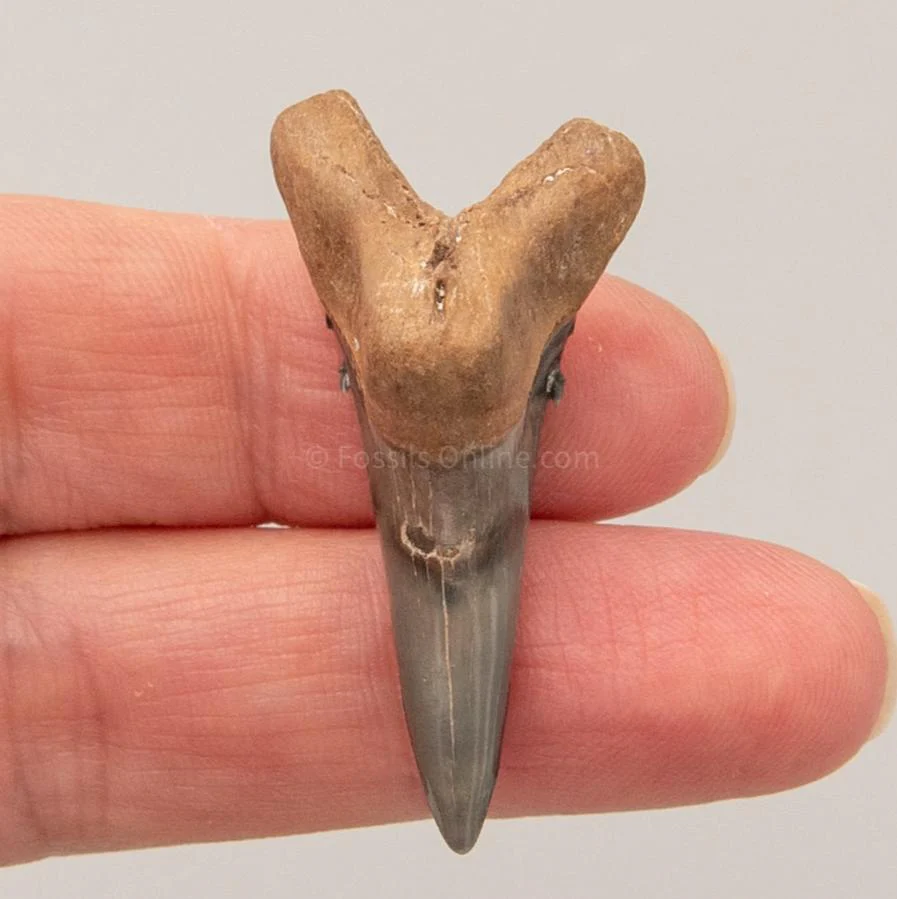
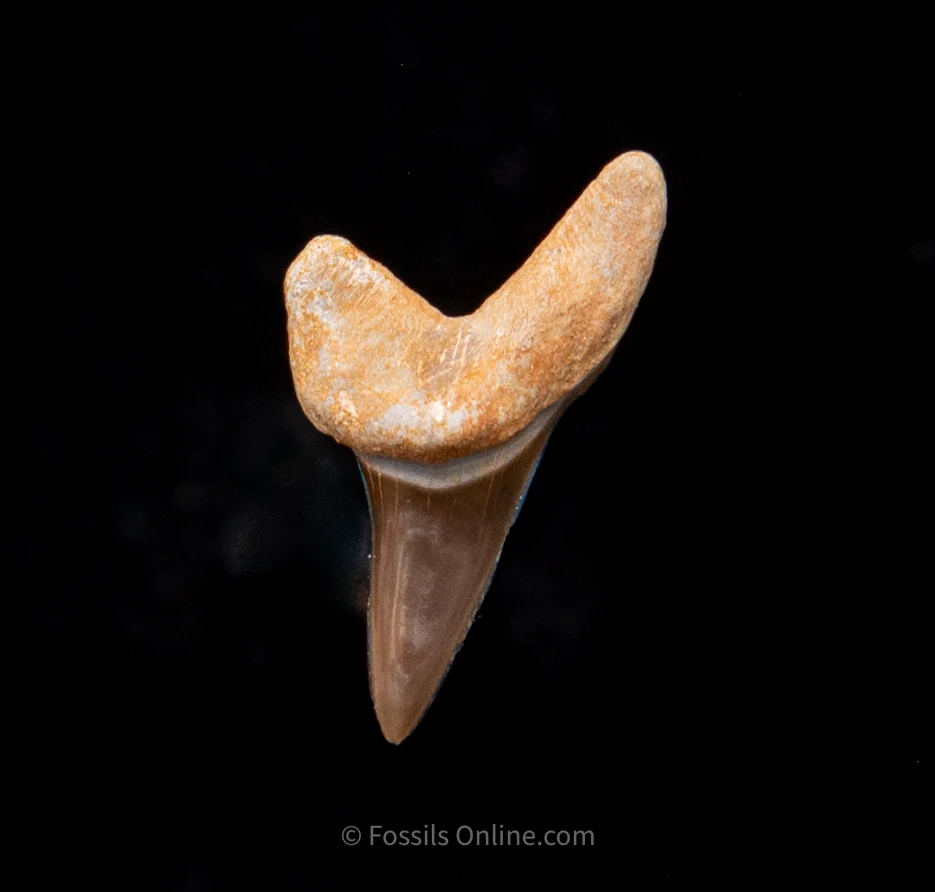
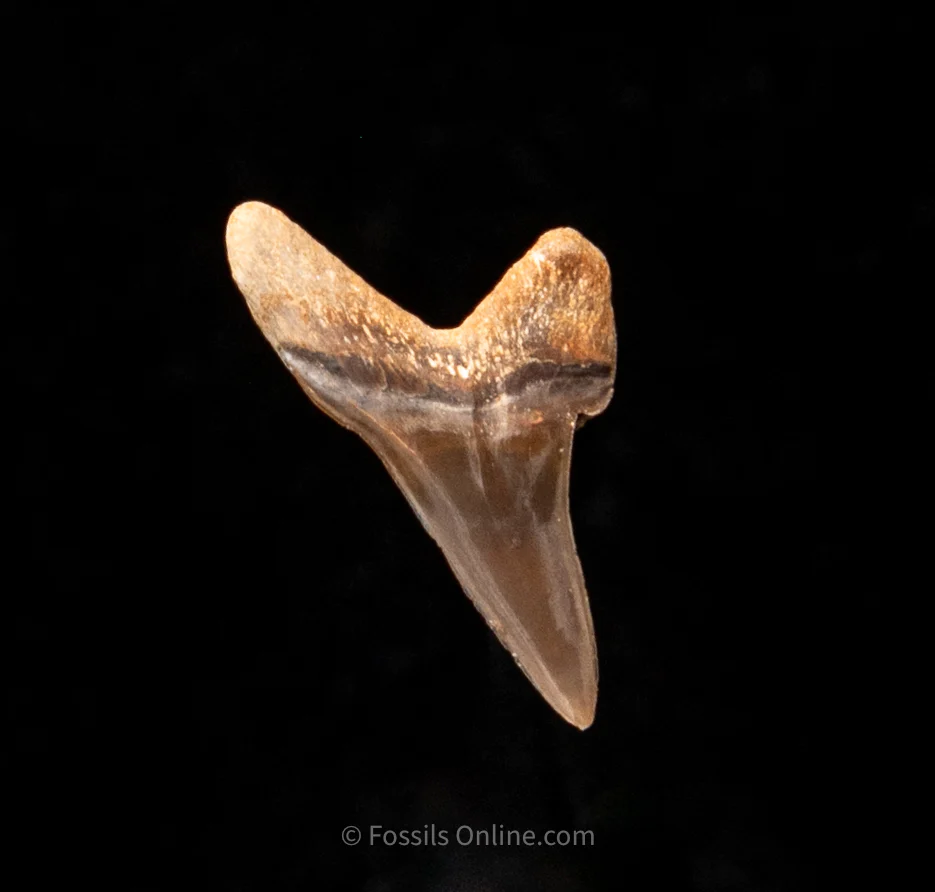
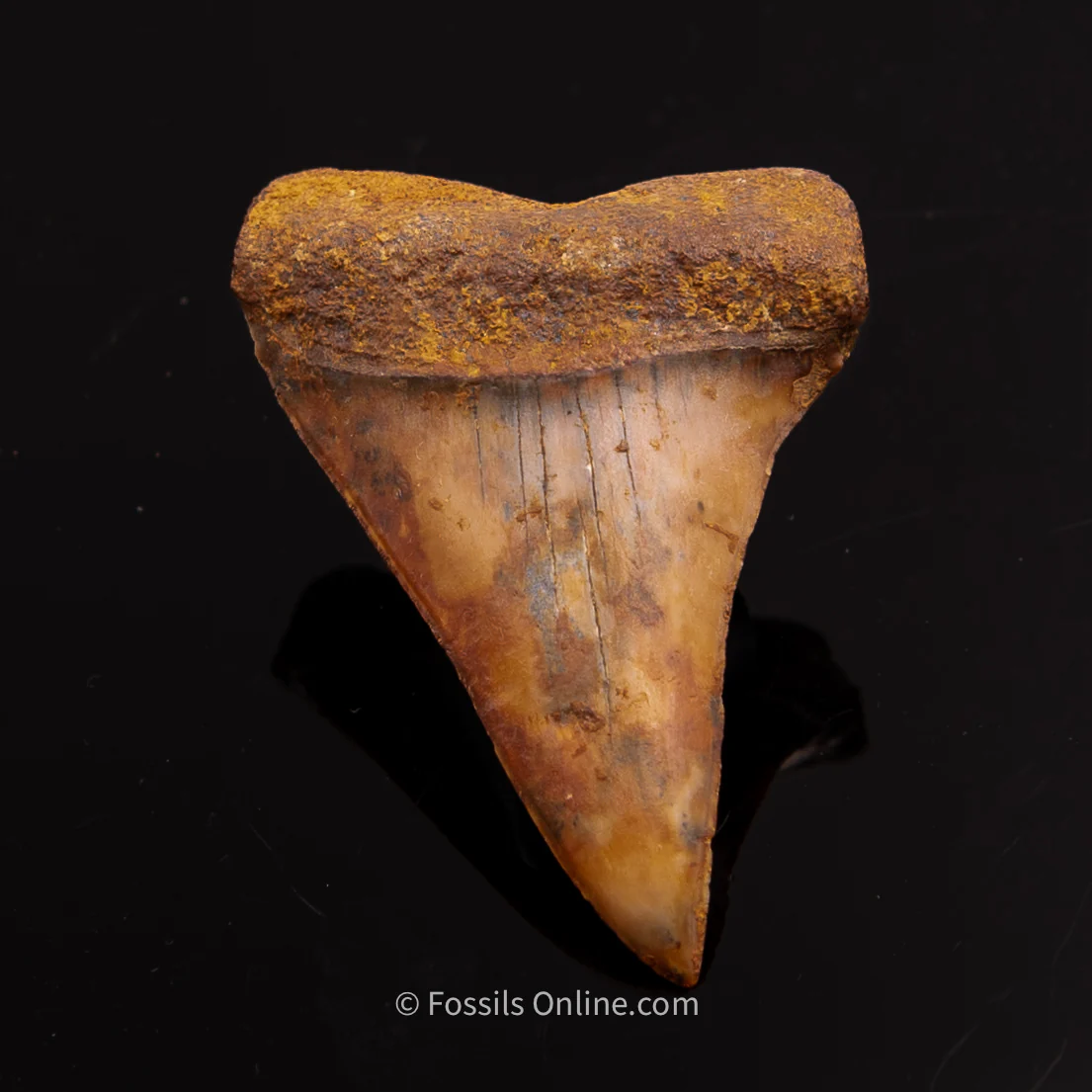
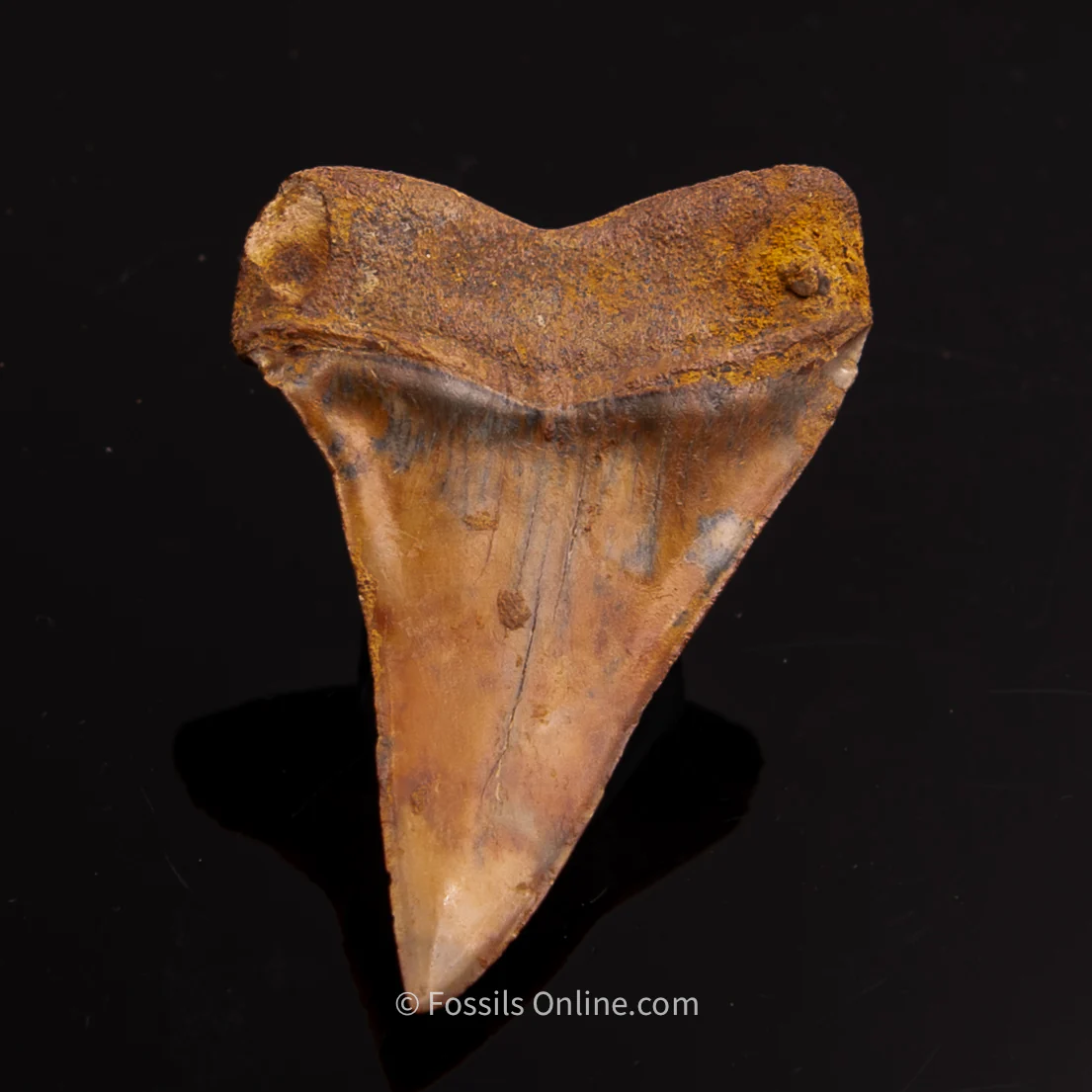
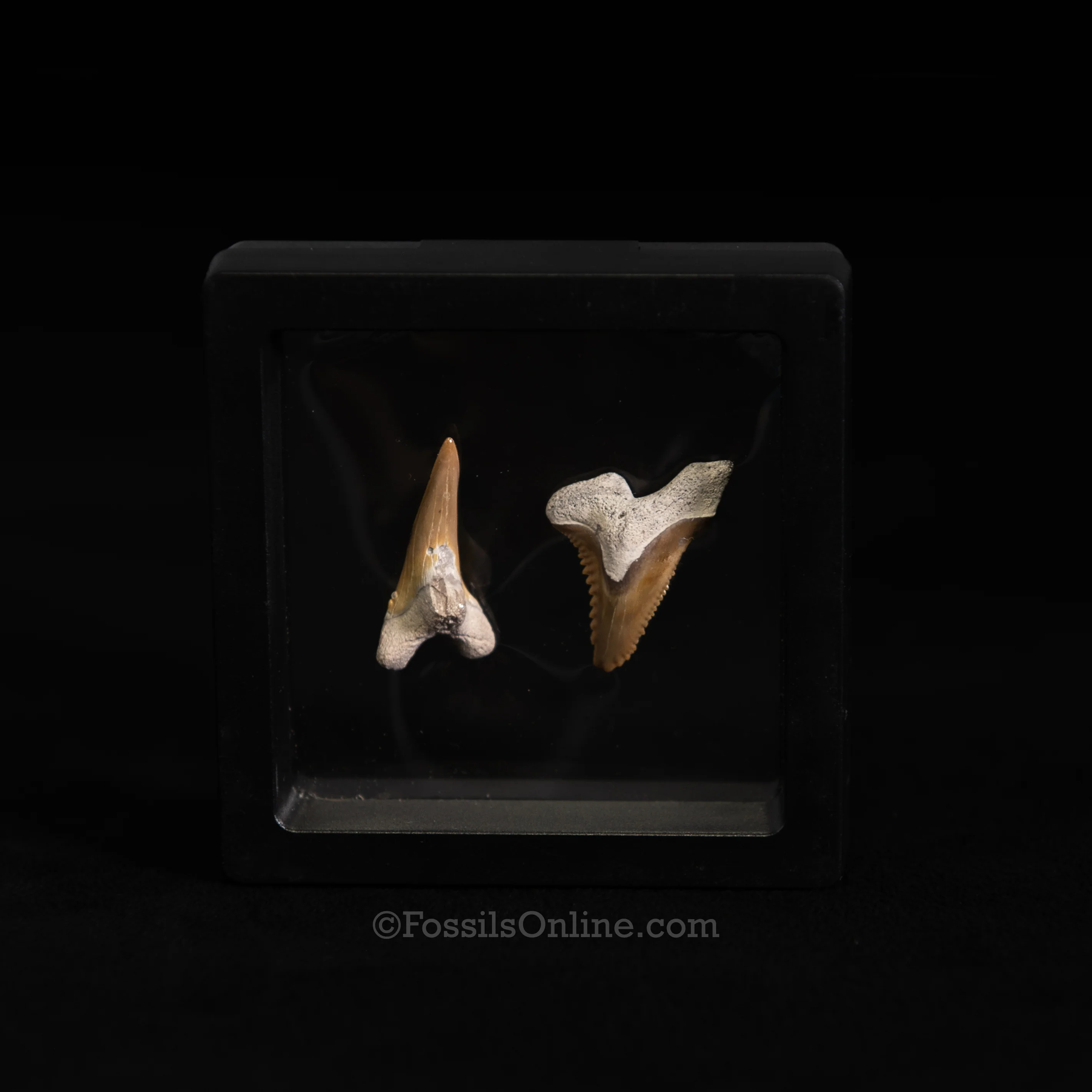
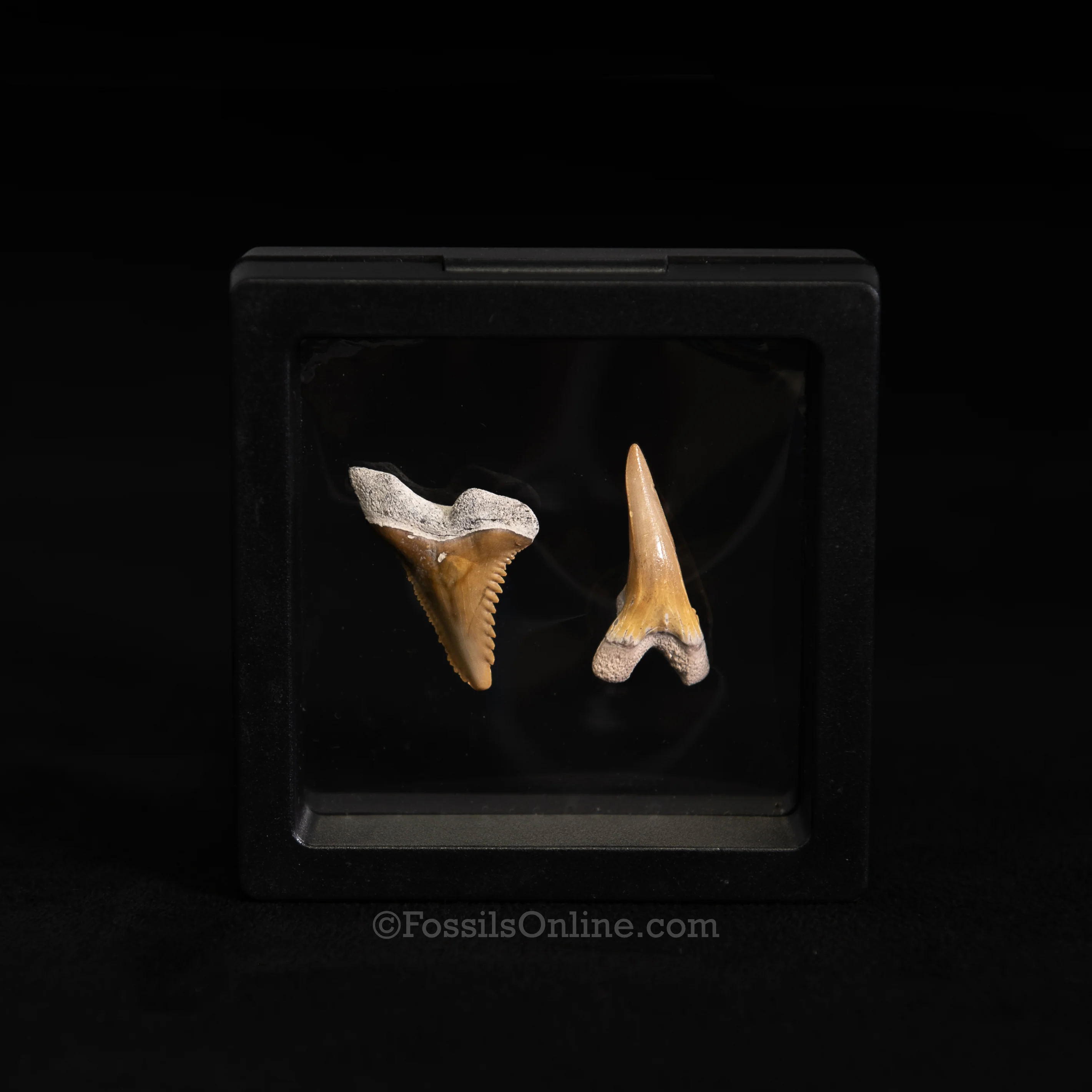
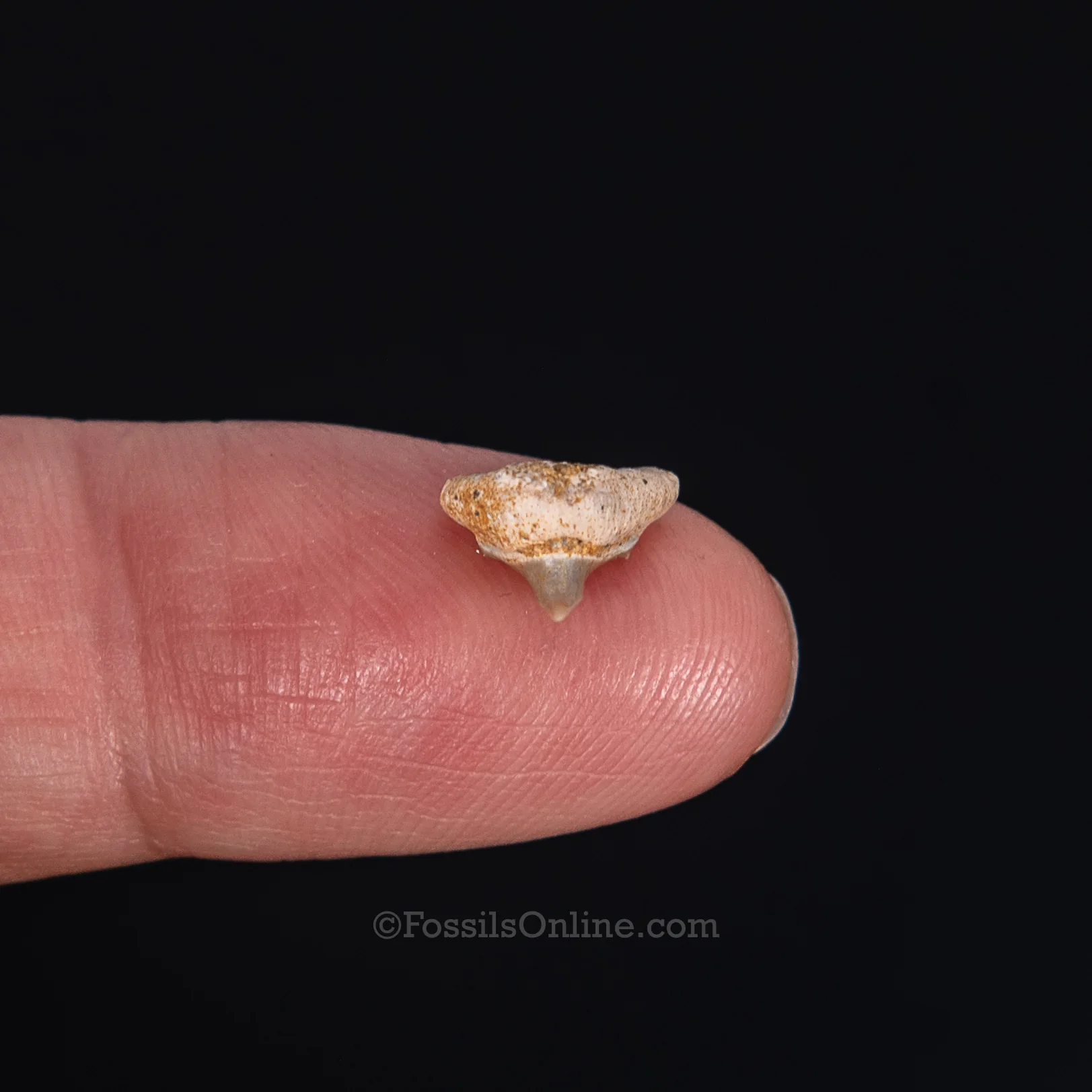
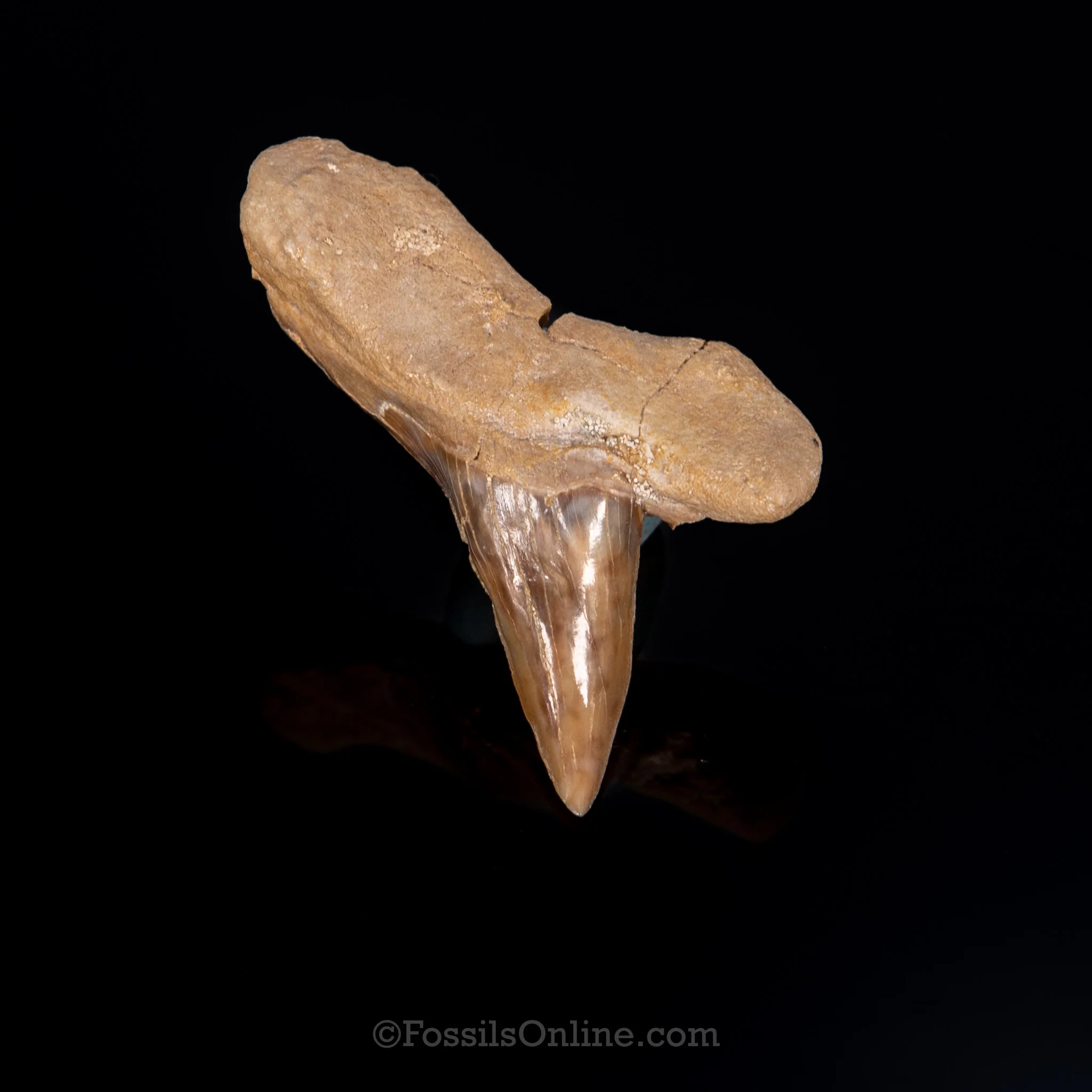
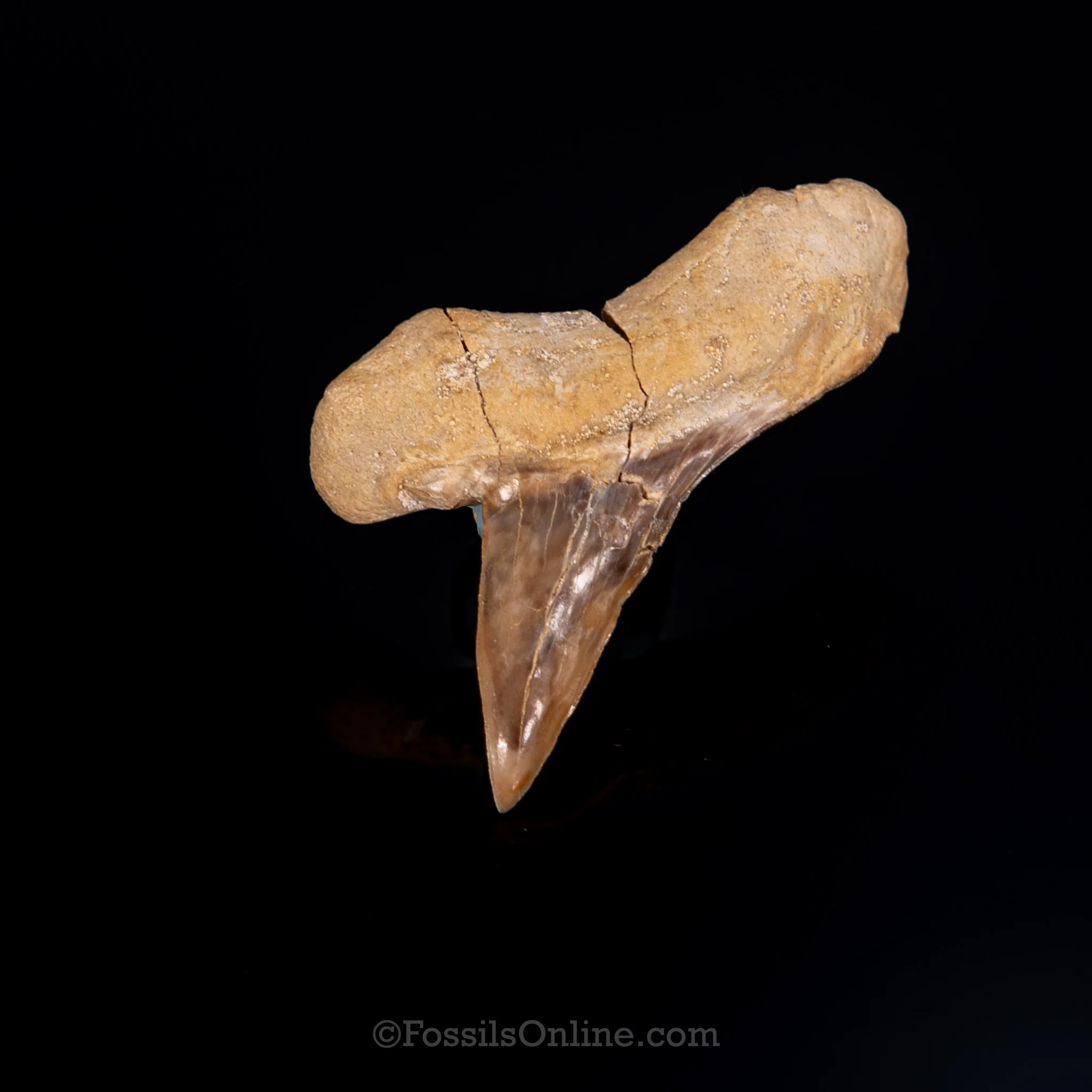
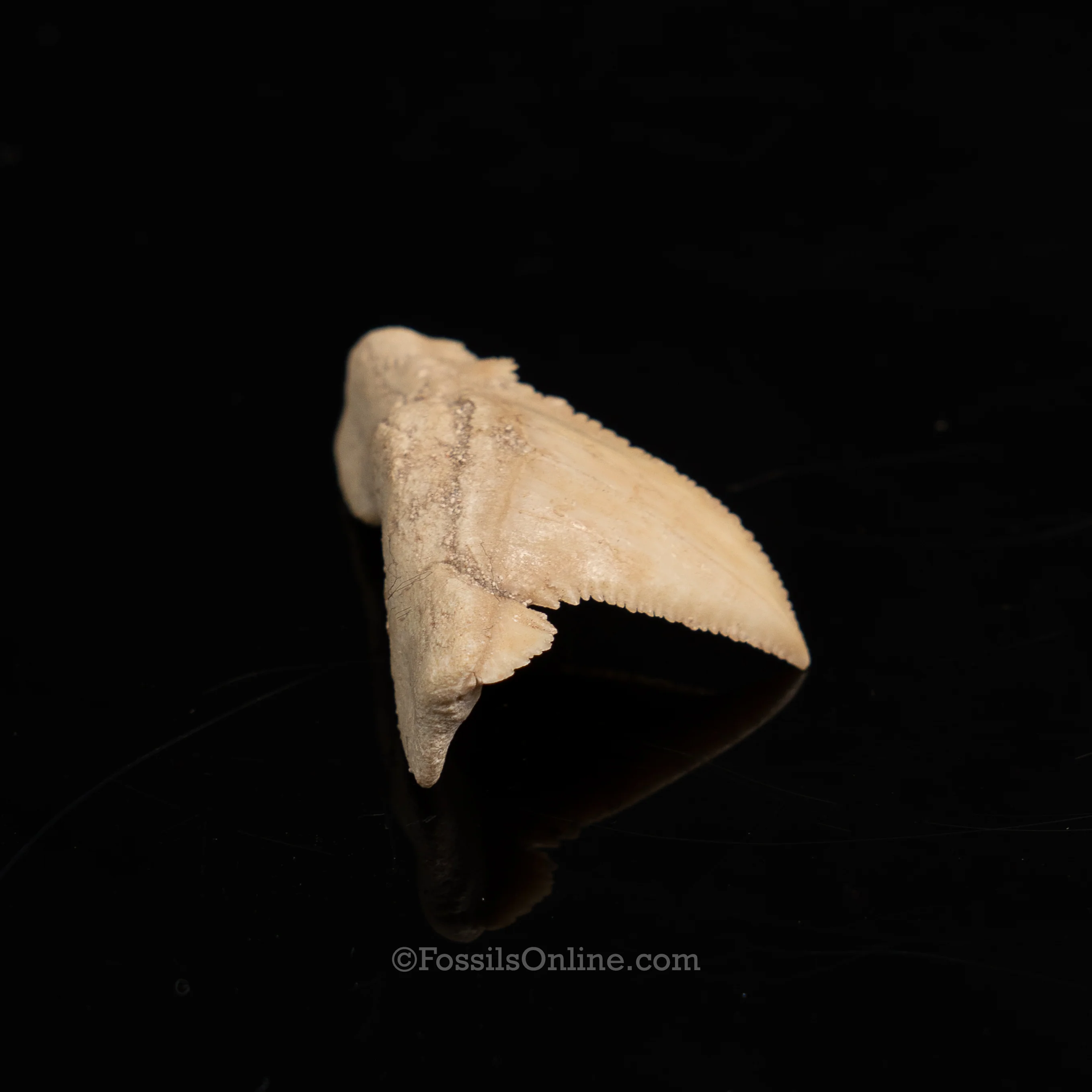
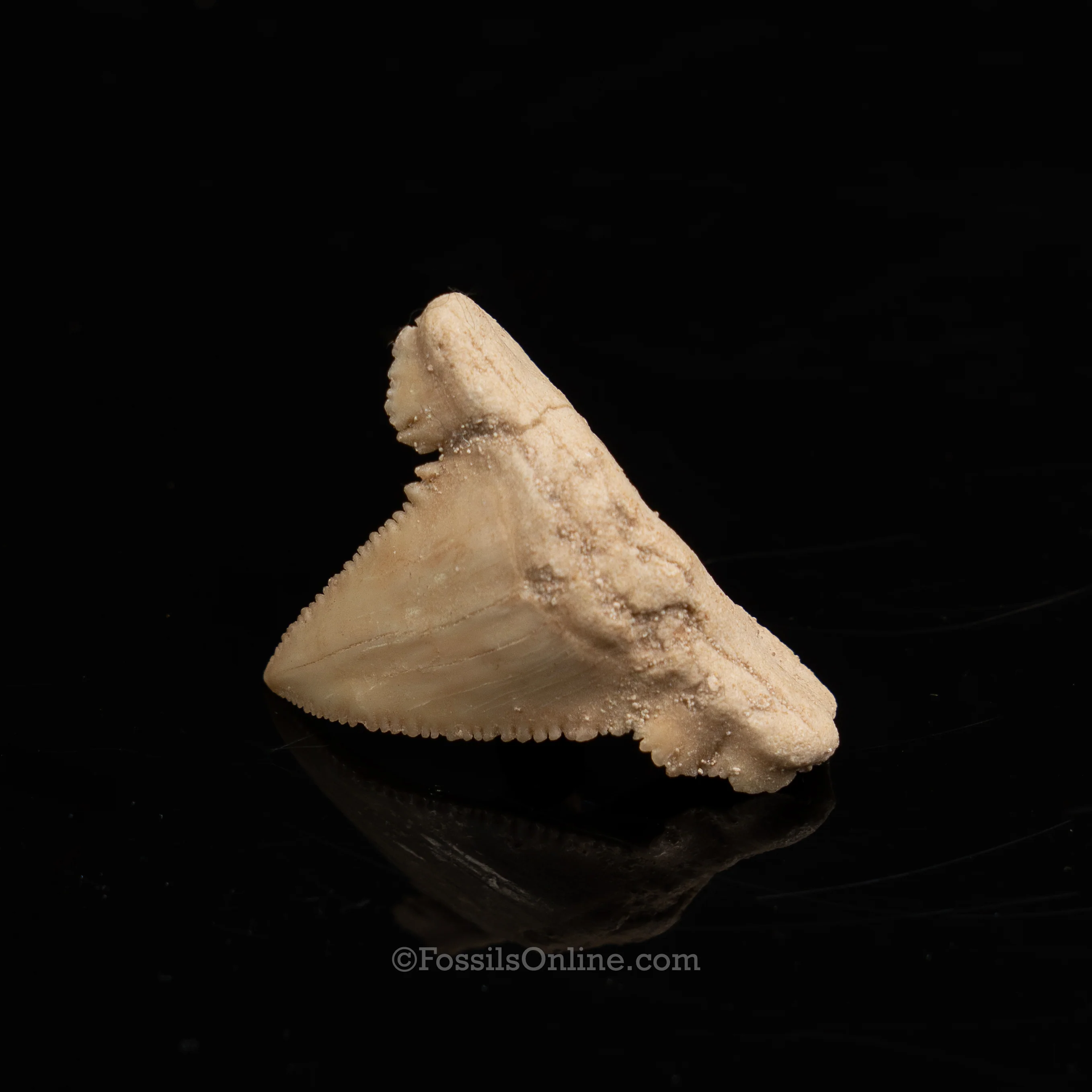
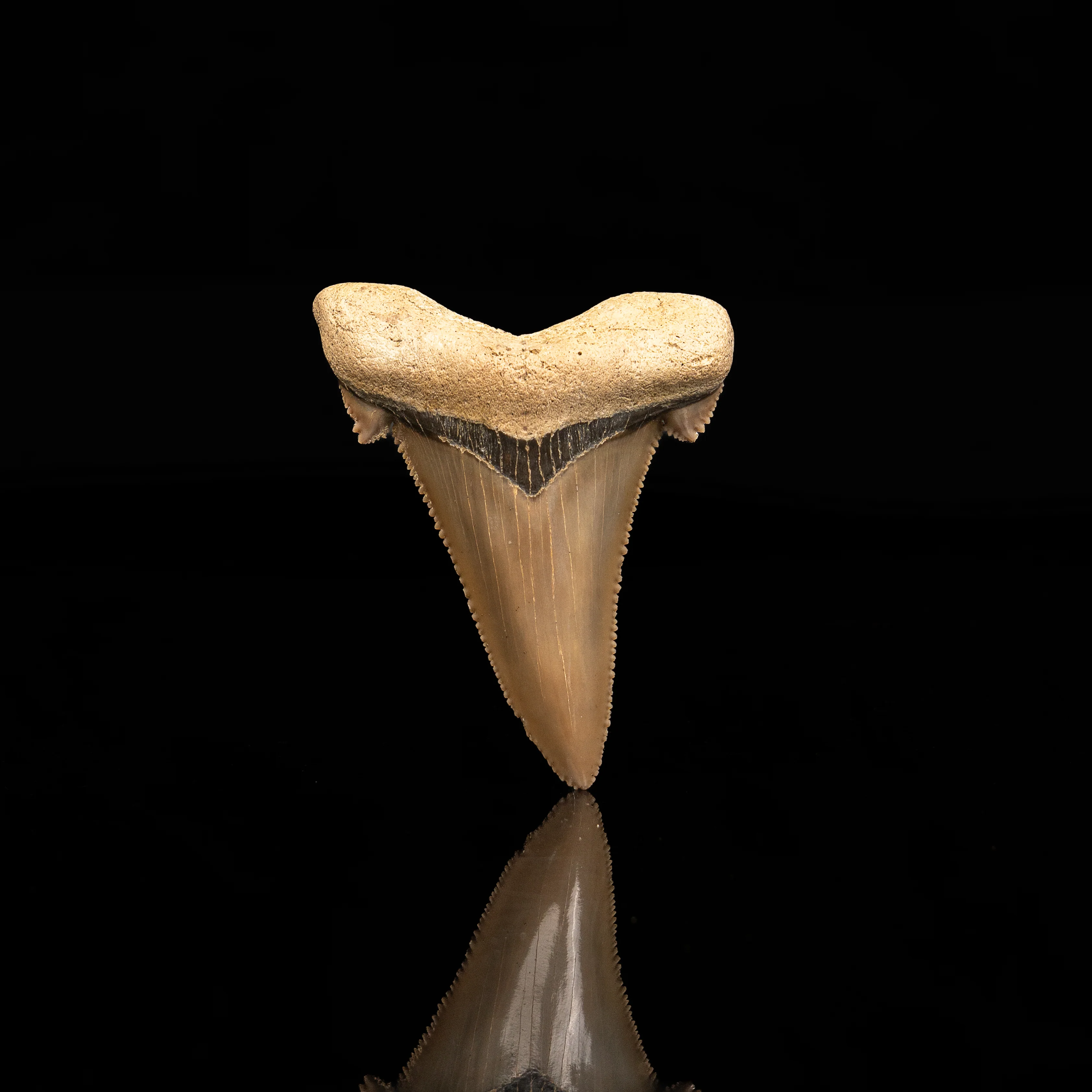
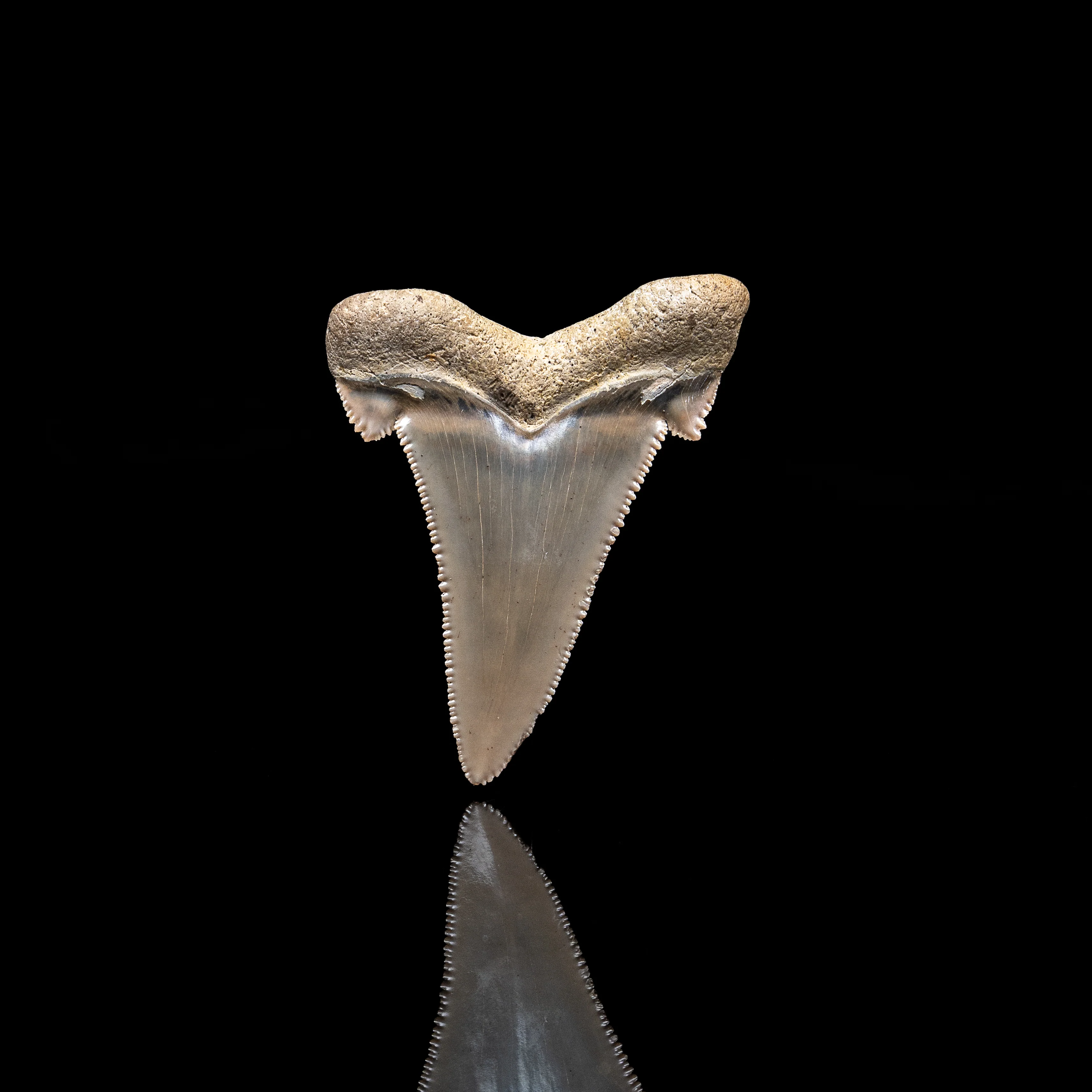
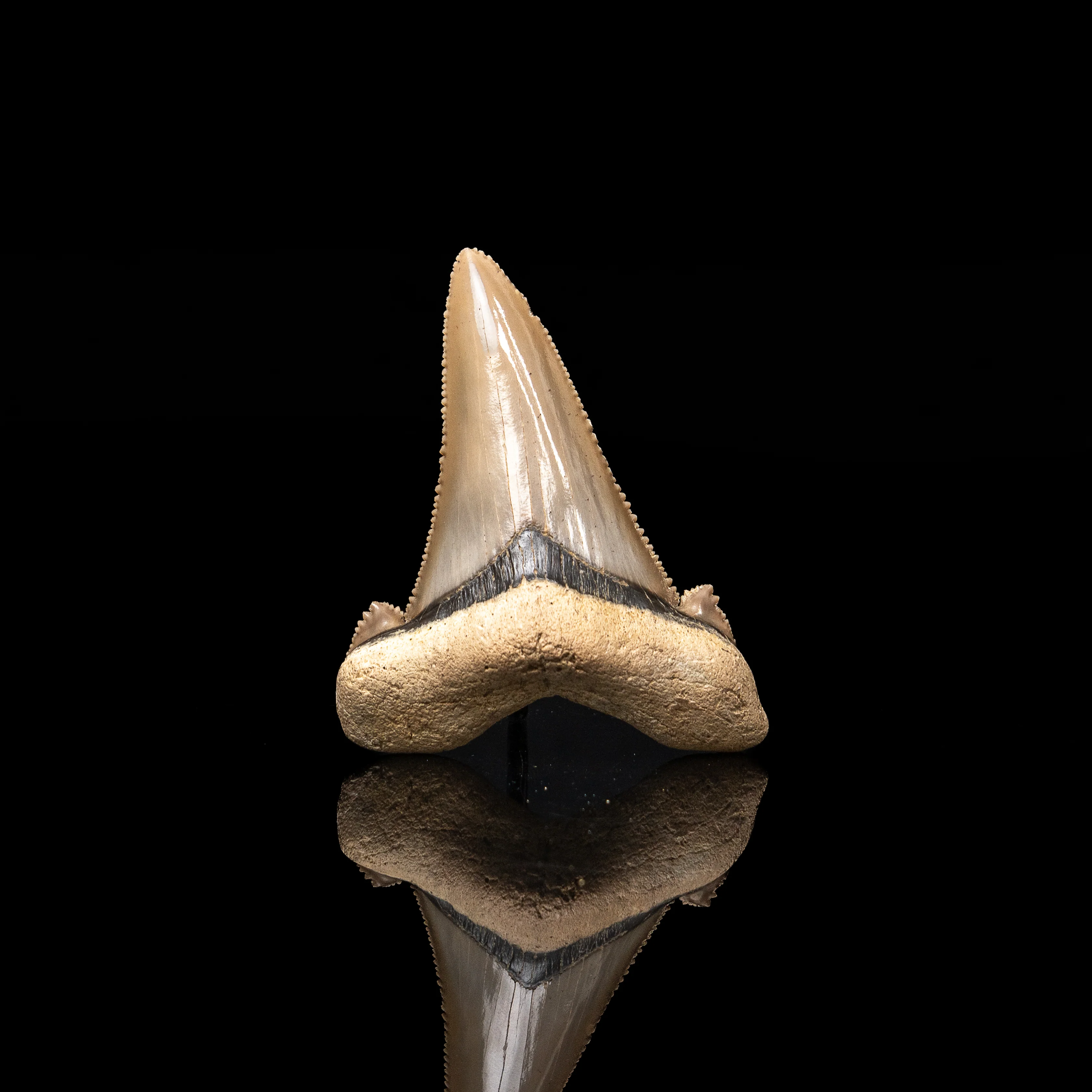
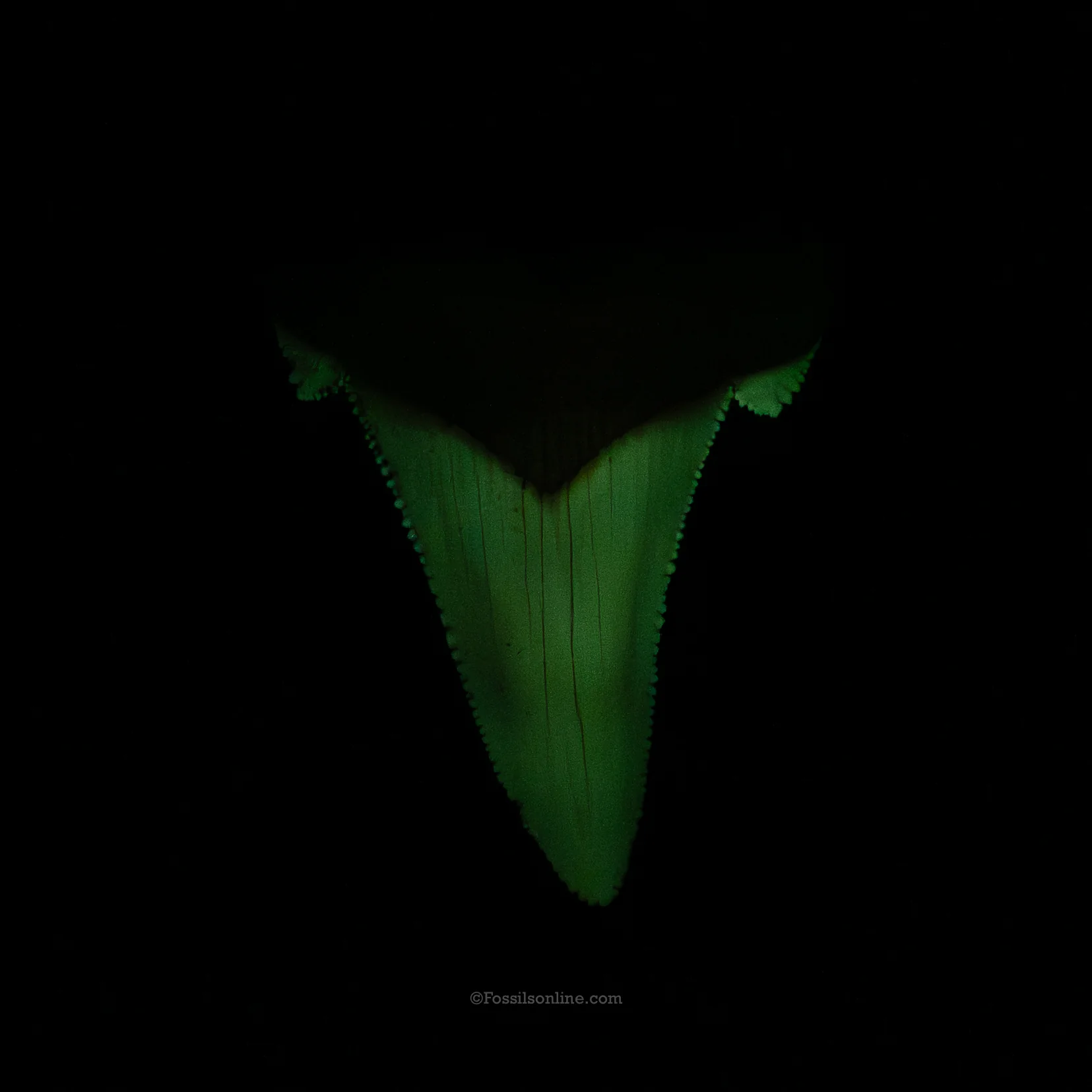
Pristine Otodus auriculatus shark tooth with beautiful coloration and a pristine bourlette. found in Harleyville SC. It also phosphoresces under UV light due to high concentrations of phosphatic minerals and trace elements, which absorb UV energy and re-release it as visible light.
Otodus auriculatus Fossil Shark Teeth — The "Eared" Megatooth Shark
Otodus auriculatus is one of the most recognizable and sought-after fossil shark teeth in the collector community. An early megatooth shark within the Otodus lineage, it is distinguished by its distinctive ear-like lateral cusplets flanking the main blade. These ancient sharks lived during the Paleocene and Eocene epochs (~60–34 million years ago), when warm, shallow seas covered much of the planet.
When Did Otodus auriculatus Live?
Otodus auriculatus first appears in the fossil record shortly after the extinction of the dinosaurs and is especially common in Eocene-aged marine deposits. Widely distributed across ancient oceans, these sharks represent some of the earliest large predatory sharks to develop cutting dentition — making their fossil teeth a prized find for collectors worldwide.
Evolutionary Position in the Megatooth Lineage
Otodus auriculatus occupies a critical transitional position in the megatooth shark family tree, sitting between Otodus obliquus — which had smooth-edged teeth with cusplets — and later species such as Otodus chubutensis and Otodus megalodon. Their teeth display the early development of serrations while still retaining large, prominent cusplets, making them a fascinating evolutionary link for fossil enthusiasts.
Apex Predator of the Eocene
During the Eocene epoch, Otodus auriculatus ruled warm, nutrient-rich seas as a top apex predator. Expansive shallow marine environments allowed these powerful sharks to thrive, occupying predatory roles comparable to those of the later and more famous Otodus megalodon.
Otodus auriculatus Tooth Identification
Otodus auriculatus teeth are easily identified by their broad triangular crowns, coarse serrations, and well-developed lateral cusplets. The root is thick and robust, built to withstand powerful bites. This distinctive combination of serrations and cusplets is the defining characteristic of these transitional megatooth teeth — and a key identification feature for collectors.
Diet and Habitat
Otodus auriculatus likely preyed on large fish, other sharks, and early marine mammals, using its serrated teeth to efficiently slice through flesh. These sharks inhabited warm, shallow coastal seas and continental shelves, with fossils recovered from ancient marine deposits across the globe.
How Does Otodus auriculatus Compare to Megalodon?
Otodus auriculatus shares key traits with Otodus megalodon, including serrated cutting teeth and apex predator status. The key difference lies in the prominent lateral cusplets retained by O. auriculatus and its slightly less refined serrations — features that make these teeth uniquely beautiful and scientifically significant in the story of shark evolution.
Where Are Otodus auriculatus Fossils Found?
Otodus auriculatus fossil teeth are recovered worldwide, including North America, Europe, Africa, and Asia — most commonly from phosphate-rich marine deposits renowned for exceptional shark tooth preservation.
Collecting Otodus auriculatus Fossil Teeth
Otodus auriculatus teeth are highly regarded for their outstanding preservation, frequently displaying deep dark mineralization, sharp serrations, and intact cusplets. Their striking appearance and scientific significance make them a standout addition to any fossil shark tooth collection.
Product Information
Product Information
Shipping & Returns
Shipping & Returns
Pristine Otodus auriculatus Tooth 2.50"
Pristine Otodus auriculatus Tooth 2.50"
Pristine Otodus auriculatus shark tooth with beautiful coloration and a pristine bourlette. found in Harleyville SC. It also phosphoresces under UV light due to high concentrations of phosphatic minerals and trace elements, which absorb UV energy and re-release it as visible light.
Otodus auriculatus Fossil Shark Teeth — The "Eared" Megatooth Shark
Otodus auriculatus is one of the most recognizable and sought-after fossil shark teeth in the collector community. An early megatooth shark within the Otodus lineage, it is distinguished by its distinctive ear-like lateral cusplets flanking the main blade. These ancient sharks lived during the Paleocene and Eocene epochs (~60–34 million years ago), when warm, shallow seas covered much of the planet.
When Did Otodus auriculatus Live?
Otodus auriculatus first appears in the fossil record shortly after the extinction of the dinosaurs and is especially common in Eocene-aged marine deposits. Widely distributed across ancient oceans, these sharks represent some of the earliest large predatory sharks to develop cutting dentition — making their fossil teeth a prized find for collectors worldwide.
Evolutionary Position in the Megatooth Lineage
Otodus auriculatus occupies a critical transitional position in the megatooth shark family tree, sitting between Otodus obliquus — which had smooth-edged teeth with cusplets — and later species such as Otodus chubutensis and Otodus megalodon. Their teeth display the early development of serrations while still retaining large, prominent cusplets, making them a fascinating evolutionary link for fossil enthusiasts.
Apex Predator of the Eocene
During the Eocene epoch, Otodus auriculatus ruled warm, nutrient-rich seas as a top apex predator. Expansive shallow marine environments allowed these powerful sharks to thrive, occupying predatory roles comparable to those of the later and more famous Otodus megalodon.
Otodus auriculatus Tooth Identification
Otodus auriculatus teeth are easily identified by their broad triangular crowns, coarse serrations, and well-developed lateral cusplets. The root is thick and robust, built to withstand powerful bites. This distinctive combination of serrations and cusplets is the defining characteristic of these transitional megatooth teeth — and a key identification feature for collectors.
Diet and Habitat
Otodus auriculatus likely preyed on large fish, other sharks, and early marine mammals, using its serrated teeth to efficiently slice through flesh. These sharks inhabited warm, shallow coastal seas and continental shelves, with fossils recovered from ancient marine deposits across the globe.
How Does Otodus auriculatus Compare to Megalodon?
Otodus auriculatus shares key traits with Otodus megalodon, including serrated cutting teeth and apex predator status. The key difference lies in the prominent lateral cusplets retained by O. auriculatus and its slightly less refined serrations — features that make these teeth uniquely beautiful and scientifically significant in the story of shark evolution.
Where Are Otodus auriculatus Fossils Found?
Otodus auriculatus fossil teeth are recovered worldwide, including North America, Europe, Africa, and Asia — most commonly from phosphate-rich marine deposits renowned for exceptional shark tooth preservation.
Collecting Otodus auriculatus Fossil Teeth
Otodus auriculatus teeth are highly regarded for their outstanding preservation, frequently displaying deep dark mineralization, sharp serrations, and intact cusplets. Their striking appearance and scientific significance make them a standout addition to any fossil shark tooth collection.
Original: $375.00
-65%$375.00
$131.25Product Information
Product Information
Shipping & Returns
Shipping & Returns
Description
Pristine Otodus auriculatus shark tooth with beautiful coloration and a pristine bourlette. found in Harleyville SC. It also phosphoresces under UV light due to high concentrations of phosphatic minerals and trace elements, which absorb UV energy and re-release it as visible light.
Otodus auriculatus Fossil Shark Teeth — The "Eared" Megatooth Shark
Otodus auriculatus is one of the most recognizable and sought-after fossil shark teeth in the collector community. An early megatooth shark within the Otodus lineage, it is distinguished by its distinctive ear-like lateral cusplets flanking the main blade. These ancient sharks lived during the Paleocene and Eocene epochs (~60–34 million years ago), when warm, shallow seas covered much of the planet.
When Did Otodus auriculatus Live?
Otodus auriculatus first appears in the fossil record shortly after the extinction of the dinosaurs and is especially common in Eocene-aged marine deposits. Widely distributed across ancient oceans, these sharks represent some of the earliest large predatory sharks to develop cutting dentition — making their fossil teeth a prized find for collectors worldwide.
Evolutionary Position in the Megatooth Lineage
Otodus auriculatus occupies a critical transitional position in the megatooth shark family tree, sitting between Otodus obliquus — which had smooth-edged teeth with cusplets — and later species such as Otodus chubutensis and Otodus megalodon. Their teeth display the early development of serrations while still retaining large, prominent cusplets, making them a fascinating evolutionary link for fossil enthusiasts.
Apex Predator of the Eocene
During the Eocene epoch, Otodus auriculatus ruled warm, nutrient-rich seas as a top apex predator. Expansive shallow marine environments allowed these powerful sharks to thrive, occupying predatory roles comparable to those of the later and more famous Otodus megalodon.
Otodus auriculatus Tooth Identification
Otodus auriculatus teeth are easily identified by their broad triangular crowns, coarse serrations, and well-developed lateral cusplets. The root is thick and robust, built to withstand powerful bites. This distinctive combination of serrations and cusplets is the defining characteristic of these transitional megatooth teeth — and a key identification feature for collectors.
Diet and Habitat
Otodus auriculatus likely preyed on large fish, other sharks, and early marine mammals, using its serrated teeth to efficiently slice through flesh. These sharks inhabited warm, shallow coastal seas and continental shelves, with fossils recovered from ancient marine deposits across the globe.
How Does Otodus auriculatus Compare to Megalodon?
Otodus auriculatus shares key traits with Otodus megalodon, including serrated cutting teeth and apex predator status. The key difference lies in the prominent lateral cusplets retained by O. auriculatus and its slightly less refined serrations — features that make these teeth uniquely beautiful and scientifically significant in the story of shark evolution.
Where Are Otodus auriculatus Fossils Found?
Otodus auriculatus fossil teeth are recovered worldwide, including North America, Europe, Africa, and Asia — most commonly from phosphate-rich marine deposits renowned for exceptional shark tooth preservation.
Collecting Otodus auriculatus Fossil Teeth
Otodus auriculatus teeth are highly regarded for their outstanding preservation, frequently displaying deep dark mineralization, sharp serrations, and intact cusplets. Their striking appearance and scientific significance make them a standout addition to any fossil shark tooth collection.