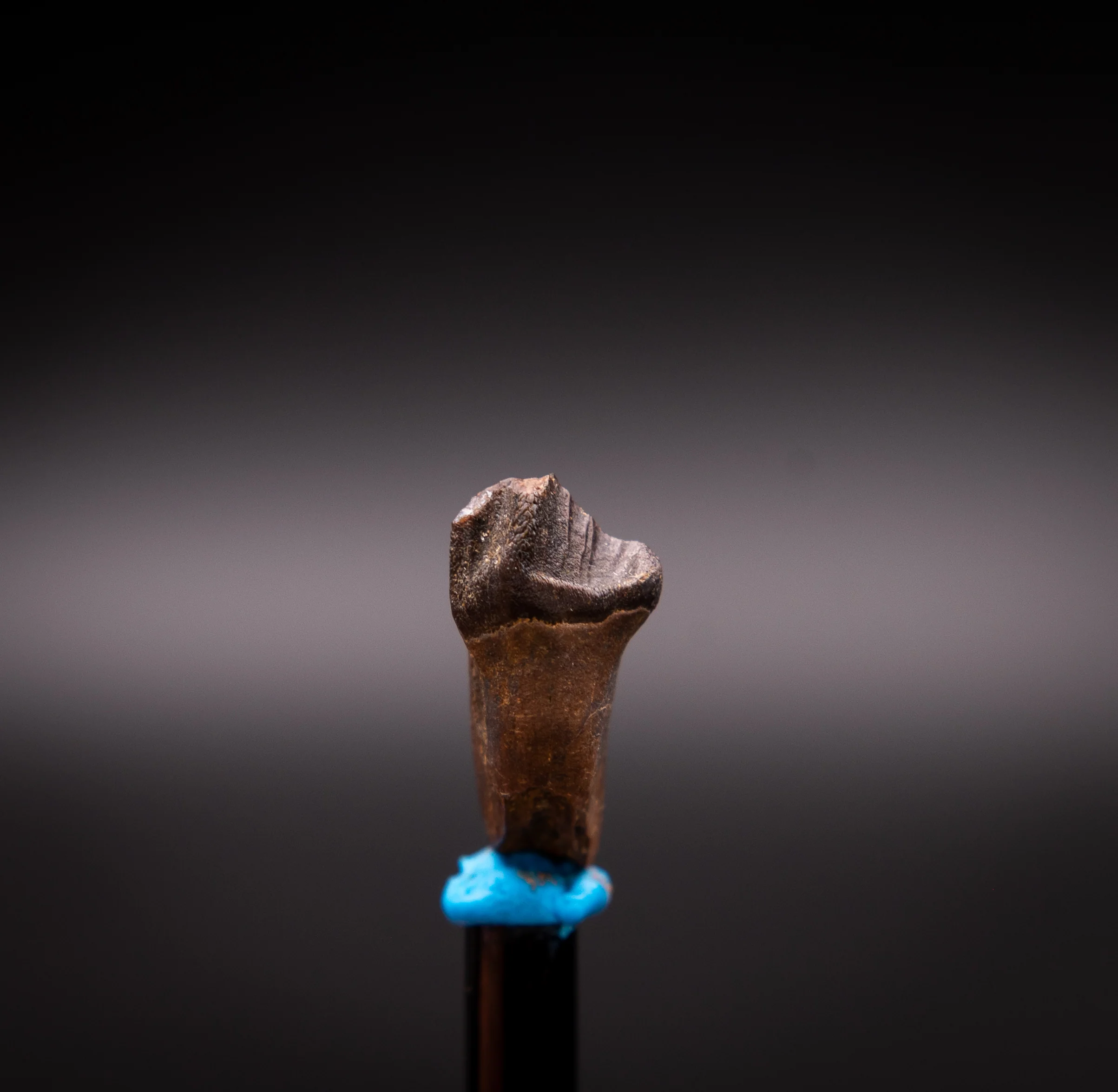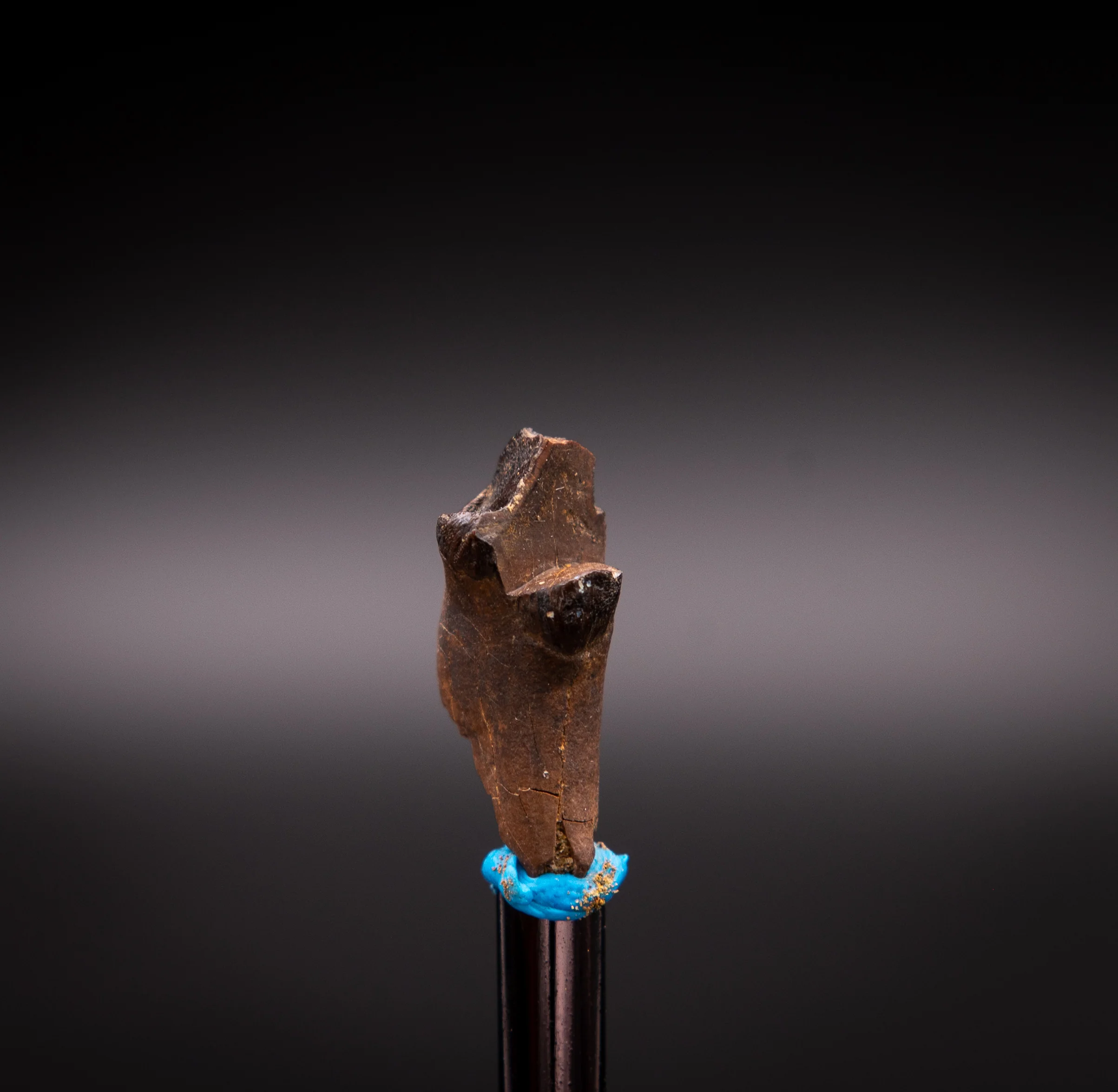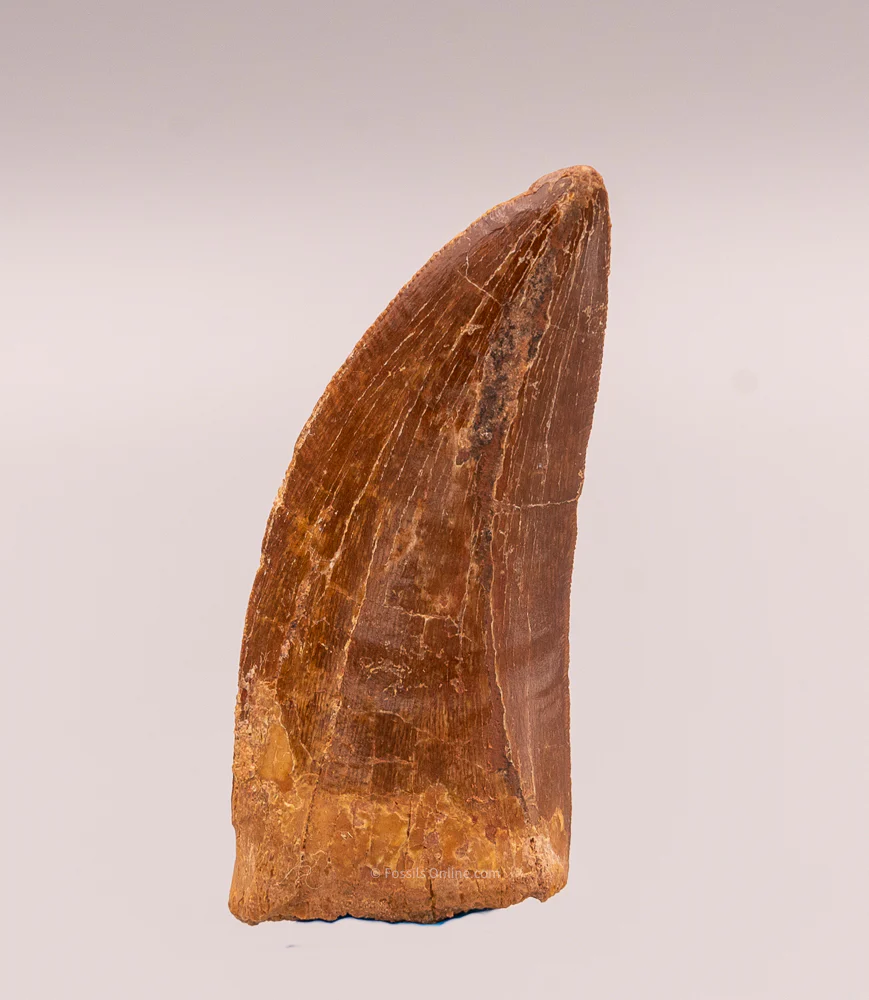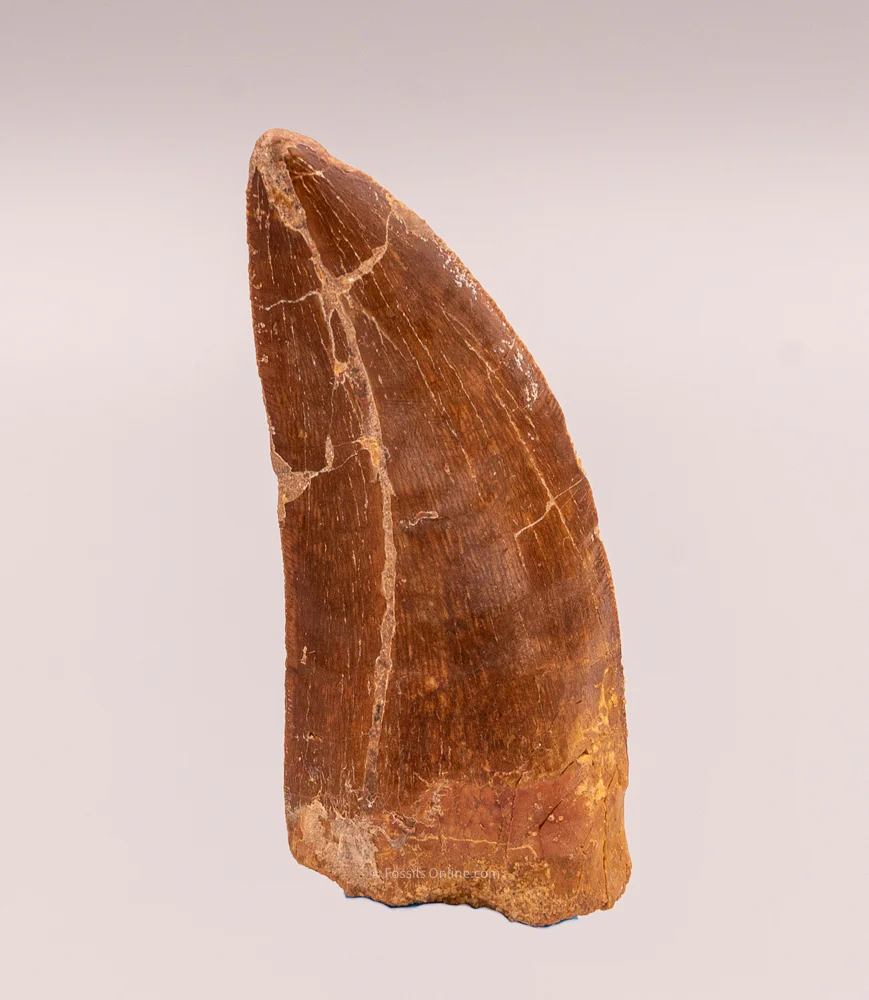
RARE Marshosaurus Tooth in matrix
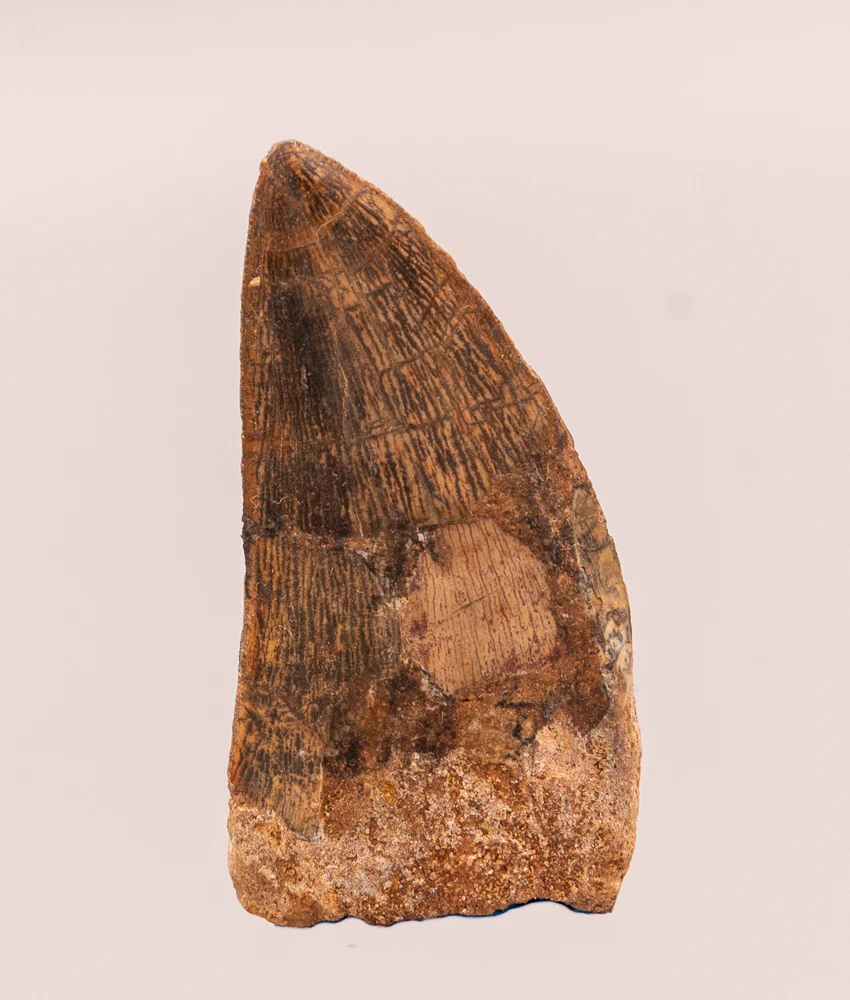
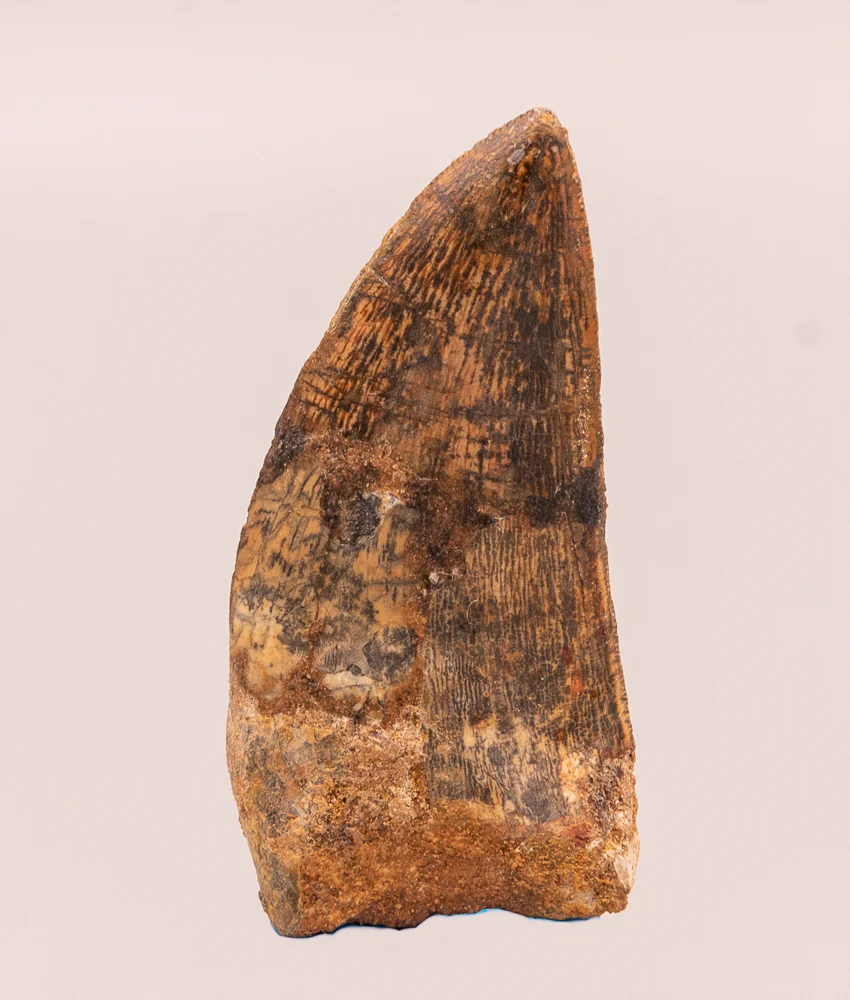
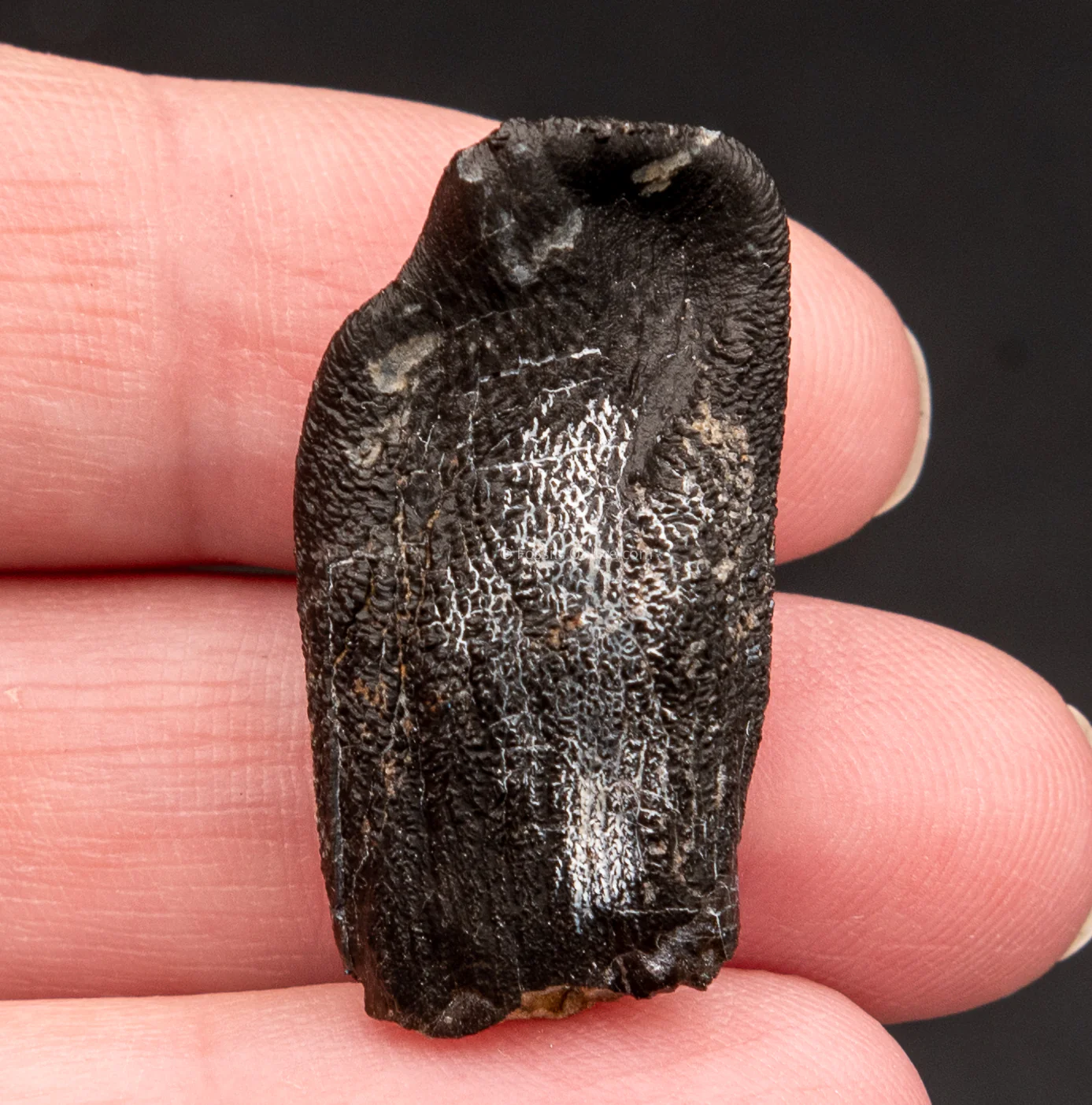
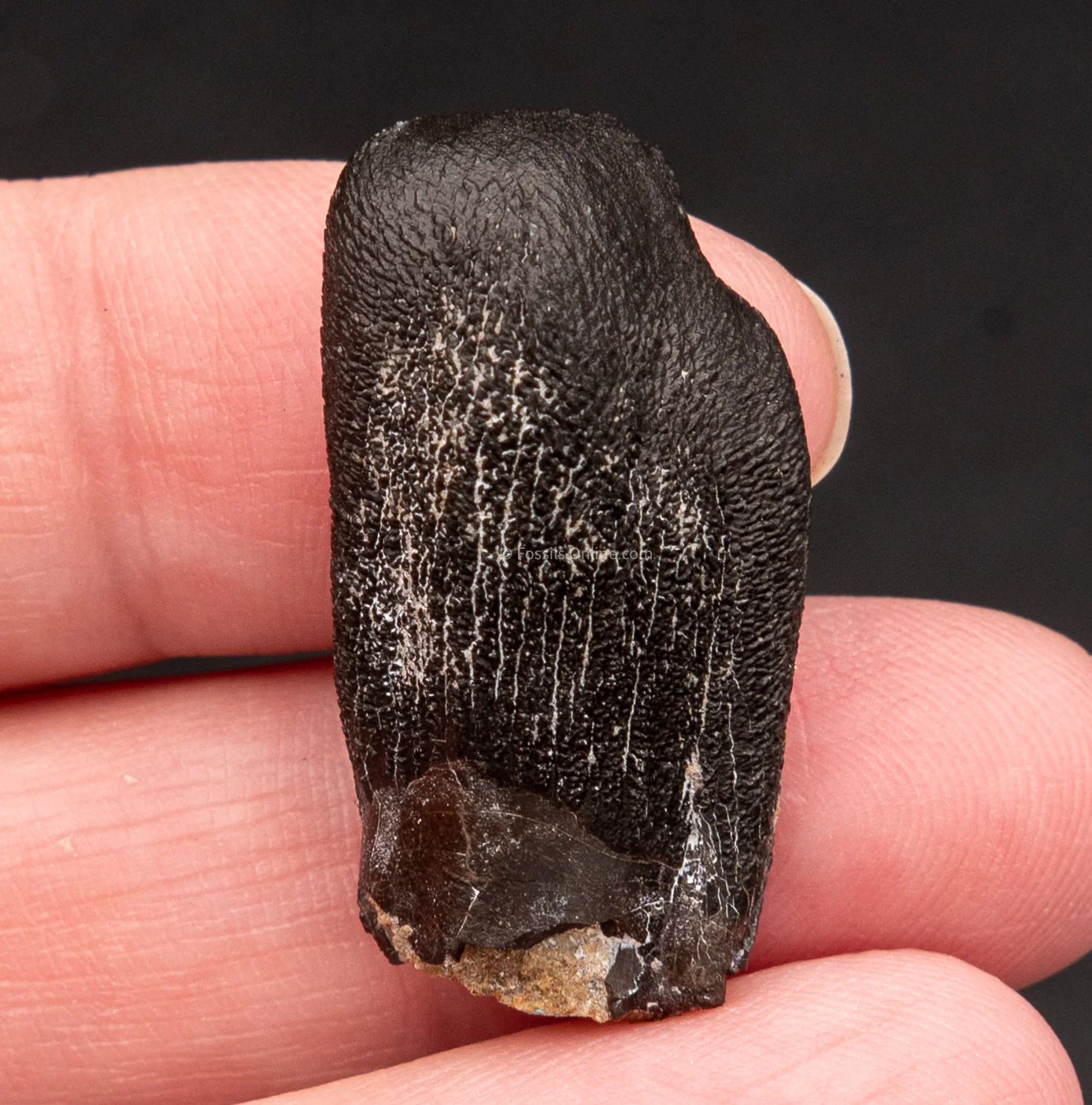
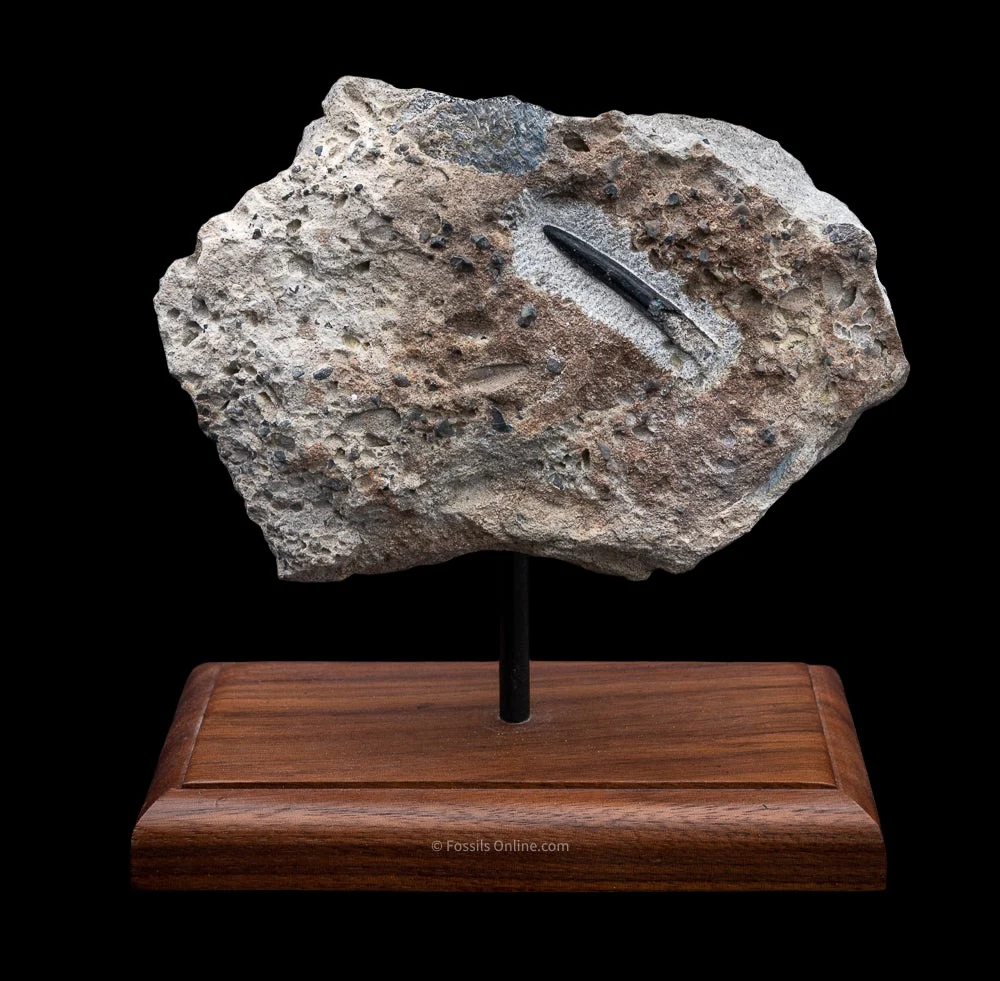
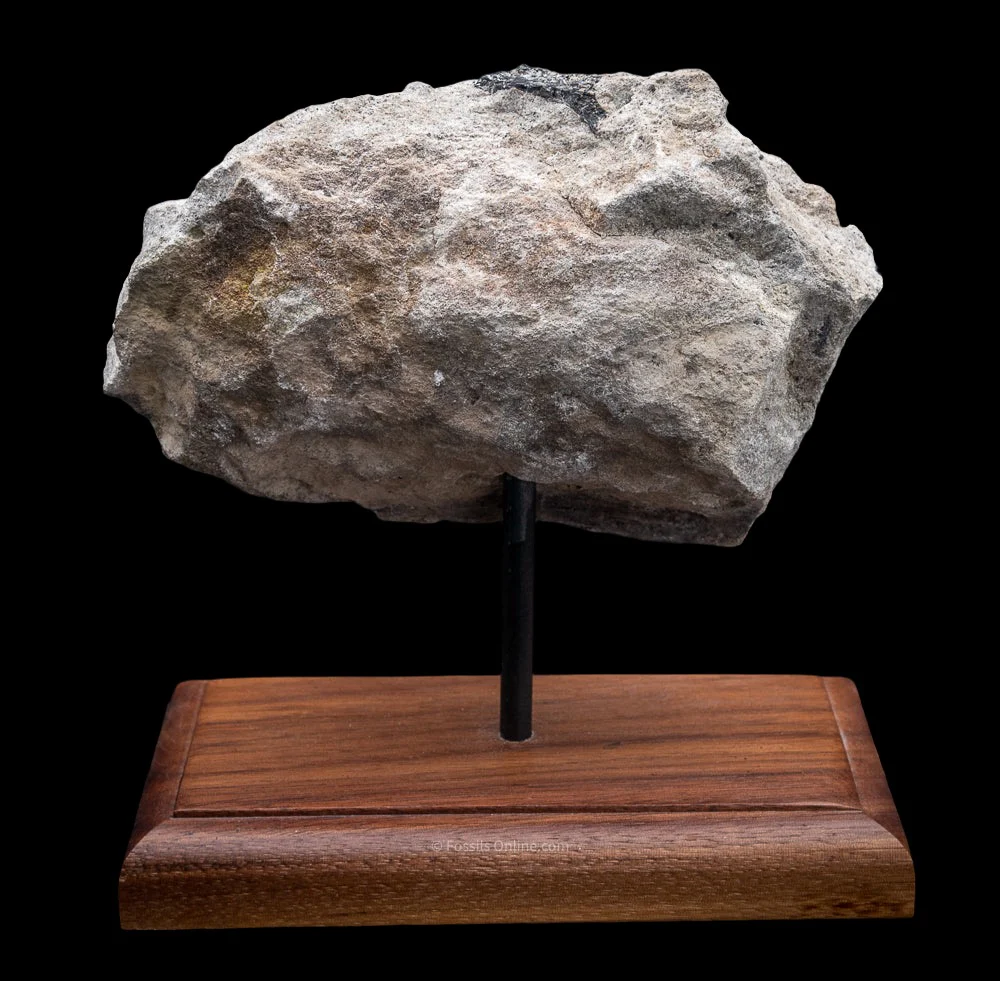
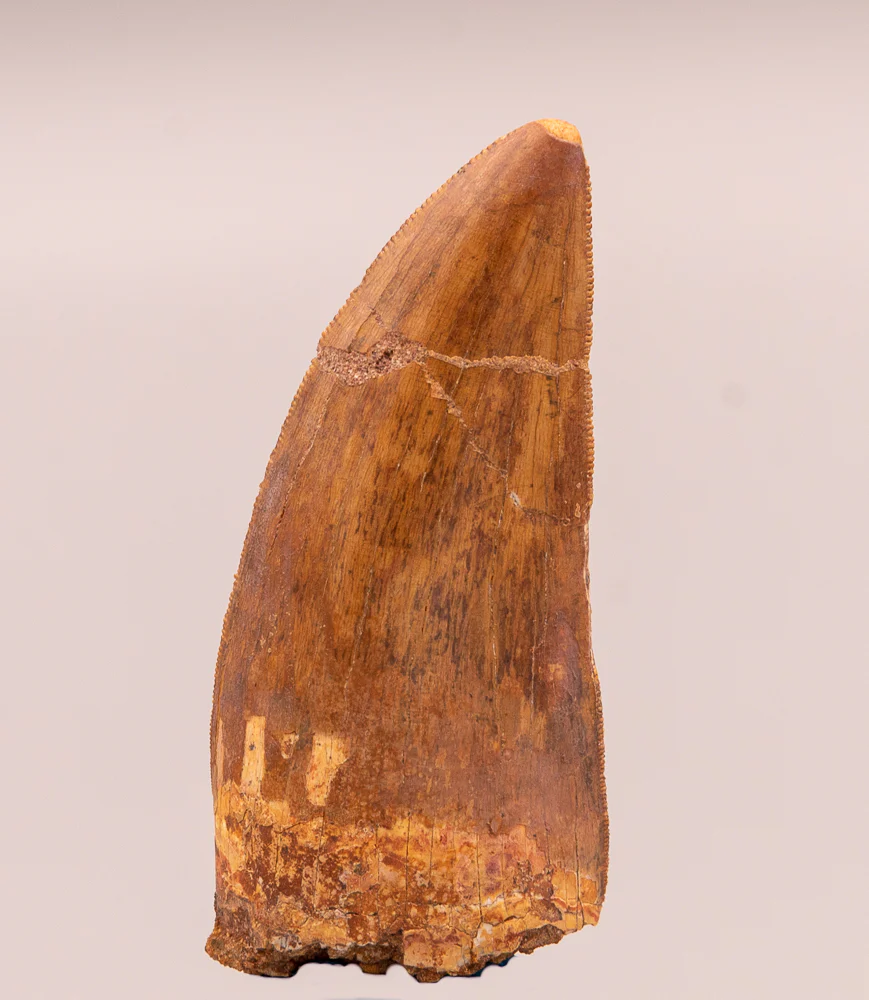
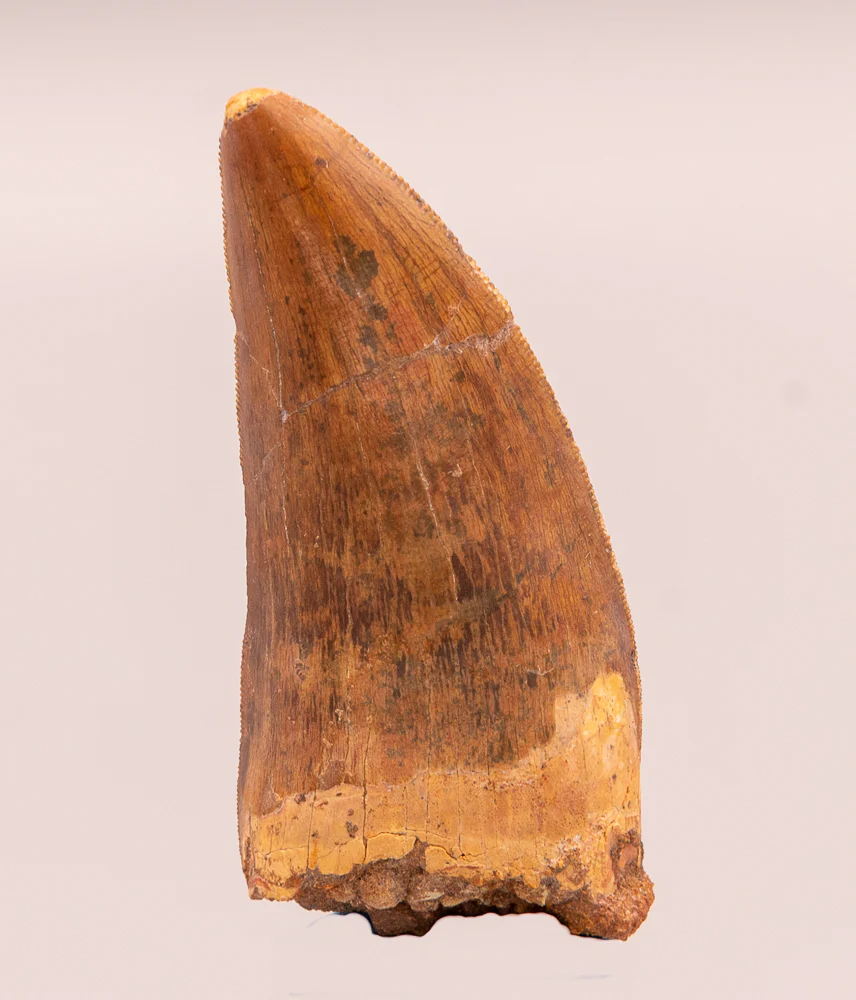
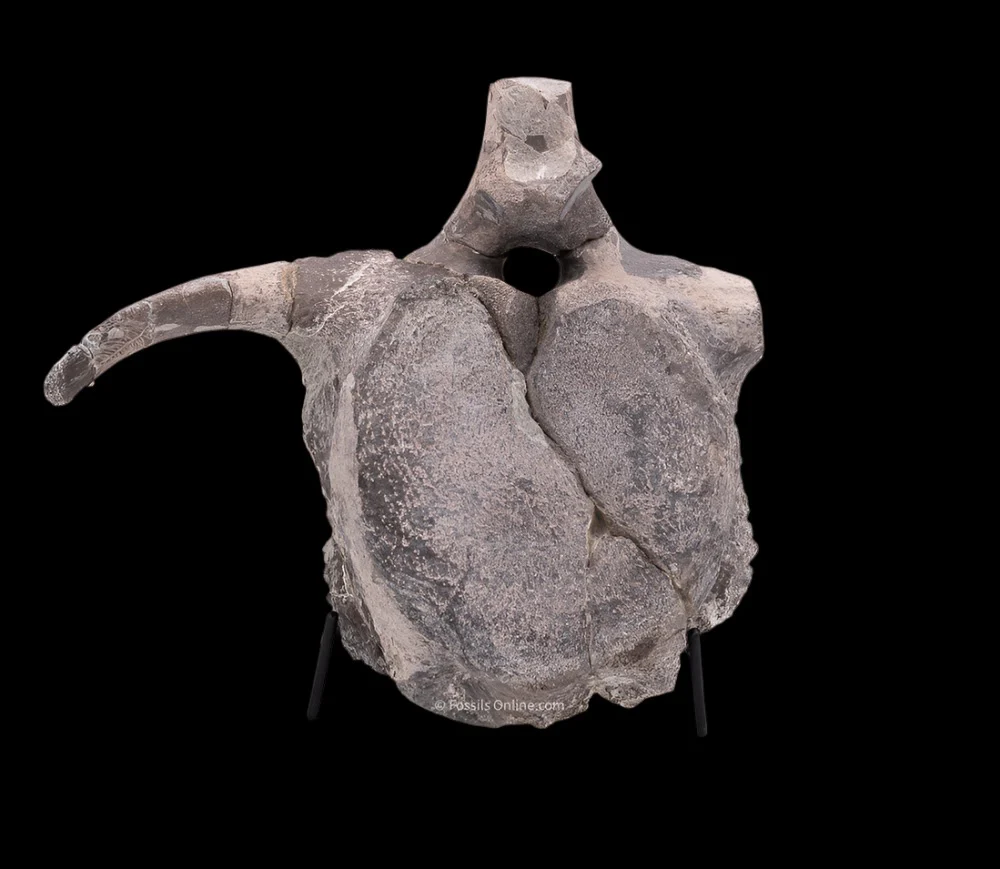
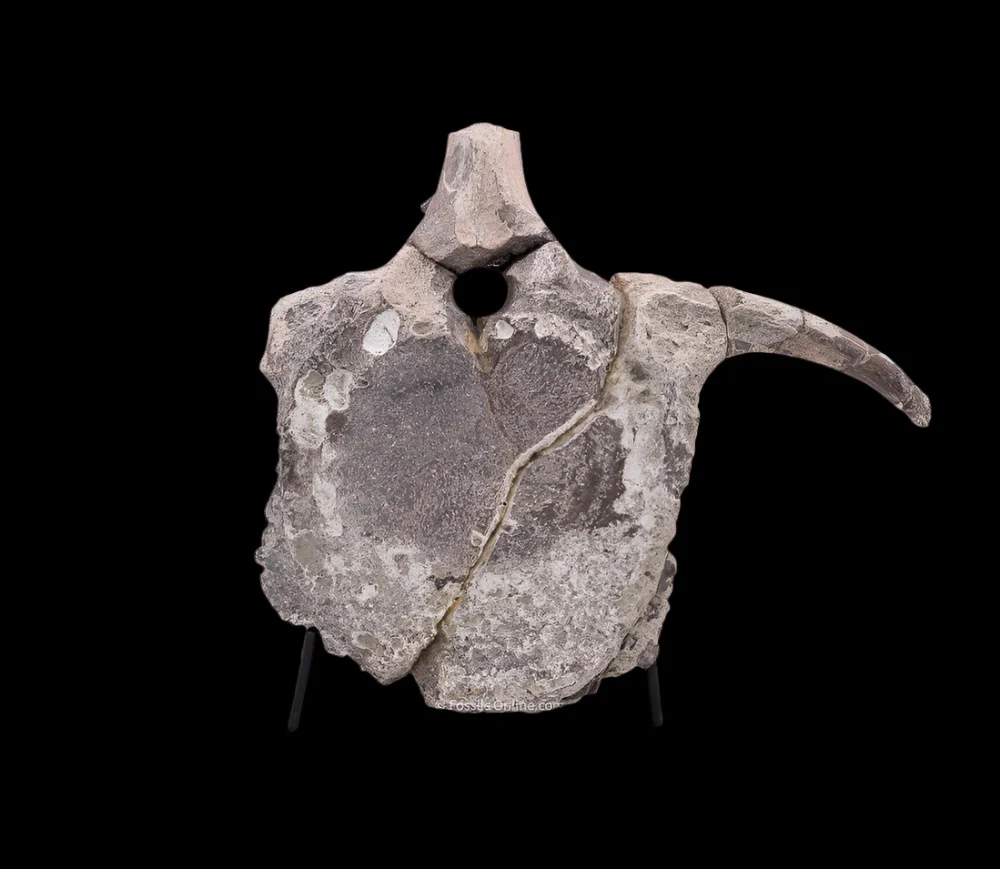
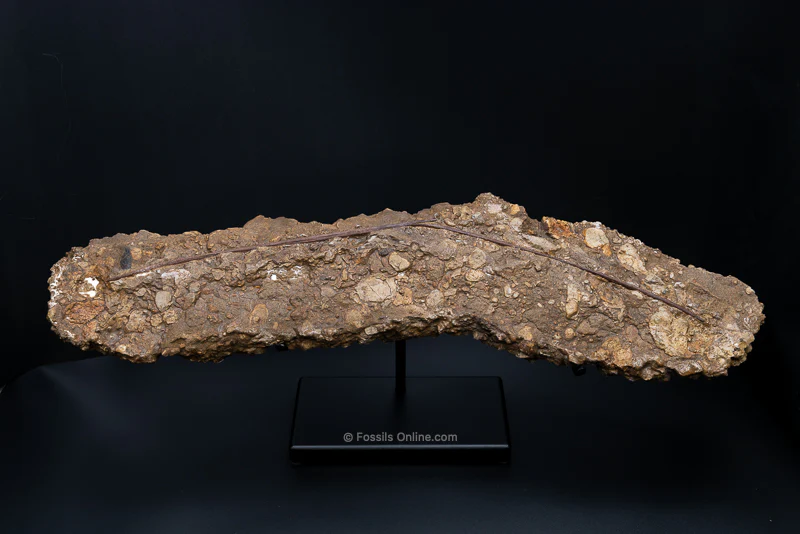
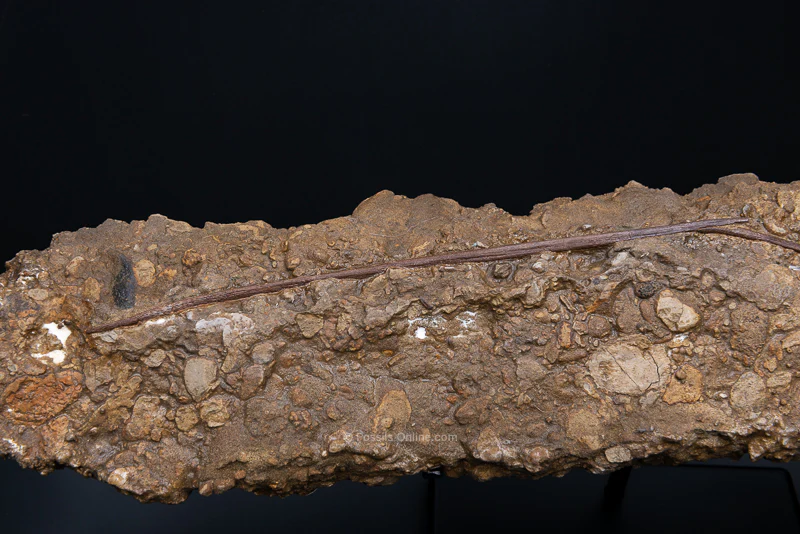
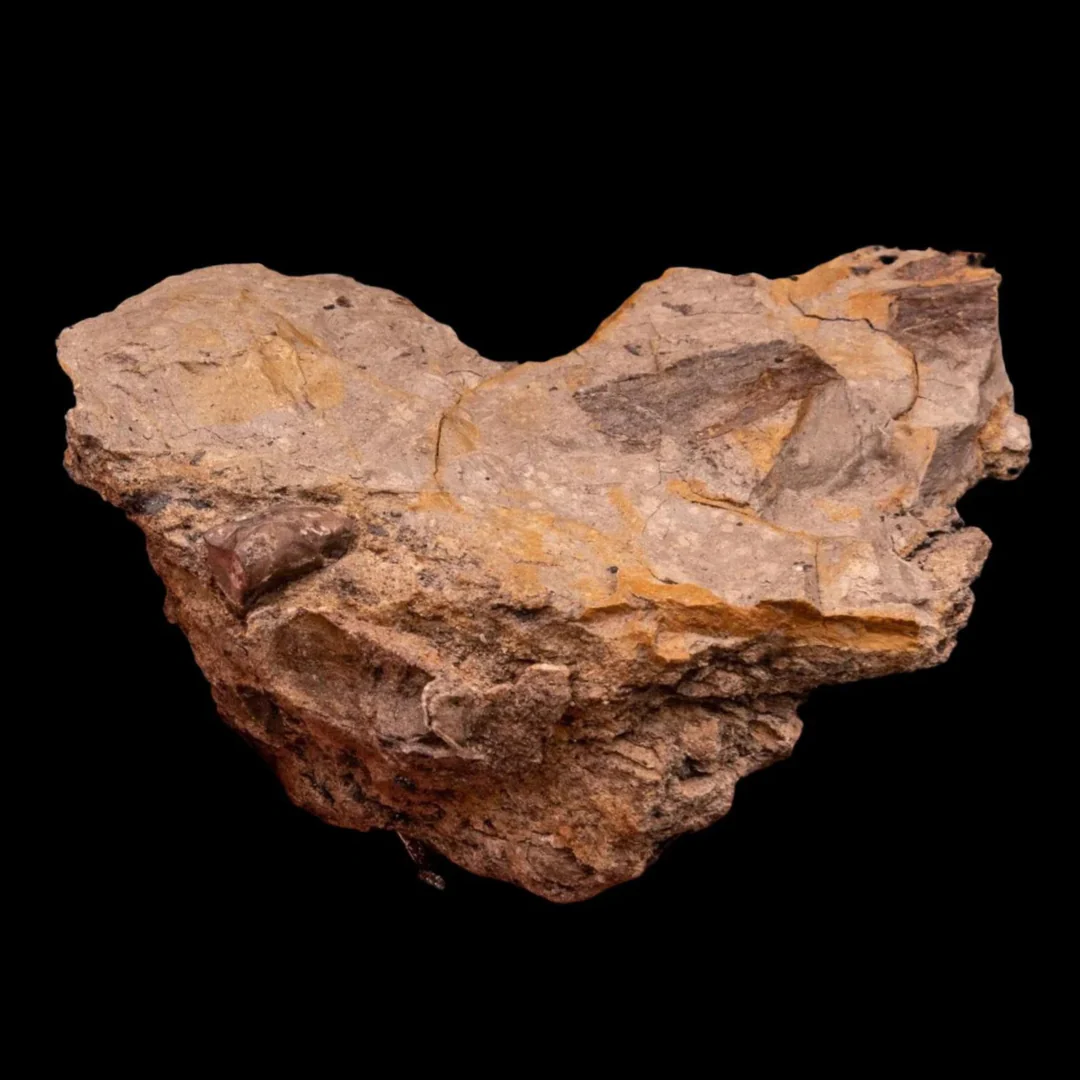
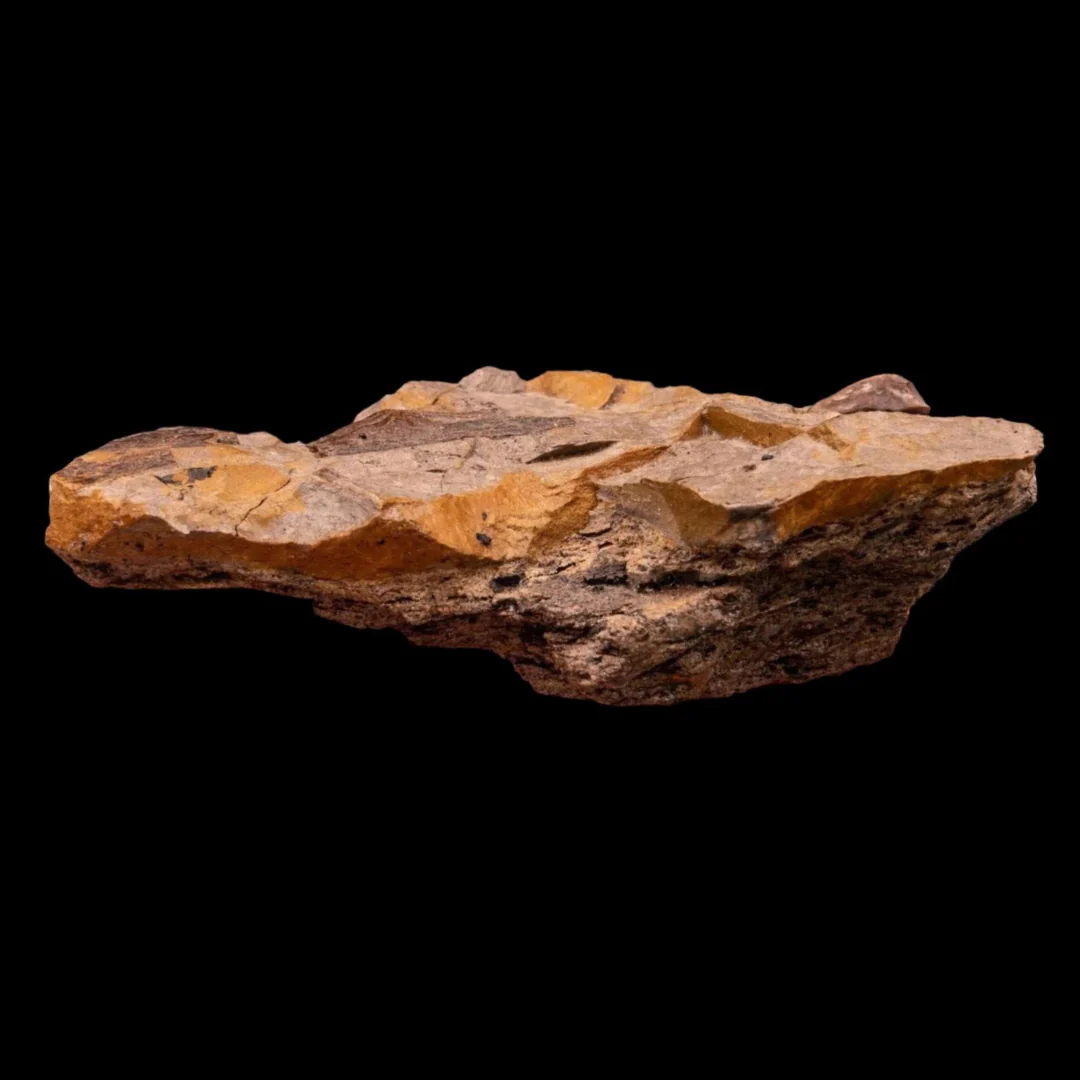
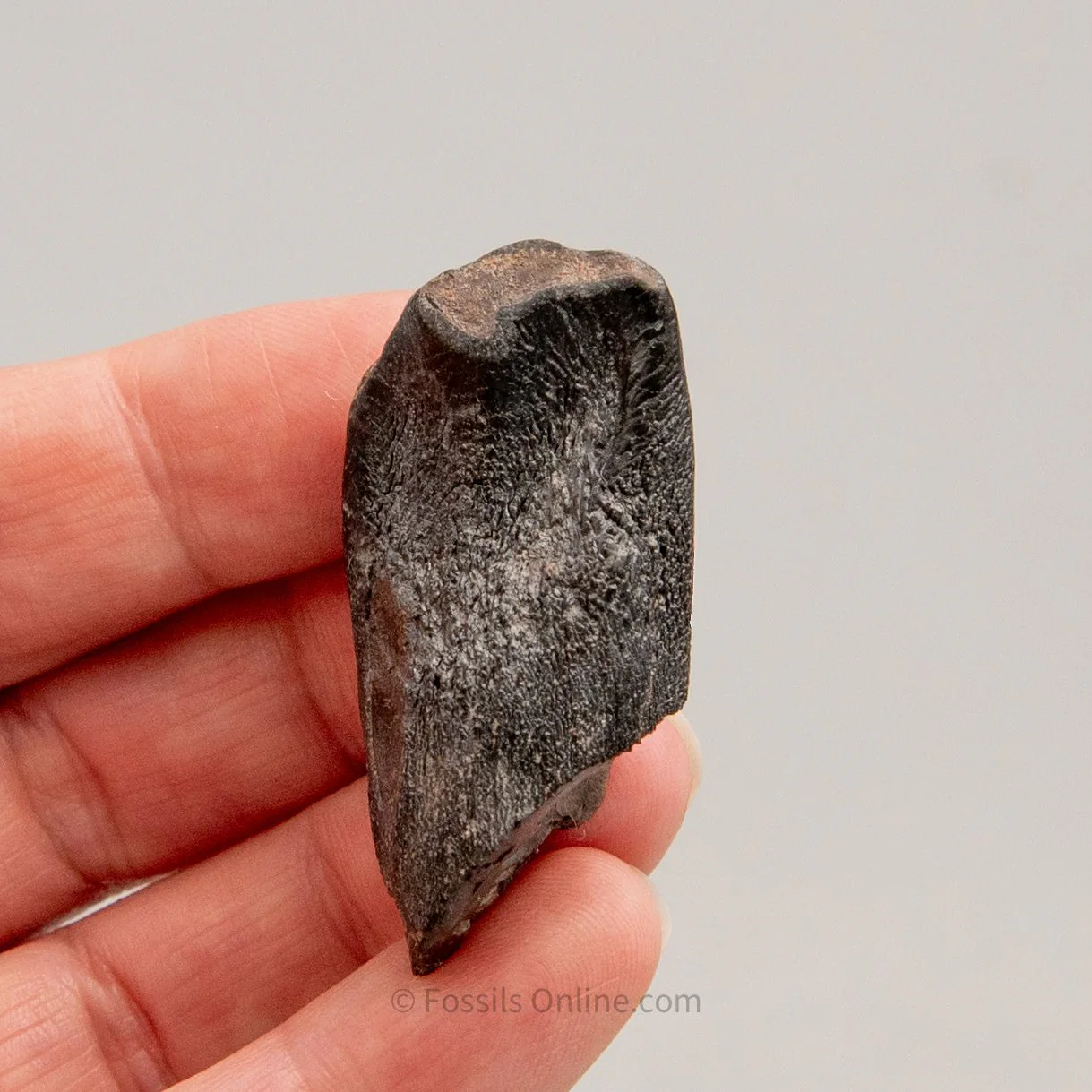
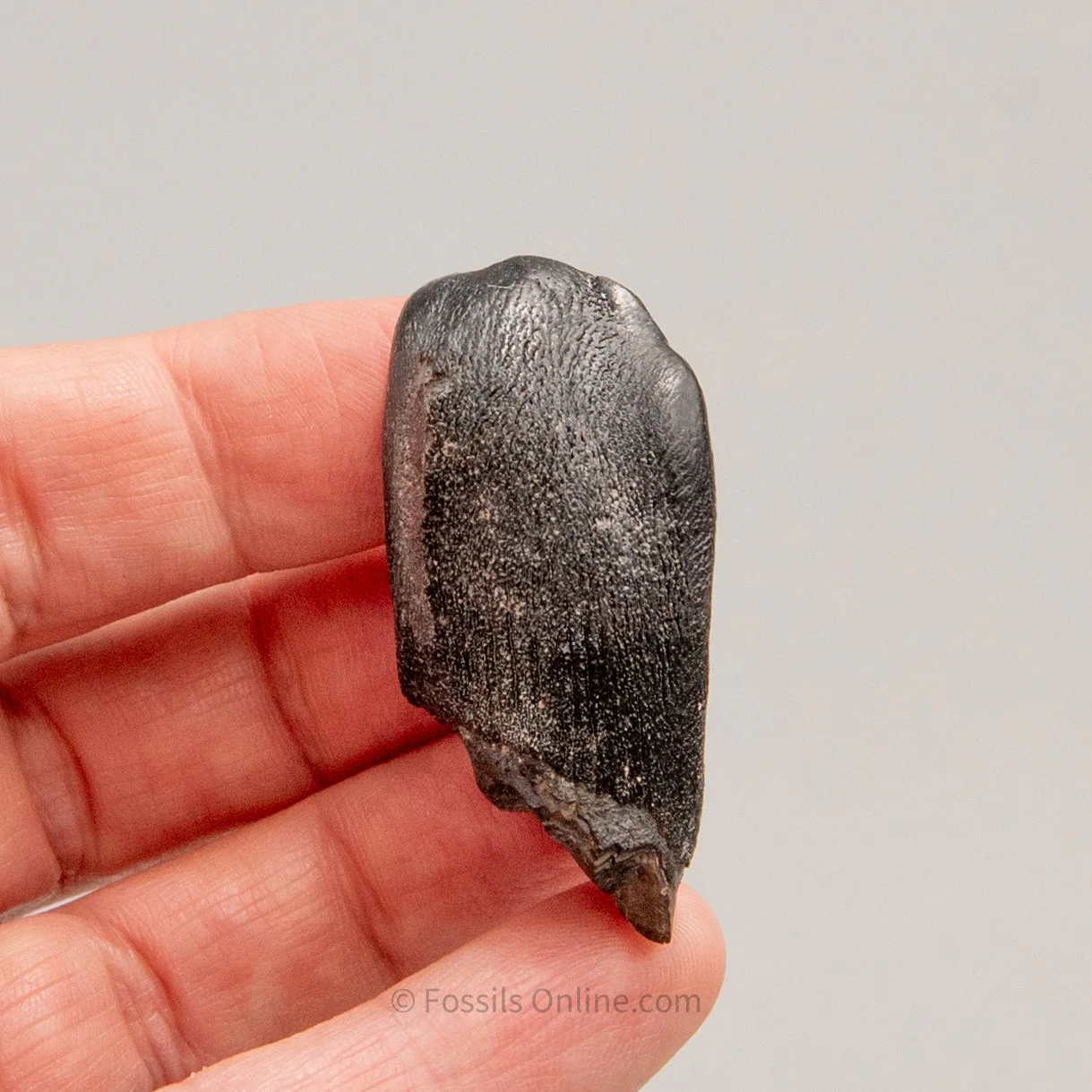
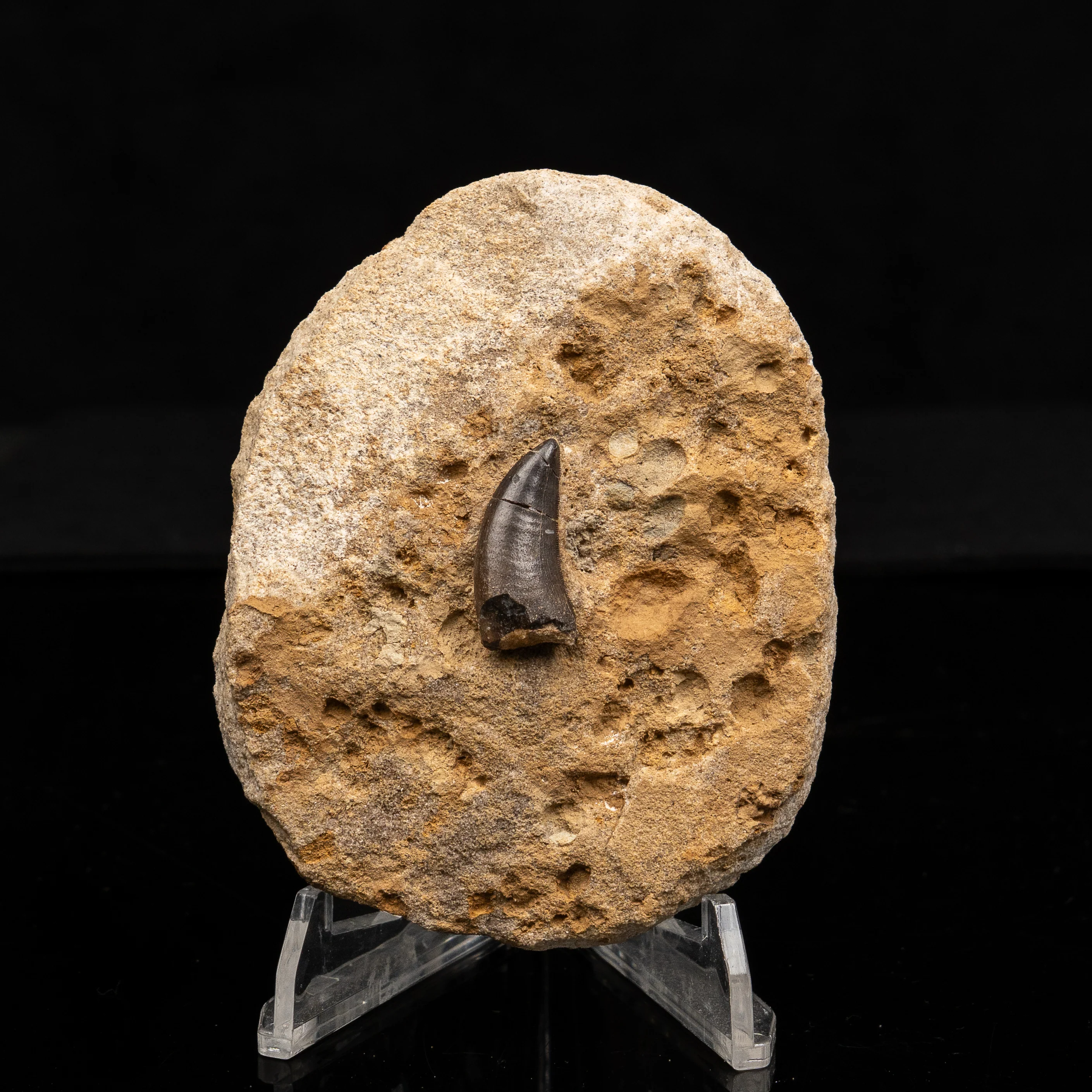
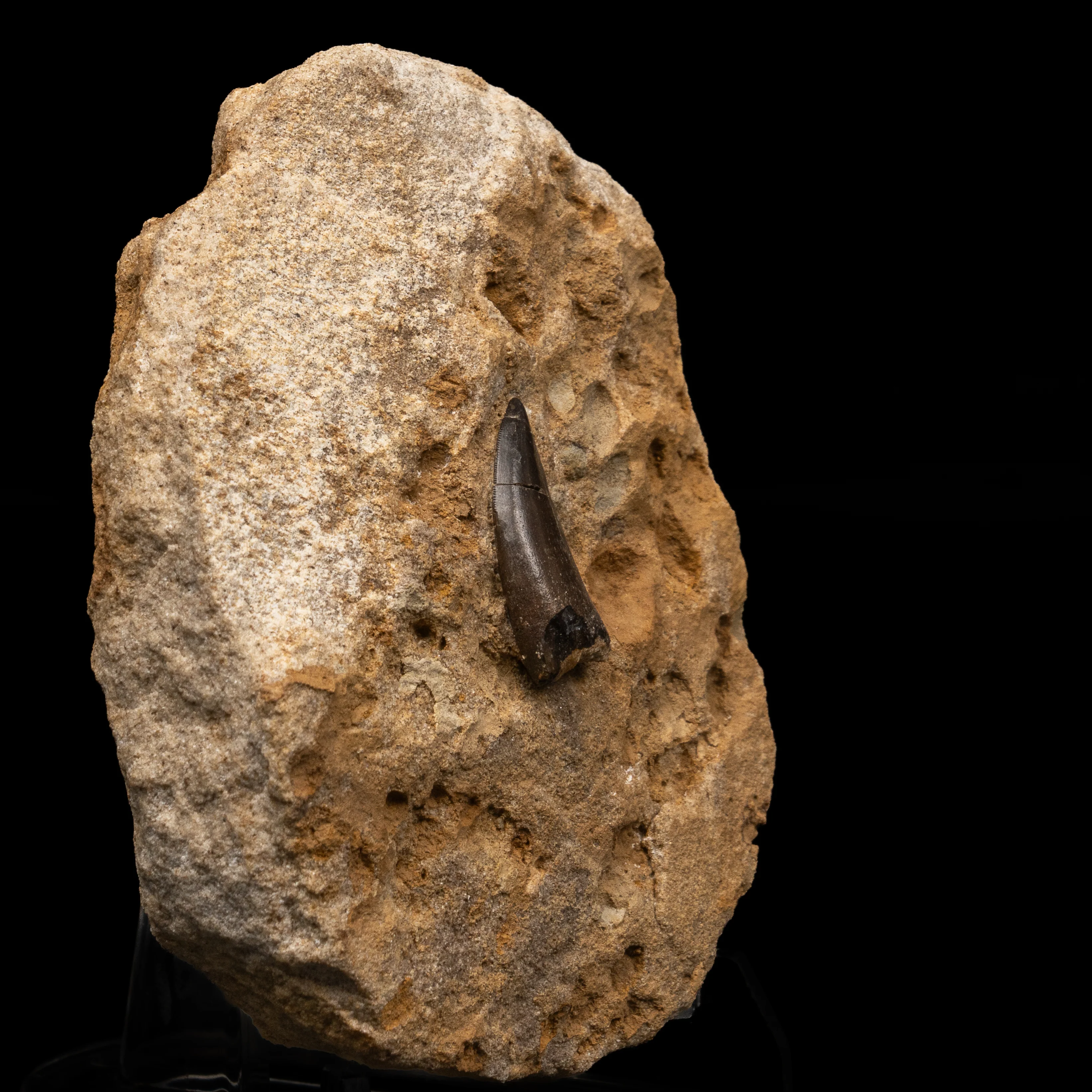
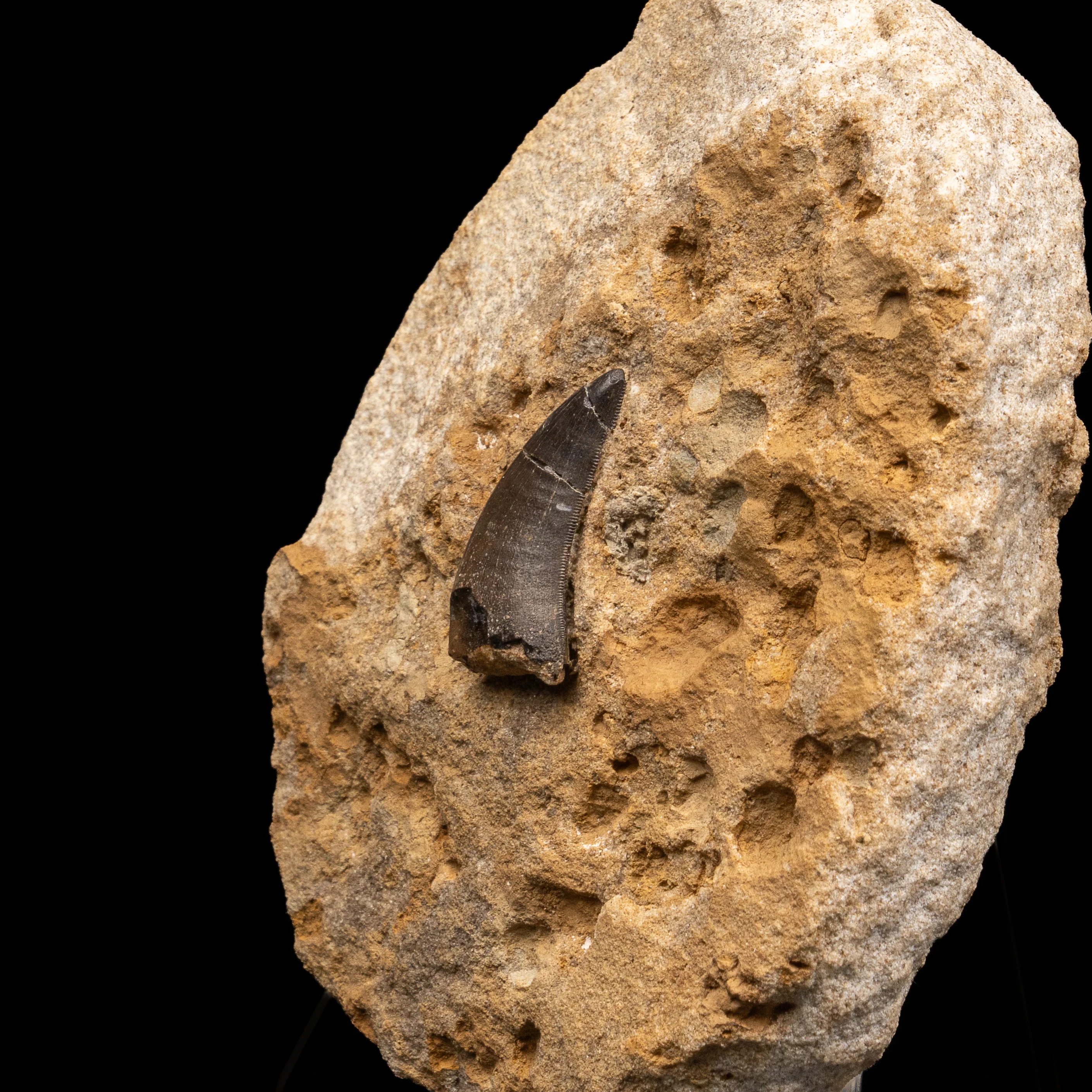
This incredible Marshosaurus tooth, in its original matrix is from the Paint Rock Quarry in Wyoming. It has no repair or restoration. Marshosaurus teeth a very rare compared to other jurrasic teeth like allosaurus and even Torvosaurus and Ceratosaurus. Marshosaurus teeth are characterized by the serrations on the mesial carina only extending half of the distance from tip to the base of the crown, they also have a more compressed cross section, and higher serration density.
Marshosaurus
Marshosaurus is a genus of carnivorous theropod dinosaur from the Late Jurassic Morrison Formation of Utah and possibly Colorado, USA. It is classified within the family Piatnitzkysauridae, a group of medium-sized megalosauroid or basal allosauroid theropods. Marshosaurus is known primarily from fragmentary skeletal material and remains one of the least completely understood large theropods of the Morrison Formation.
Discovery and Naming
During the 1960s, excavations at the Cleveland-Lloyd Dinosaur Quarry in Emery County, Utah yielded over fourteen thousand fossil bones. The majority were referred to Allosaurus fragilis, but a subset of specimens represented at least two previously unknown theropod genera. In 1974, James H. Madsen Jr. named one of these Stokesosaurus. In 1976, Madsen formally described the second as Marshosaurus bicentesimus. The generic name honors 19th-century paleontologist Othniel Charles Marsh. The species name bicentesimus commemorates the bicentennial of the United States of America, as the description was published in 1976.
The holotype is a left ilium, cataloged as UMNH VP 6373, recovered from the Brushy Basin Member of the Morrison Formation and dated to the late Kimmeridgian, approximately 155–152 million years ago. Paratypes include a right ischium (UMNH VP 6379), a left ischium (UMNH VP 6380), and a right pubic bone (UMNH VP 6387), all from the same locality. Six jaw fragments bearing teeth and three additional ilia were provisionally referred to the taxon, representing a minimum of three individuals. Further material was later recovered from the Dry Mesa Quarry in Mesa County, Colorado, and from Dinosaur National Monument in northeastern Utah.
Physical Description
Marshosaurus is estimated to have reached approximately 4.5 meters in length and around 200 kilograms in body mass, making it a medium-sized theropod by Morrison standards. It was bipedal with the elongated hindlimbs, short forelimbs, and stiffened tail typical of tetanuran theropods.
The skull, reconstructed from referred jaw material, was proportionally shorter and deeper than that of Allosaurus, with large orbits. The cervical vertebrae have a subtly convex anterior articular surface on the centra, a feature also seen in Leshansaurus, Monolophosaurus, and Sinraptor. The anterior neural spines of the dorsal vertebrae are bifurcated. The holotype ilium is heavy-built, with a long, low posterior blade that tapers to a definite point posteriorly. The pubic peduncle is stout with a rugose articular surface divided into anterior and posterior concavities. The ischiadic peduncle is moderately long with a rugose, rounded, truncated apex. The acetabulum is deep and nearly symmetrical. The articular surface between the pubic peduncle and the pubic bone is convex and curves upward anteriorly and concave posteriorly — an autapomorphy of the holotype identified by Matthew Carrano in 2012.
One referred ilium exhibits an undescribed pathological deformation, likely the result of injury. A second specimen has a pathological rib. A 2001 study by Bruce Rothschild and colleagues examined five referred foot bones for stress fractures and found none.
Dentition
Marshosaurus teeth are laterally compressed, blade-like ziphodont crowns consistent with a carnivorous diet. Crowns are notably slender in labiolingual cross-section compared to Allosaurus. The mesial carina terminates near mid-crown height, with serrations extending only approximately halfway from tip to base — a feature considered diagnostic for the genus. The distal carina bears serrations along its full length and deflects strongly in the labial direction.
Denticle density is significantly higher than in Allosaurus: approximately 17–18 denticles per 5mm on the mesial carina and 14–15 per 5mm on the distal carina at mid-crown. The mesial denticles are slightly smaller than the distal denticles, an asymmetry not observed in megalosaurids. A 2005 discriminant function analysis of Morrison theropod teeth classified a known Marshosaurus tooth as Allosaurus, reflecting the degree of morphological overlap between the two taxa and raising the possibility that Marshosaurus may represent a juvenile morphotype of Allosaurus — a hypothesis that has not been confirmed. Dental microwear textural analysis (3D DMTA) of Cleveland-Lloyd material has identified statistically significant dietary differences between Marshosaurus and Allosaurus fragilis, consistent with prey partitioning between the two taxa.
Taxonomy and Phylogeny
Madsen originally classified Marshosaurus as Theropoda incertae sedis due to insufficient material for confident family placement. Subsequent analyses variously placed it within Avetheropoda or as a possible megalosauroid. Roger Benson's 2010 phylogenetic analysis of Megalosaurus and 40 other theropods recovered Marshosaurus as a megalosauroid, specifically as a probable piatnitzkysaurid. The family Piatnitzkysauridae was formally erected by Matthew Carrano and colleagues in 2012, placing Marshosaurus alongside Piatnitzkysaurus floresi and Condorraptor currumili from the Middle Jurassic of Argentina, and possibly Xuanhanosaurus from China.
More recent analyses by Rauhut and Pol (2019) and Pradelli and colleagues (2025) have alternatively placed Piatnitzkysauridae as the earliest-diverging lineage of Allosauroidea rather than within Megalosauroidea. This distinction has significant implications for the early evolutionary history of large theropods. The position of Marshosaurus remains contested, and its taxonomic stability is limited by the fragmentary nature of known material. If its piatnitzkysaurid relatives are predominantly Middle Jurassic in age, Marshosaurus may represent a relict lineage persisting into the Late Jurassic.
Paleoecology
Marshosaurus inhabited the Morrison Formation during the late Kimmeridgian to early Tithonian, approximately 155–150 million years ago. The Morrison paleoenvironment consisted of broad alluvial floodplains, seasonal rivers, and semi-arid lowlands supporting a diverse megafauna. Dominant herbivores included sauropods such as Apatosaurus, Diplodocus, Camarasaurus, Brachiosaurus, and Supersaurus, along with Stegosaurus and ornithopods including Camptosaurus and Dryosaurus.
The Morrison predator guild included Allosaurus, which accounted for 70–75% of theropod specimens and occupied the apex trophic level, as well as Torvosaurus, Ceratosaurus, Saurophaganax, Stokesosaurus, and Ornitholestes. Marshosaurus occupied an intermediate position in this hierarchy. Its relative rarity in the fossil record is consistent with the ecological suppression of mesopredators in systems dominated by large apex predators. Dental microwear evidence indicates Marshosaurus targeted softer or more accessible prey than Allosaurus, suggesting niche partitioning among sympatric Morrison carnivores. Likely prey included small to medium ornithopods, juvenile sauropods, and small vertebrates.
Fossil Record and Known Material
Known Marshosaurus material is sparse and fragmentary. Primary specimens derive from the Cleveland-Lloyd Dinosaur Quarry (Utah), Dry Mesa Quarry (Colorado), and Dinosaur National Monument (Utah/Colorado). No complete or near-complete skeleton is known. The most complete referred cranial material consists of jaw fragments bearing in-situ teeth. Postcranial material is limited primarily to pelvic elements and referred hindlimb bones.
Because theropod teeth are shed and replaced continuously throughout life, isolated teeth potentially attributable to Marshosaurus may occur at a higher frequency in Morrison fossil sites than skeletal material suggests. However, isolated Morrison theropod teeth are routinely referred to Allosaurus by default due to morphological similarity, and it is likely that Marshosaurus teeth exist unidentified in collections. The diagnostic combination of truncated mesial carina serrations, high denticle density, and mesial-smaller-than-distal denticle asymmetry provides a basis for reidentifying such material. A reconstructed skull based on referred material is on public display at the Carnegie Museum of Natural History in Pittsburgh, Pennsylvania (CM 21704).
Product Information
Product Information
Shipping & Returns
Shipping & Returns
RARE Marshosaurus Tooth in matrix
RARE Marshosaurus Tooth in matrix
This incredible Marshosaurus tooth, in its original matrix is from the Paint Rock Quarry in Wyoming. It has no repair or restoration. Marshosaurus teeth a very rare compared to other jurrasic teeth like allosaurus and even Torvosaurus and Ceratosaurus. Marshosaurus teeth are characterized by the serrations on the mesial carina only extending half of the distance from tip to the base of the crown, they also have a more compressed cross section, and higher serration density.
Marshosaurus
Marshosaurus is a genus of carnivorous theropod dinosaur from the Late Jurassic Morrison Formation of Utah and possibly Colorado, USA. It is classified within the family Piatnitzkysauridae, a group of medium-sized megalosauroid or basal allosauroid theropods. Marshosaurus is known primarily from fragmentary skeletal material and remains one of the least completely understood large theropods of the Morrison Formation.
Discovery and Naming
During the 1960s, excavations at the Cleveland-Lloyd Dinosaur Quarry in Emery County, Utah yielded over fourteen thousand fossil bones. The majority were referred to Allosaurus fragilis, but a subset of specimens represented at least two previously unknown theropod genera. In 1974, James H. Madsen Jr. named one of these Stokesosaurus. In 1976, Madsen formally described the second as Marshosaurus bicentesimus. The generic name honors 19th-century paleontologist Othniel Charles Marsh. The species name bicentesimus commemorates the bicentennial of the United States of America, as the description was published in 1976.
The holotype is a left ilium, cataloged as UMNH VP 6373, recovered from the Brushy Basin Member of the Morrison Formation and dated to the late Kimmeridgian, approximately 155–152 million years ago. Paratypes include a right ischium (UMNH VP 6379), a left ischium (UMNH VP 6380), and a right pubic bone (UMNH VP 6387), all from the same locality. Six jaw fragments bearing teeth and three additional ilia were provisionally referred to the taxon, representing a minimum of three individuals. Further material was later recovered from the Dry Mesa Quarry in Mesa County, Colorado, and from Dinosaur National Monument in northeastern Utah.
Physical Description
Marshosaurus is estimated to have reached approximately 4.5 meters in length and around 200 kilograms in body mass, making it a medium-sized theropod by Morrison standards. It was bipedal with the elongated hindlimbs, short forelimbs, and stiffened tail typical of tetanuran theropods.
The skull, reconstructed from referred jaw material, was proportionally shorter and deeper than that of Allosaurus, with large orbits. The cervical vertebrae have a subtly convex anterior articular surface on the centra, a feature also seen in Leshansaurus, Monolophosaurus, and Sinraptor. The anterior neural spines of the dorsal vertebrae are bifurcated. The holotype ilium is heavy-built, with a long, low posterior blade that tapers to a definite point posteriorly. The pubic peduncle is stout with a rugose articular surface divided into anterior and posterior concavities. The ischiadic peduncle is moderately long with a rugose, rounded, truncated apex. The acetabulum is deep and nearly symmetrical. The articular surface between the pubic peduncle and the pubic bone is convex and curves upward anteriorly and concave posteriorly — an autapomorphy of the holotype identified by Matthew Carrano in 2012.
One referred ilium exhibits an undescribed pathological deformation, likely the result of injury. A second specimen has a pathological rib. A 2001 study by Bruce Rothschild and colleagues examined five referred foot bones for stress fractures and found none.
Dentition
Marshosaurus teeth are laterally compressed, blade-like ziphodont crowns consistent with a carnivorous diet. Crowns are notably slender in labiolingual cross-section compared to Allosaurus. The mesial carina terminates near mid-crown height, with serrations extending only approximately halfway from tip to base — a feature considered diagnostic for the genus. The distal carina bears serrations along its full length and deflects strongly in the labial direction.
Denticle density is significantly higher than in Allosaurus: approximately 17–18 denticles per 5mm on the mesial carina and 14–15 per 5mm on the distal carina at mid-crown. The mesial denticles are slightly smaller than the distal denticles, an asymmetry not observed in megalosaurids. A 2005 discriminant function analysis of Morrison theropod teeth classified a known Marshosaurus tooth as Allosaurus, reflecting the degree of morphological overlap between the two taxa and raising the possibility that Marshosaurus may represent a juvenile morphotype of Allosaurus — a hypothesis that has not been confirmed. Dental microwear textural analysis (3D DMTA) of Cleveland-Lloyd material has identified statistically significant dietary differences between Marshosaurus and Allosaurus fragilis, consistent with prey partitioning between the two taxa.
Taxonomy and Phylogeny
Madsen originally classified Marshosaurus as Theropoda incertae sedis due to insufficient material for confident family placement. Subsequent analyses variously placed it within Avetheropoda or as a possible megalosauroid. Roger Benson's 2010 phylogenetic analysis of Megalosaurus and 40 other theropods recovered Marshosaurus as a megalosauroid, specifically as a probable piatnitzkysaurid. The family Piatnitzkysauridae was formally erected by Matthew Carrano and colleagues in 2012, placing Marshosaurus alongside Piatnitzkysaurus floresi and Condorraptor currumili from the Middle Jurassic of Argentina, and possibly Xuanhanosaurus from China.
More recent analyses by Rauhut and Pol (2019) and Pradelli and colleagues (2025) have alternatively placed Piatnitzkysauridae as the earliest-diverging lineage of Allosauroidea rather than within Megalosauroidea. This distinction has significant implications for the early evolutionary history of large theropods. The position of Marshosaurus remains contested, and its taxonomic stability is limited by the fragmentary nature of known material. If its piatnitzkysaurid relatives are predominantly Middle Jurassic in age, Marshosaurus may represent a relict lineage persisting into the Late Jurassic.
Paleoecology
Marshosaurus inhabited the Morrison Formation during the late Kimmeridgian to early Tithonian, approximately 155–150 million years ago. The Morrison paleoenvironment consisted of broad alluvial floodplains, seasonal rivers, and semi-arid lowlands supporting a diverse megafauna. Dominant herbivores included sauropods such as Apatosaurus, Diplodocus, Camarasaurus, Brachiosaurus, and Supersaurus, along with Stegosaurus and ornithopods including Camptosaurus and Dryosaurus.
The Morrison predator guild included Allosaurus, which accounted for 70–75% of theropod specimens and occupied the apex trophic level, as well as Torvosaurus, Ceratosaurus, Saurophaganax, Stokesosaurus, and Ornitholestes. Marshosaurus occupied an intermediate position in this hierarchy. Its relative rarity in the fossil record is consistent with the ecological suppression of mesopredators in systems dominated by large apex predators. Dental microwear evidence indicates Marshosaurus targeted softer or more accessible prey than Allosaurus, suggesting niche partitioning among sympatric Morrison carnivores. Likely prey included small to medium ornithopods, juvenile sauropods, and small vertebrates.
Fossil Record and Known Material
Known Marshosaurus material is sparse and fragmentary. Primary specimens derive from the Cleveland-Lloyd Dinosaur Quarry (Utah), Dry Mesa Quarry (Colorado), and Dinosaur National Monument (Utah/Colorado). No complete or near-complete skeleton is known. The most complete referred cranial material consists of jaw fragments bearing in-situ teeth. Postcranial material is limited primarily to pelvic elements and referred hindlimb bones.
Because theropod teeth are shed and replaced continuously throughout life, isolated teeth potentially attributable to Marshosaurus may occur at a higher frequency in Morrison fossil sites than skeletal material suggests. However, isolated Morrison theropod teeth are routinely referred to Allosaurus by default due to morphological similarity, and it is likely that Marshosaurus teeth exist unidentified in collections. The diagnostic combination of truncated mesial carina serrations, high denticle density, and mesial-smaller-than-distal denticle asymmetry provides a basis for reidentifying such material. A reconstructed skull based on referred material is on public display at the Carnegie Museum of Natural History in Pittsburgh, Pennsylvania (CM 21704).
Original: $1,700.00
-65%$1,700.00
$595.00Product Information
Product Information
Shipping & Returns
Shipping & Returns
Description
This incredible Marshosaurus tooth, in its original matrix is from the Paint Rock Quarry in Wyoming. It has no repair or restoration. Marshosaurus teeth a very rare compared to other jurrasic teeth like allosaurus and even Torvosaurus and Ceratosaurus. Marshosaurus teeth are characterized by the serrations on the mesial carina only extending half of the distance from tip to the base of the crown, they also have a more compressed cross section, and higher serration density.
Marshosaurus
Marshosaurus is a genus of carnivorous theropod dinosaur from the Late Jurassic Morrison Formation of Utah and possibly Colorado, USA. It is classified within the family Piatnitzkysauridae, a group of medium-sized megalosauroid or basal allosauroid theropods. Marshosaurus is known primarily from fragmentary skeletal material and remains one of the least completely understood large theropods of the Morrison Formation.
Discovery and Naming
During the 1960s, excavations at the Cleveland-Lloyd Dinosaur Quarry in Emery County, Utah yielded over fourteen thousand fossil bones. The majority were referred to Allosaurus fragilis, but a subset of specimens represented at least two previously unknown theropod genera. In 1974, James H. Madsen Jr. named one of these Stokesosaurus. In 1976, Madsen formally described the second as Marshosaurus bicentesimus. The generic name honors 19th-century paleontologist Othniel Charles Marsh. The species name bicentesimus commemorates the bicentennial of the United States of America, as the description was published in 1976.
The holotype is a left ilium, cataloged as UMNH VP 6373, recovered from the Brushy Basin Member of the Morrison Formation and dated to the late Kimmeridgian, approximately 155–152 million years ago. Paratypes include a right ischium (UMNH VP 6379), a left ischium (UMNH VP 6380), and a right pubic bone (UMNH VP 6387), all from the same locality. Six jaw fragments bearing teeth and three additional ilia were provisionally referred to the taxon, representing a minimum of three individuals. Further material was later recovered from the Dry Mesa Quarry in Mesa County, Colorado, and from Dinosaur National Monument in northeastern Utah.
Physical Description
Marshosaurus is estimated to have reached approximately 4.5 meters in length and around 200 kilograms in body mass, making it a medium-sized theropod by Morrison standards. It was bipedal with the elongated hindlimbs, short forelimbs, and stiffened tail typical of tetanuran theropods.
The skull, reconstructed from referred jaw material, was proportionally shorter and deeper than that of Allosaurus, with large orbits. The cervical vertebrae have a subtly convex anterior articular surface on the centra, a feature also seen in Leshansaurus, Monolophosaurus, and Sinraptor. The anterior neural spines of the dorsal vertebrae are bifurcated. The holotype ilium is heavy-built, with a long, low posterior blade that tapers to a definite point posteriorly. The pubic peduncle is stout with a rugose articular surface divided into anterior and posterior concavities. The ischiadic peduncle is moderately long with a rugose, rounded, truncated apex. The acetabulum is deep and nearly symmetrical. The articular surface between the pubic peduncle and the pubic bone is convex and curves upward anteriorly and concave posteriorly — an autapomorphy of the holotype identified by Matthew Carrano in 2012.
One referred ilium exhibits an undescribed pathological deformation, likely the result of injury. A second specimen has a pathological rib. A 2001 study by Bruce Rothschild and colleagues examined five referred foot bones for stress fractures and found none.
Dentition
Marshosaurus teeth are laterally compressed, blade-like ziphodont crowns consistent with a carnivorous diet. Crowns are notably slender in labiolingual cross-section compared to Allosaurus. The mesial carina terminates near mid-crown height, with serrations extending only approximately halfway from tip to base — a feature considered diagnostic for the genus. The distal carina bears serrations along its full length and deflects strongly in the labial direction.
Denticle density is significantly higher than in Allosaurus: approximately 17–18 denticles per 5mm on the mesial carina and 14–15 per 5mm on the distal carina at mid-crown. The mesial denticles are slightly smaller than the distal denticles, an asymmetry not observed in megalosaurids. A 2005 discriminant function analysis of Morrison theropod teeth classified a known Marshosaurus tooth as Allosaurus, reflecting the degree of morphological overlap between the two taxa and raising the possibility that Marshosaurus may represent a juvenile morphotype of Allosaurus — a hypothesis that has not been confirmed. Dental microwear textural analysis (3D DMTA) of Cleveland-Lloyd material has identified statistically significant dietary differences between Marshosaurus and Allosaurus fragilis, consistent with prey partitioning between the two taxa.
Taxonomy and Phylogeny
Madsen originally classified Marshosaurus as Theropoda incertae sedis due to insufficient material for confident family placement. Subsequent analyses variously placed it within Avetheropoda or as a possible megalosauroid. Roger Benson's 2010 phylogenetic analysis of Megalosaurus and 40 other theropods recovered Marshosaurus as a megalosauroid, specifically as a probable piatnitzkysaurid. The family Piatnitzkysauridae was formally erected by Matthew Carrano and colleagues in 2012, placing Marshosaurus alongside Piatnitzkysaurus floresi and Condorraptor currumili from the Middle Jurassic of Argentina, and possibly Xuanhanosaurus from China.
More recent analyses by Rauhut and Pol (2019) and Pradelli and colleagues (2025) have alternatively placed Piatnitzkysauridae as the earliest-diverging lineage of Allosauroidea rather than within Megalosauroidea. This distinction has significant implications for the early evolutionary history of large theropods. The position of Marshosaurus remains contested, and its taxonomic stability is limited by the fragmentary nature of known material. If its piatnitzkysaurid relatives are predominantly Middle Jurassic in age, Marshosaurus may represent a relict lineage persisting into the Late Jurassic.
Paleoecology
Marshosaurus inhabited the Morrison Formation during the late Kimmeridgian to early Tithonian, approximately 155–150 million years ago. The Morrison paleoenvironment consisted of broad alluvial floodplains, seasonal rivers, and semi-arid lowlands supporting a diverse megafauna. Dominant herbivores included sauropods such as Apatosaurus, Diplodocus, Camarasaurus, Brachiosaurus, and Supersaurus, along with Stegosaurus and ornithopods including Camptosaurus and Dryosaurus.
The Morrison predator guild included Allosaurus, which accounted for 70–75% of theropod specimens and occupied the apex trophic level, as well as Torvosaurus, Ceratosaurus, Saurophaganax, Stokesosaurus, and Ornitholestes. Marshosaurus occupied an intermediate position in this hierarchy. Its relative rarity in the fossil record is consistent with the ecological suppression of mesopredators in systems dominated by large apex predators. Dental microwear evidence indicates Marshosaurus targeted softer or more accessible prey than Allosaurus, suggesting niche partitioning among sympatric Morrison carnivores. Likely prey included small to medium ornithopods, juvenile sauropods, and small vertebrates.
Fossil Record and Known Material
Known Marshosaurus material is sparse and fragmentary. Primary specimens derive from the Cleveland-Lloyd Dinosaur Quarry (Utah), Dry Mesa Quarry (Colorado), and Dinosaur National Monument (Utah/Colorado). No complete or near-complete skeleton is known. The most complete referred cranial material consists of jaw fragments bearing in-situ teeth. Postcranial material is limited primarily to pelvic elements and referred hindlimb bones.
Because theropod teeth are shed and replaced continuously throughout life, isolated teeth potentially attributable to Marshosaurus may occur at a higher frequency in Morrison fossil sites than skeletal material suggests. However, isolated Morrison theropod teeth are routinely referred to Allosaurus by default due to morphological similarity, and it is likely that Marshosaurus teeth exist unidentified in collections. The diagnostic combination of truncated mesial carina serrations, high denticle density, and mesial-smaller-than-distal denticle asymmetry provides a basis for reidentifying such material. A reconstructed skull based on referred material is on public display at the Carnegie Museum of Natural History in Pittsburgh, Pennsylvania (CM 21704).