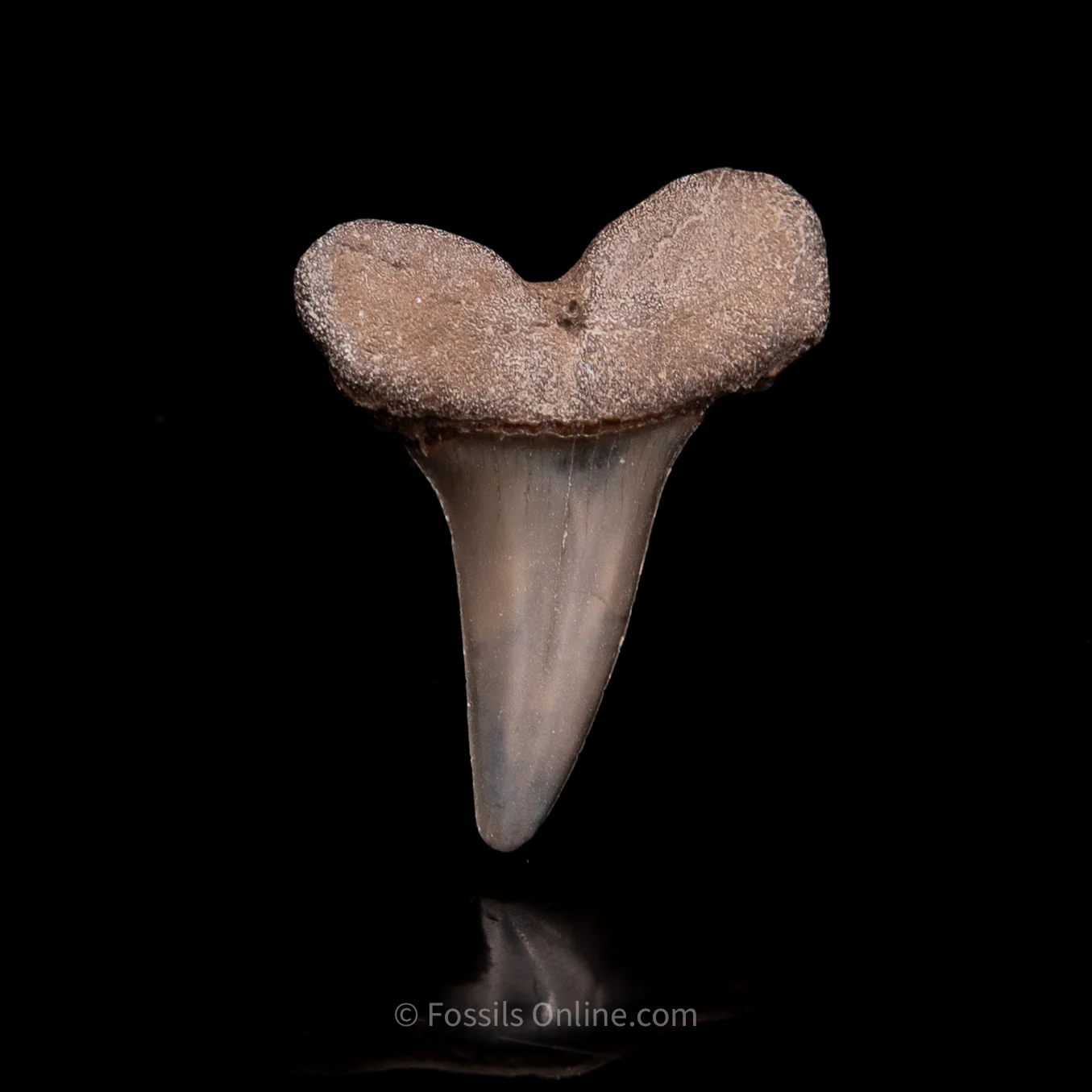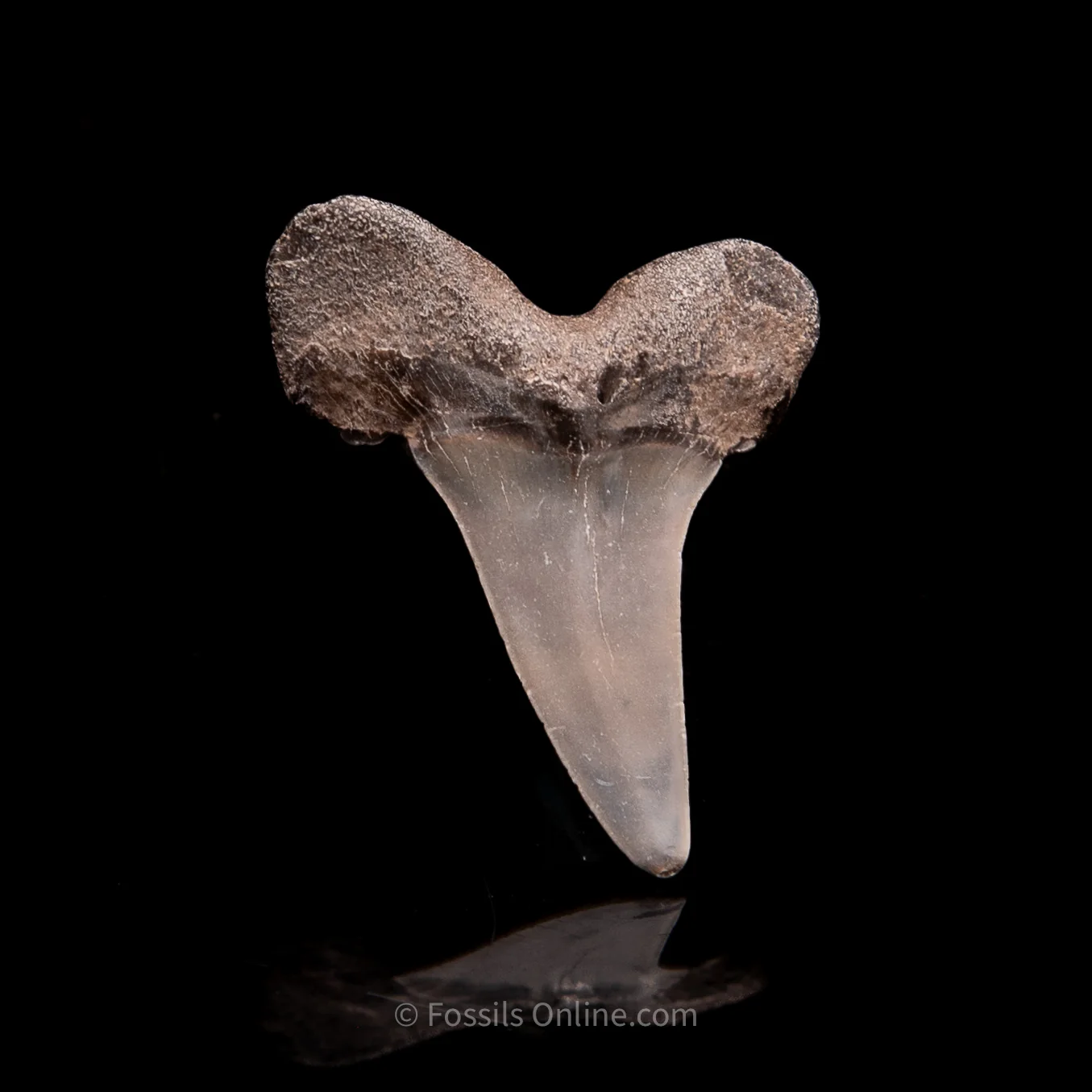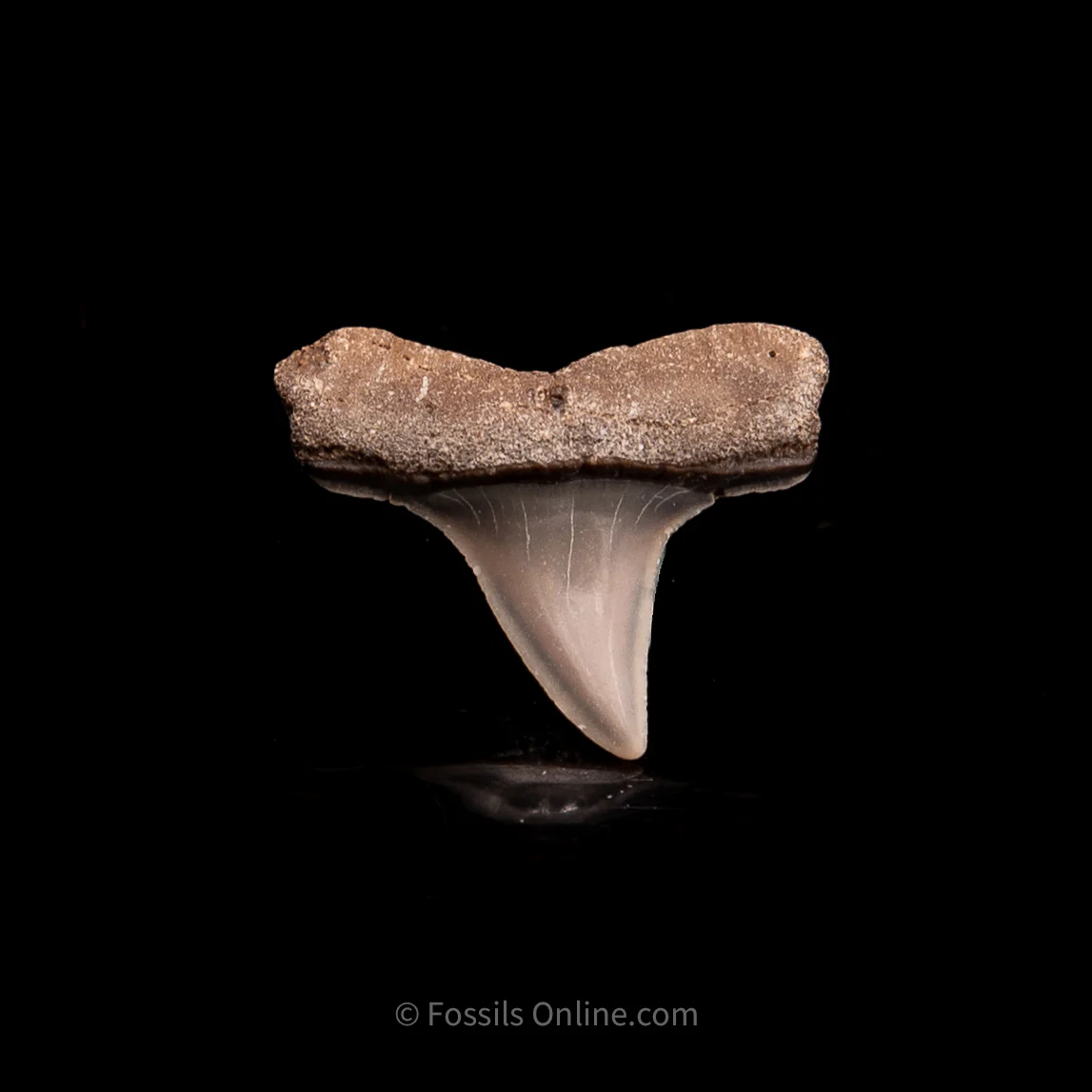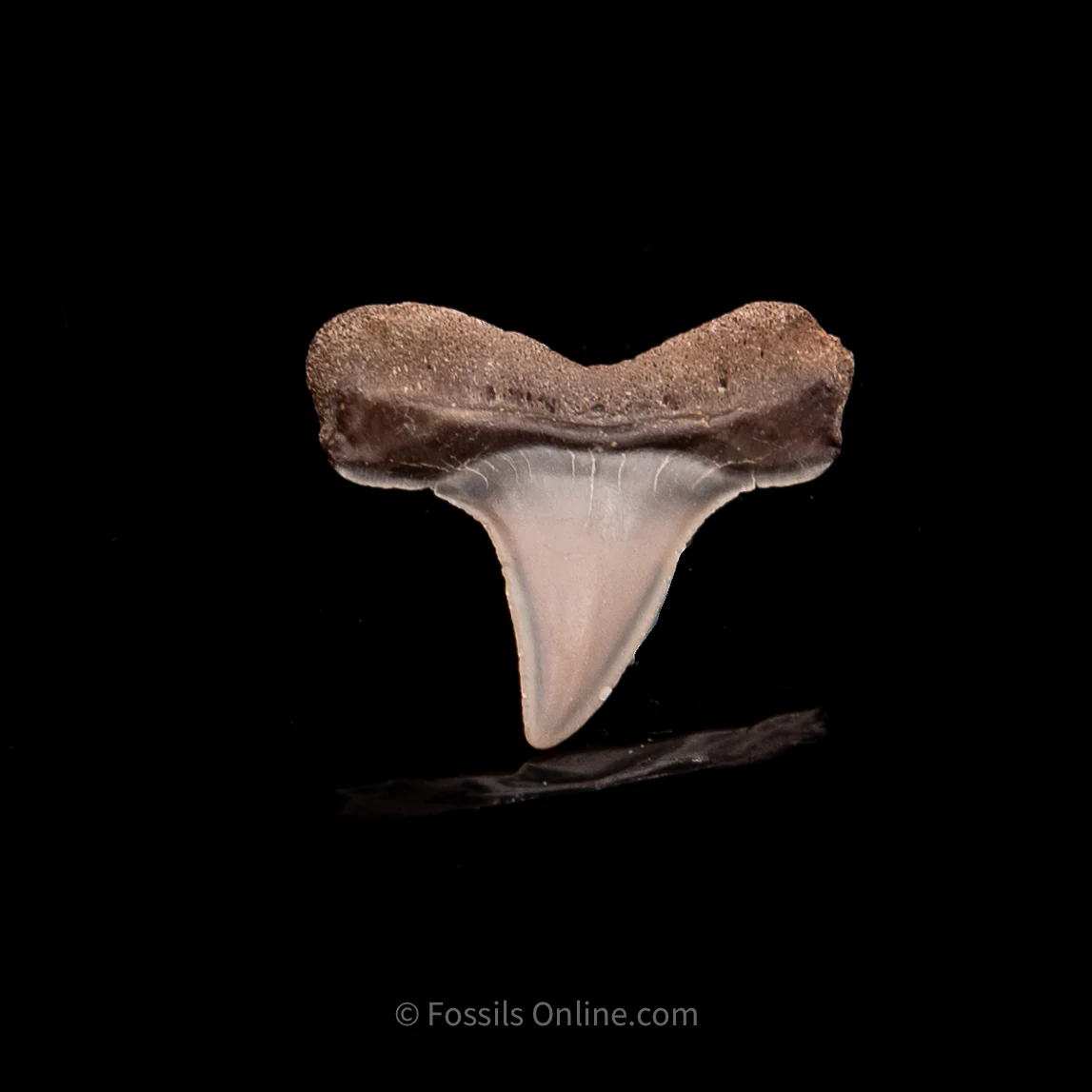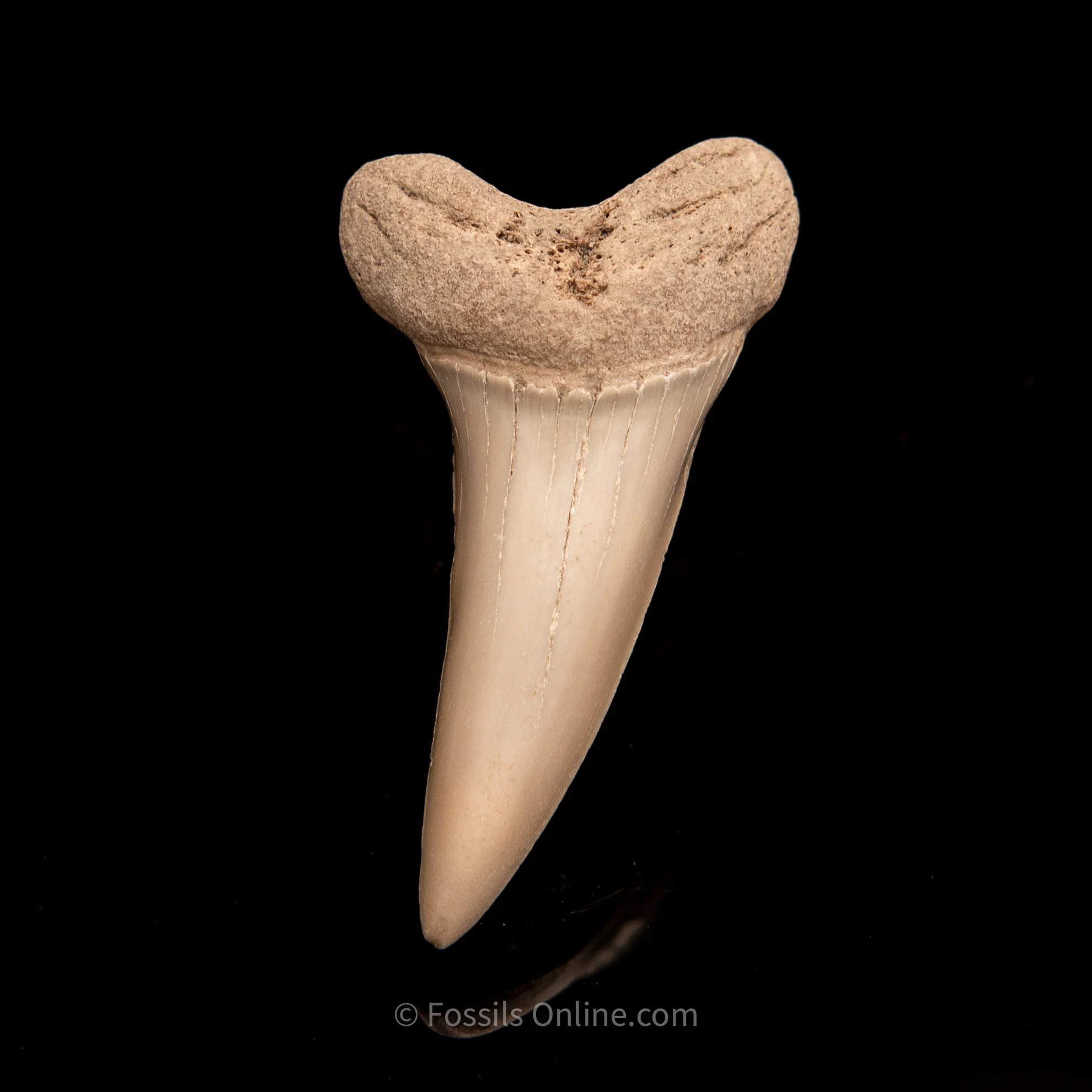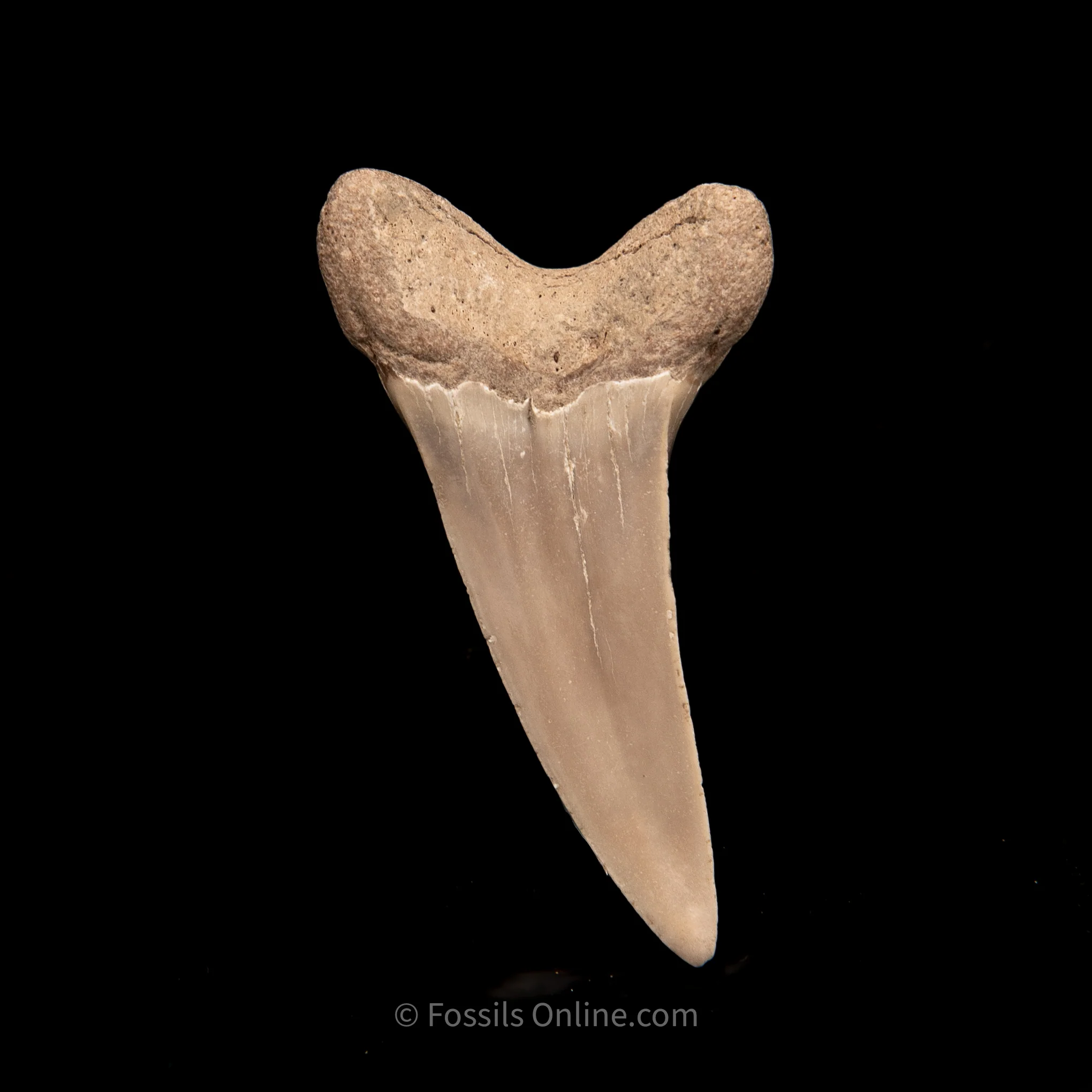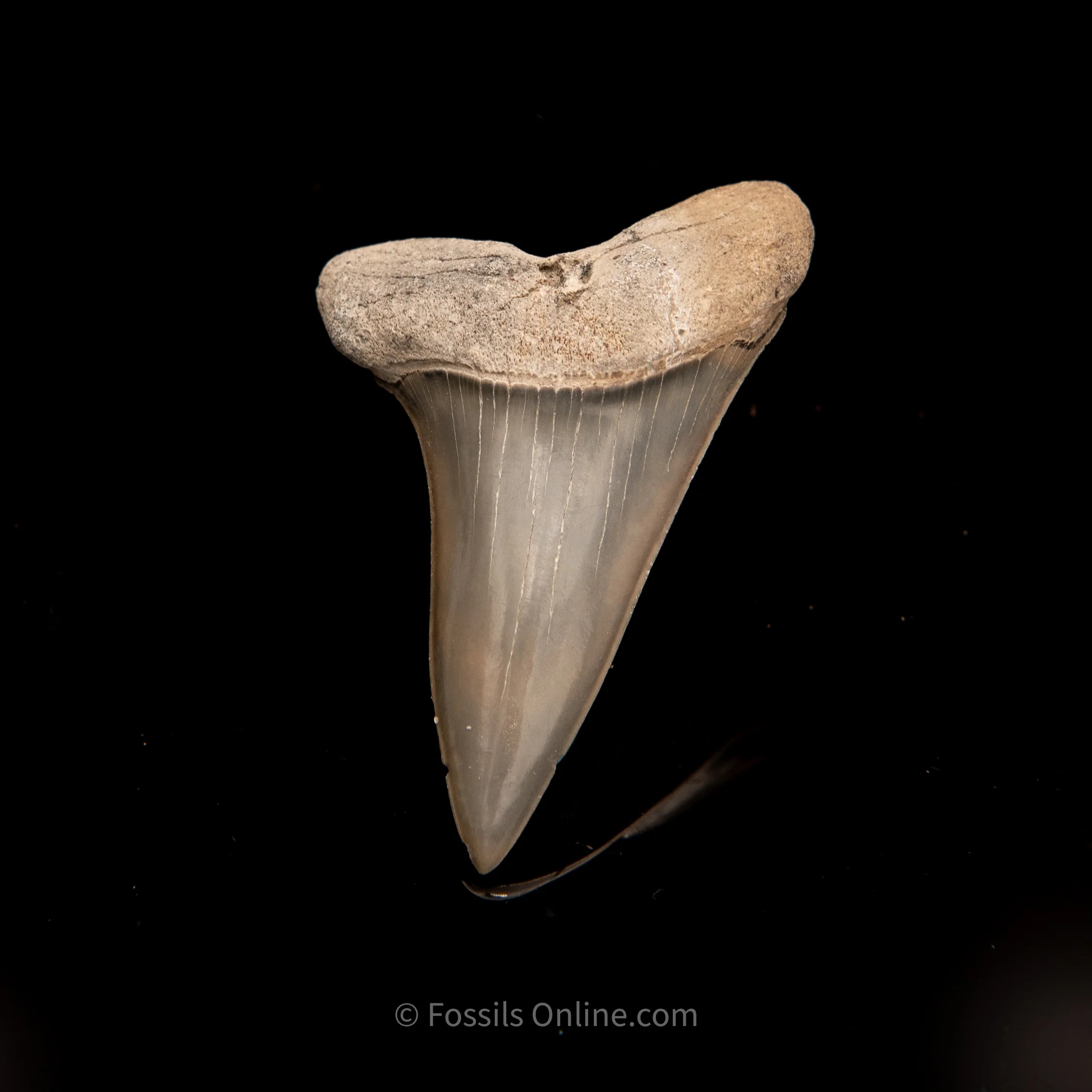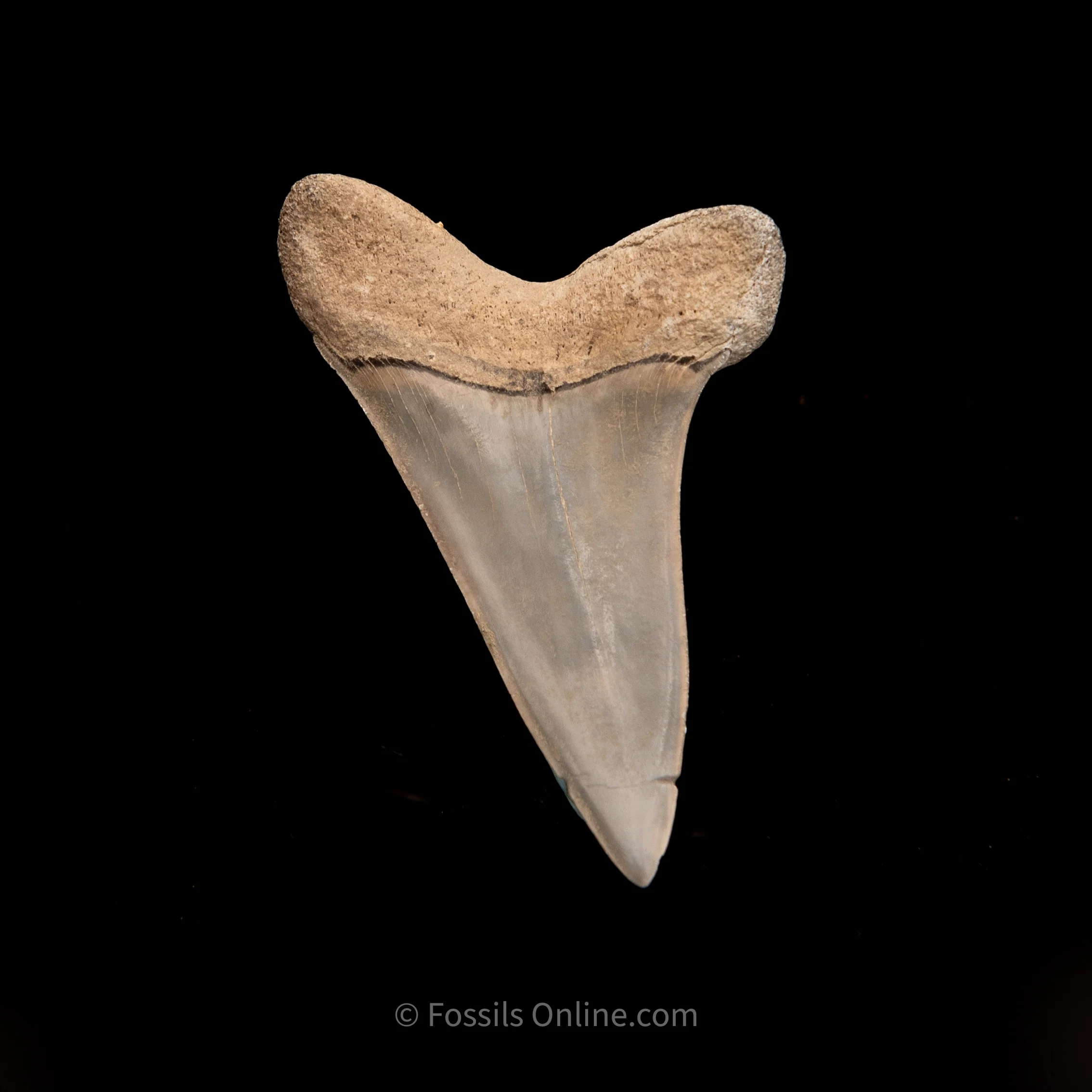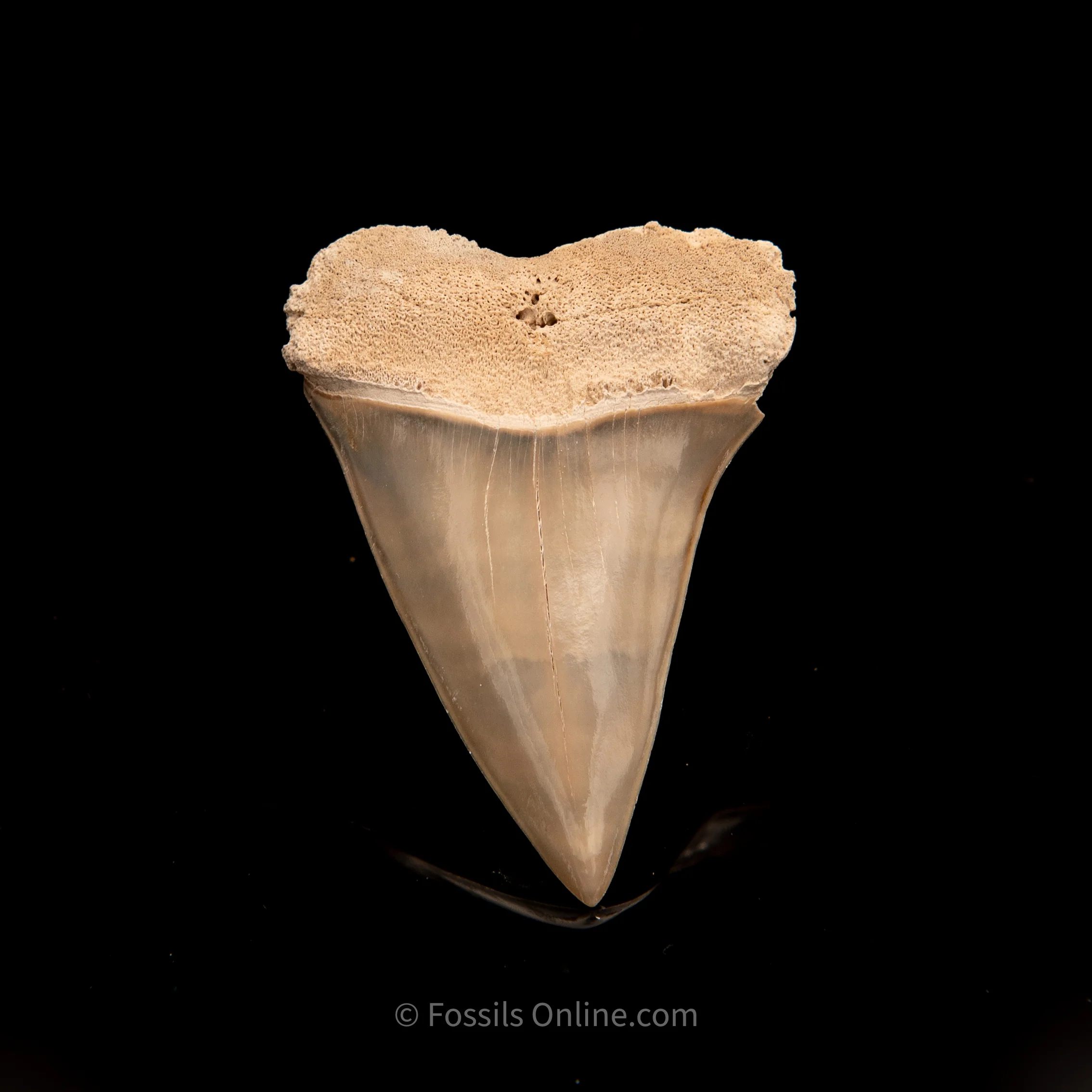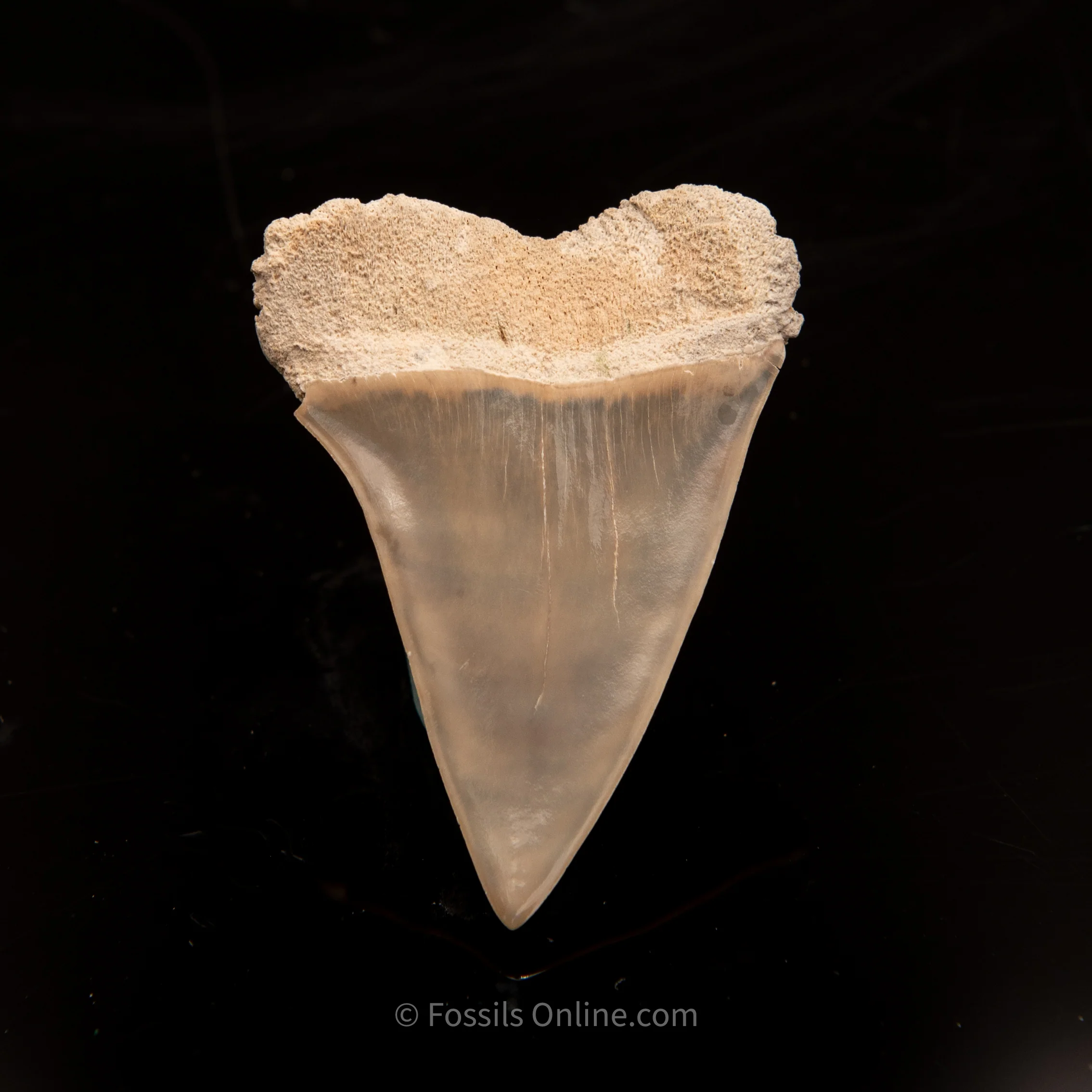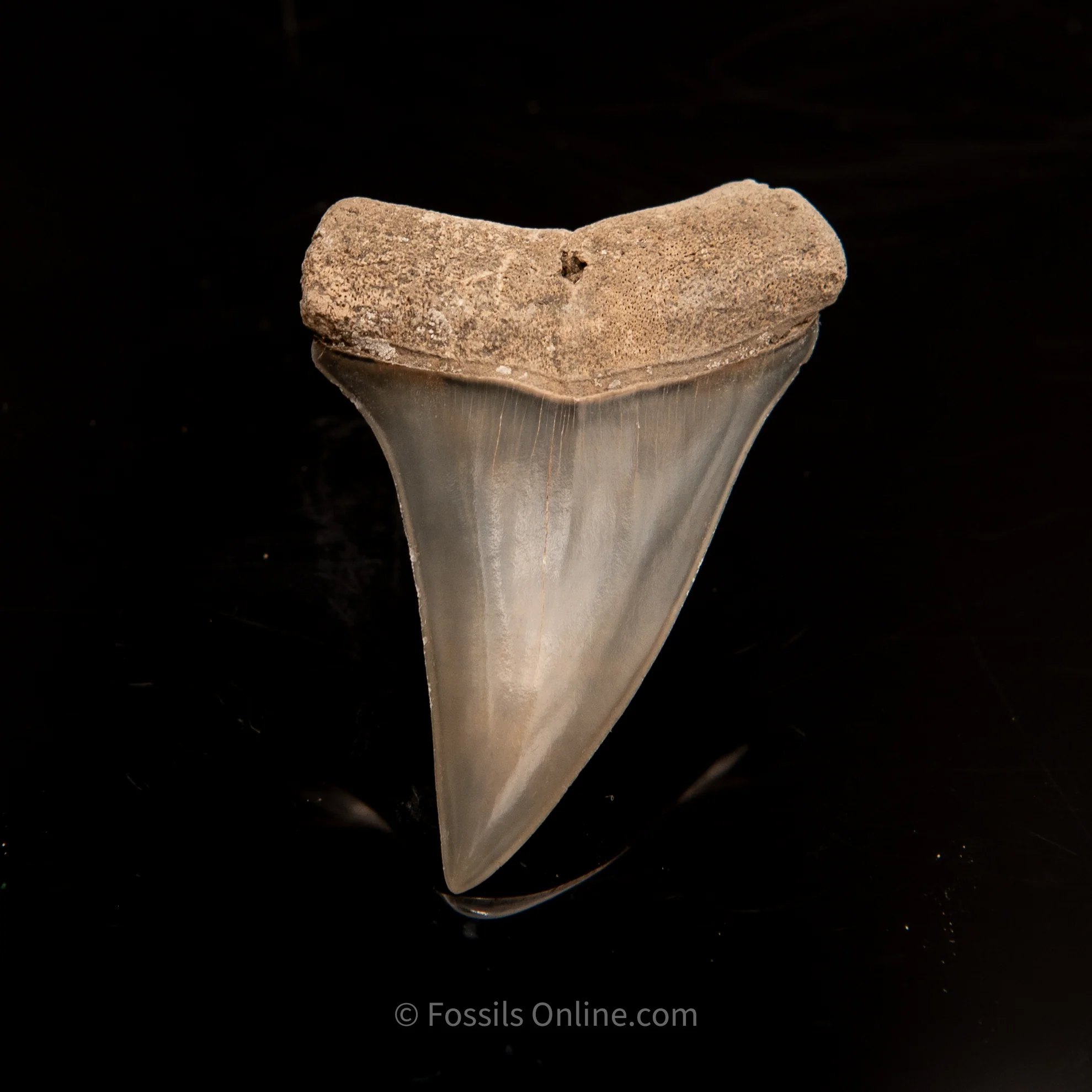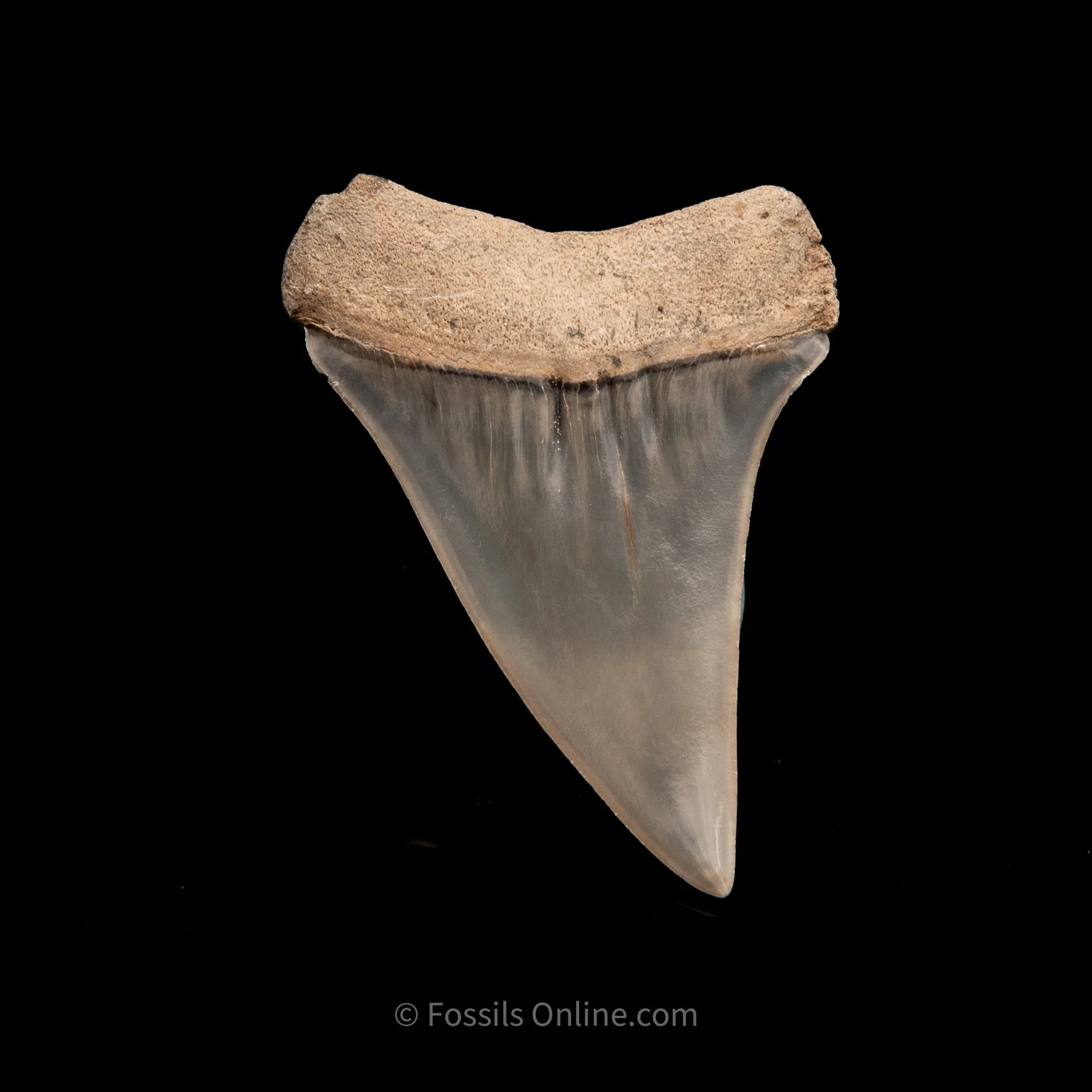
Bakersfield C. planus 1.84"
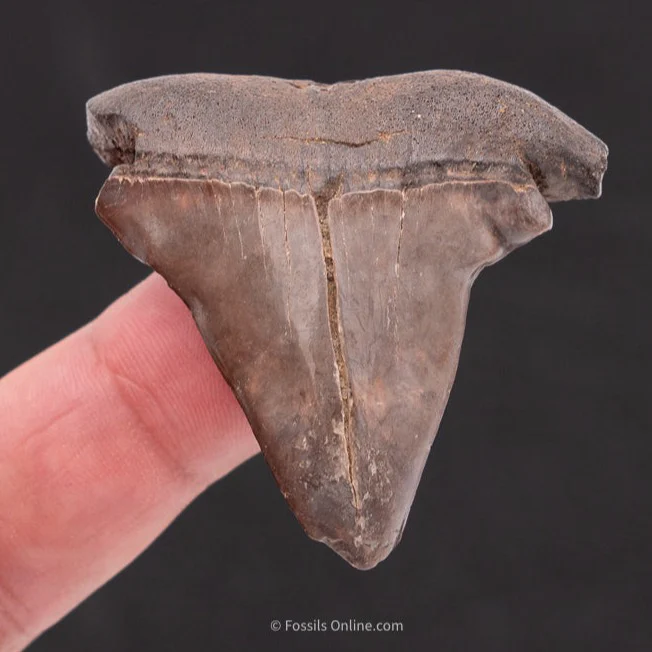
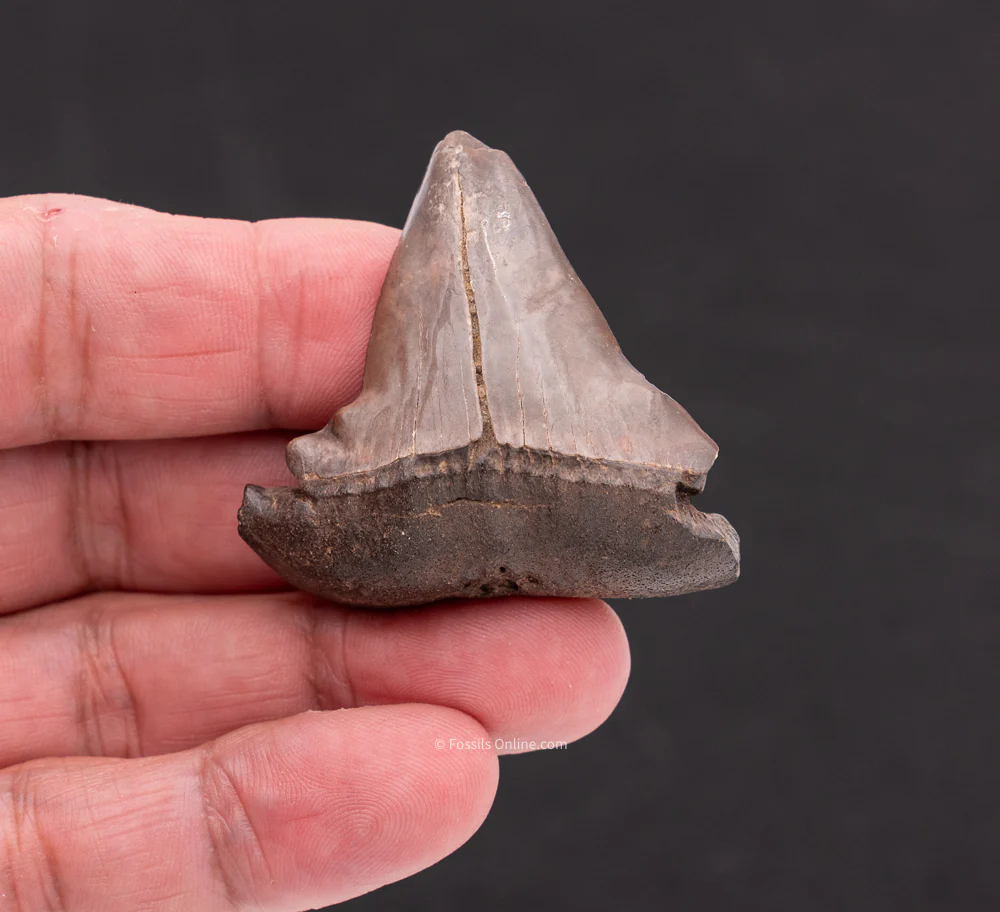
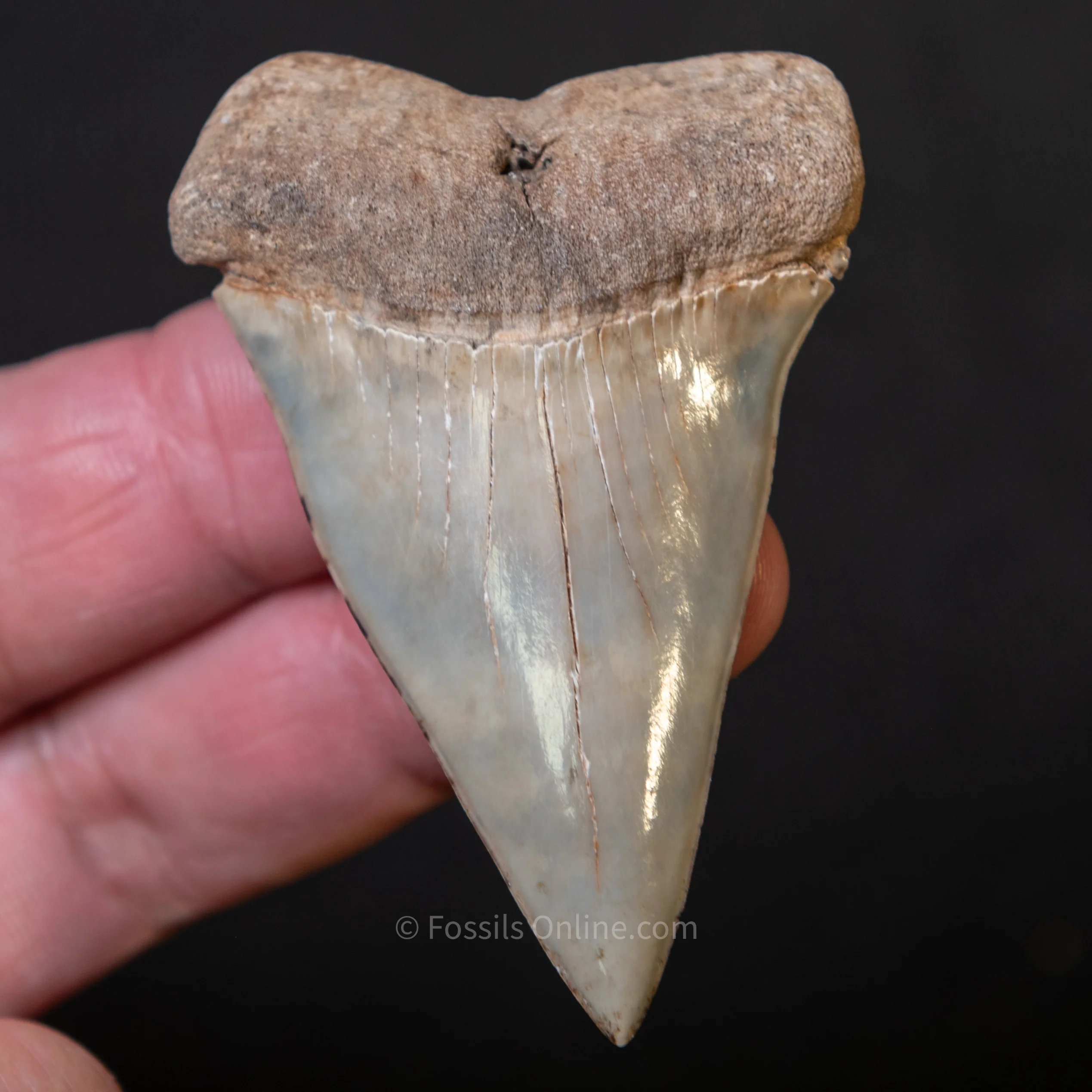
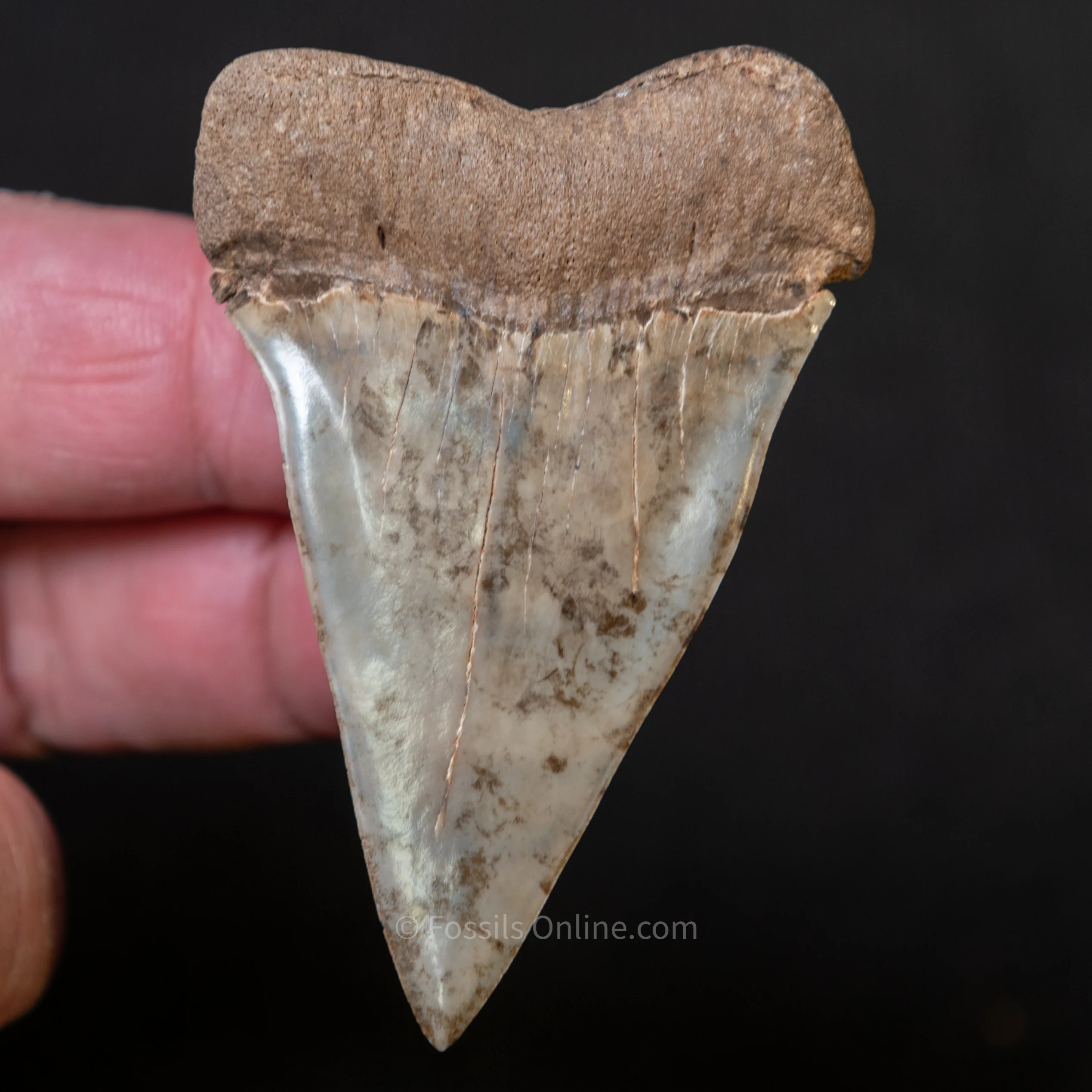
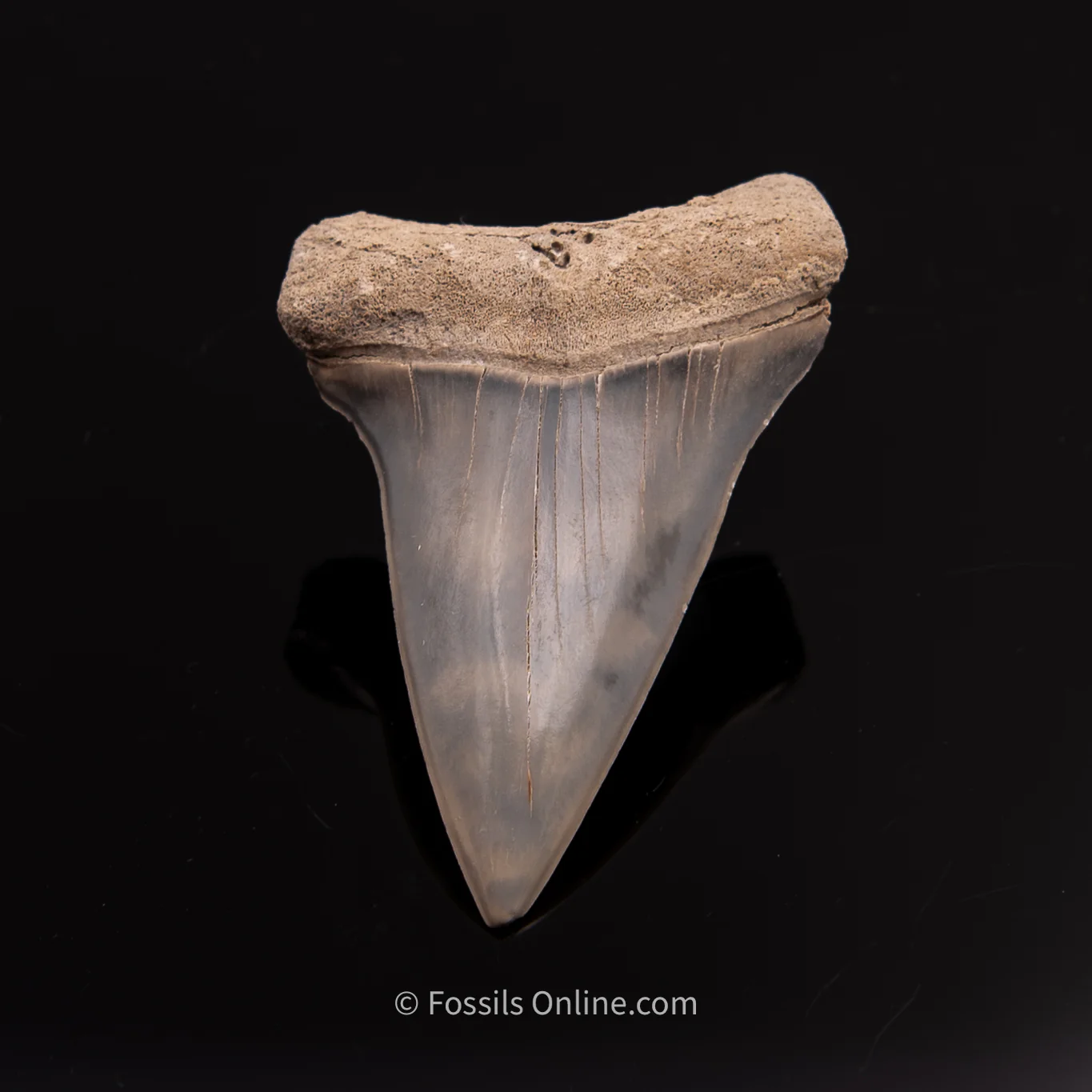
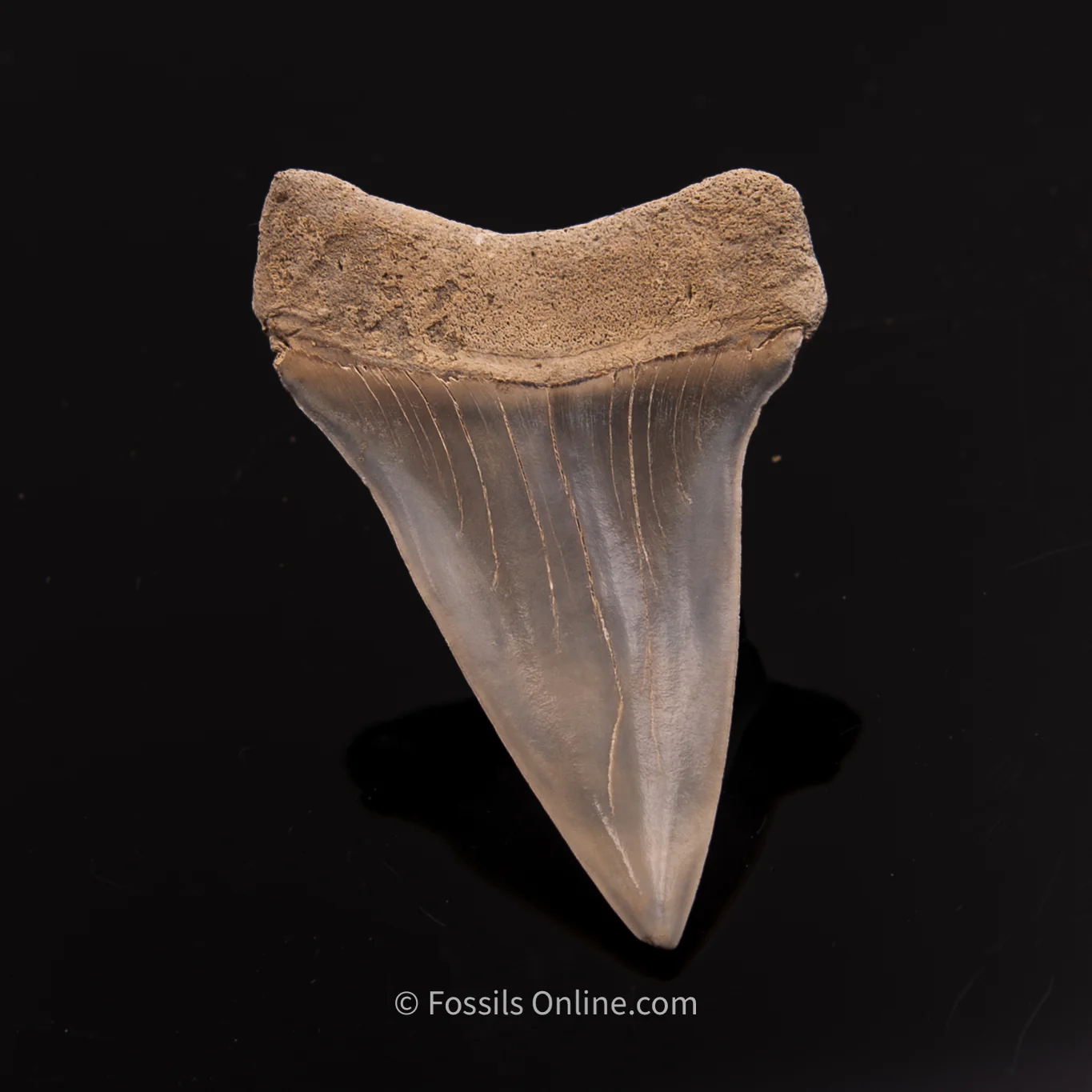
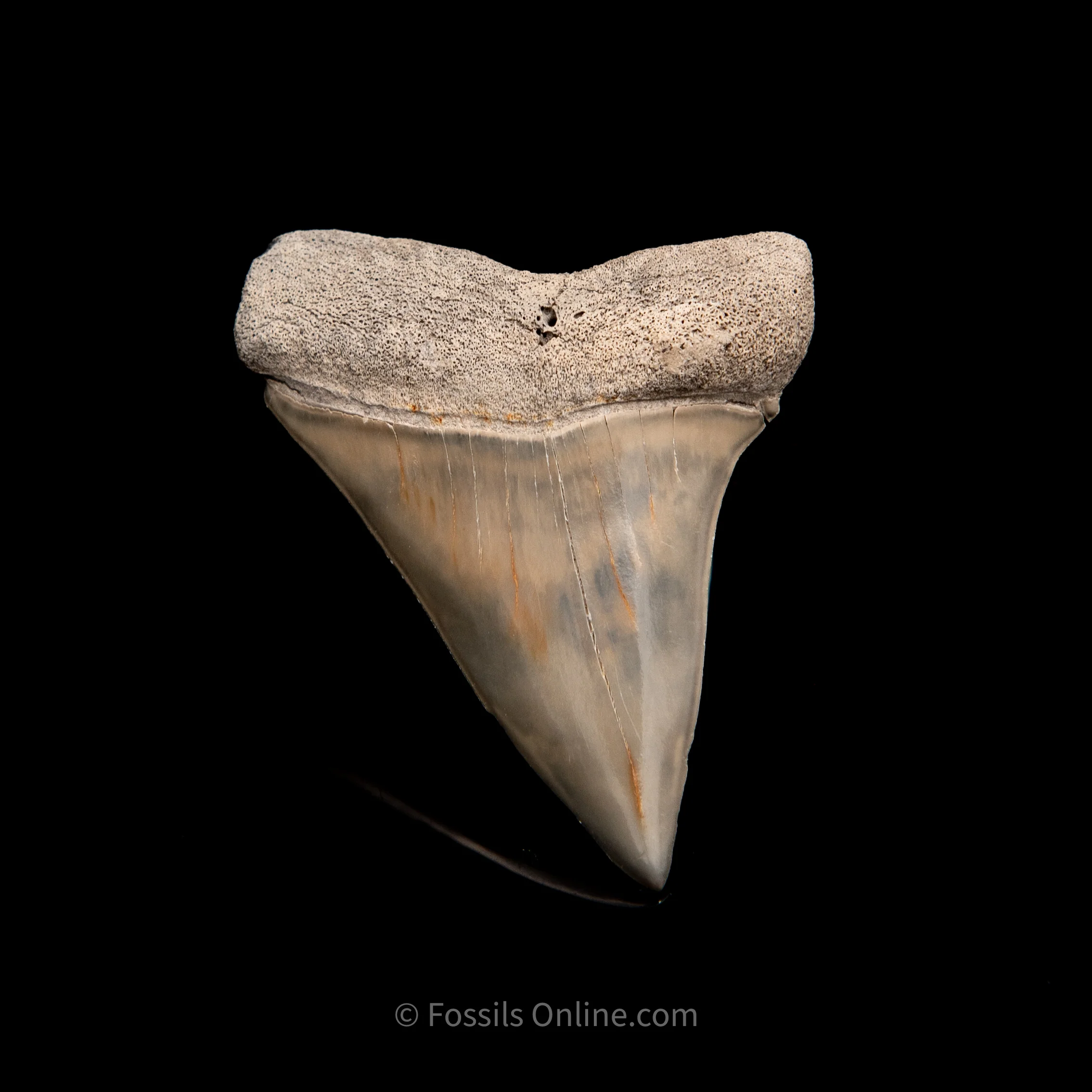
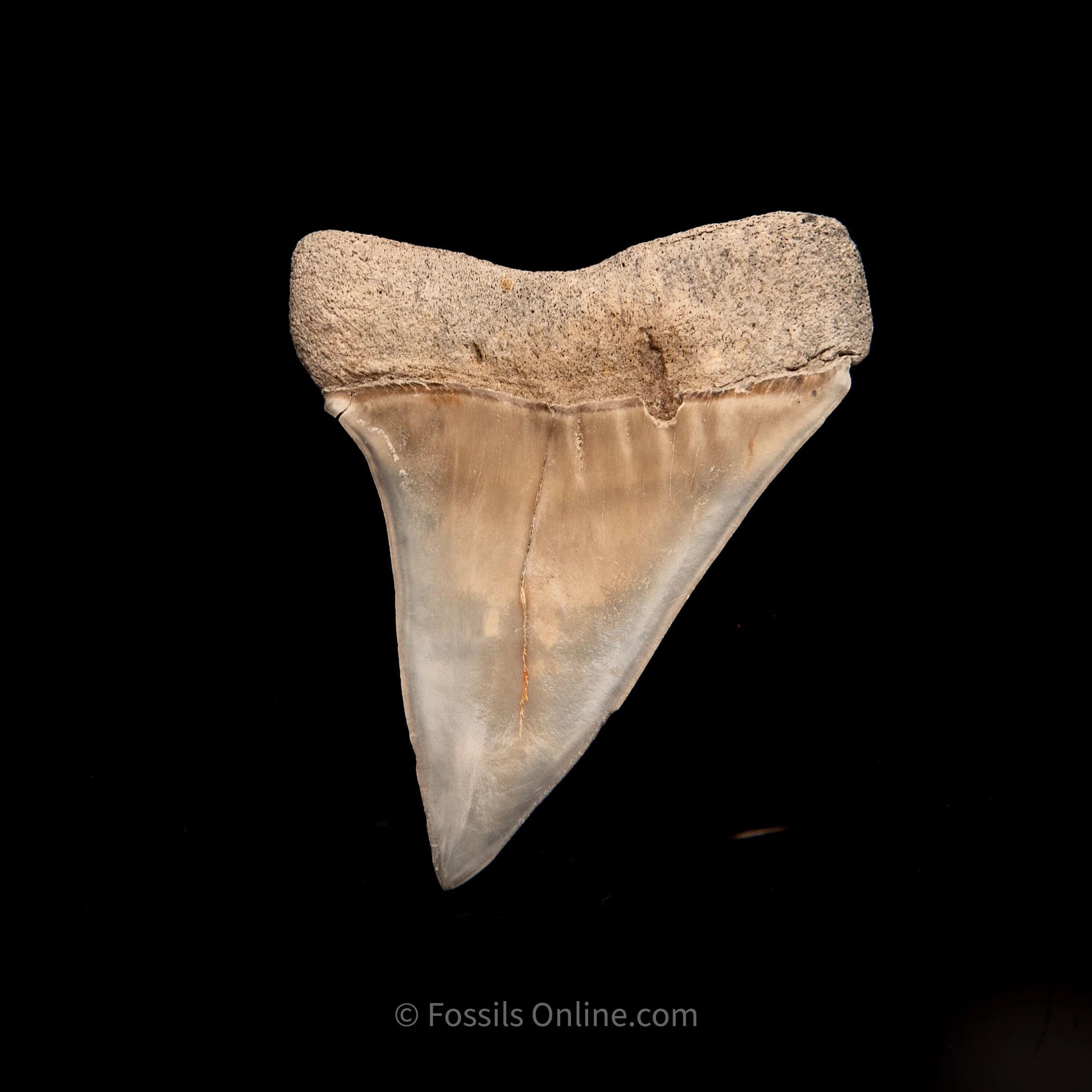
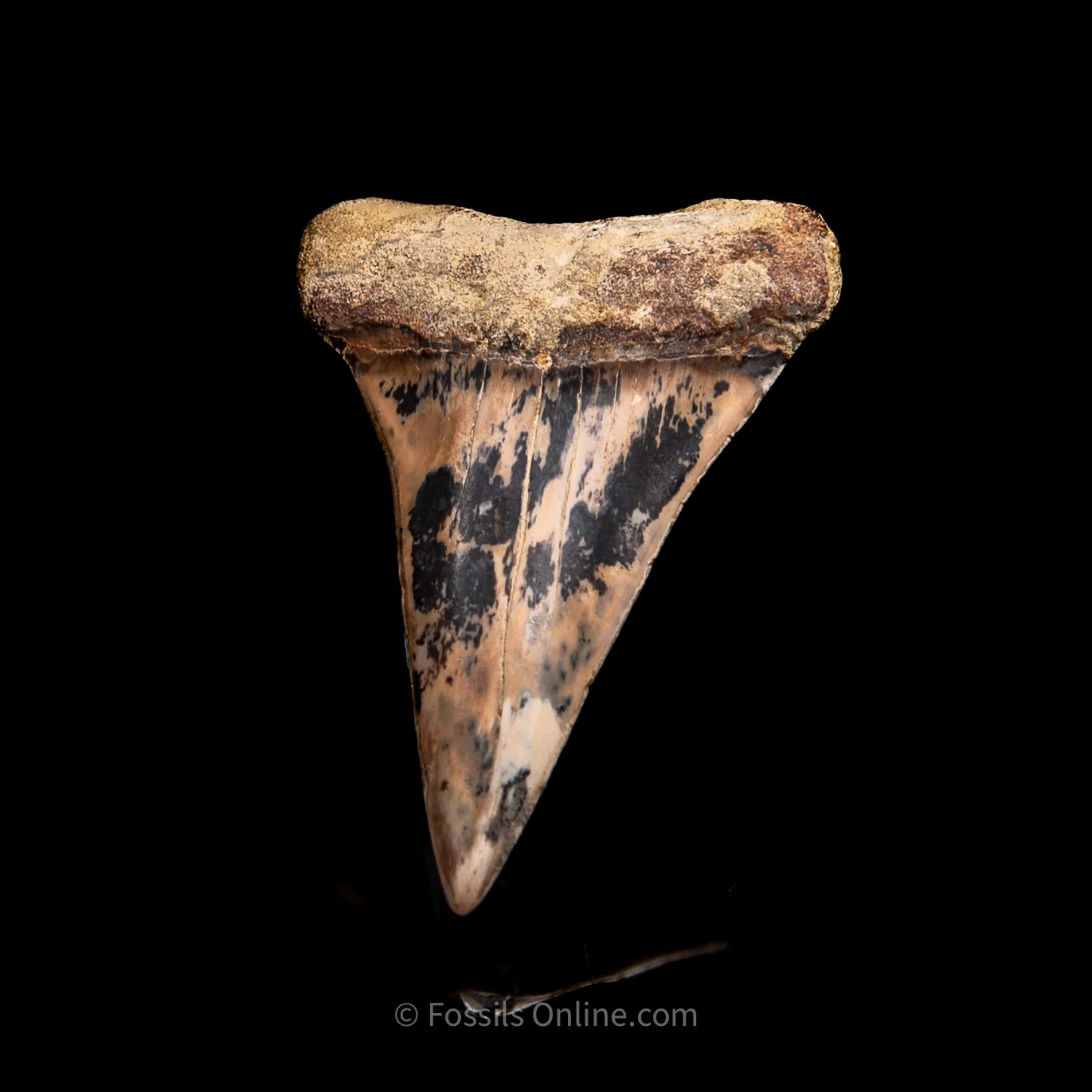
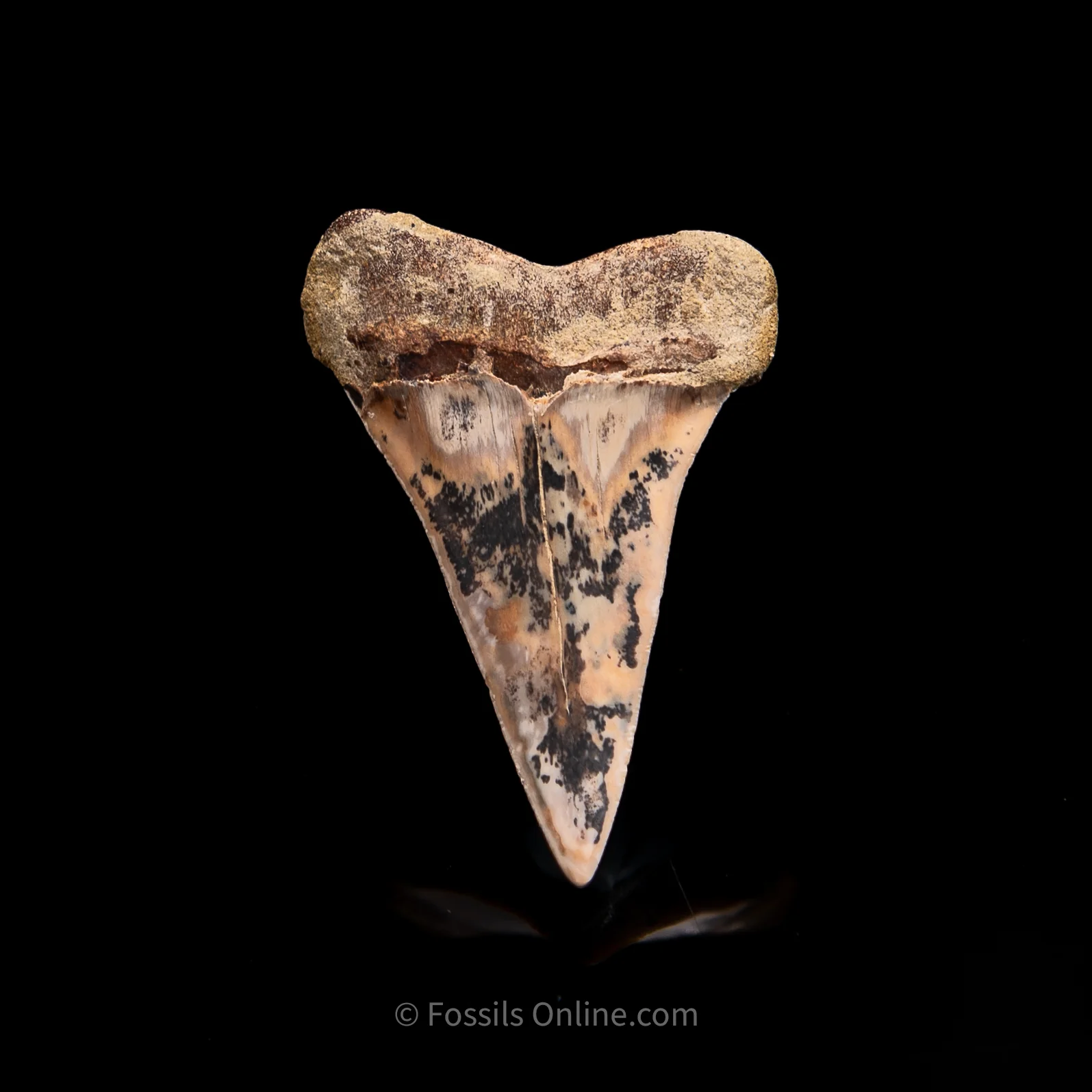
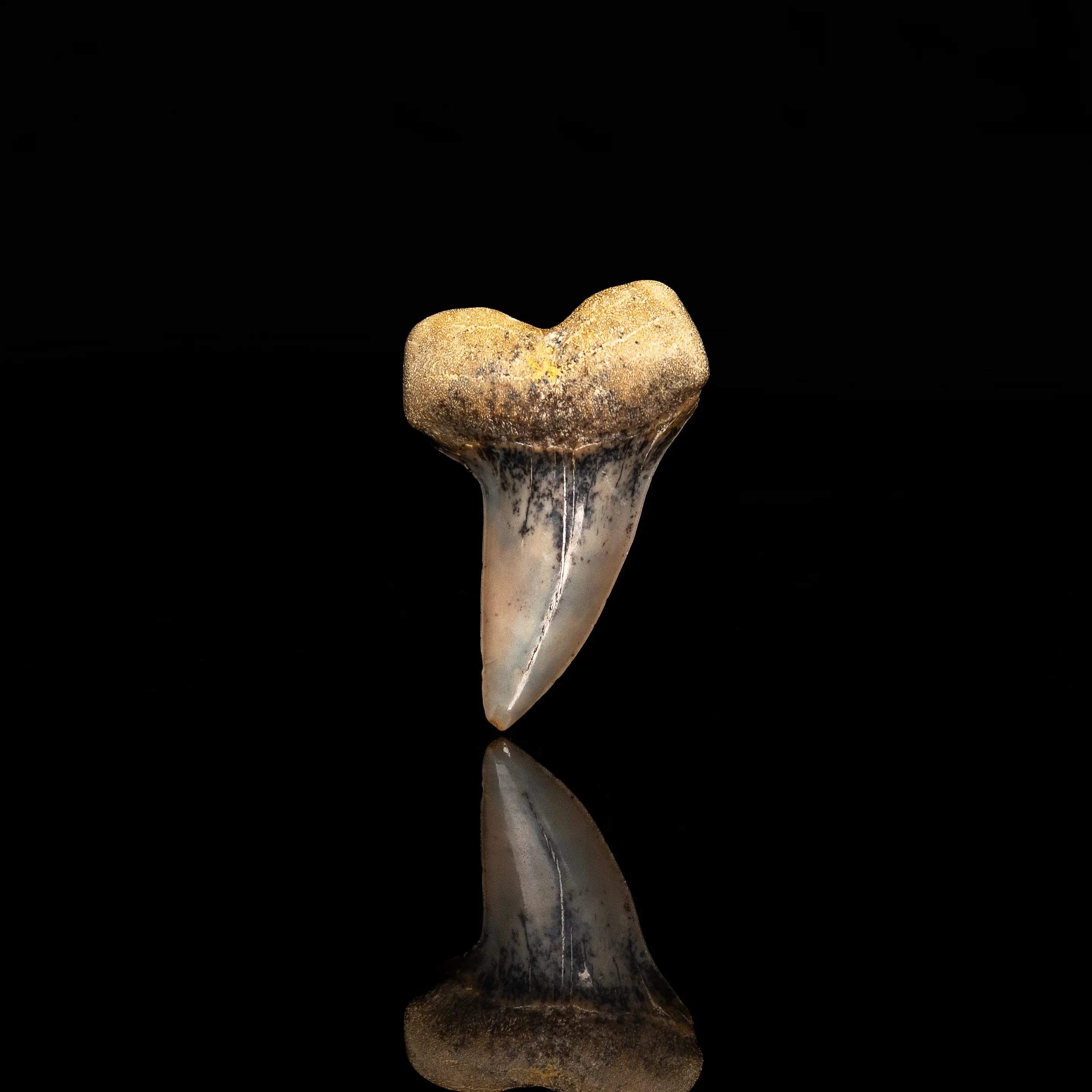
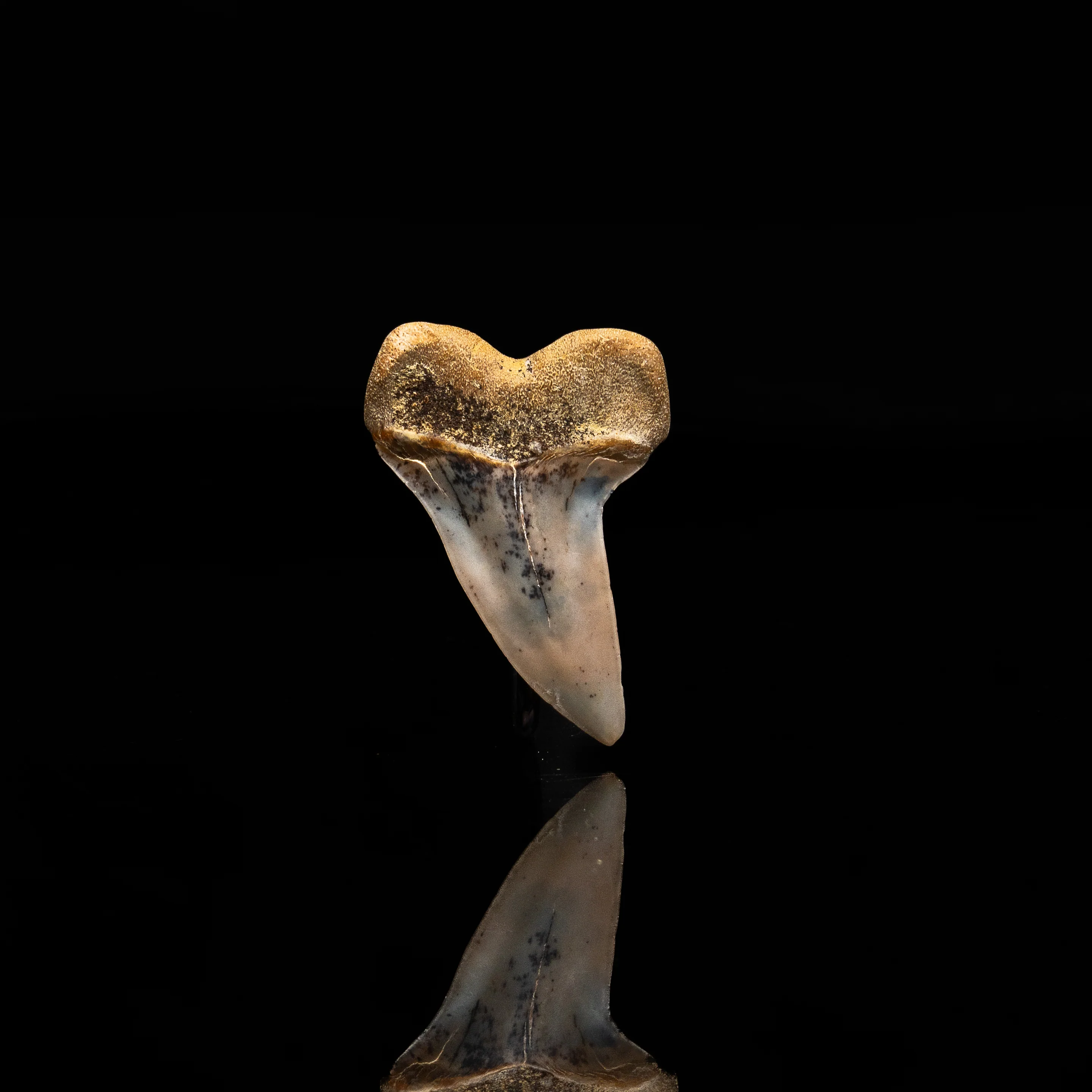
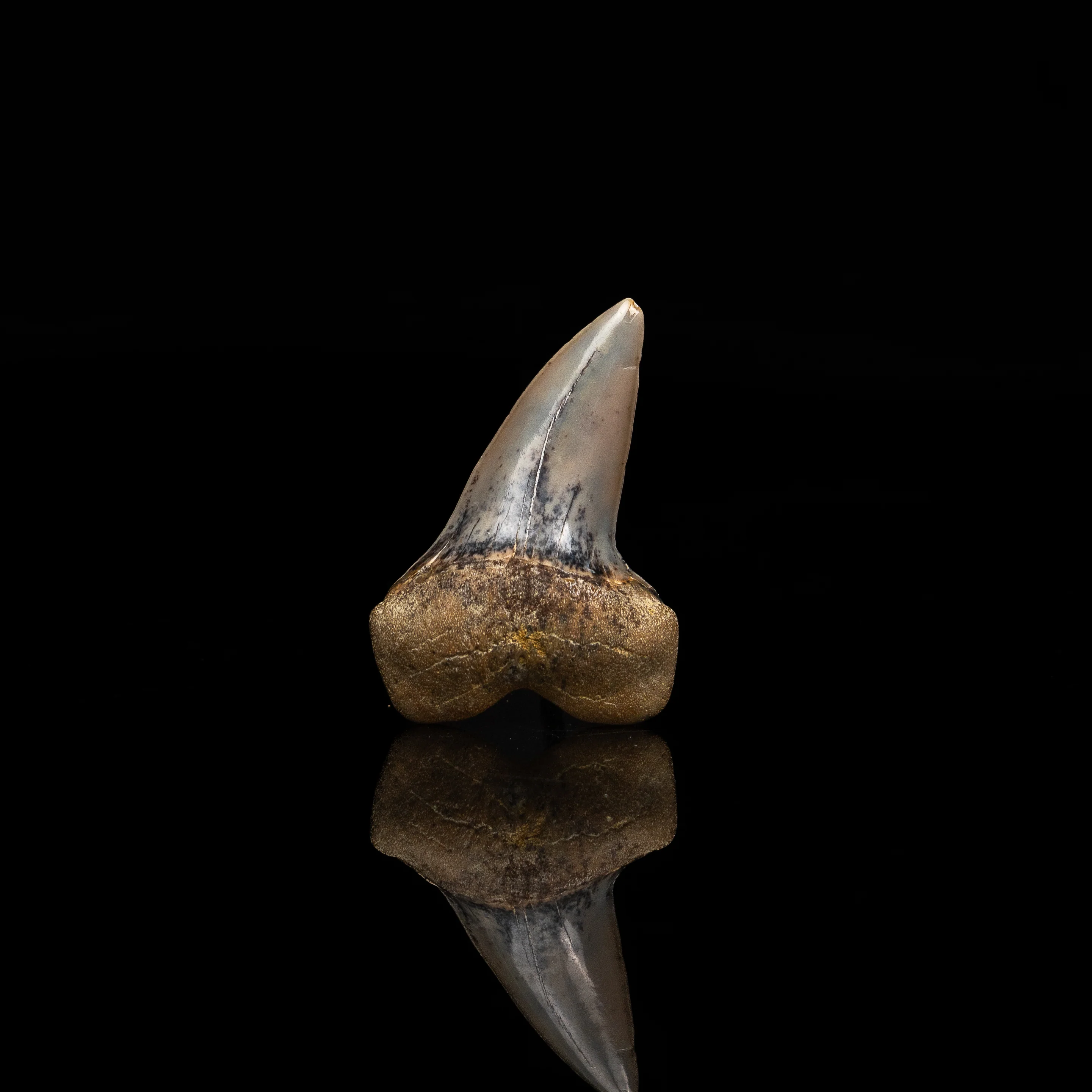
This large Carcharodon planus (Mako) tooth is truly one-of-a-kind! It has a stunning coloration, with some dark spots from natural manganese staining. Found in Bakersfield, California.
No repair or restoration.
Carcharodon planus
Carcharodon planus is an extinct species of mackerel shark that lived during the Paleogene, primarily in the Eocene to Oligocene (roughly 40–25 million years ago). It represents an earlier stage in the evolution of large lamniform sharks, before the fully developed cutting adaptations seen in later species like the great white.
Diet and habitat
Carcharodon planus lived in warm, shallow marine environments that covered large parts of ancient coastlines. Its diet likely included fish and smaller marine animals, relying on speed and precision rather than brute force. The tooth structure suggests a feeding style focused on gripping and slicing softer prey.
Tooth morphology compared to other sharks
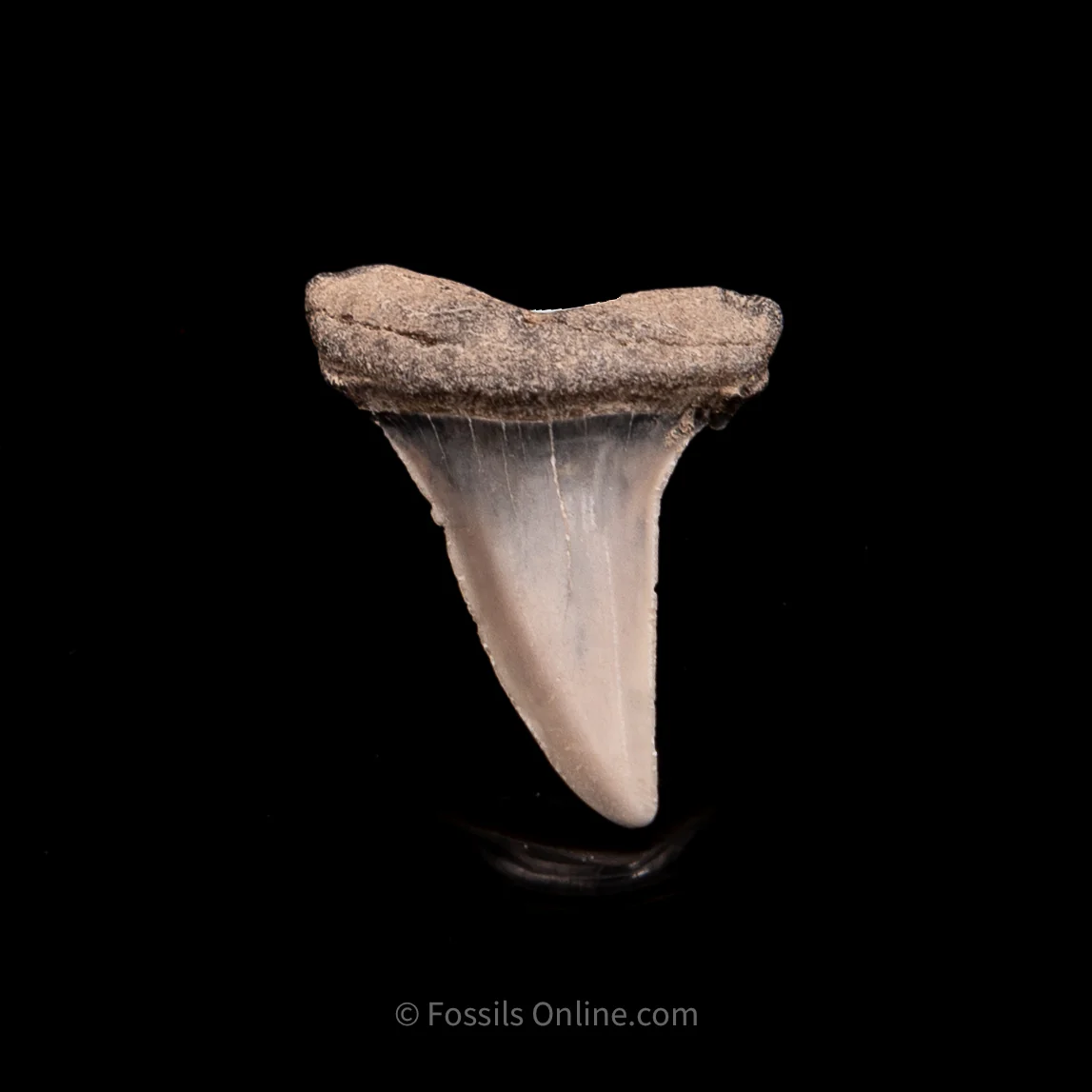
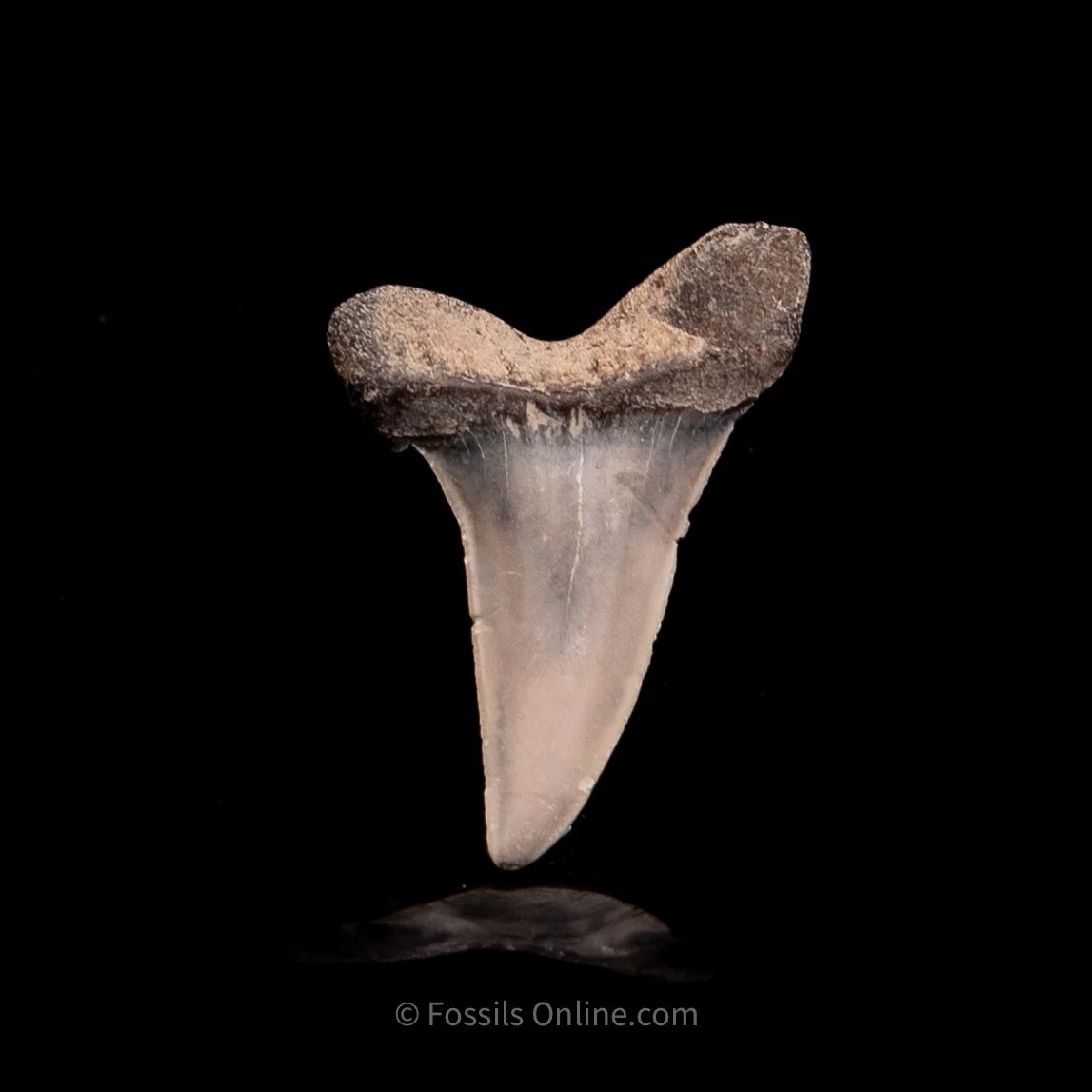
Carcharodon planus teeth are very distinctive once you know what to look for. They are completely smooth-edged, with no serrations at all, and are typically asymmetrical and curved rather than straight and balanced. The crowns often lean to one side, giving them a slightly hooked or swept-back appearance.
They are also noticeably thicker than teeth of Carcharodon hastalis, with a more solid, heavy build despite often being smaller overall. This gives them a sturdy feel in hand compared to the flatter, more blade-like look of hastalisteeth.
Compared to other sharks:
- Carcharodon hastalis has broader, more symmetrical, and flatter teeth with clean, straight profiles
- Carcharodon carcharias has wide, triangular teeth with strong serrations for tearing flesh
- Otodus megalodon has massive, thick, serrated teeth built for cutting and crushing
Carcharodon planus stands out for its curved, asymmetrical shape, lack of serrations, and thicker cross-section, making it easy to distinguish once familiar.
Evolutionary importance
Carcharodon planus represents an earlier phase in the development of large predatory sharks. It shows a stage where teeth were becoming more robust, but had not yet developed serrations or the fully optimized cutting edges seen in later species.
This places it as part of the broader evolutionary pathway that eventually led to more specialized predators like the modern Carcharodon carcharias.
Color and preservation
Teeth of Carcharodon planus vary depending on the fossil site, with colors ranging from light gray and tan to darker brown or black. Because of their thicker structure, they often preserve well, with smooth edges and solid crowns that hold their shape even after millions of years.
Product Information
Product Information
Shipping & Returns
Shipping & Returns
Bakersfield C. planus 1.84"
Bakersfield C. planus 1.84"
This large Carcharodon planus (Mako) tooth is truly one-of-a-kind! It has a stunning coloration, with some dark spots from natural manganese staining. Found in Bakersfield, California.
No repair or restoration.
Carcharodon planus
Carcharodon planus is an extinct species of mackerel shark that lived during the Paleogene, primarily in the Eocene to Oligocene (roughly 40–25 million years ago). It represents an earlier stage in the evolution of large lamniform sharks, before the fully developed cutting adaptations seen in later species like the great white.
Diet and habitat
Carcharodon planus lived in warm, shallow marine environments that covered large parts of ancient coastlines. Its diet likely included fish and smaller marine animals, relying on speed and precision rather than brute force. The tooth structure suggests a feeding style focused on gripping and slicing softer prey.
Tooth morphology compared to other sharks
Carcharodon planus teeth are very distinctive once you know what to look for. They are completely smooth-edged, with no serrations at all, and are typically asymmetrical and curved rather than straight and balanced. The crowns often lean to one side, giving them a slightly hooked or swept-back appearance.
They are also noticeably thicker than teeth of Carcharodon hastalis, with a more solid, heavy build despite often being smaller overall. This gives them a sturdy feel in hand compared to the flatter, more blade-like look of hastalisteeth.
Compared to other sharks:
- Carcharodon hastalis has broader, more symmetrical, and flatter teeth with clean, straight profiles
- Carcharodon carcharias has wide, triangular teeth with strong serrations for tearing flesh
- Otodus megalodon has massive, thick, serrated teeth built for cutting and crushing
Carcharodon planus stands out for its curved, asymmetrical shape, lack of serrations, and thicker cross-section, making it easy to distinguish once familiar.
Evolutionary importance
Carcharodon planus represents an earlier phase in the development of large predatory sharks. It shows a stage where teeth were becoming more robust, but had not yet developed serrations or the fully optimized cutting edges seen in later species.
This places it as part of the broader evolutionary pathway that eventually led to more specialized predators like the modern Carcharodon carcharias.
Color and preservation
Teeth of Carcharodon planus vary depending on the fossil site, with colors ranging from light gray and tan to darker brown or black. Because of their thicker structure, they often preserve well, with smooth edges and solid crowns that hold their shape even after millions of years.
Original: $55.00
-65%$55.00
$19.25Product Information
Product Information
Shipping & Returns
Shipping & Returns
Description
This large Carcharodon planus (Mako) tooth is truly one-of-a-kind! It has a stunning coloration, with some dark spots from natural manganese staining. Found in Bakersfield, California.
No repair or restoration.
Carcharodon planus
Carcharodon planus is an extinct species of mackerel shark that lived during the Paleogene, primarily in the Eocene to Oligocene (roughly 40–25 million years ago). It represents an earlier stage in the evolution of large lamniform sharks, before the fully developed cutting adaptations seen in later species like the great white.
Diet and habitat
Carcharodon planus lived in warm, shallow marine environments that covered large parts of ancient coastlines. Its diet likely included fish and smaller marine animals, relying on speed and precision rather than brute force. The tooth structure suggests a feeding style focused on gripping and slicing softer prey.
Tooth morphology compared to other sharks
Carcharodon planus teeth are very distinctive once you know what to look for. They are completely smooth-edged, with no serrations at all, and are typically asymmetrical and curved rather than straight and balanced. The crowns often lean to one side, giving them a slightly hooked or swept-back appearance.
They are also noticeably thicker than teeth of Carcharodon hastalis, with a more solid, heavy build despite often being smaller overall. This gives them a sturdy feel in hand compared to the flatter, more blade-like look of hastalisteeth.
Compared to other sharks:
- Carcharodon hastalis has broader, more symmetrical, and flatter teeth with clean, straight profiles
- Carcharodon carcharias has wide, triangular teeth with strong serrations for tearing flesh
- Otodus megalodon has massive, thick, serrated teeth built for cutting and crushing
Carcharodon planus stands out for its curved, asymmetrical shape, lack of serrations, and thicker cross-section, making it easy to distinguish once familiar.
Evolutionary importance
Carcharodon planus represents an earlier phase in the development of large predatory sharks. It shows a stage where teeth were becoming more robust, but had not yet developed serrations or the fully optimized cutting edges seen in later species.
This places it as part of the broader evolutionary pathway that eventually led to more specialized predators like the modern Carcharodon carcharias.
Color and preservation
Teeth of Carcharodon planus vary depending on the fossil site, with colors ranging from light gray and tan to darker brown or black. Because of their thicker structure, they often preserve well, with smooth edges and solid crowns that hold their shape even after millions of years.