Polished Australian Opalized Clams in Original Matrix
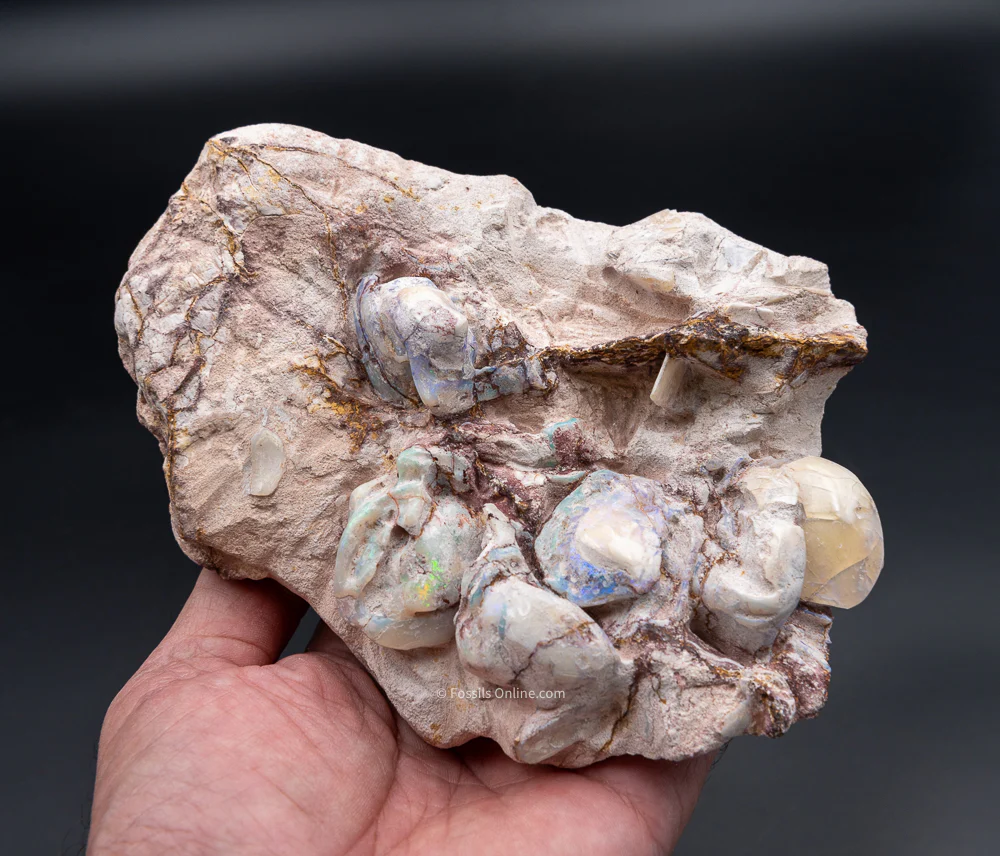
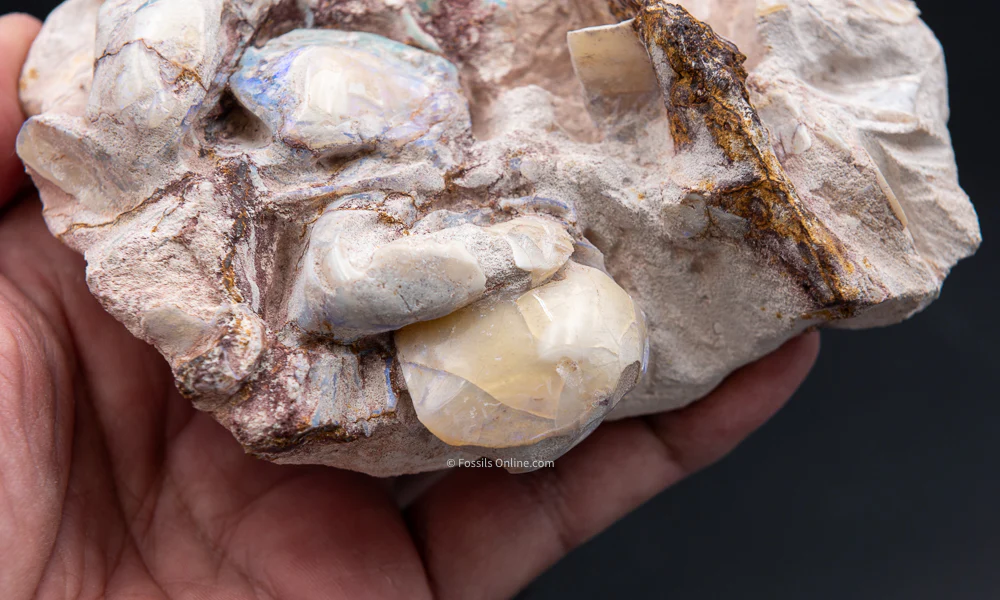
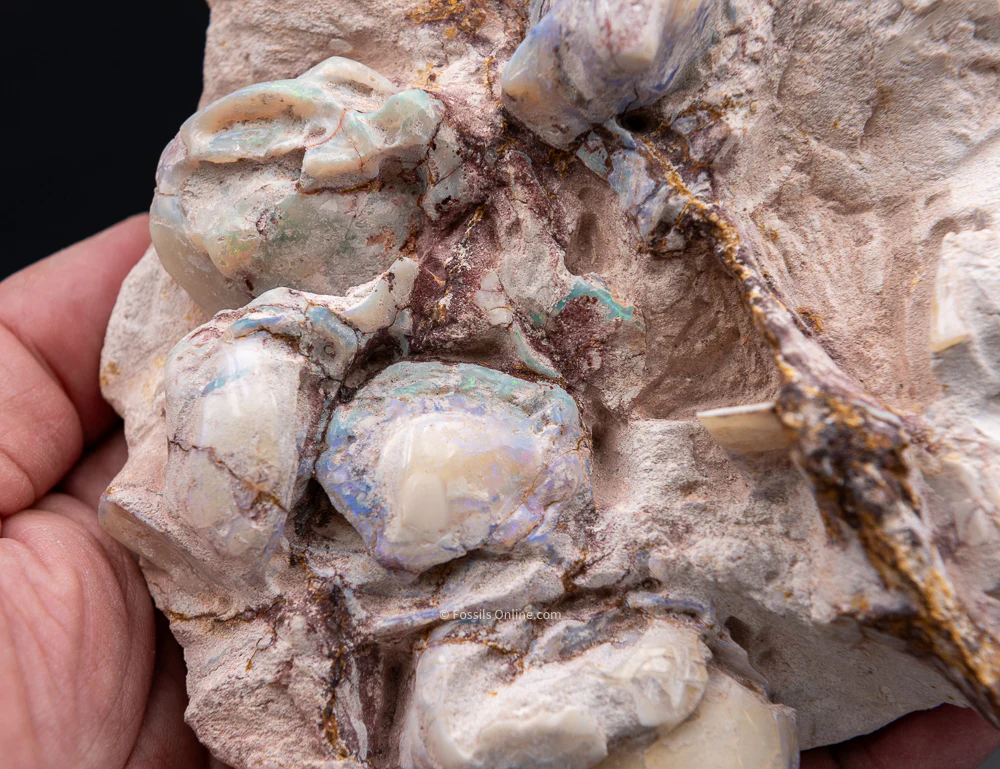
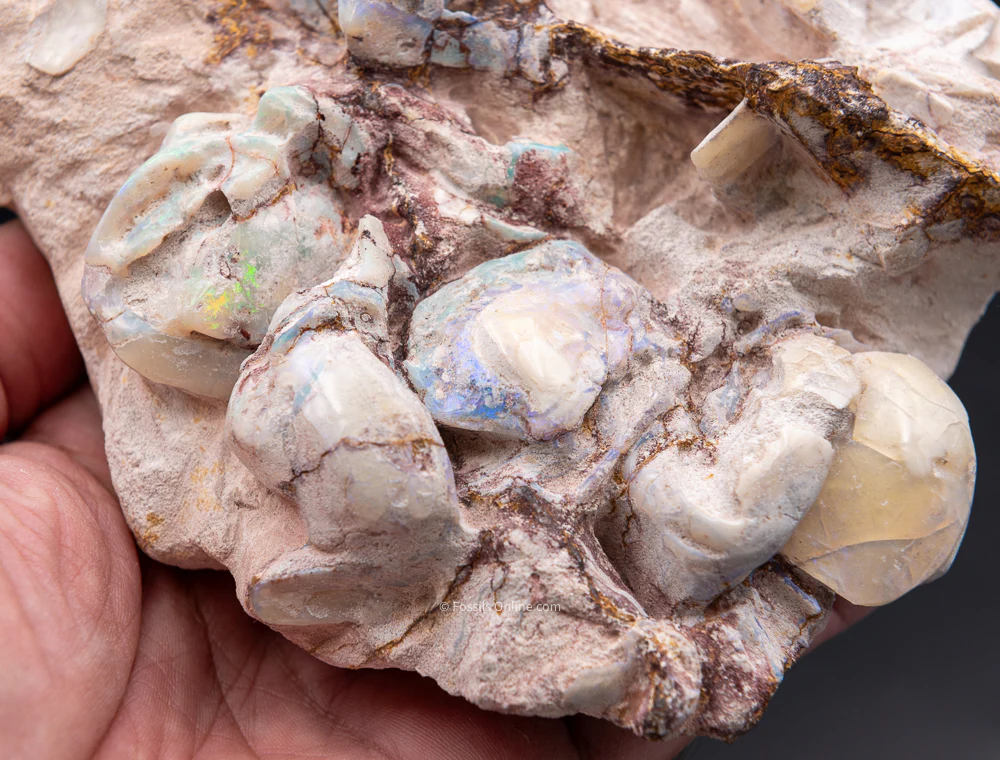
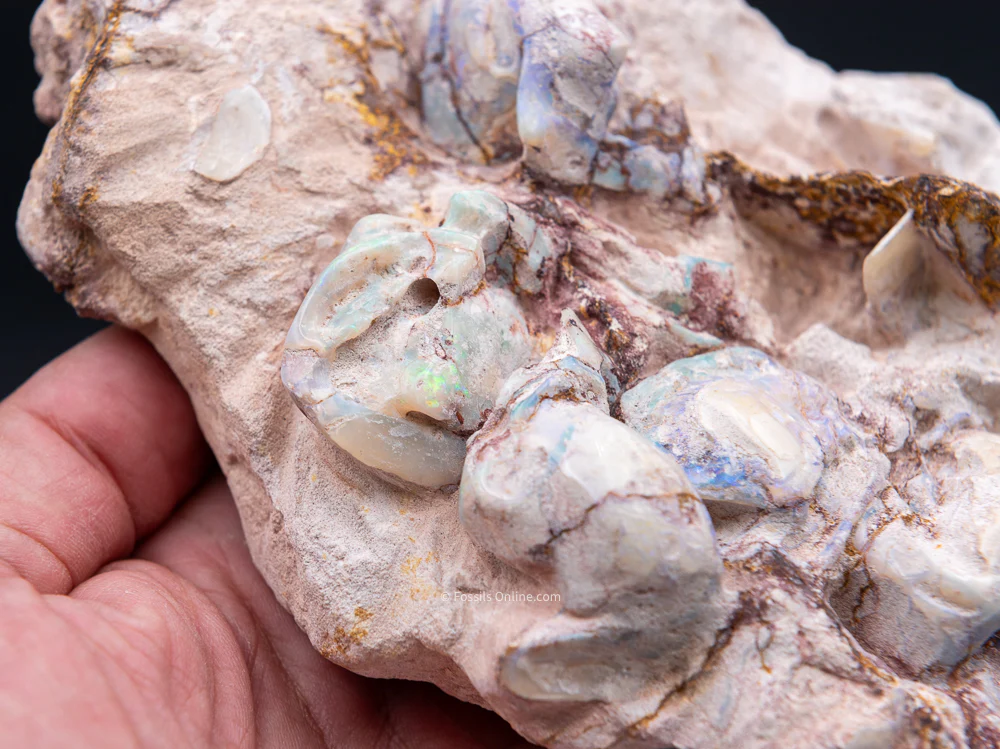
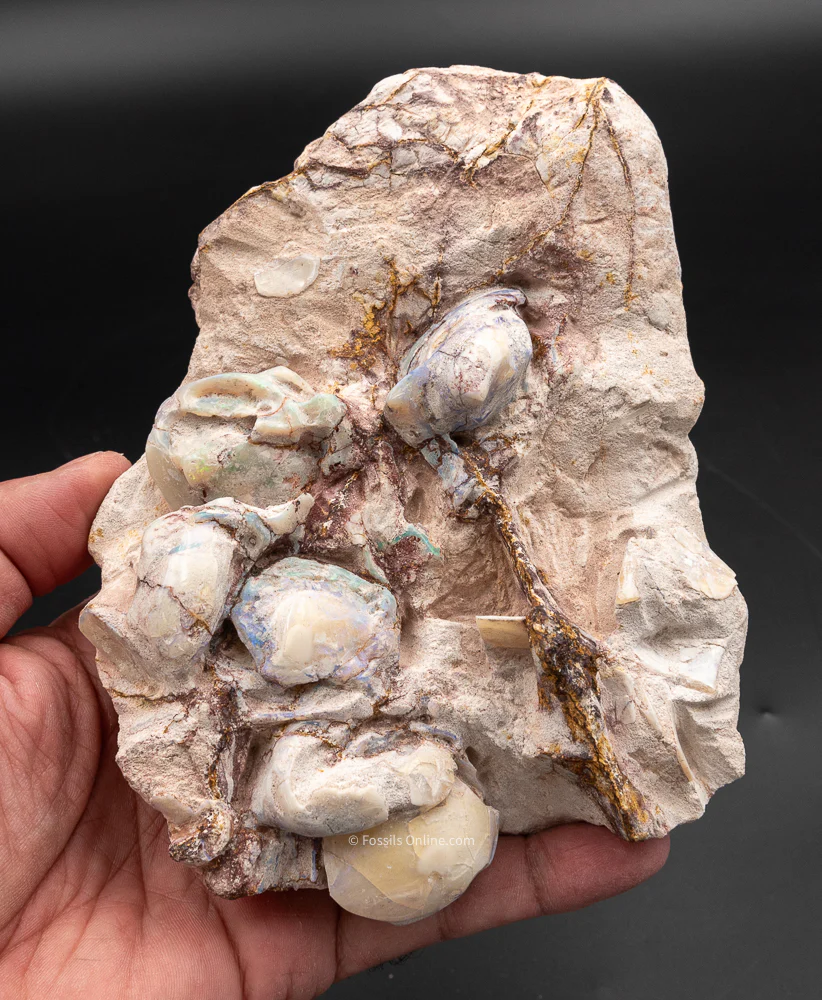
This mesmerizing specimen features a stunning cluster of opalized clams preserved in their original matrix, hailing from the Early Cretaceous period in Coober Pedy, Australia. Examples such as this are not all that common in the open market. Single clams are fairly common, but clusters with multiple specimens are not. Fantastic piece if you are looking for a truly unique specimen for your collection or display.
The original matrix measures 6"W x 4.78"H X 2"D.
Opalization occurs when organic material, such as clamshells, is buried in sediment and gradually replaced by silica-rich solutions over millions of years. In areas like Coober Pedy, Australia, ancient seas receded, leaving behind silicate-laden groundwater. As the water evaporated, silica particles settled into voids left by decaying shells, forming a gel-like substance. Over time, this silica hardened into opal, capturing the shape and intricate details of the original clamshells.
Product Information
Product Information
Shipping & Returns
Shipping & Returns
Polished Australian Opalized Clams in Original Matrix
Polished Australian Opalized Clams in Original Matrix
This mesmerizing specimen features a stunning cluster of opalized clams preserved in their original matrix, hailing from the Early Cretaceous period in Coober Pedy, Australia. Examples such as this are not all that common in the open market. Single clams are fairly common, but clusters with multiple specimens are not. Fantastic piece if you are looking for a truly unique specimen for your collection or display.
The original matrix measures 6"W x 4.78"H X 2"D.
Opalization occurs when organic material, such as clamshells, is buried in sediment and gradually replaced by silica-rich solutions over millions of years. In areas like Coober Pedy, Australia, ancient seas receded, leaving behind silicate-laden groundwater. As the water evaporated, silica particles settled into voids left by decaying shells, forming a gel-like substance. Over time, this silica hardened into opal, capturing the shape and intricate details of the original clamshells.
Original: $2,400.00
-65%$2,400.00
$840.00Product Information
Product Information
Shipping & Returns
Shipping & Returns
Description
This mesmerizing specimen features a stunning cluster of opalized clams preserved in their original matrix, hailing from the Early Cretaceous period in Coober Pedy, Australia. Examples such as this are not all that common in the open market. Single clams are fairly common, but clusters with multiple specimens are not. Fantastic piece if you are looking for a truly unique specimen for your collection or display.
The original matrix measures 6"W x 4.78"H X 2"D.
Opalization occurs when organic material, such as clamshells, is buried in sediment and gradually replaced by silica-rich solutions over millions of years. In areas like Coober Pedy, Australia, ancient seas receded, leaving behind silicate-laden groundwater. As the water evaporated, silica particles settled into voids left by decaying shells, forming a gel-like substance. Over time, this silica hardened into opal, capturing the shape and intricate details of the original clamshells.