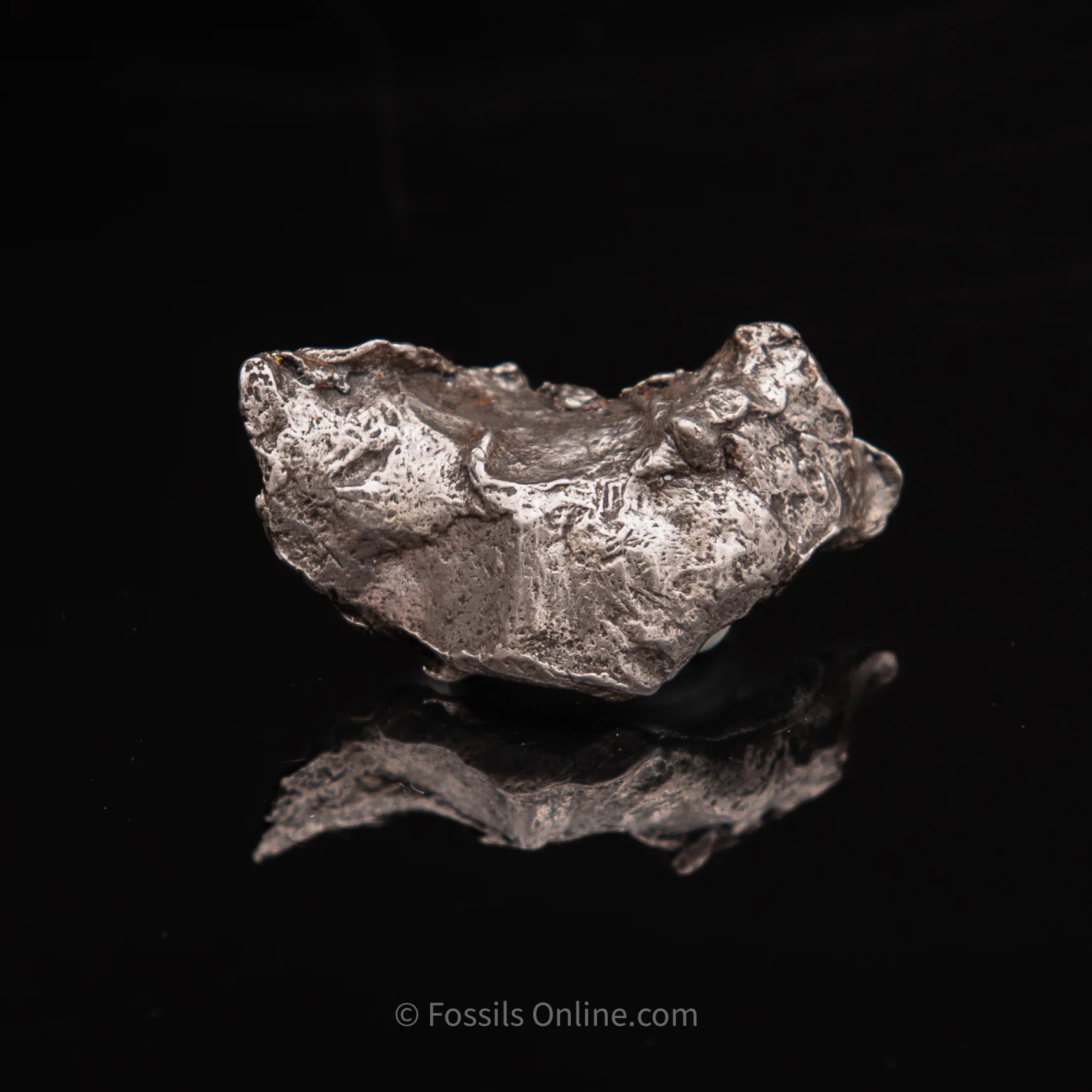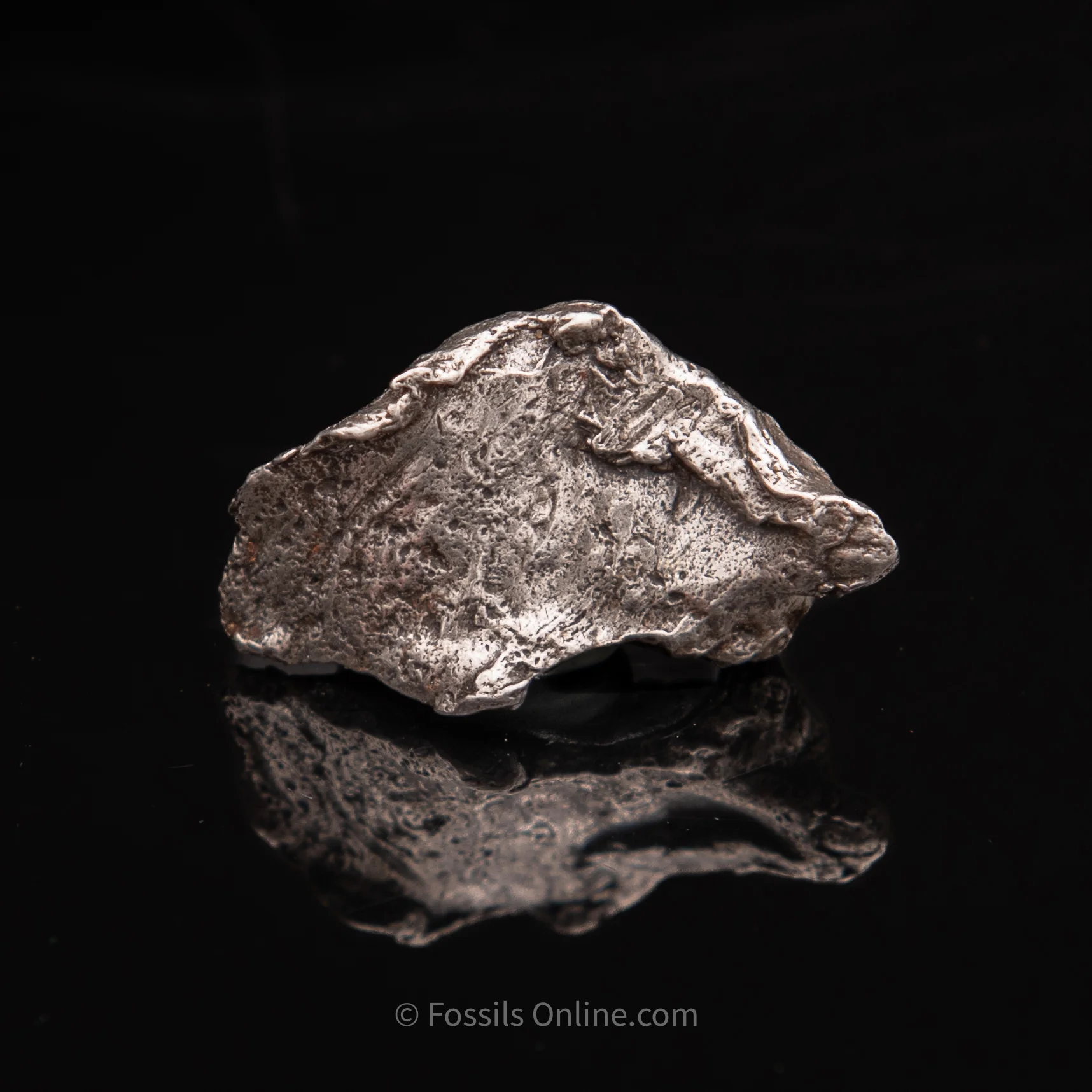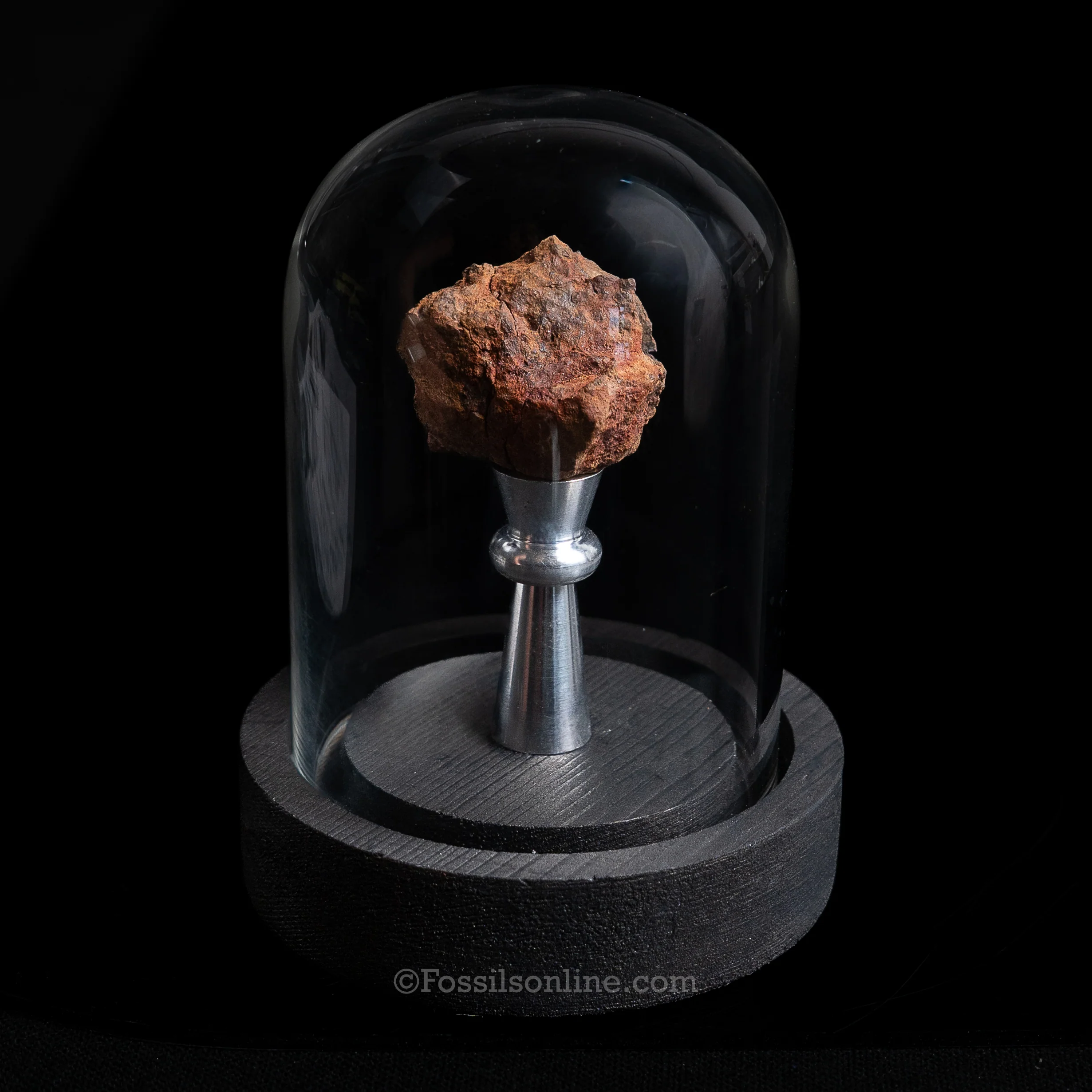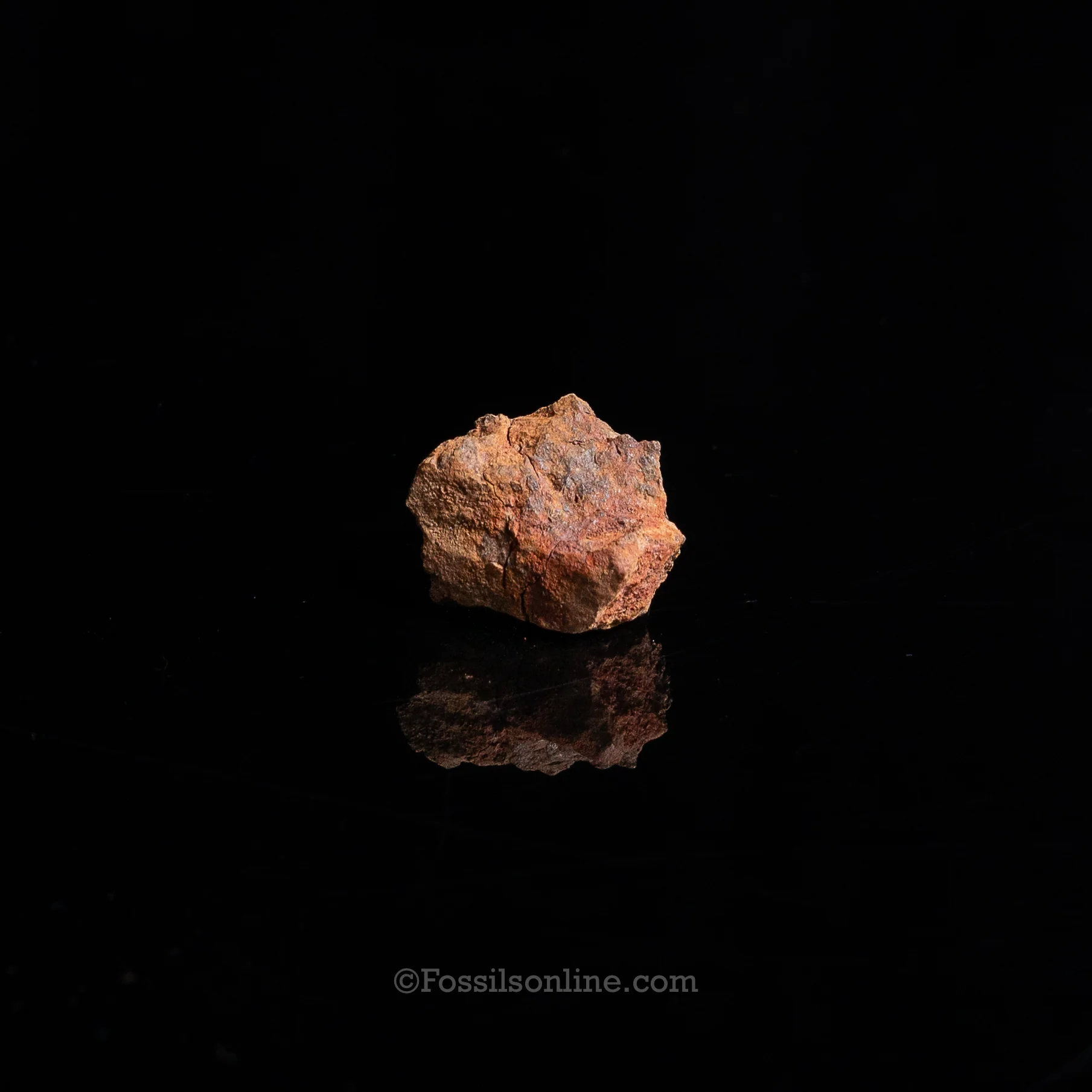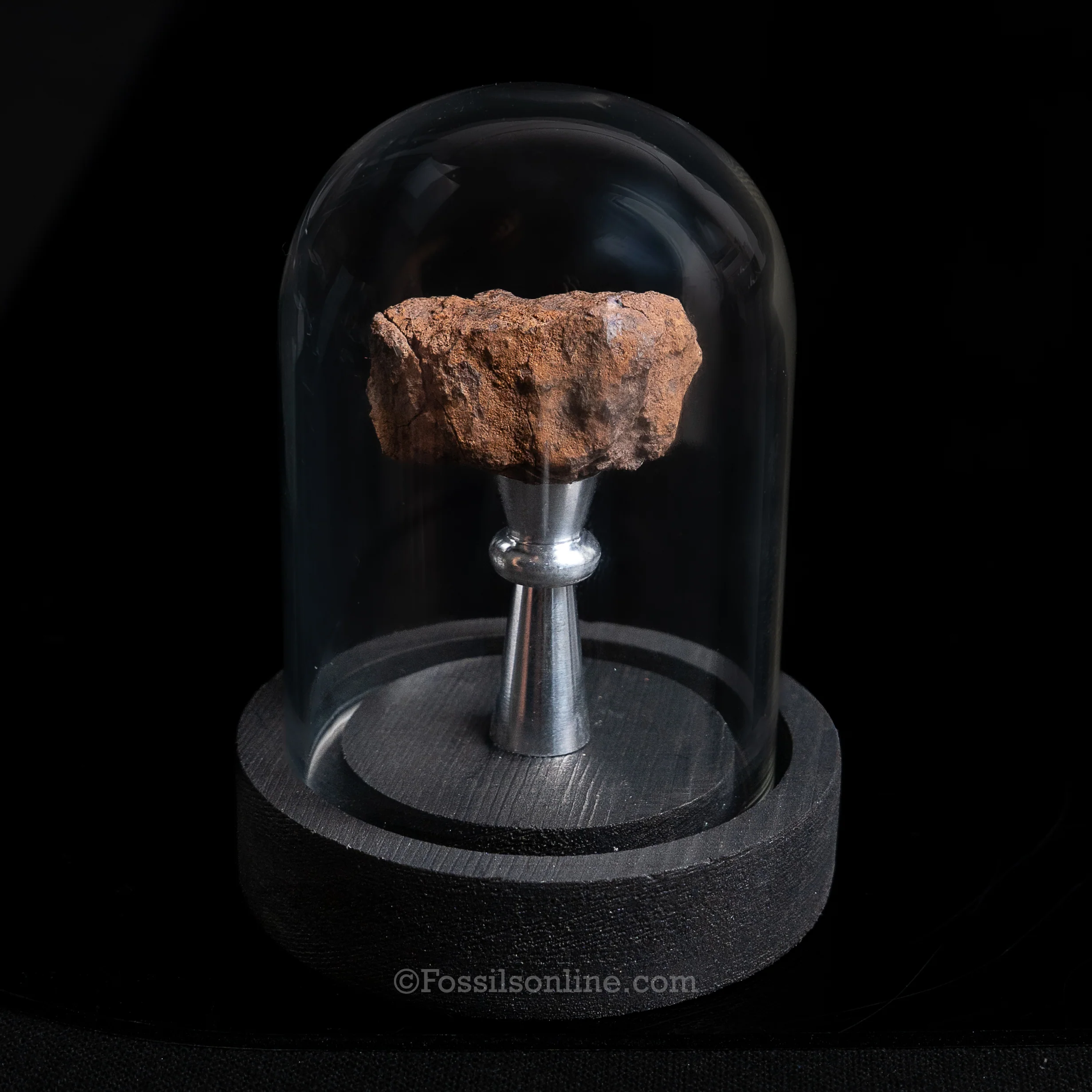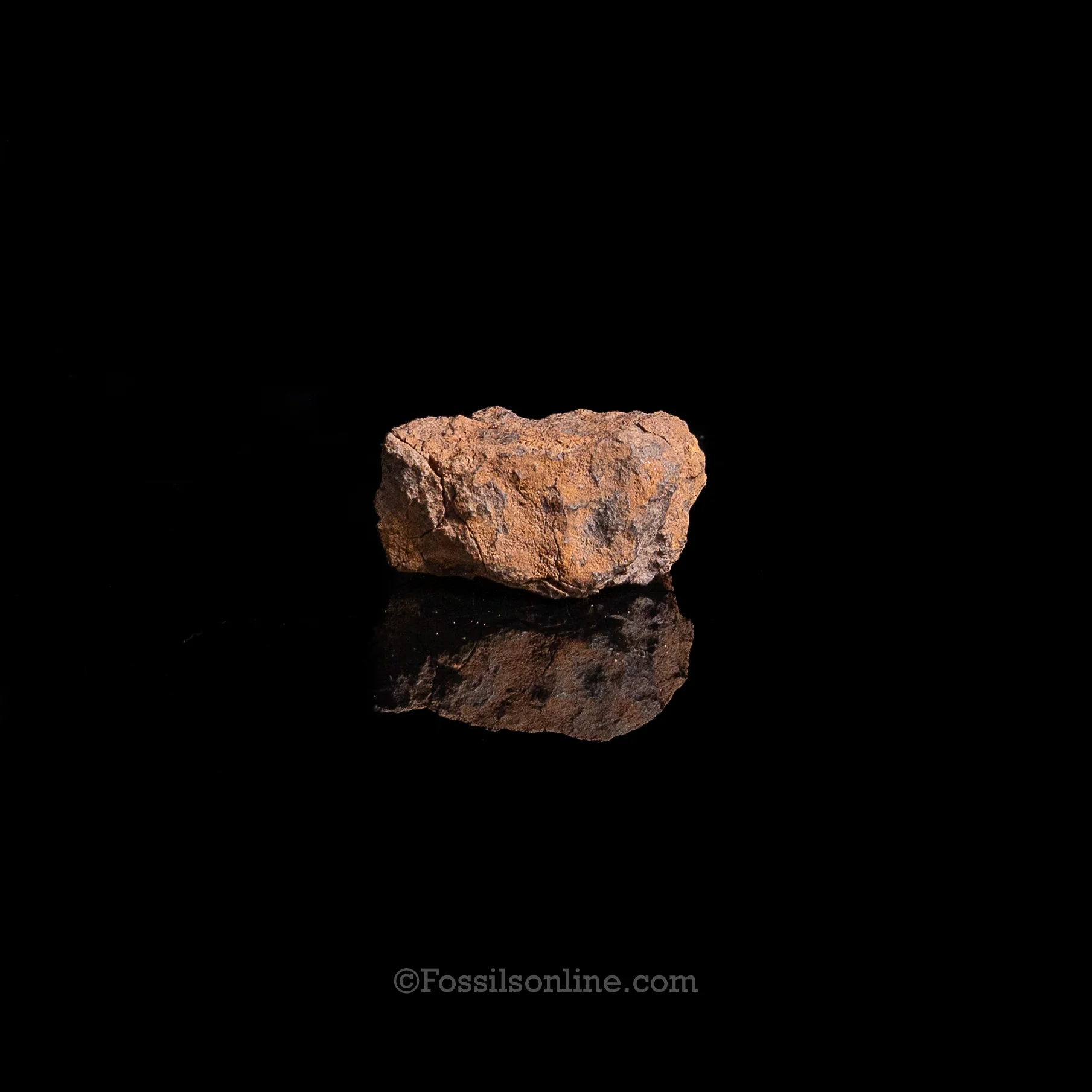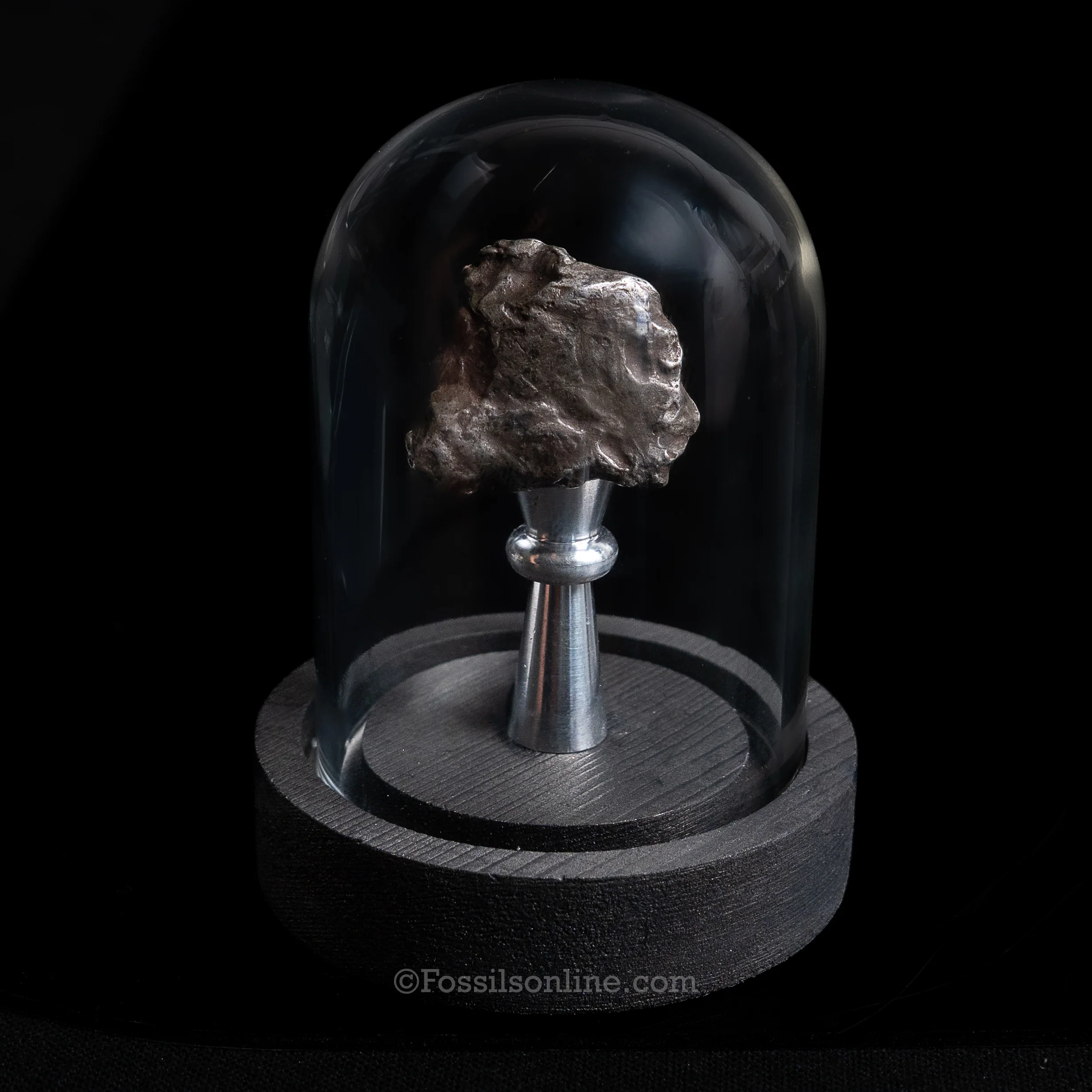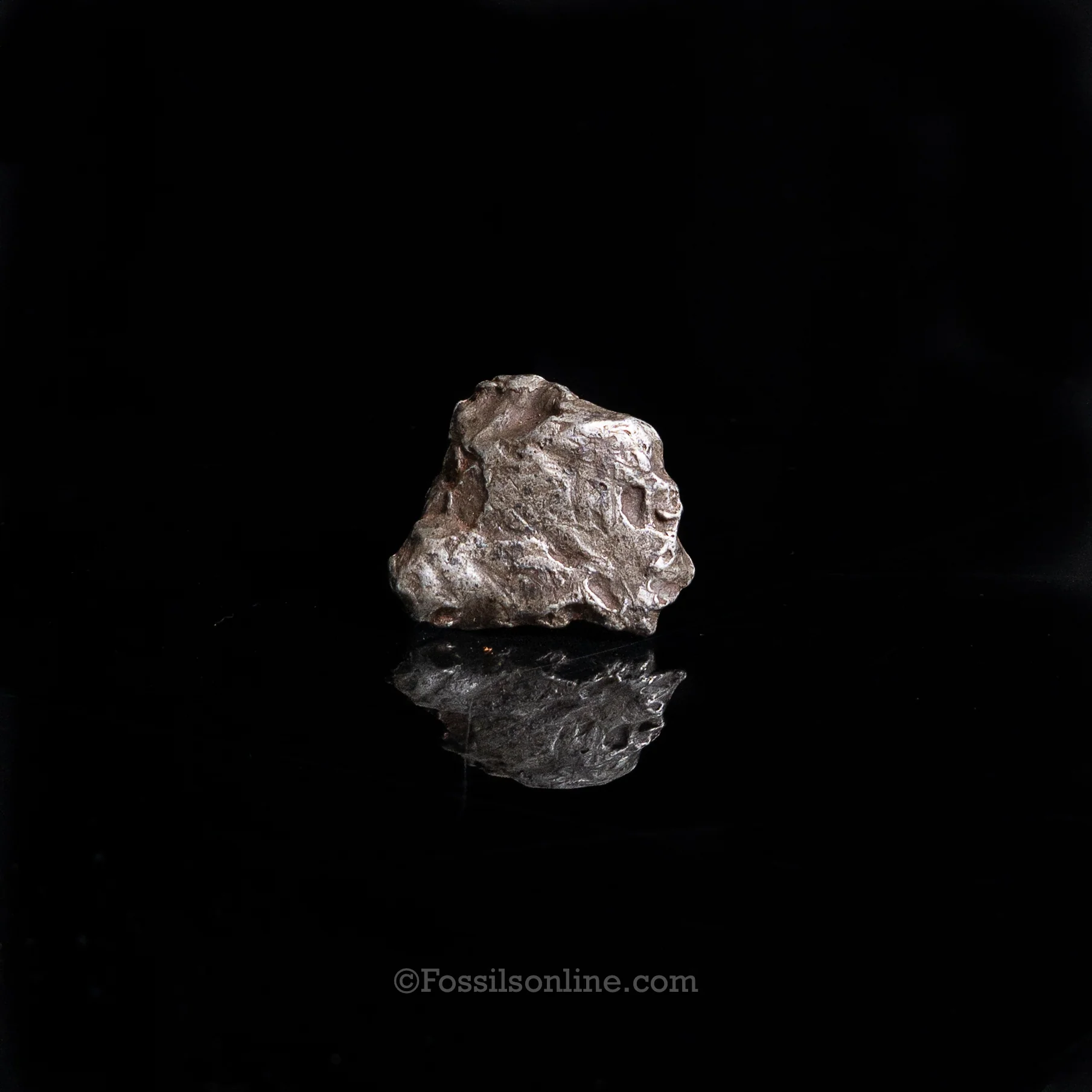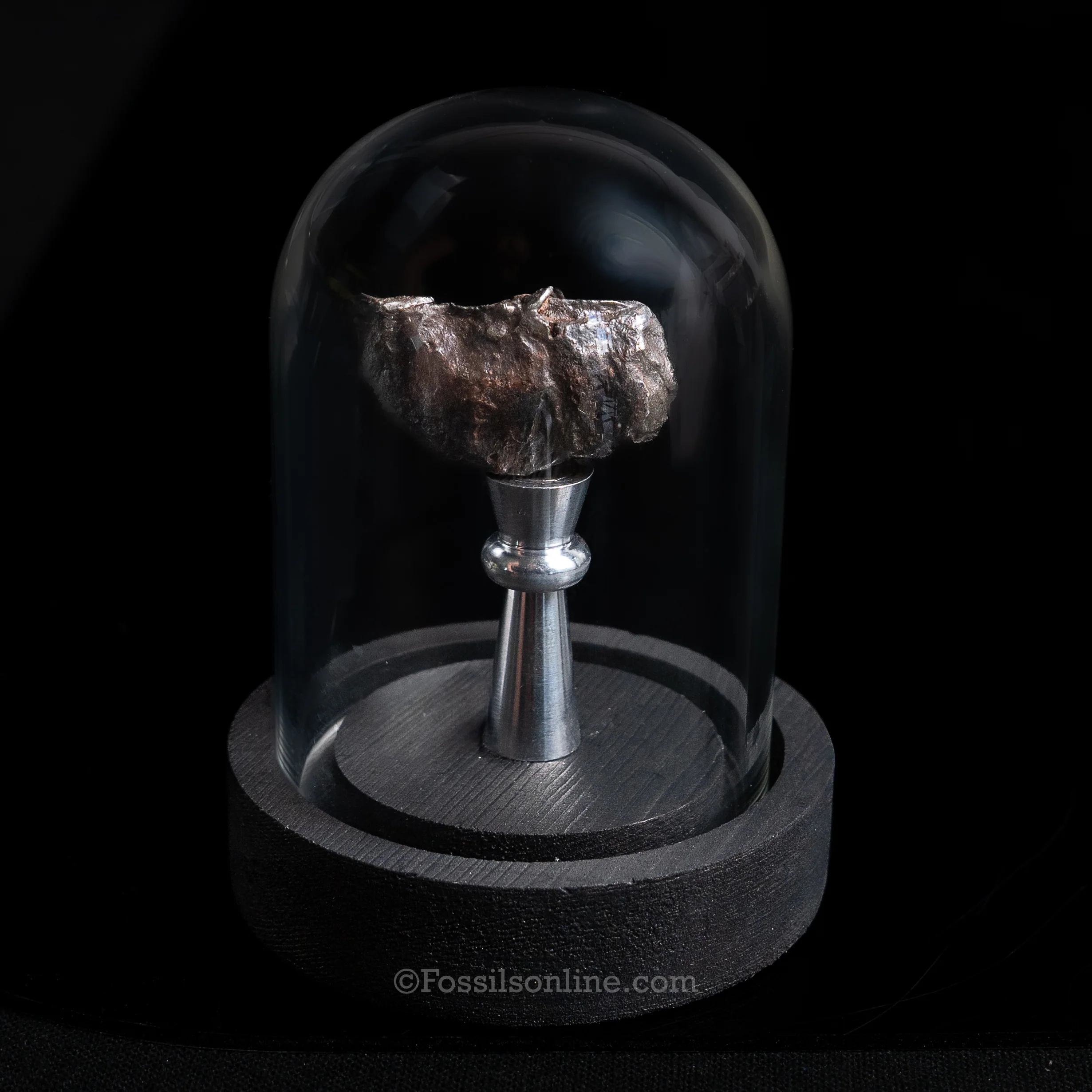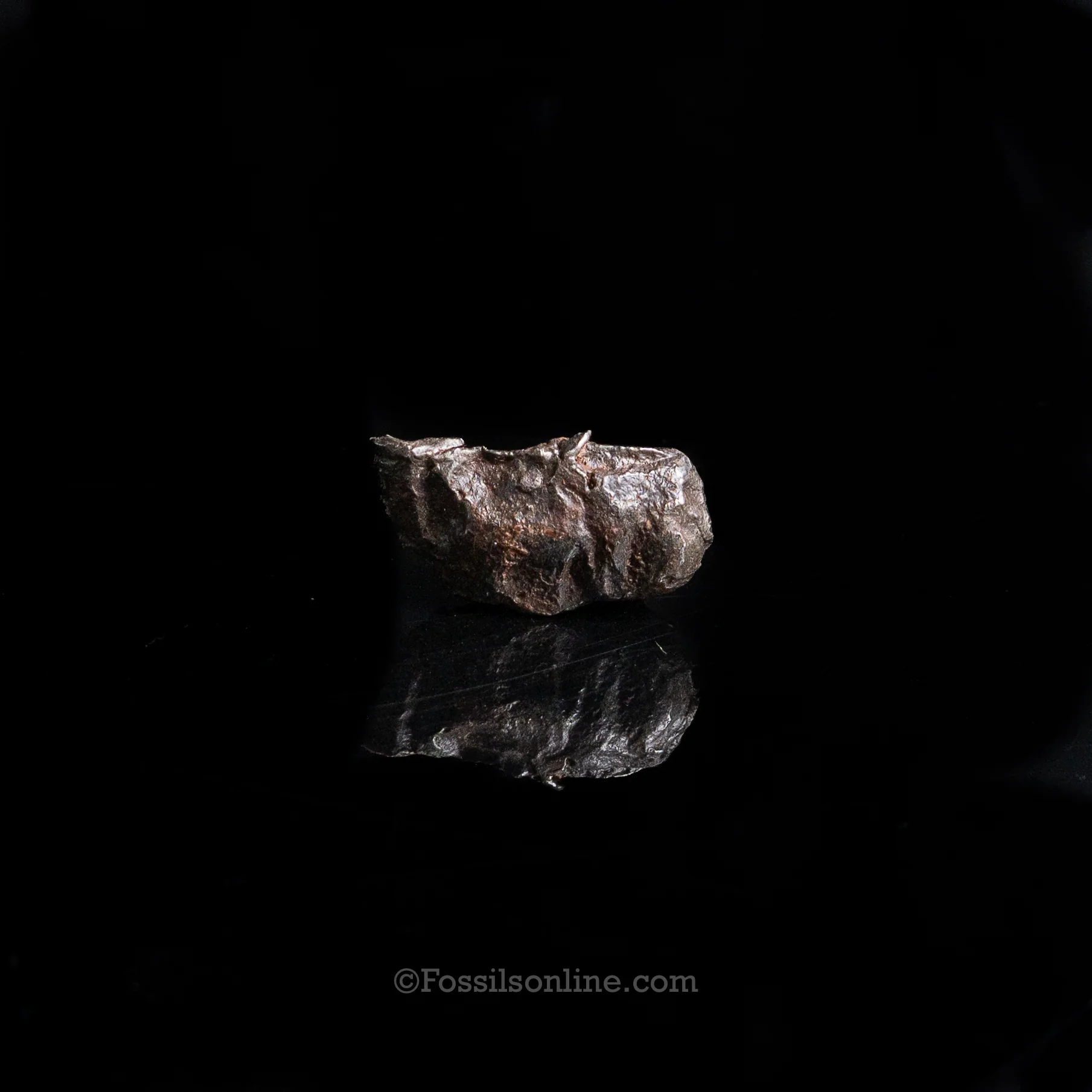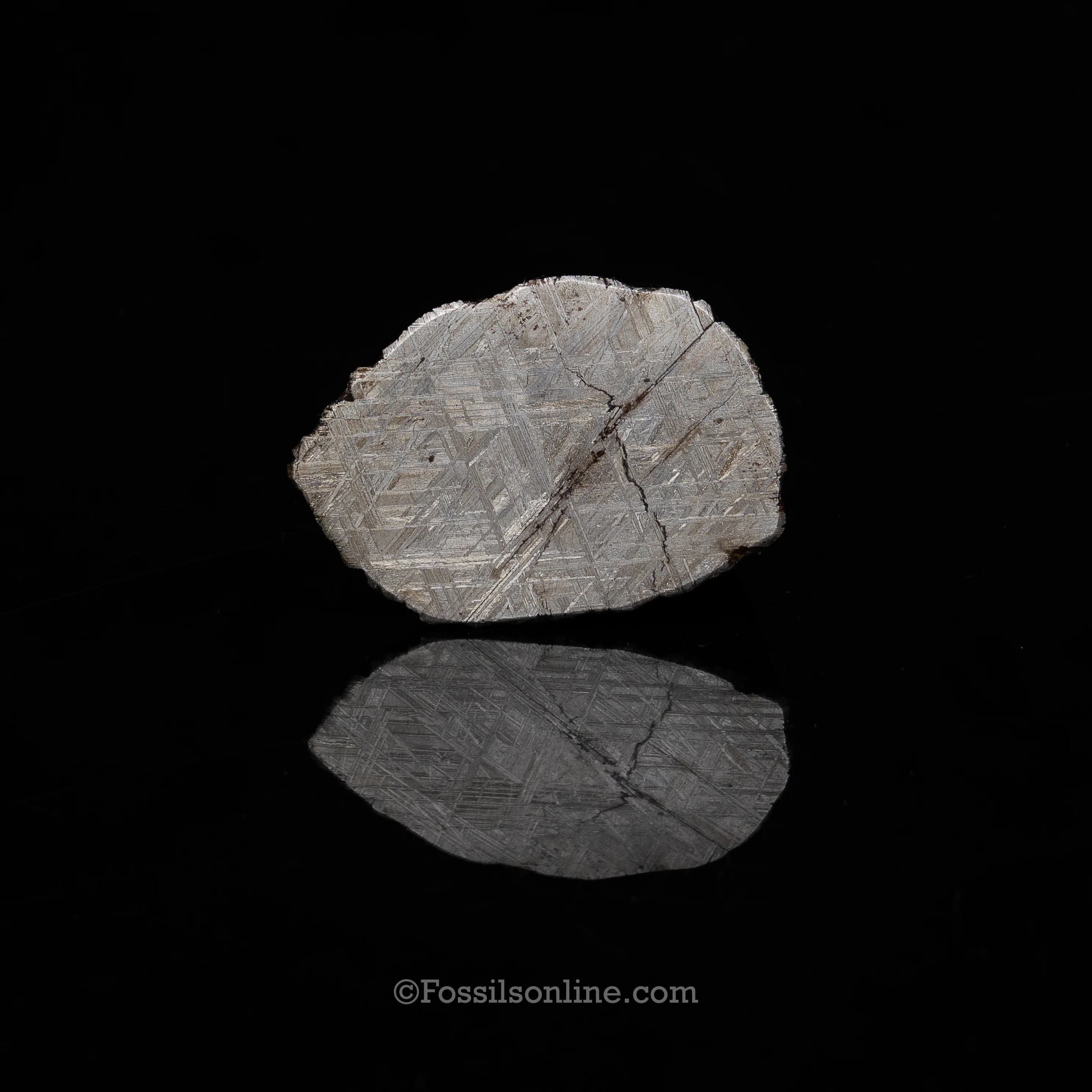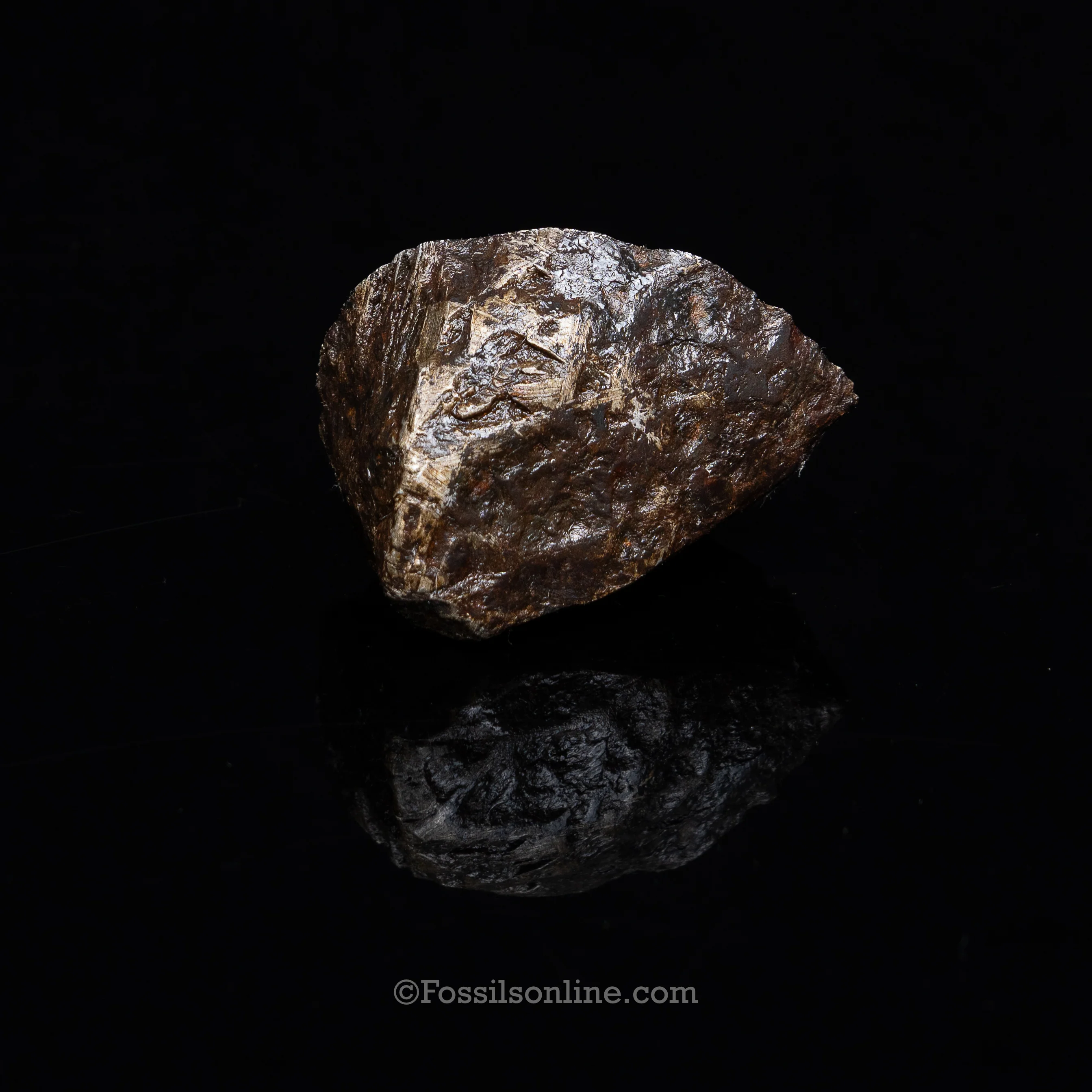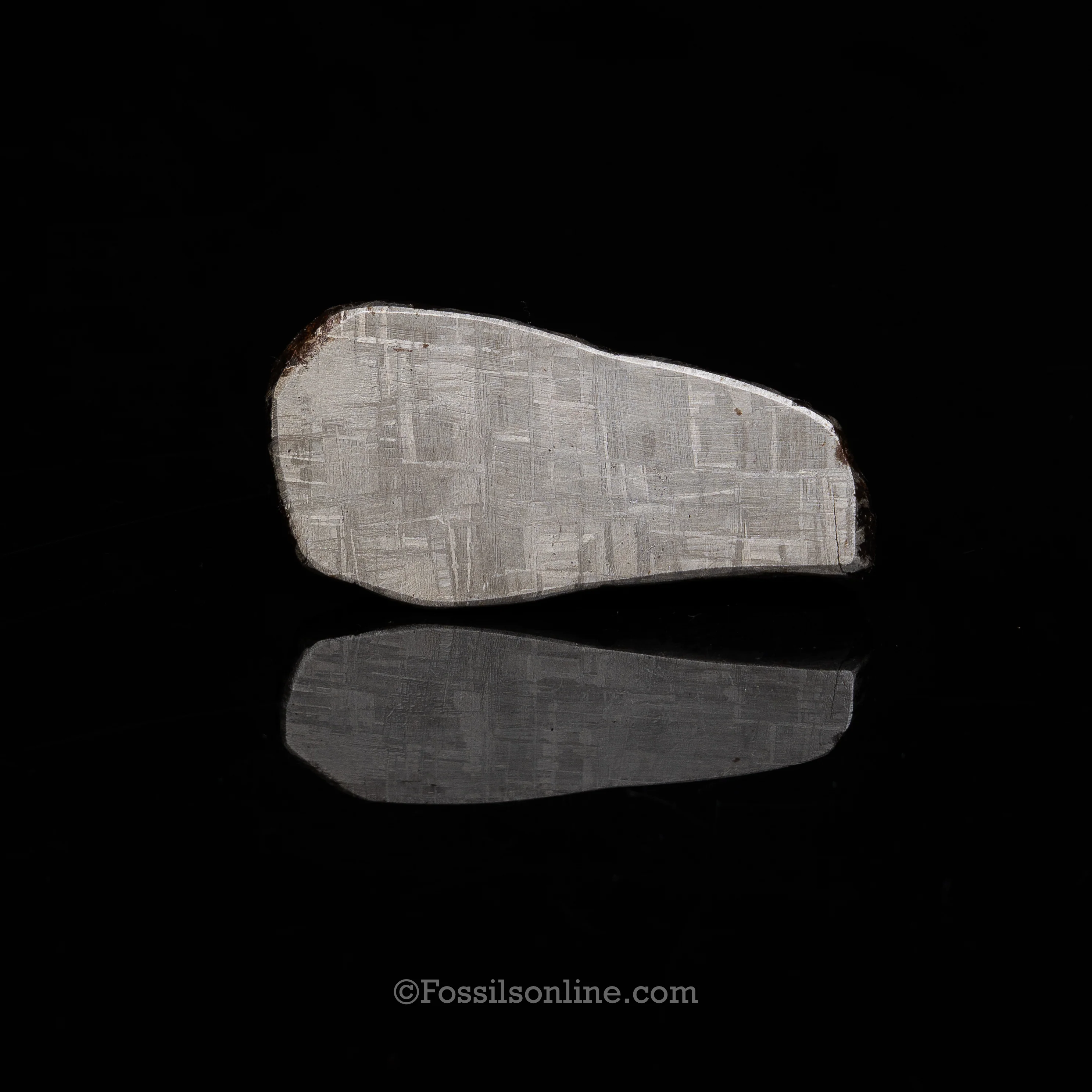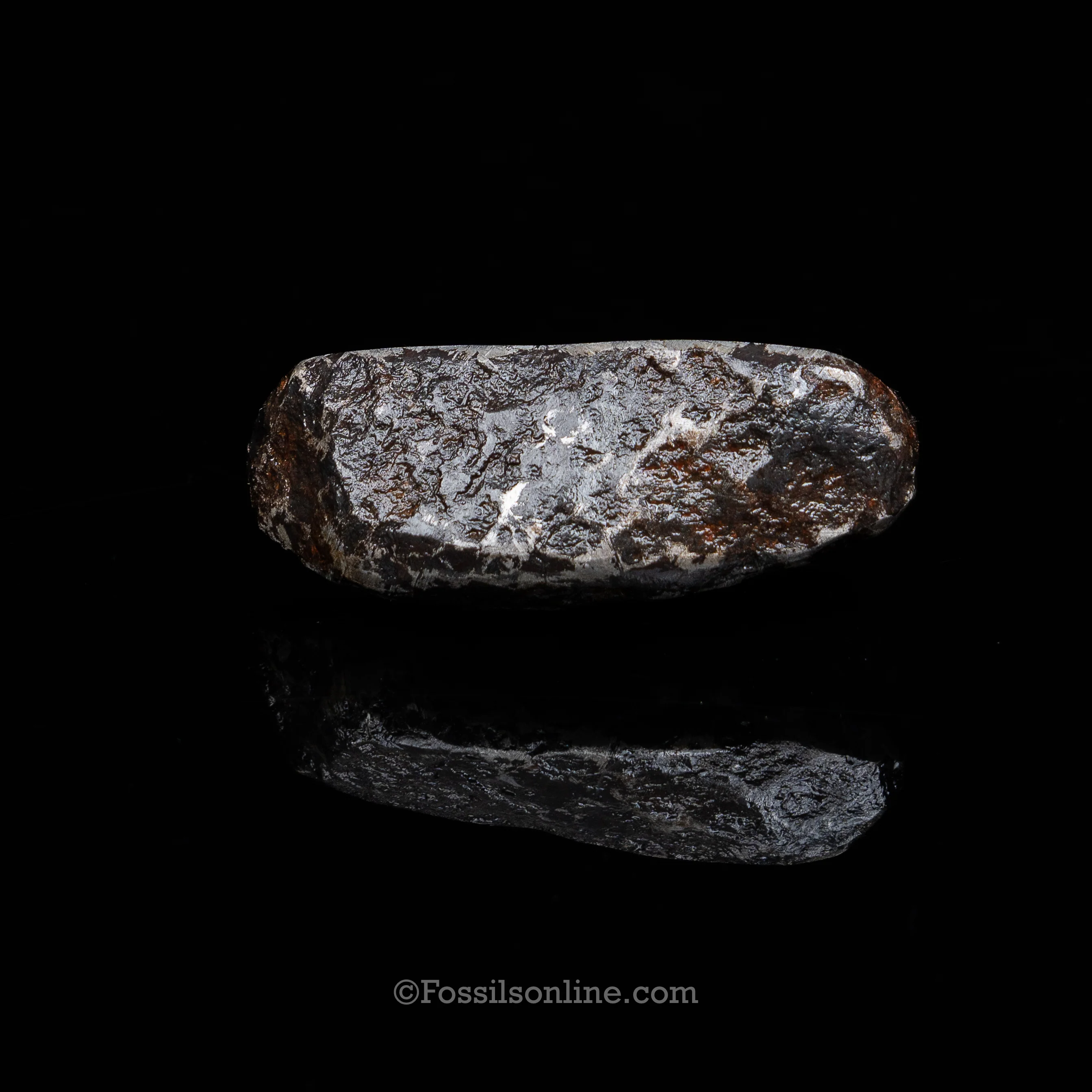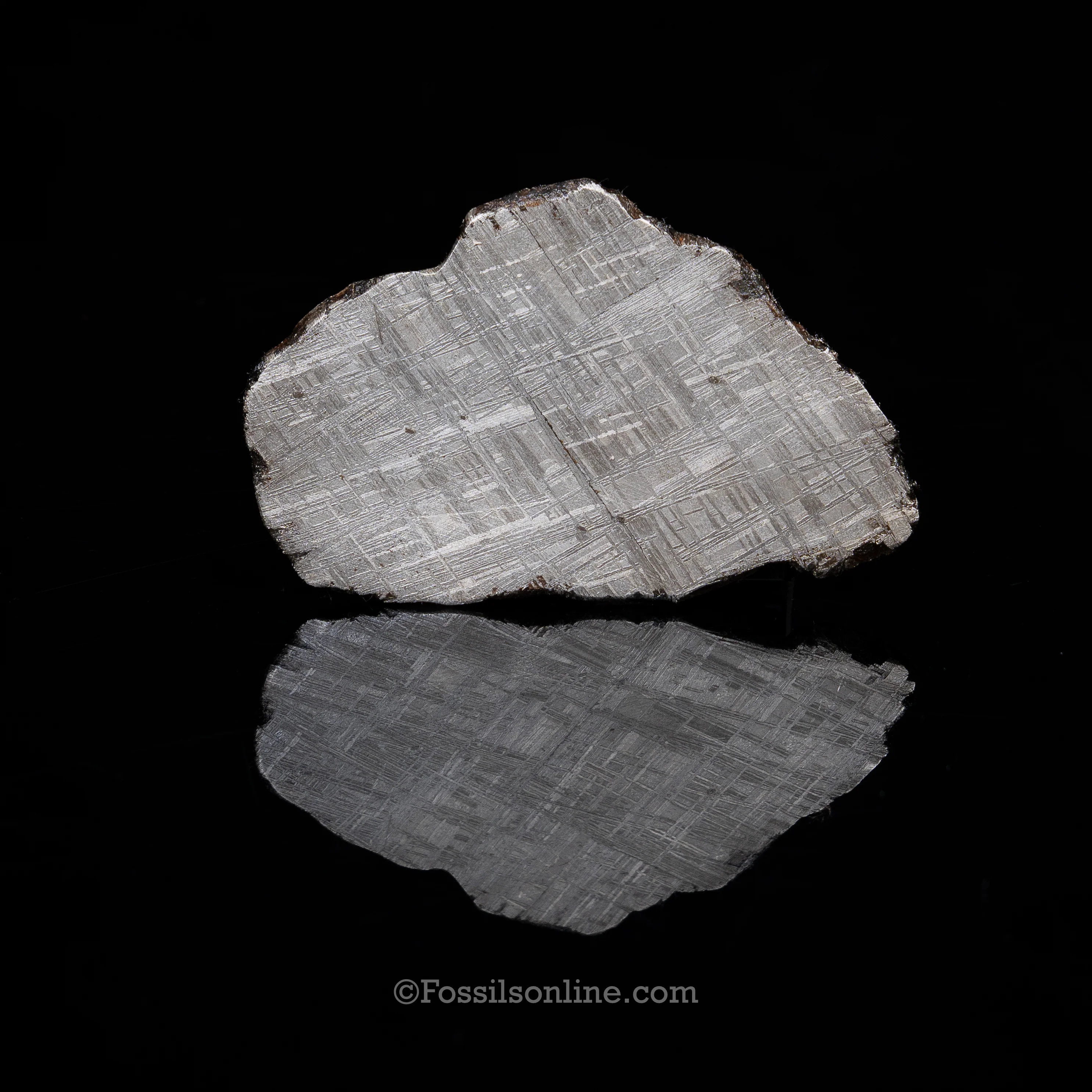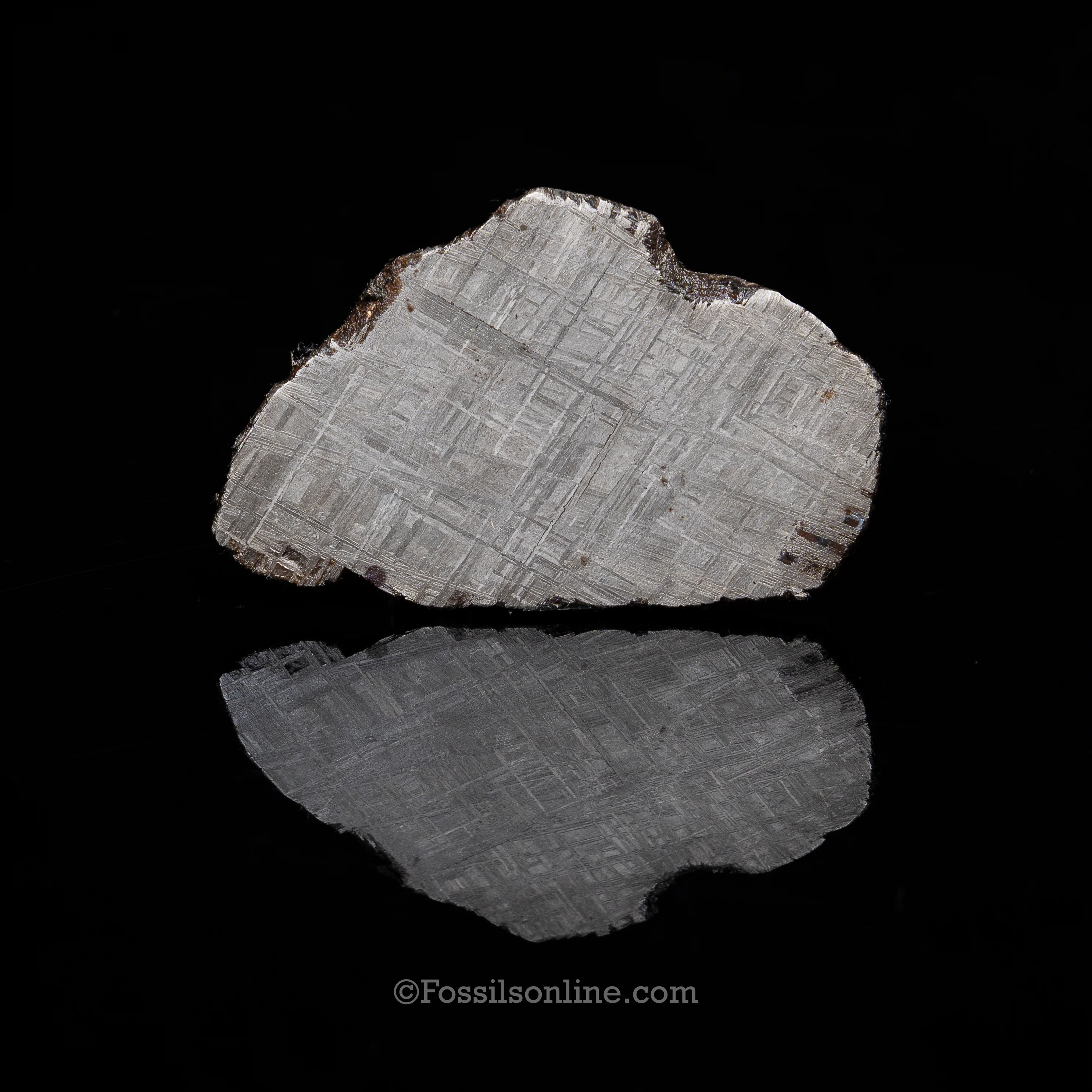
Muonionalusta Meteorite Slice 101gr
Muonionalusta Meteorite
A 4.5-Billion-Year-Old Fragment of a Shattered Planetary Core
Few objects on Earth carry a history as vast as the Muonionalusta meteorite. Formed at the very dawn of our solar system (approximately 4.5653 billion years ago) this extraordinary iron meteorite originated in the molten core of an ancient protoplanet that was violently shattered long before Earth's continents existed.
The Fall Muonionalusta impacted northern Scandinavia roughly one million years ago, making it the oldest known meteorite to have struck Earth during the Quaternary Period. It fell west of the Sweden-Finland border, in what is now the remote Lapland tundra of Norrbotten County, Sweden. The impact shattered the mass into numerous fragments scattered across a strewn field approximately 25 × 25 kilometers wide. Over the next million years, the meteorite endured four complete ice ages, buried, transported, and preserved within glacial moraines until the first fragment was unearthed in 1906 near the village of Kitkiöjärvi. Since then, more than 40 individual specimens have been recovered and studied by institutions worldwide.
Classification & Composition Muonionalusta is classified as a fine octahedrite, Group IVA (Of) , an iron meteorite derived from the core or core-mantle boundary of a differentiated planetary body. Its composition is approximately:
- Iron ~90%
- Nickel ~8%
- Trace amounts of cobalt, phosphorus, manganese, gallium, and germanium
This IVA classification links it to a specific parent body whose core was exposed and flash-cooled in the vacuum of space following a catastrophic collision, an event written permanently into the meteorite's crystal structure.
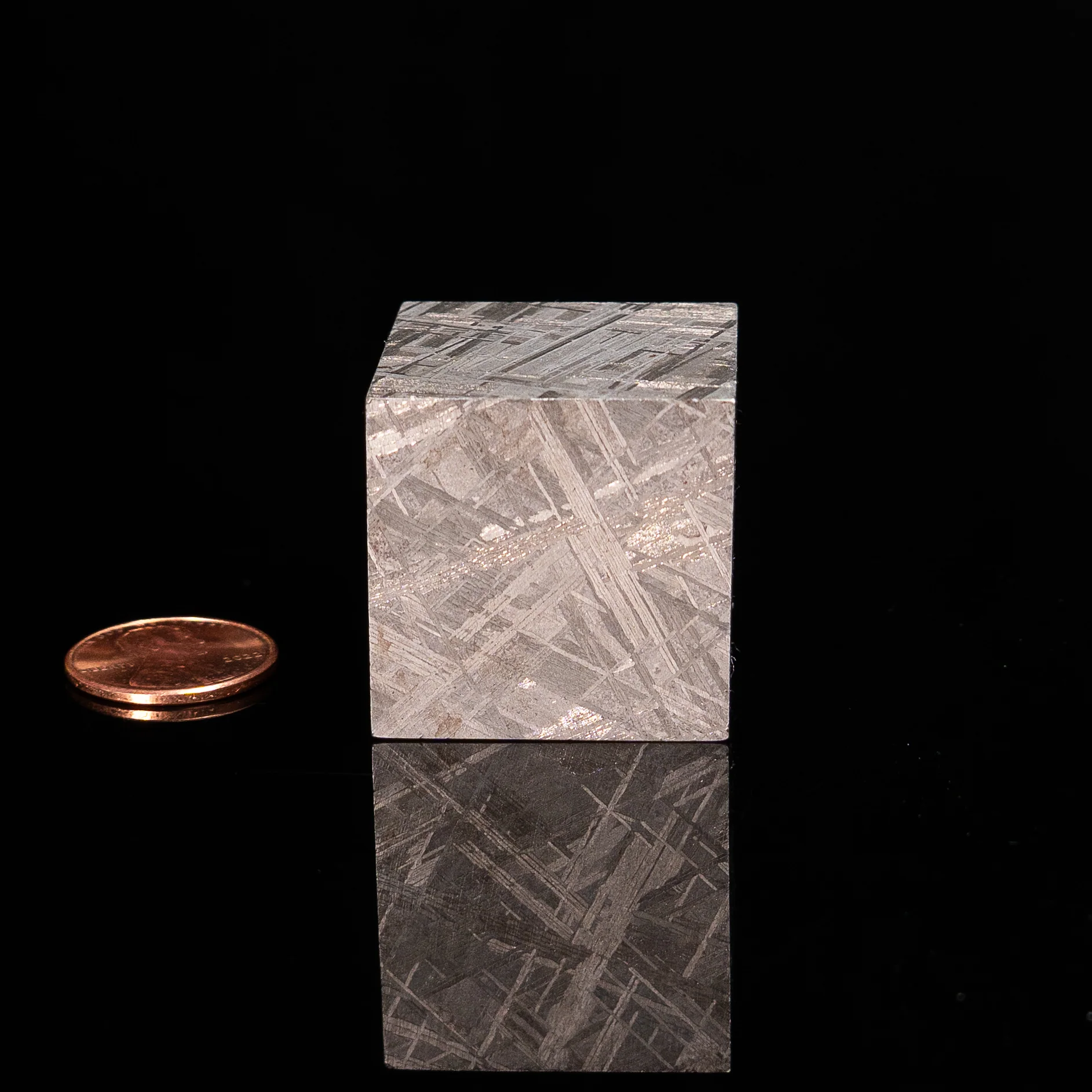
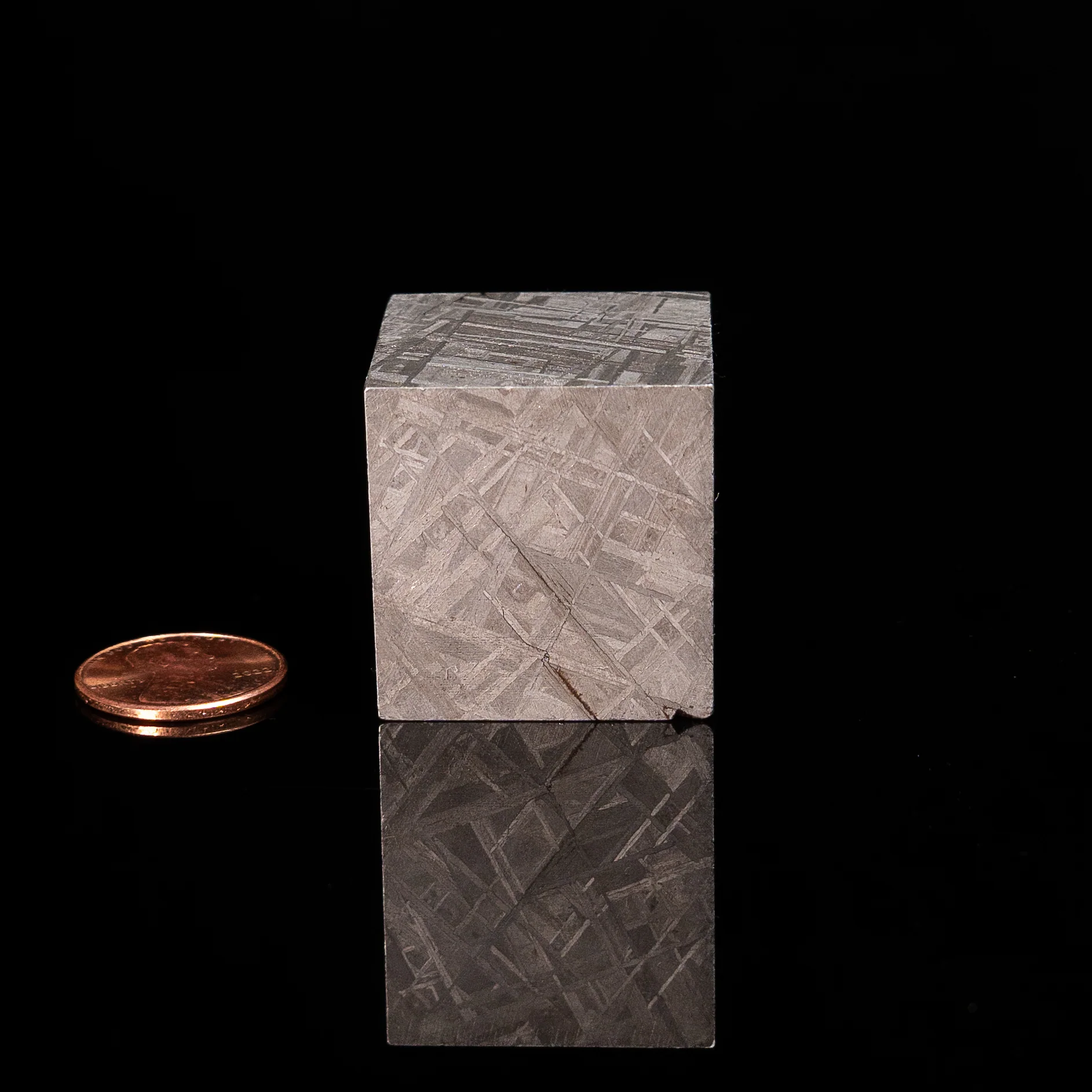
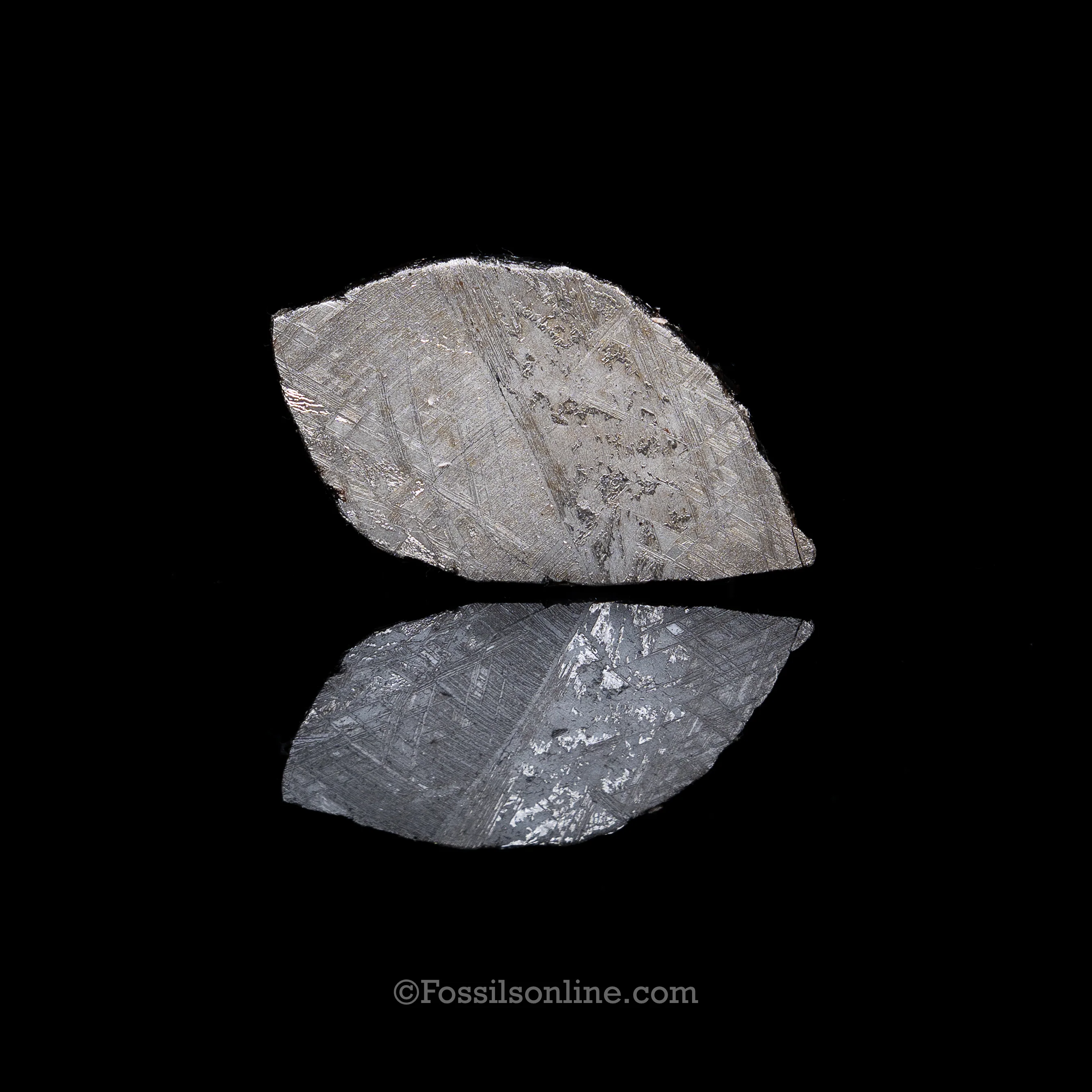
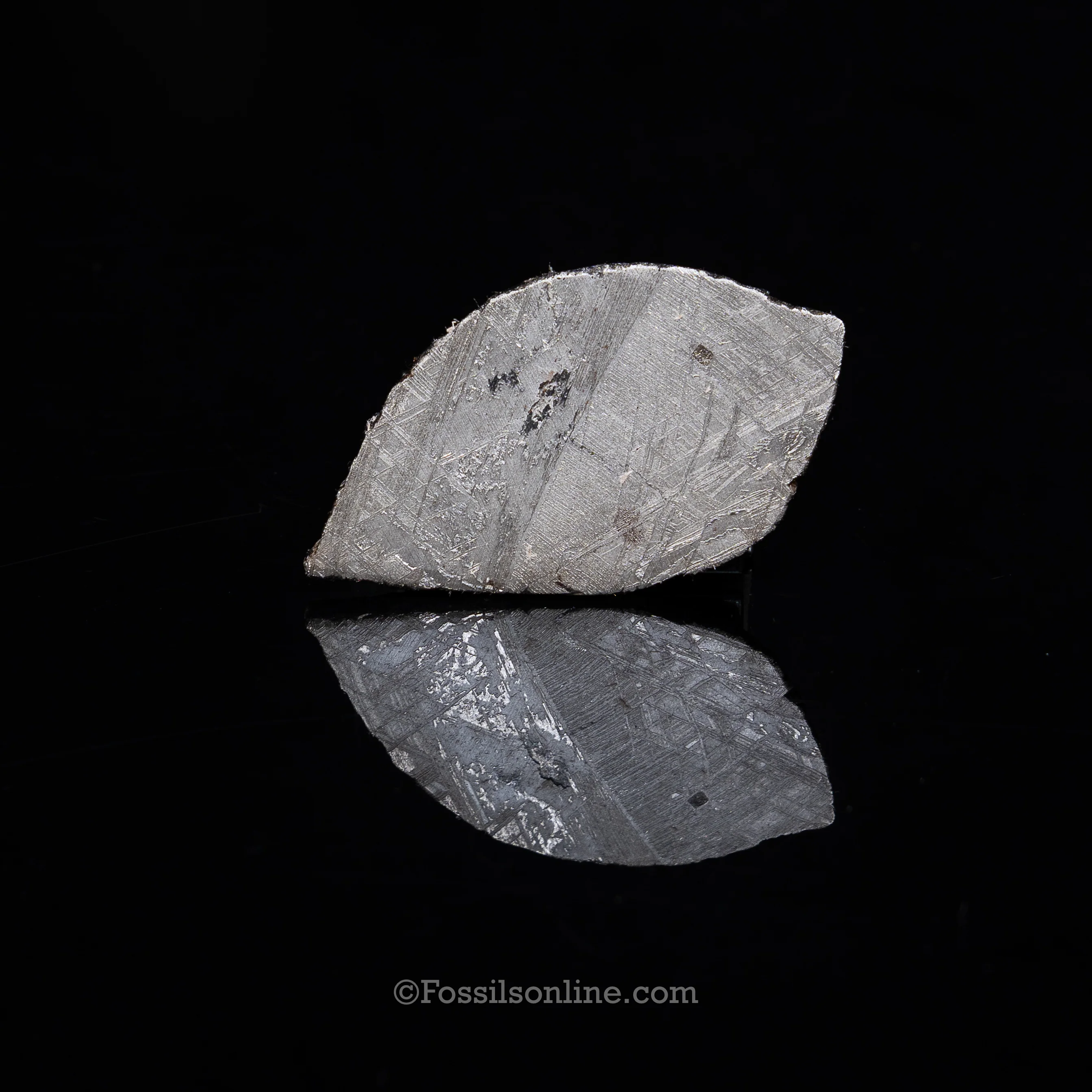
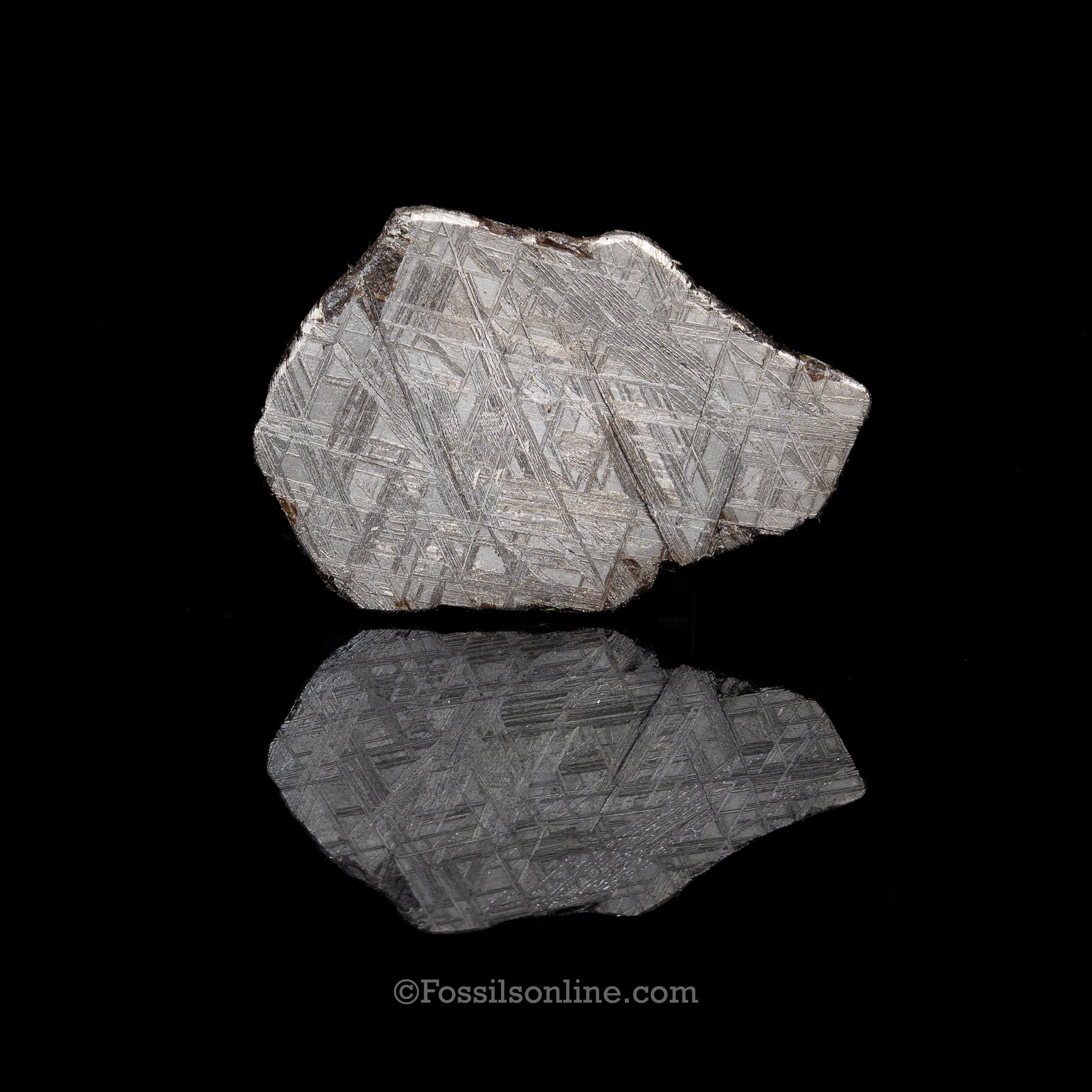
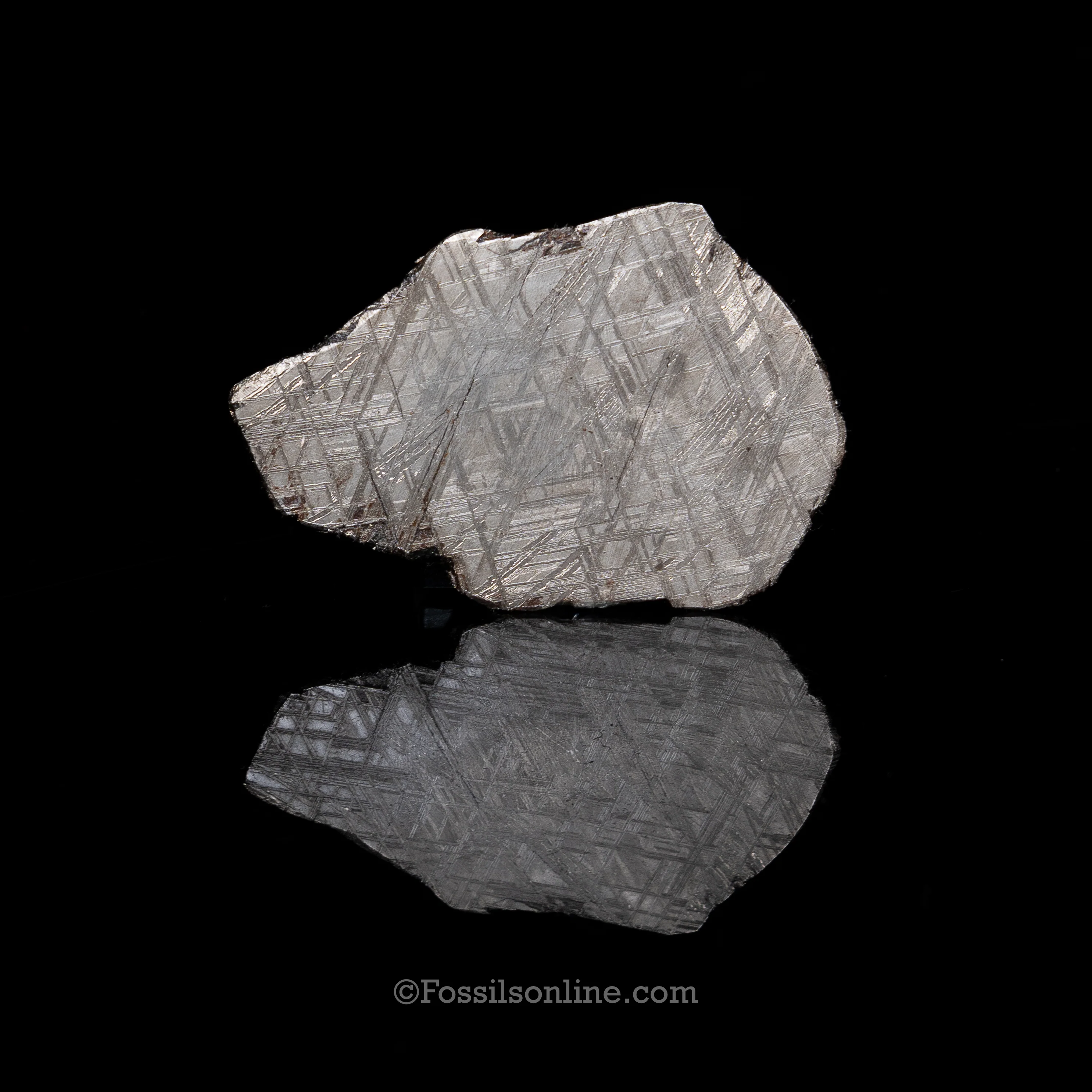
The Widmanstätten Pattern The defining feature of every Muonionalusta specimen is its breathtaking Widmanstätten pattern -an interlocking geometric lattice of kamacite (low nickel iron alloy) and taenite (high nickel iron alloy) crystals that formed as the molten planetary core cooled at a rate of just 1–100°C per million years. This glacially slow cooling process, possible only deep inside a large celestial body in the vacuum of space, cannot be replicated in any laboratory on Earth. The result is a crystalline fingerprint of cosmic origin, invisible until the specimen is cut, polished flat, and acid etched to reveal the full geometric structure. No two slices are identical. The fine scale banding of the IVA group produces one of the most visually refined Widmanstätten patterns found in any iron meteorite, with delicate interlacing bands forming precise triangular and chevron configurations depending on the cut angle.
A Meteorite of Scientific Distinction Muonionalusta holds several remarkable scientific distinctions. It marks the first recorded occurrence of stishovite, an ultra high pressure polymorph of silicon dioxide, found within an iron meteorite, evidence of a violent impact event approximately 400 million years ago. It is also the source of the mineral muonionalustaite, a hydrated nickel chloride formed as a weathering product after the meteorite's long terrestrial burial.
What You're Purchasing Each specimen offered by Fossils Online is a genuine, authenticated slice or end piece of the Muonionalusta meteorite , cut, polished, and acid-etched to reveal the full Widmanstätten pattern. These are finite, natural objects. No two pieces are alike in pattern geometry, shape, or dimension.
Product Information
Product Information
Shipping & Returns
Shipping & Returns
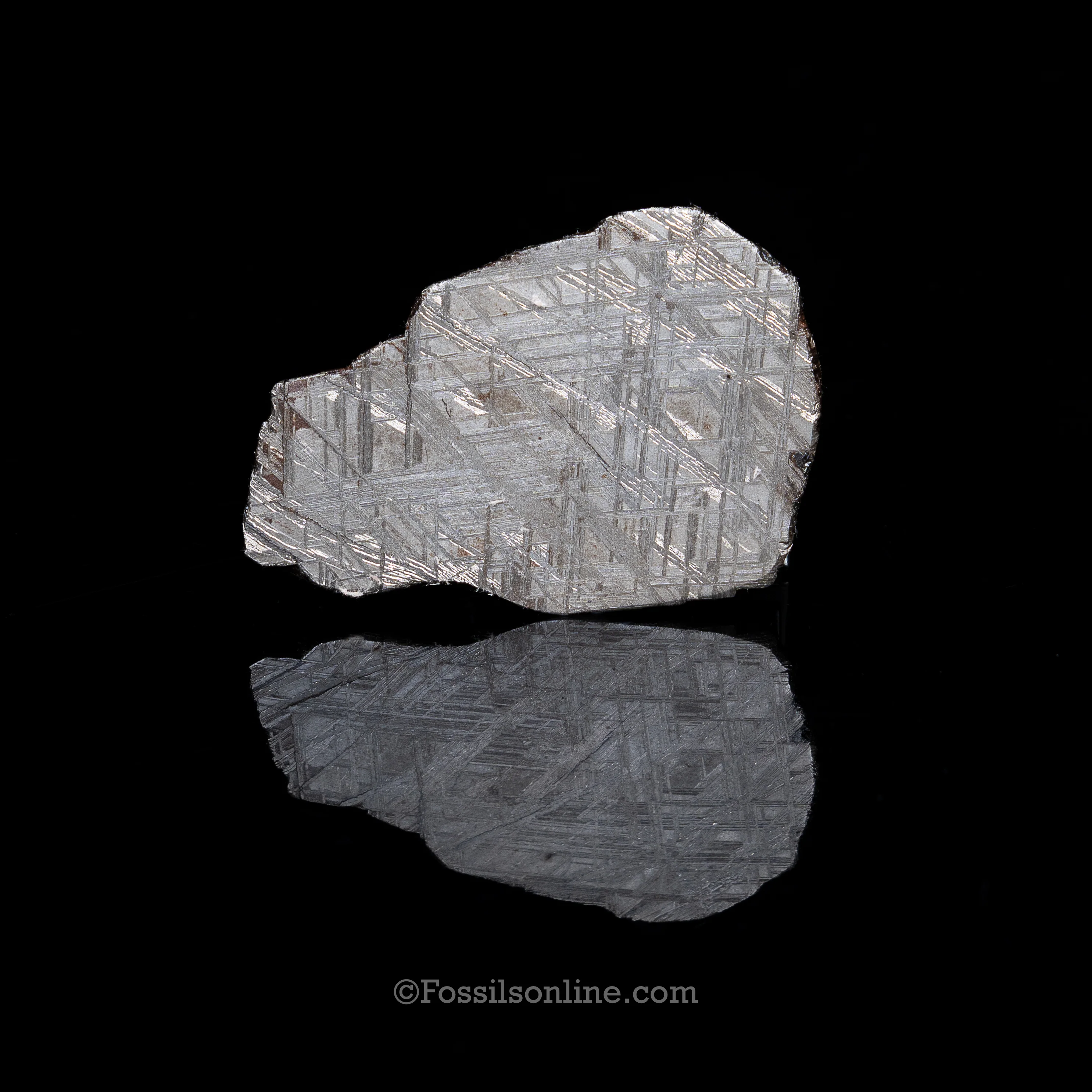
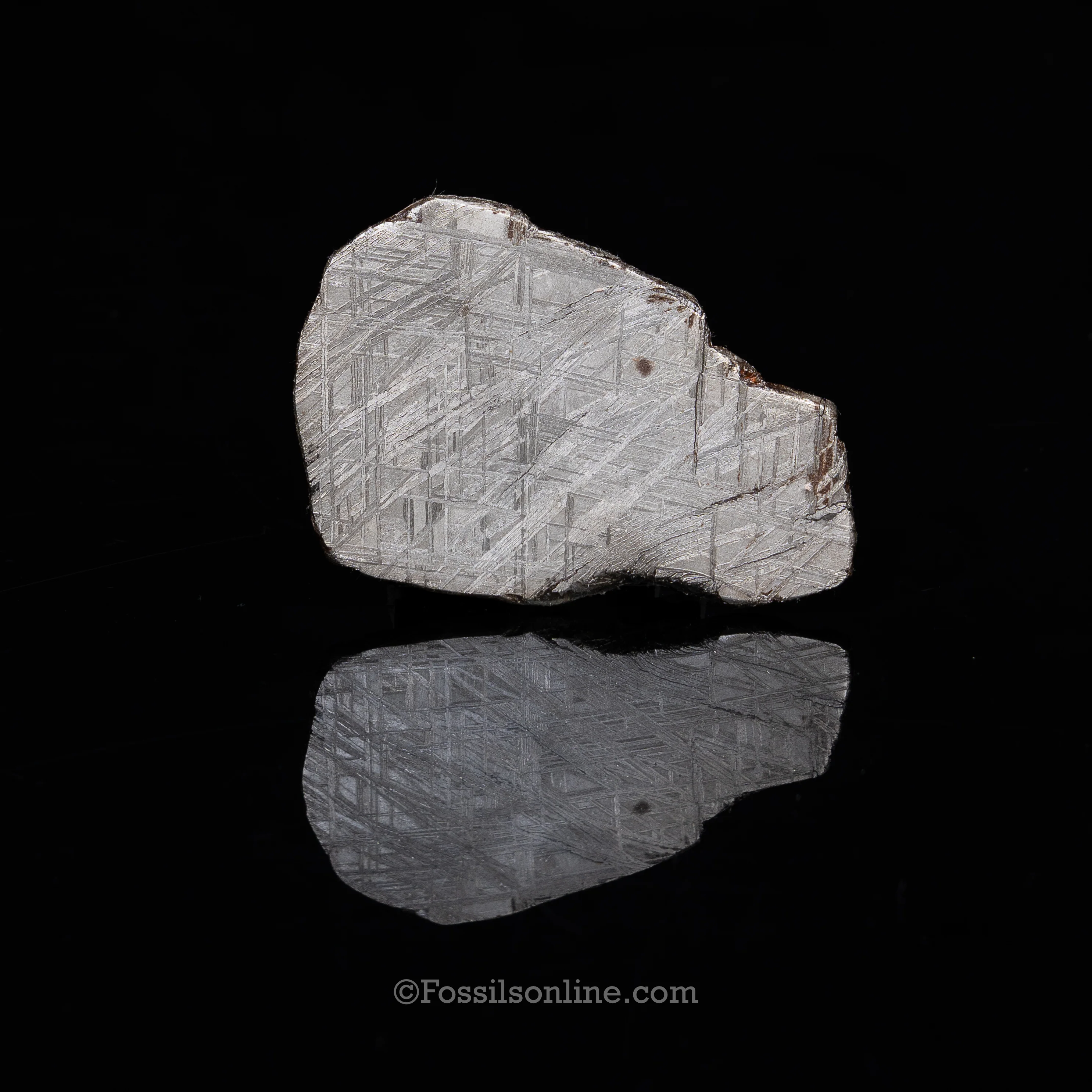
Muonionalusta Meteorite Slice 101gr
Muonionalusta Meteorite Slice 101gr
Muonionalusta Meteorite
A 4.5-Billion-Year-Old Fragment of a Shattered Planetary Core
Few objects on Earth carry a history as vast as the Muonionalusta meteorite. Formed at the very dawn of our solar system (approximately 4.5653 billion years ago) this extraordinary iron meteorite originated in the molten core of an ancient protoplanet that was violently shattered long before Earth's continents existed.
The Fall Muonionalusta impacted northern Scandinavia roughly one million years ago, making it the oldest known meteorite to have struck Earth during the Quaternary Period. It fell west of the Sweden-Finland border, in what is now the remote Lapland tundra of Norrbotten County, Sweden. The impact shattered the mass into numerous fragments scattered across a strewn field approximately 25 × 25 kilometers wide. Over the next million years, the meteorite endured four complete ice ages, buried, transported, and preserved within glacial moraines until the first fragment was unearthed in 1906 near the village of Kitkiöjärvi. Since then, more than 40 individual specimens have been recovered and studied by institutions worldwide.
Classification & Composition Muonionalusta is classified as a fine octahedrite, Group IVA (Of) , an iron meteorite derived from the core or core-mantle boundary of a differentiated planetary body. Its composition is approximately:
- Iron ~90%
- Nickel ~8%
- Trace amounts of cobalt, phosphorus, manganese, gallium, and germanium
This IVA classification links it to a specific parent body whose core was exposed and flash-cooled in the vacuum of space following a catastrophic collision, an event written permanently into the meteorite's crystal structure.
The Widmanstätten Pattern The defining feature of every Muonionalusta specimen is its breathtaking Widmanstätten pattern -an interlocking geometric lattice of kamacite (low nickel iron alloy) and taenite (high nickel iron alloy) crystals that formed as the molten planetary core cooled at a rate of just 1–100°C per million years. This glacially slow cooling process, possible only deep inside a large celestial body in the vacuum of space, cannot be replicated in any laboratory on Earth. The result is a crystalline fingerprint of cosmic origin, invisible until the specimen is cut, polished flat, and acid etched to reveal the full geometric structure. No two slices are identical. The fine scale banding of the IVA group produces one of the most visually refined Widmanstätten patterns found in any iron meteorite, with delicate interlacing bands forming precise triangular and chevron configurations depending on the cut angle.
A Meteorite of Scientific Distinction Muonionalusta holds several remarkable scientific distinctions. It marks the first recorded occurrence of stishovite, an ultra high pressure polymorph of silicon dioxide, found within an iron meteorite, evidence of a violent impact event approximately 400 million years ago. It is also the source of the mineral muonionalustaite, a hydrated nickel chloride formed as a weathering product after the meteorite's long terrestrial burial.
What You're Purchasing Each specimen offered by Fossils Online is a genuine, authenticated slice or end piece of the Muonionalusta meteorite , cut, polished, and acid-etched to reveal the full Widmanstätten pattern. These are finite, natural objects. No two pieces are alike in pattern geometry, shape, or dimension.
Original: $253.00
-65%$253.00
$88.55Product Information
Product Information
Shipping & Returns
Shipping & Returns
Description
Muonionalusta Meteorite
A 4.5-Billion-Year-Old Fragment of a Shattered Planetary Core
Few objects on Earth carry a history as vast as the Muonionalusta meteorite. Formed at the very dawn of our solar system (approximately 4.5653 billion years ago) this extraordinary iron meteorite originated in the molten core of an ancient protoplanet that was violently shattered long before Earth's continents existed.
The Fall Muonionalusta impacted northern Scandinavia roughly one million years ago, making it the oldest known meteorite to have struck Earth during the Quaternary Period. It fell west of the Sweden-Finland border, in what is now the remote Lapland tundra of Norrbotten County, Sweden. The impact shattered the mass into numerous fragments scattered across a strewn field approximately 25 × 25 kilometers wide. Over the next million years, the meteorite endured four complete ice ages, buried, transported, and preserved within glacial moraines until the first fragment was unearthed in 1906 near the village of Kitkiöjärvi. Since then, more than 40 individual specimens have been recovered and studied by institutions worldwide.
Classification & Composition Muonionalusta is classified as a fine octahedrite, Group IVA (Of) , an iron meteorite derived from the core or core-mantle boundary of a differentiated planetary body. Its composition is approximately:
- Iron ~90%
- Nickel ~8%
- Trace amounts of cobalt, phosphorus, manganese, gallium, and germanium
This IVA classification links it to a specific parent body whose core was exposed and flash-cooled in the vacuum of space following a catastrophic collision, an event written permanently into the meteorite's crystal structure.
The Widmanstätten Pattern The defining feature of every Muonionalusta specimen is its breathtaking Widmanstätten pattern -an interlocking geometric lattice of kamacite (low nickel iron alloy) and taenite (high nickel iron alloy) crystals that formed as the molten planetary core cooled at a rate of just 1–100°C per million years. This glacially slow cooling process, possible only deep inside a large celestial body in the vacuum of space, cannot be replicated in any laboratory on Earth. The result is a crystalline fingerprint of cosmic origin, invisible until the specimen is cut, polished flat, and acid etched to reveal the full geometric structure. No two slices are identical. The fine scale banding of the IVA group produces one of the most visually refined Widmanstätten patterns found in any iron meteorite, with delicate interlacing bands forming precise triangular and chevron configurations depending on the cut angle.
A Meteorite of Scientific Distinction Muonionalusta holds several remarkable scientific distinctions. It marks the first recorded occurrence of stishovite, an ultra high pressure polymorph of silicon dioxide, found within an iron meteorite, evidence of a violent impact event approximately 400 million years ago. It is also the source of the mineral muonionalustaite, a hydrated nickel chloride formed as a weathering product after the meteorite's long terrestrial burial.
What You're Purchasing Each specimen offered by Fossils Online is a genuine, authenticated slice or end piece of the Muonionalusta meteorite , cut, polished, and acid-etched to reveal the full Widmanstätten pattern. These are finite, natural objects. No two pieces are alike in pattern geometry, shape, or dimension.