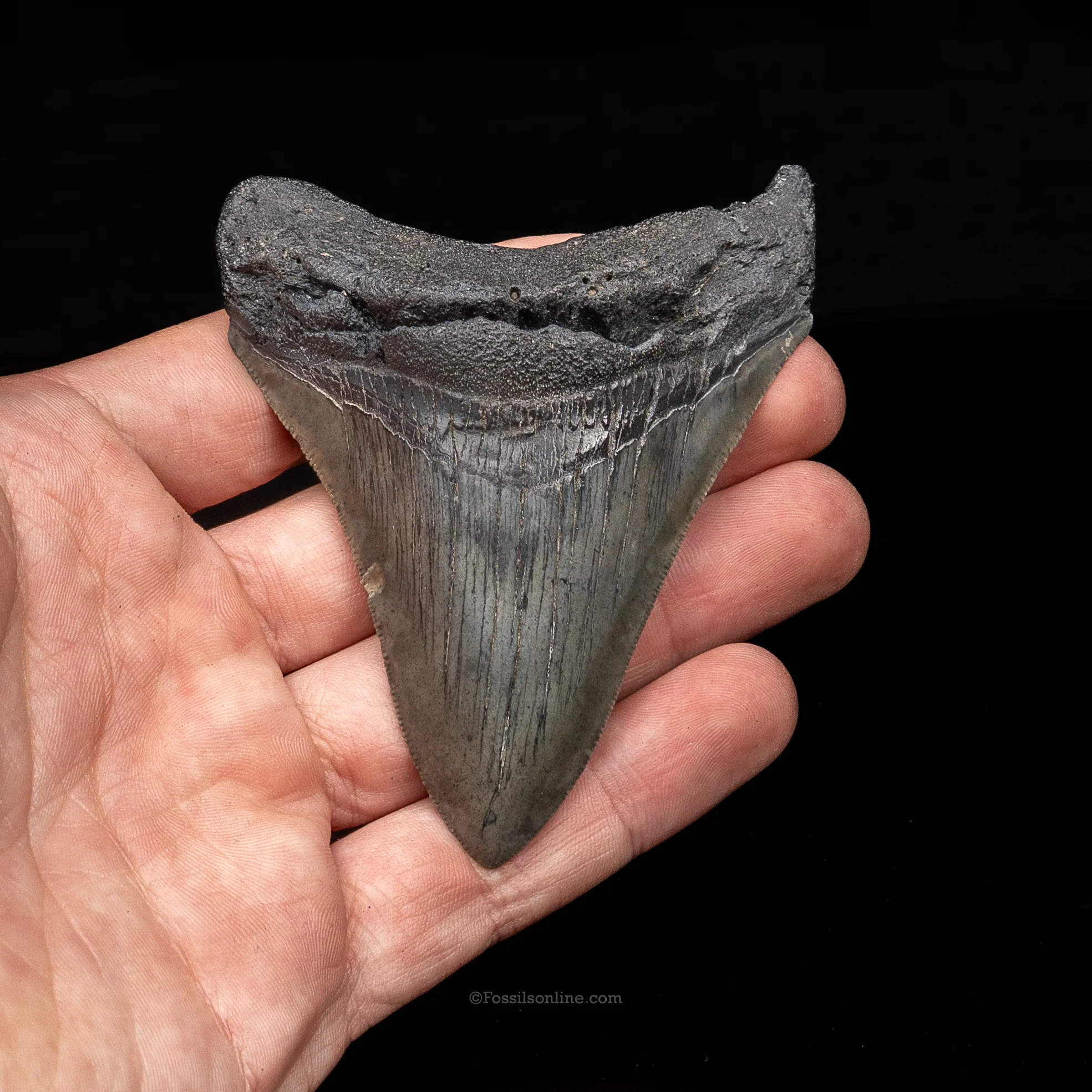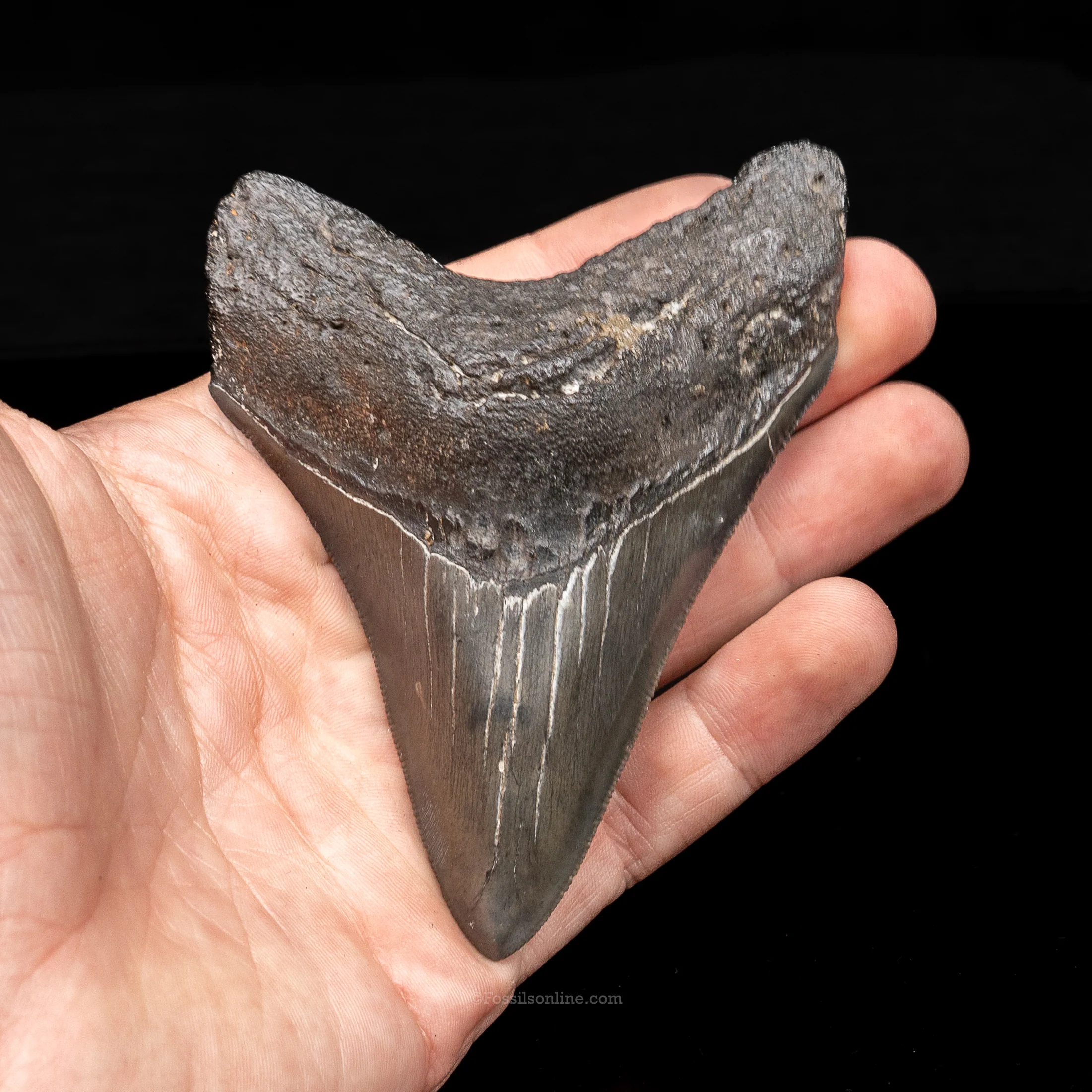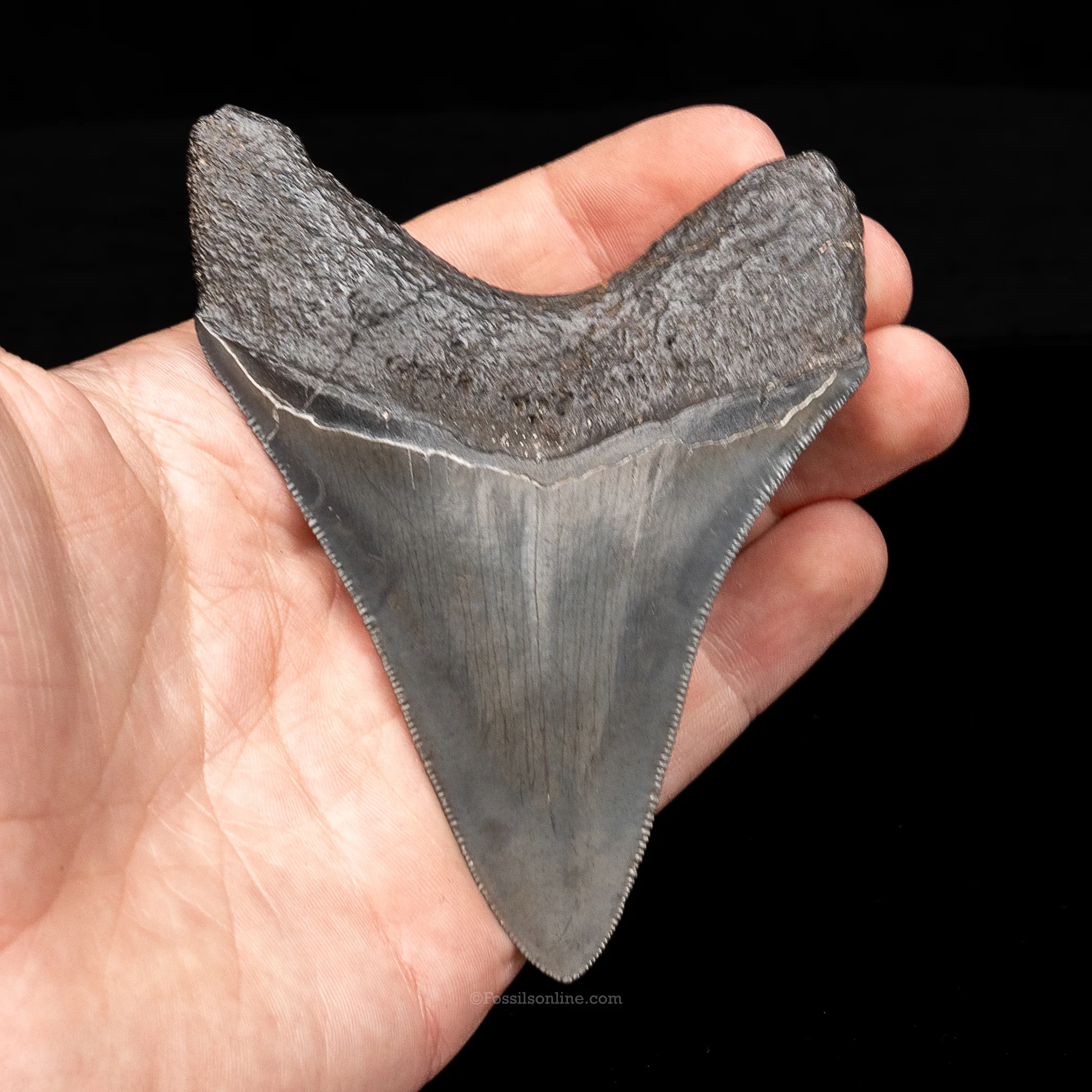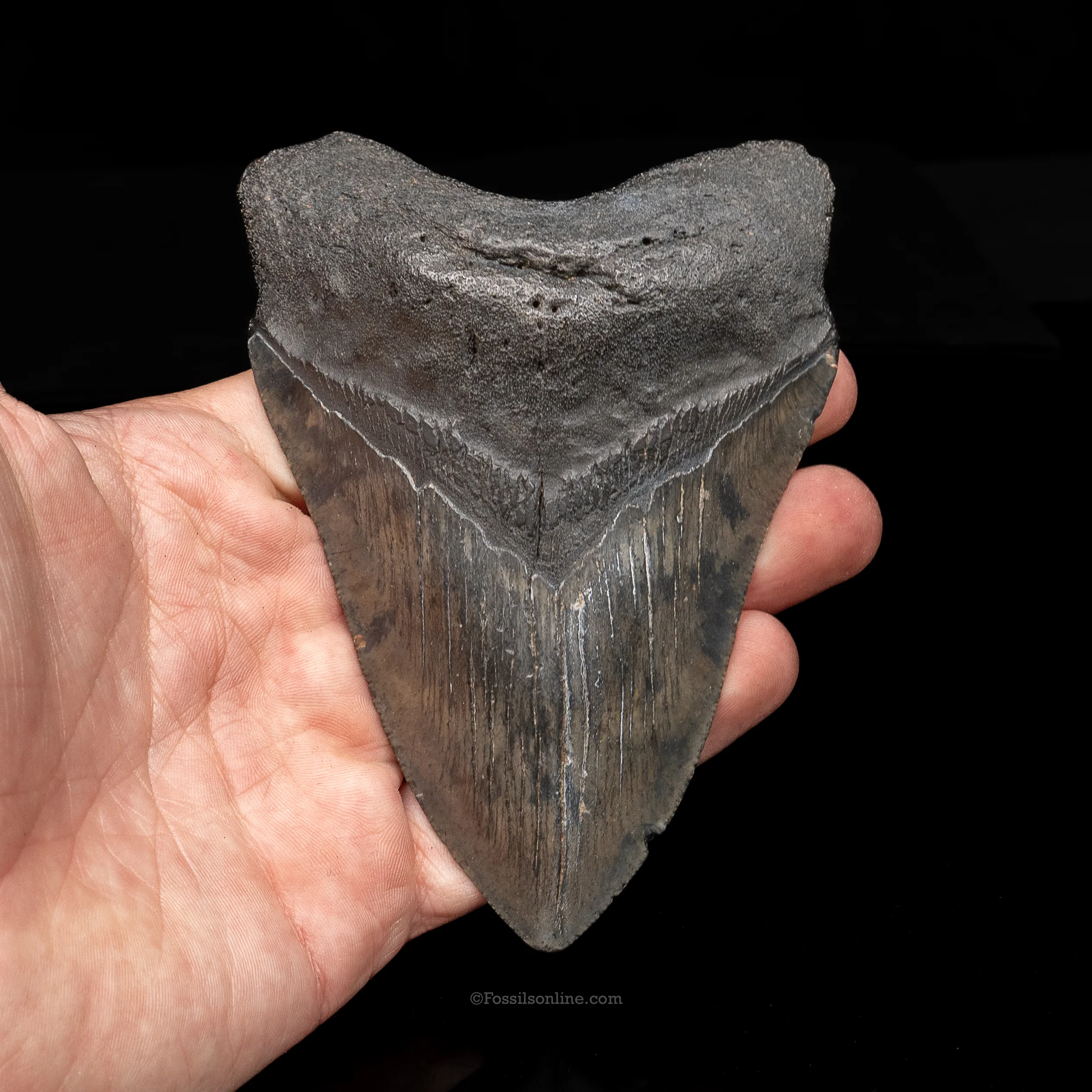
Georgia Megalodon 3.59"
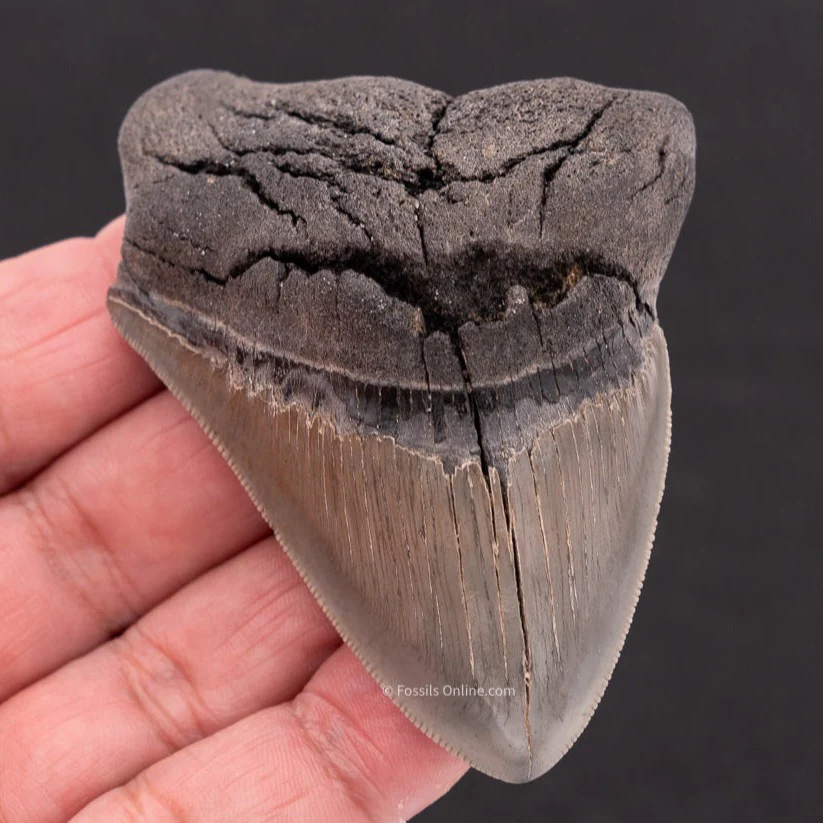
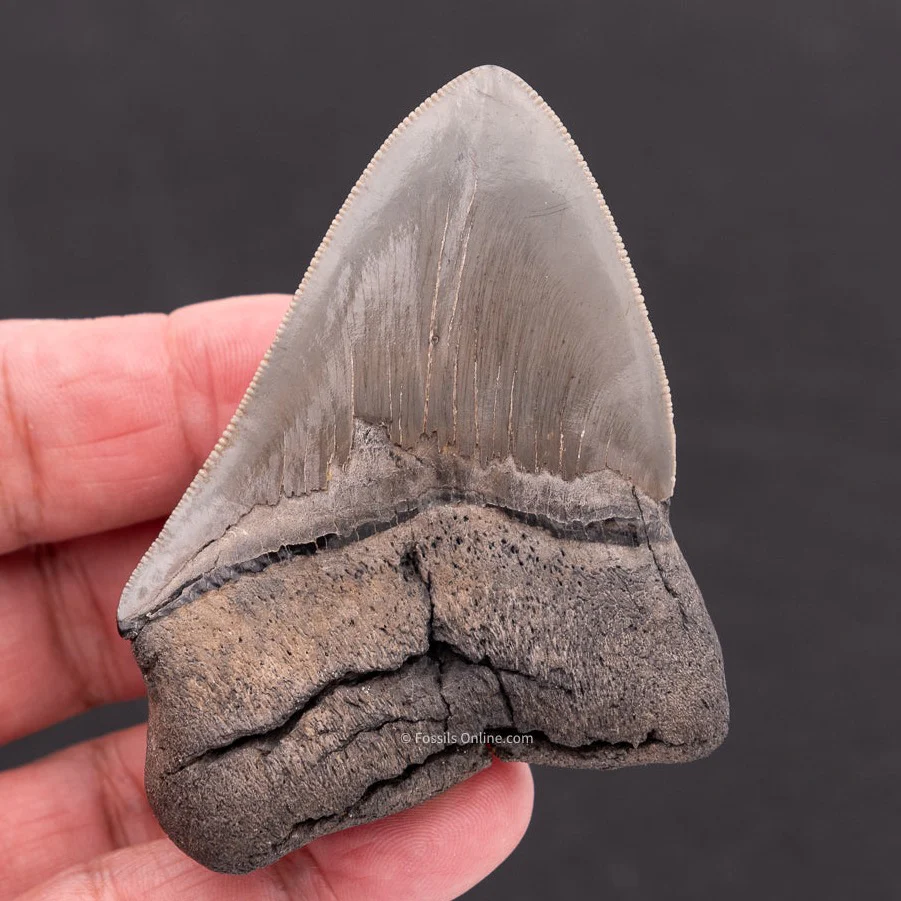
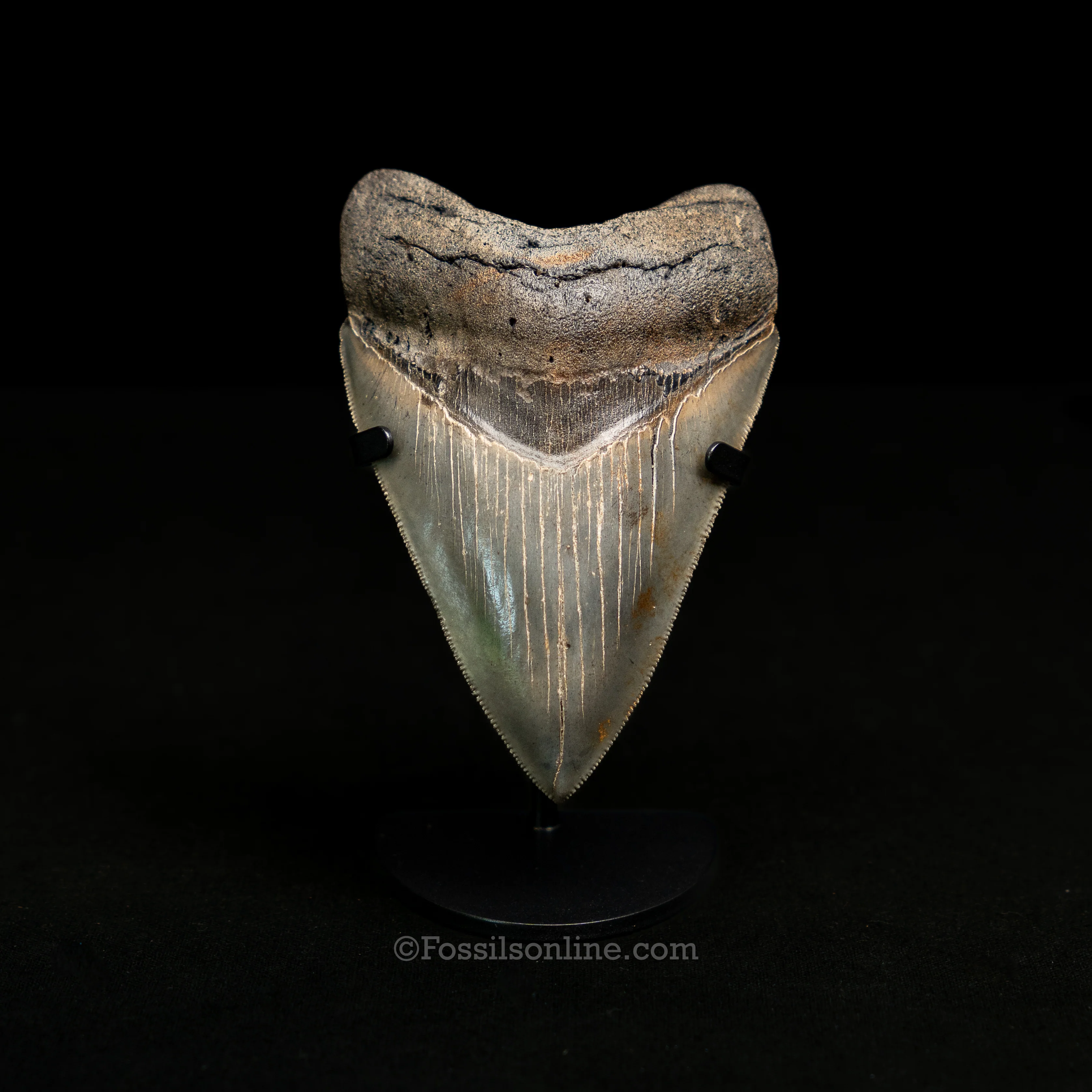
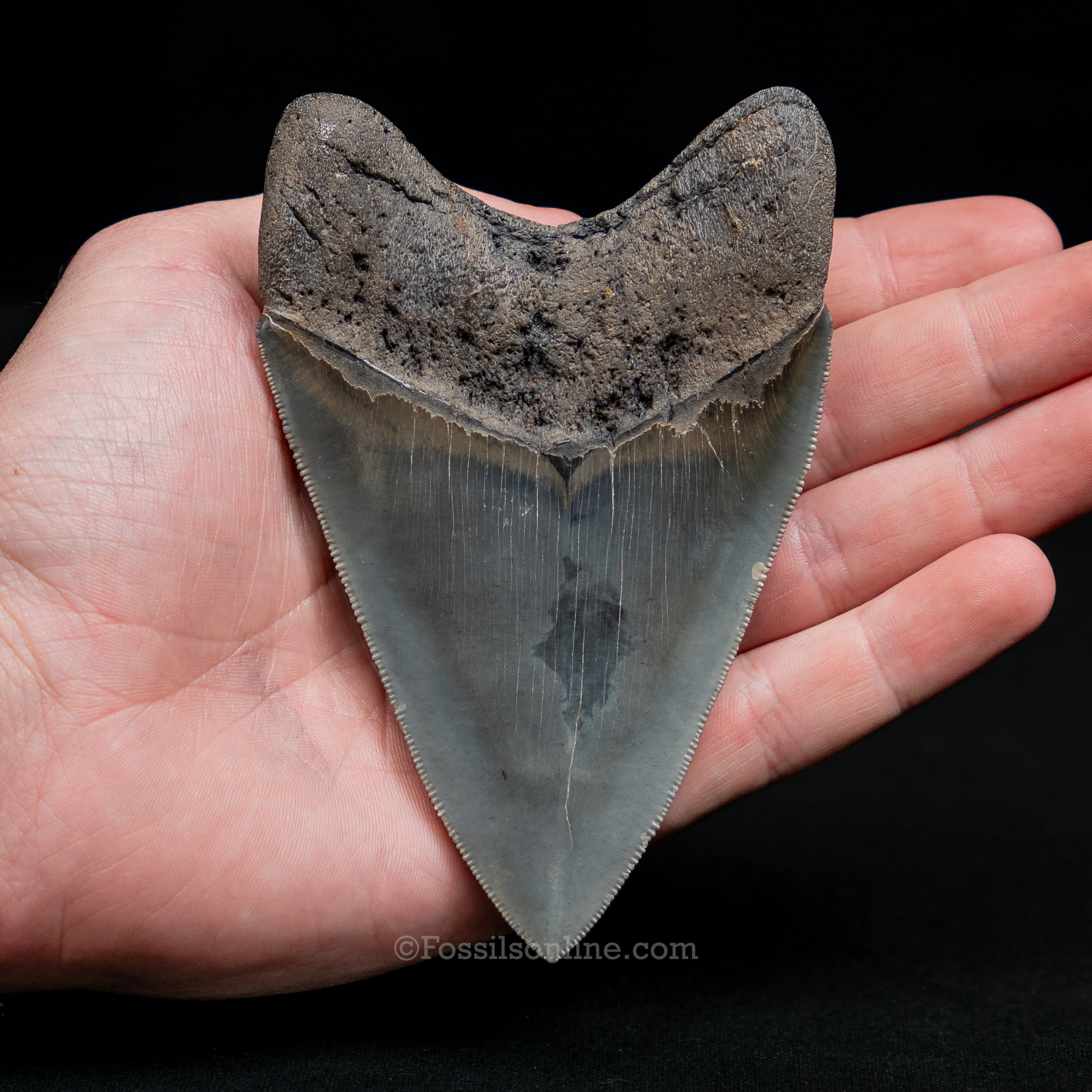
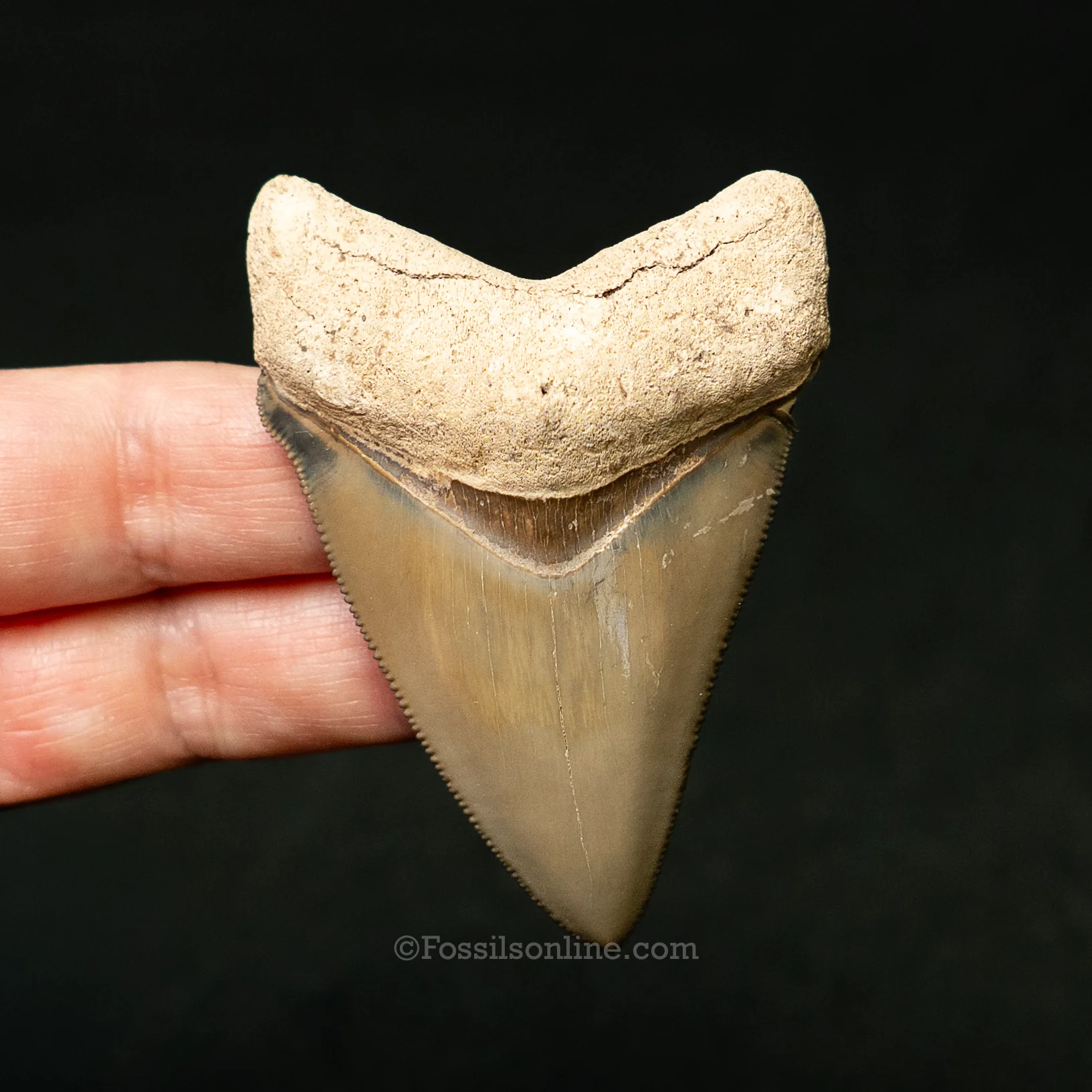
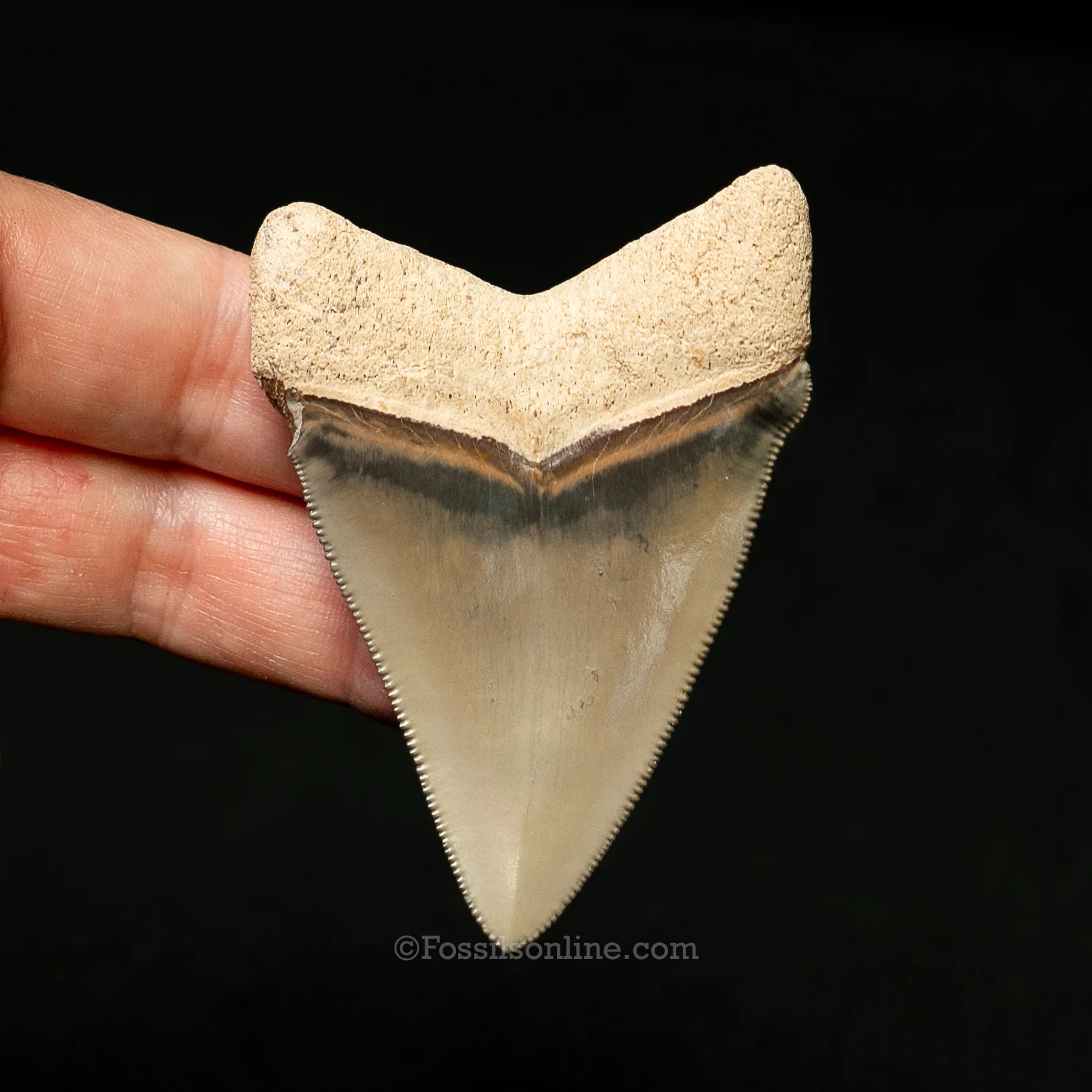
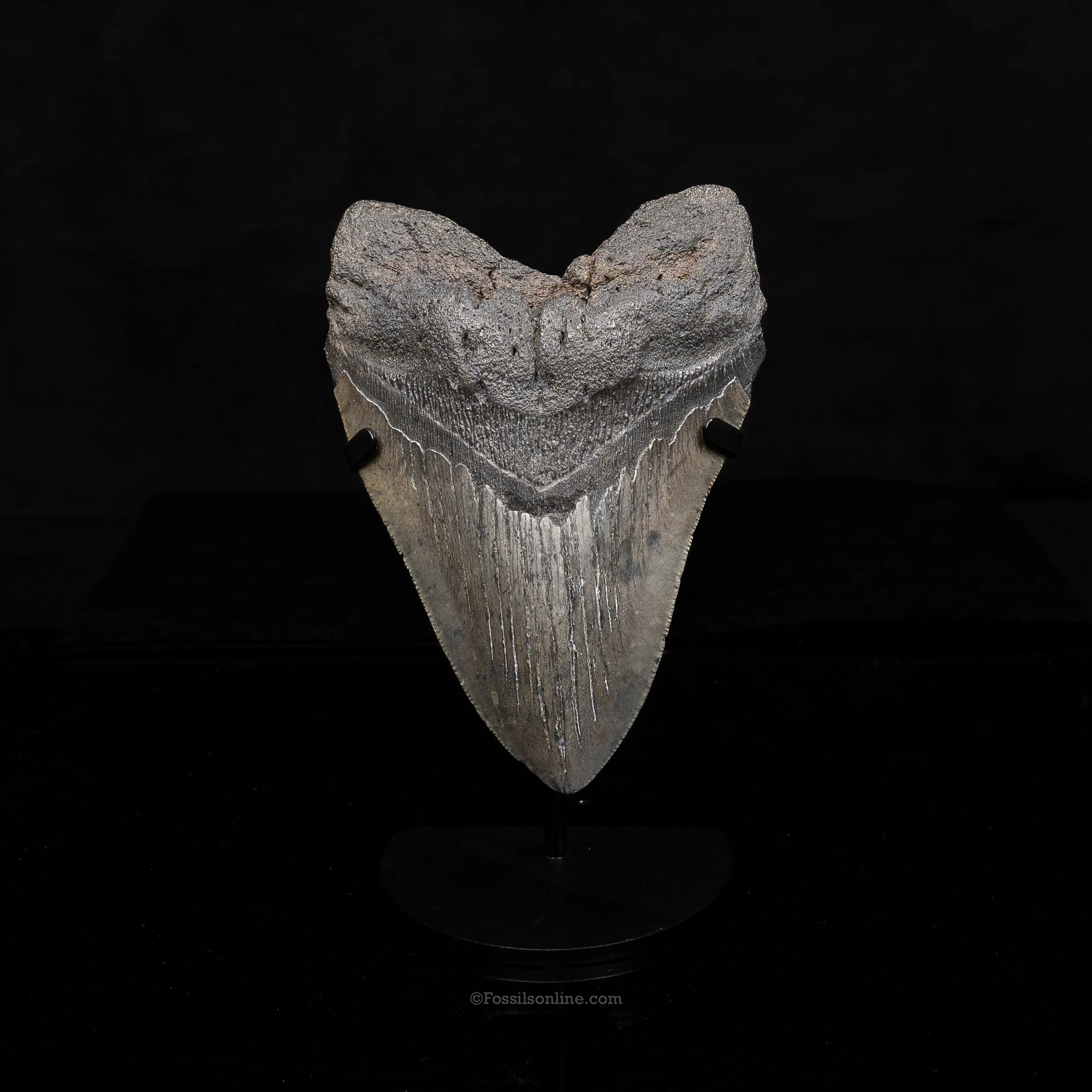
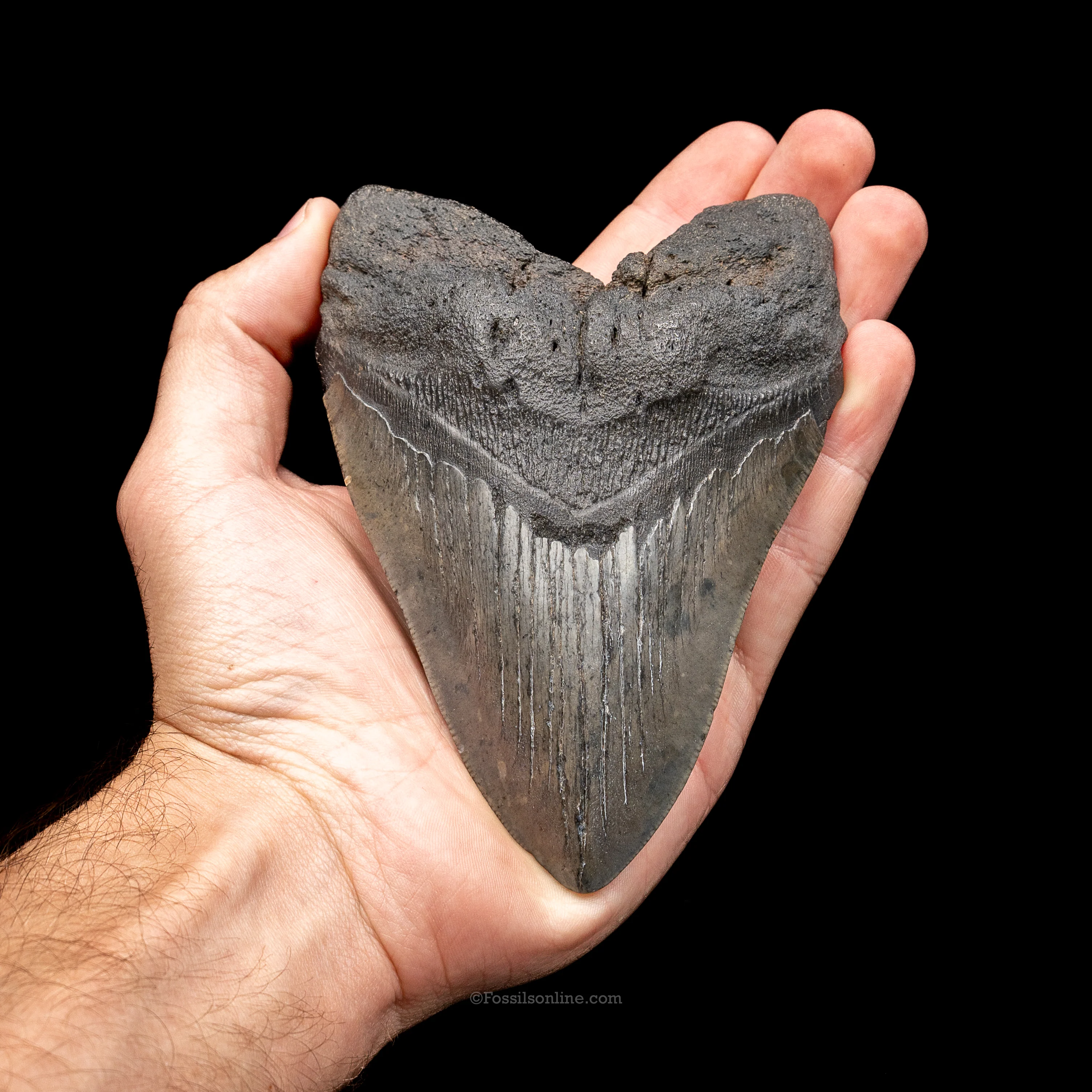
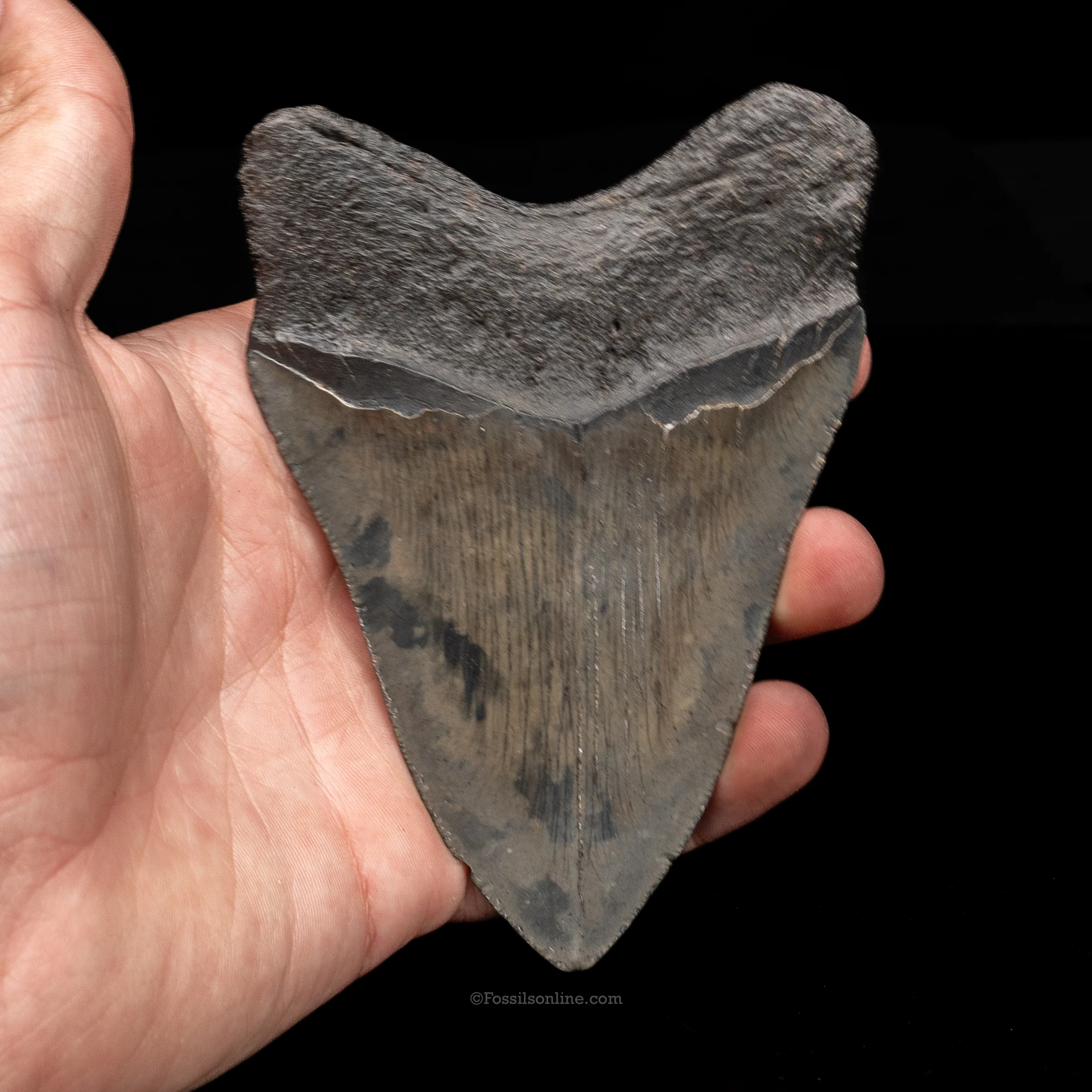
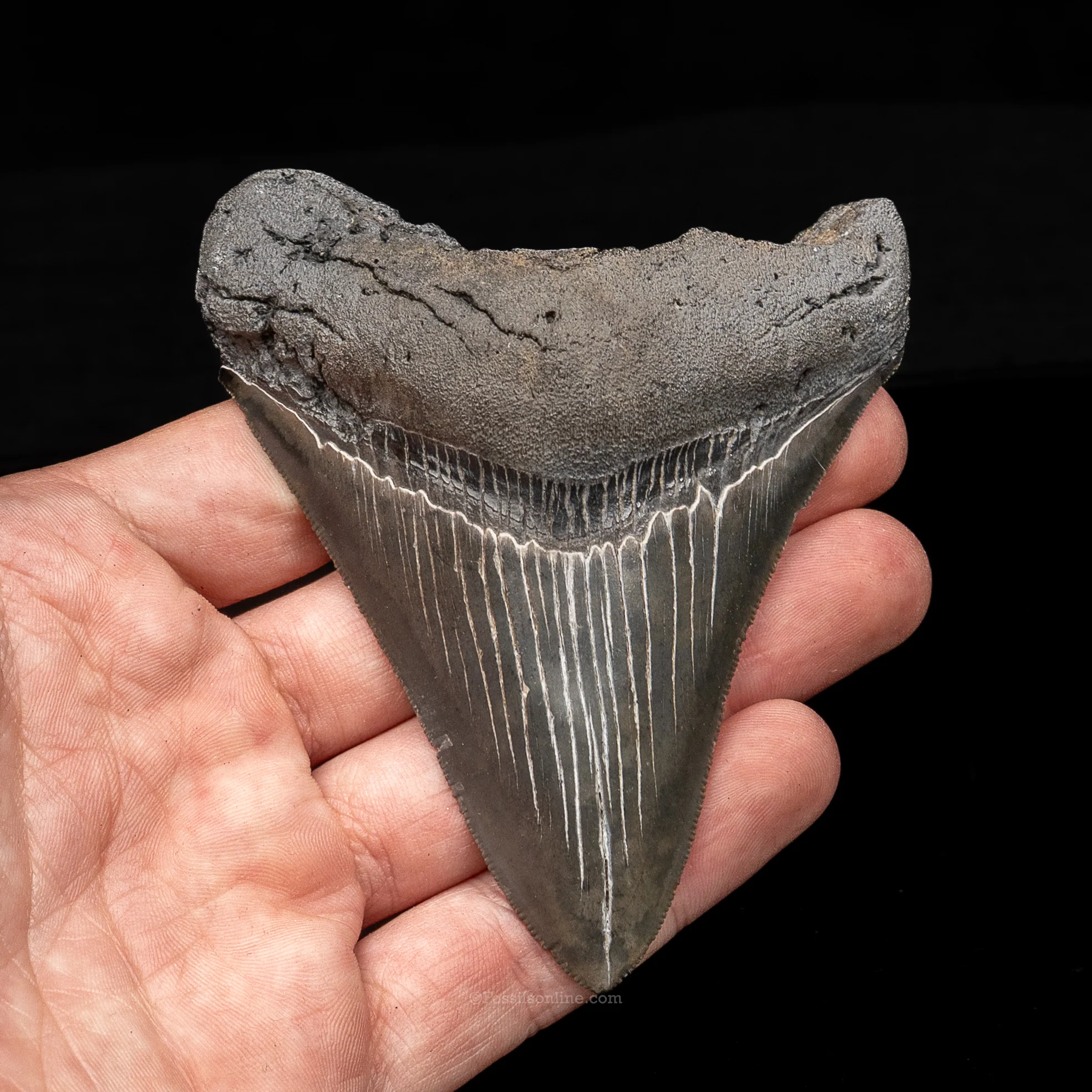
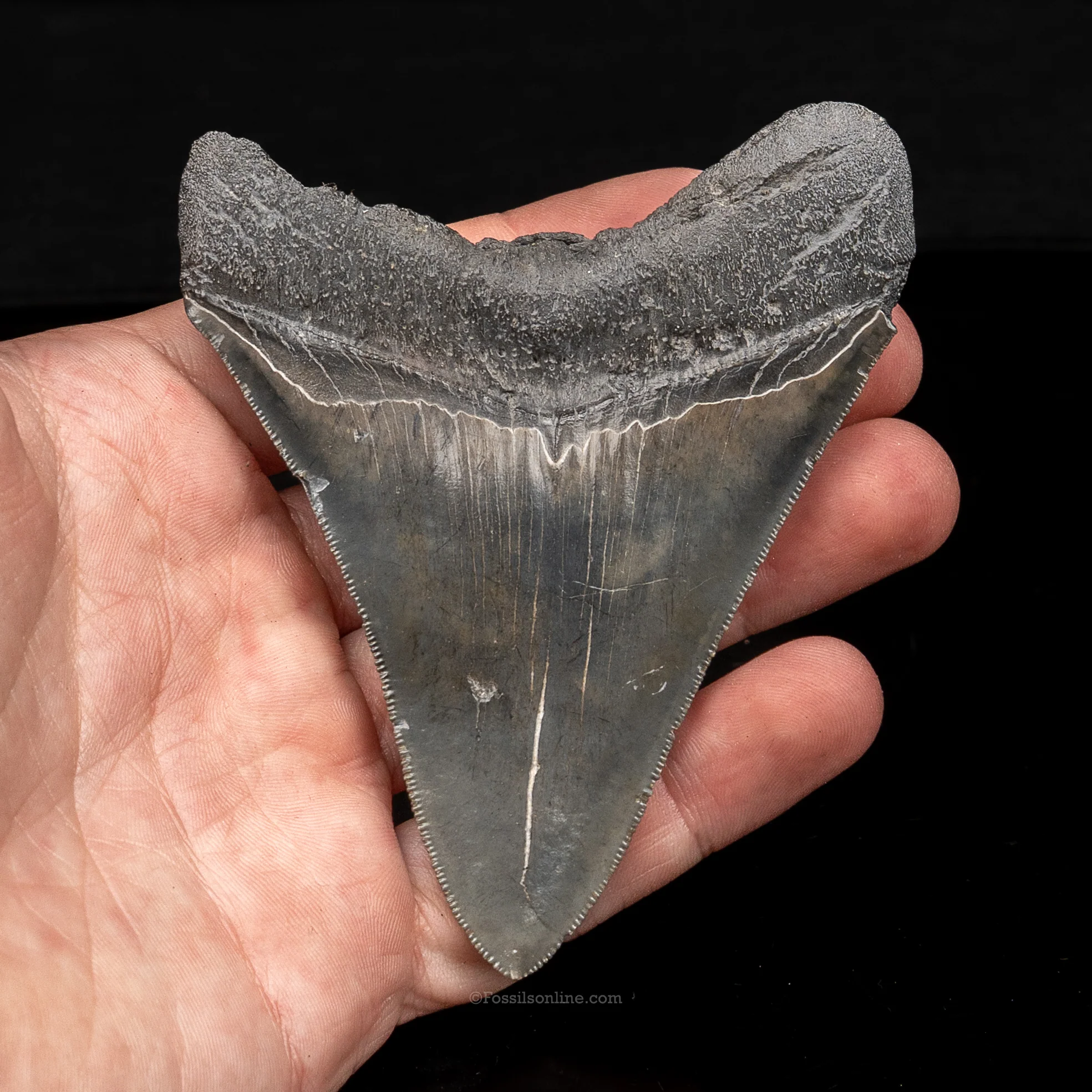
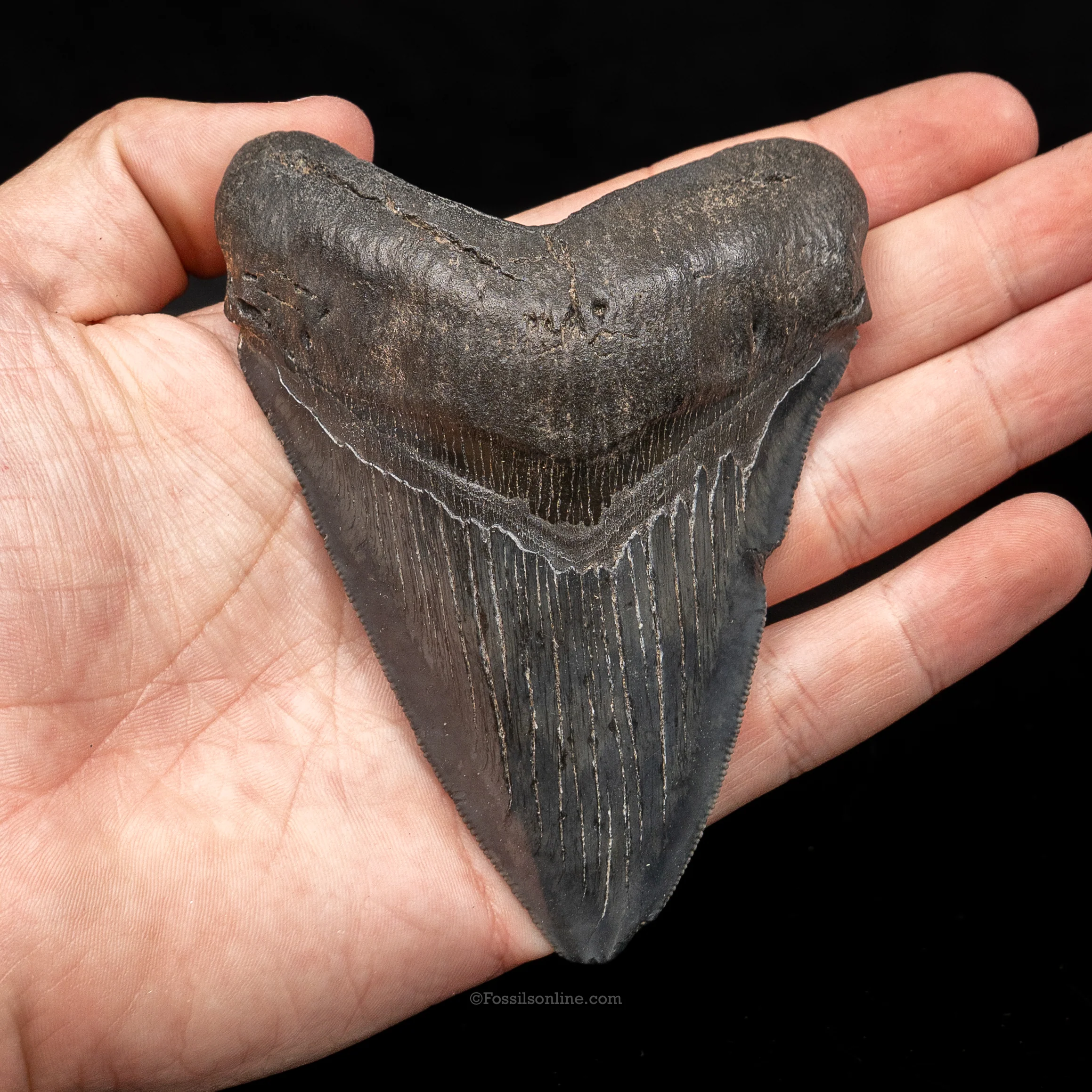
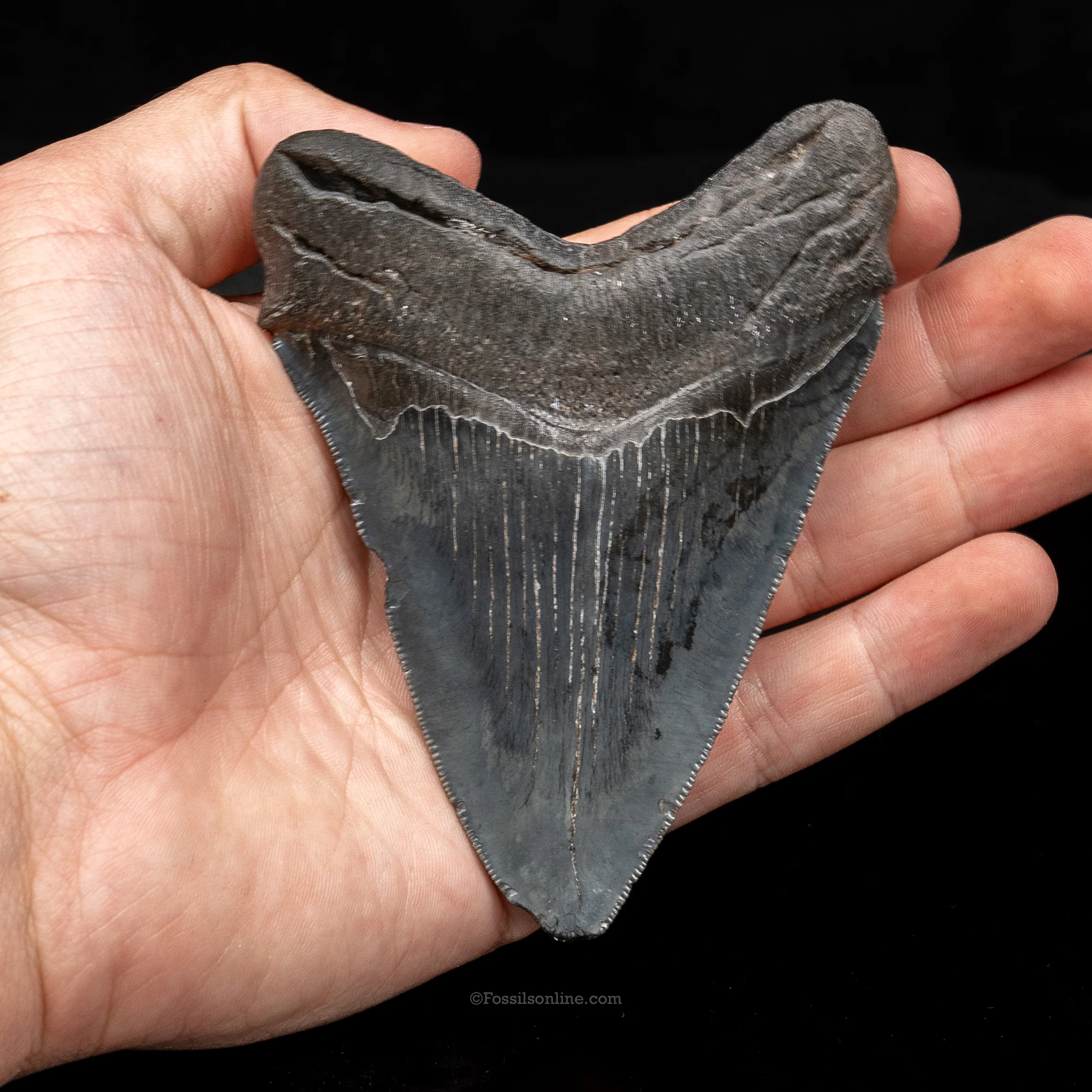
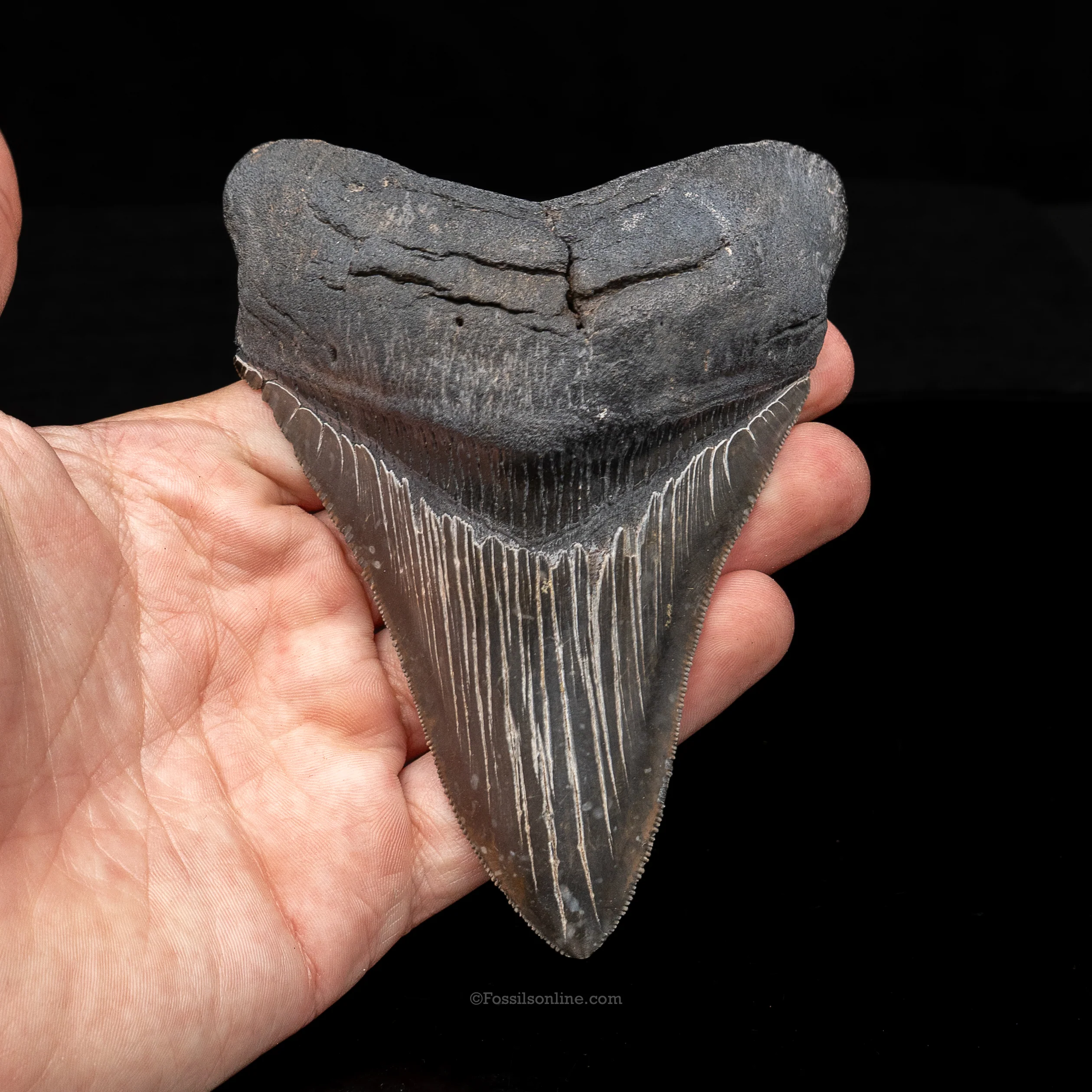
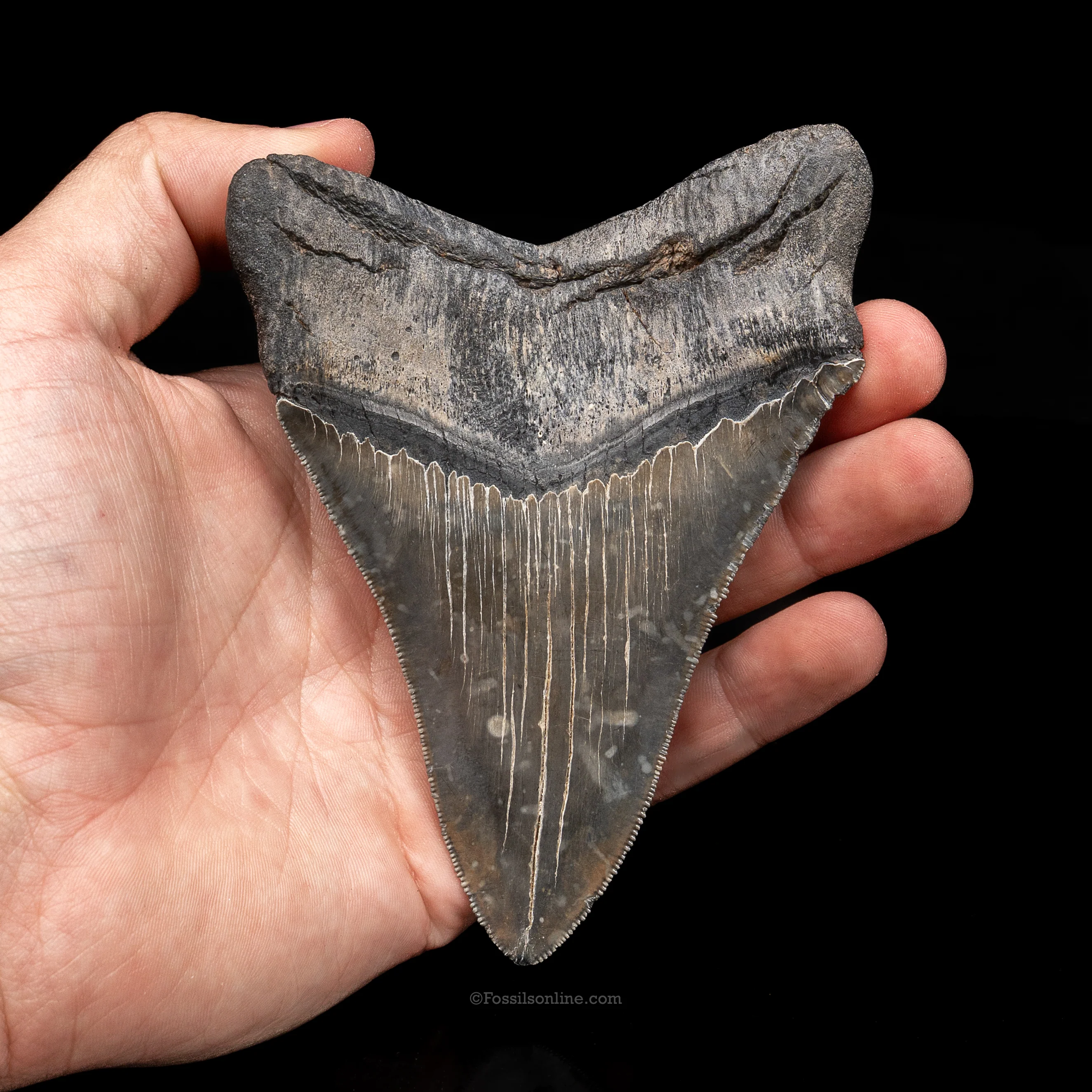
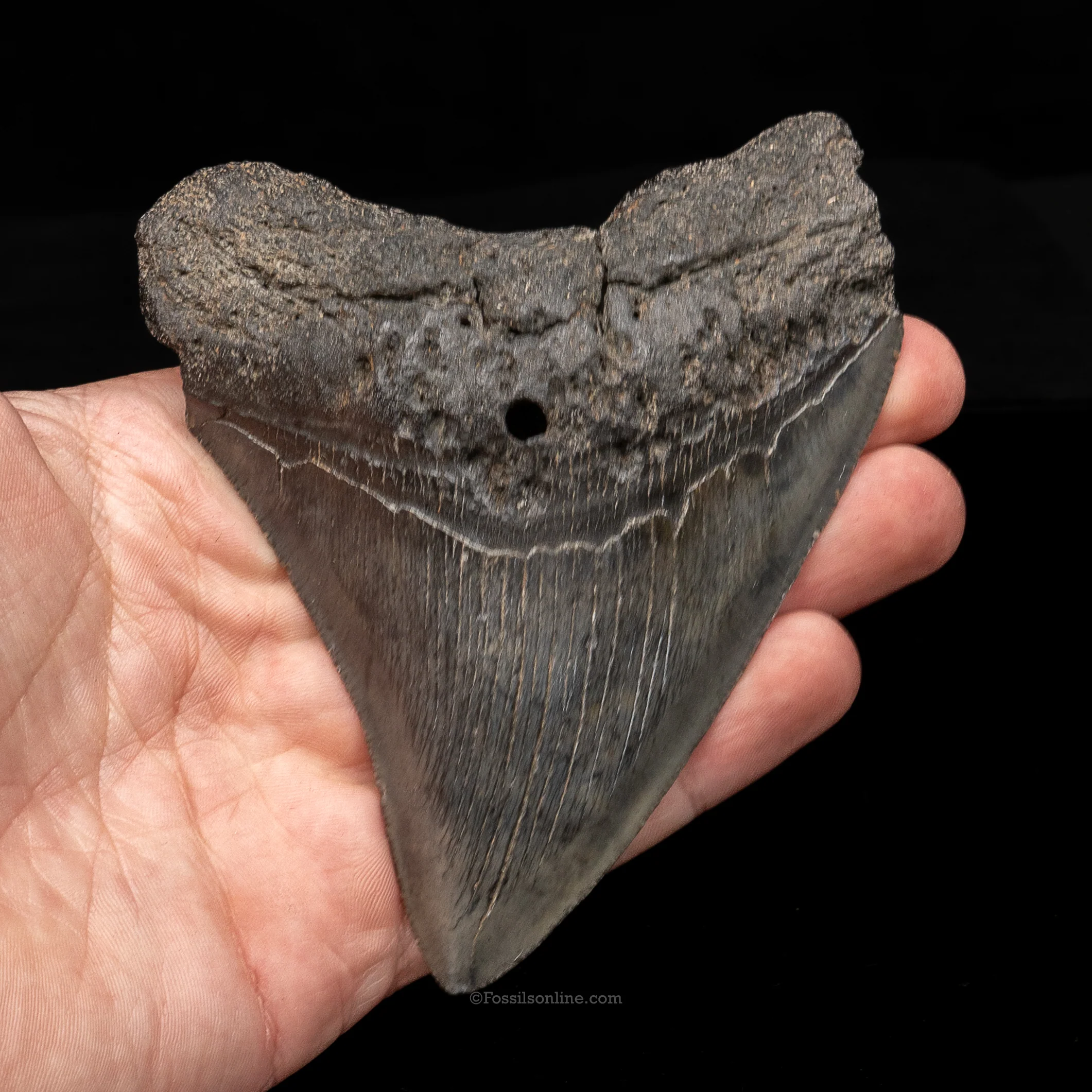
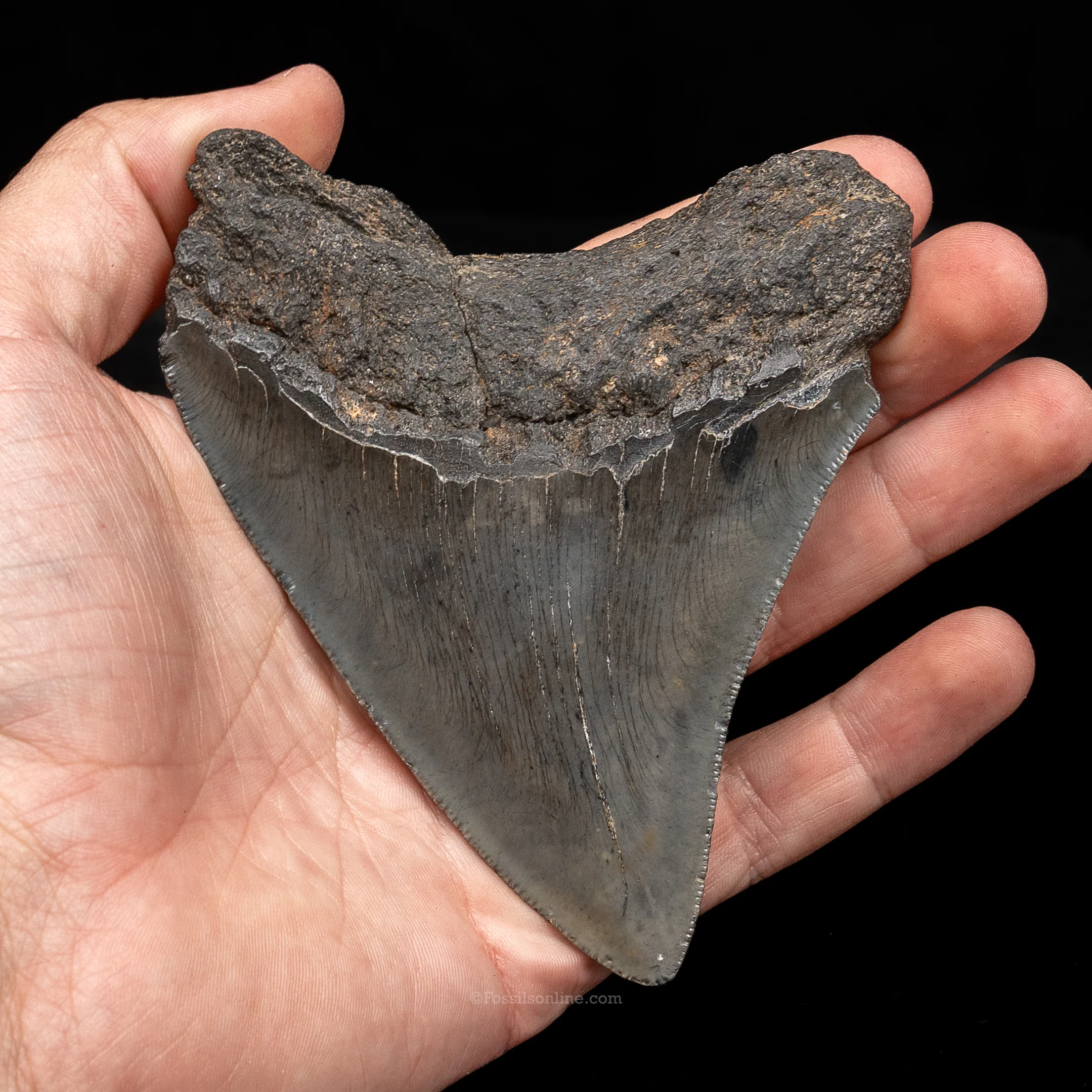
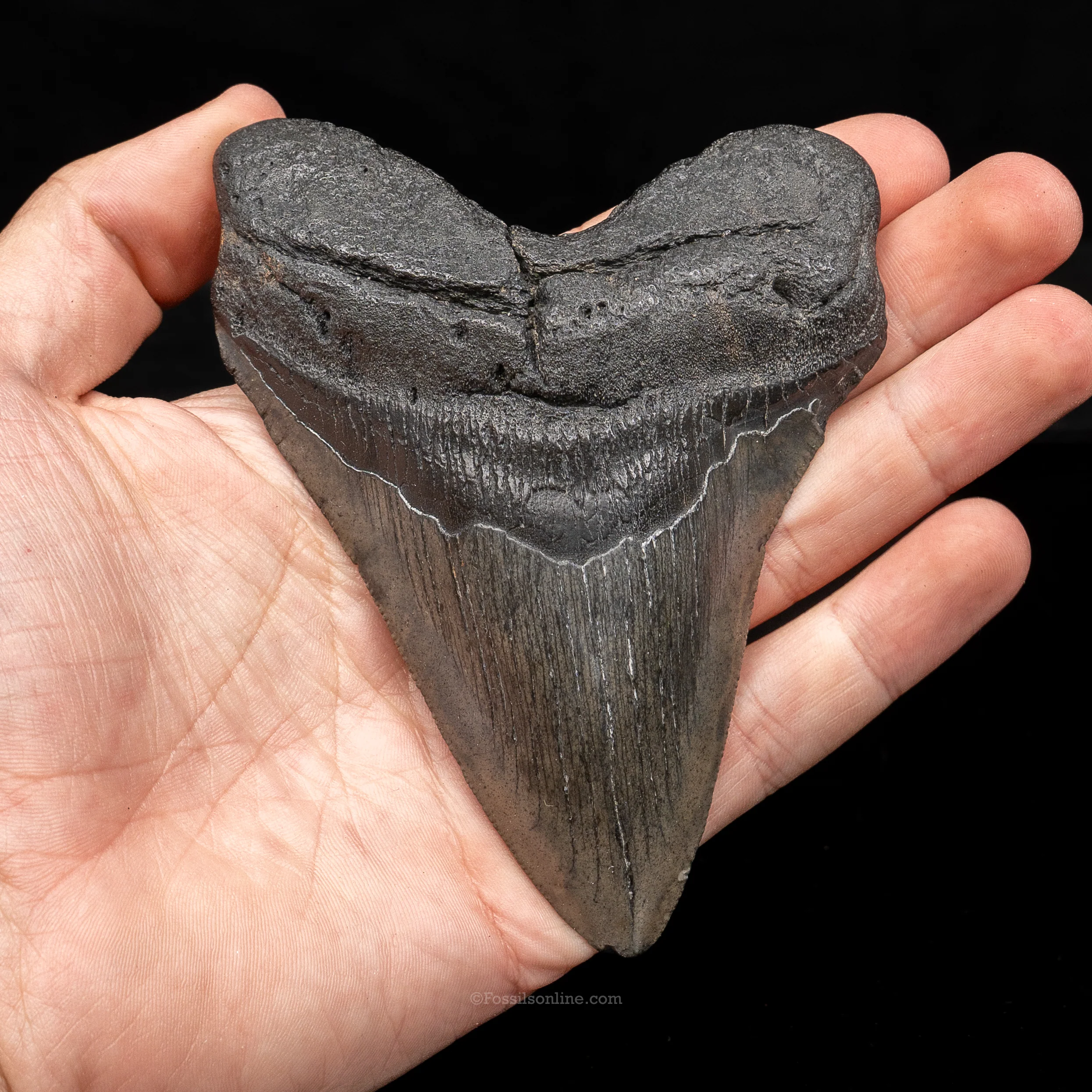
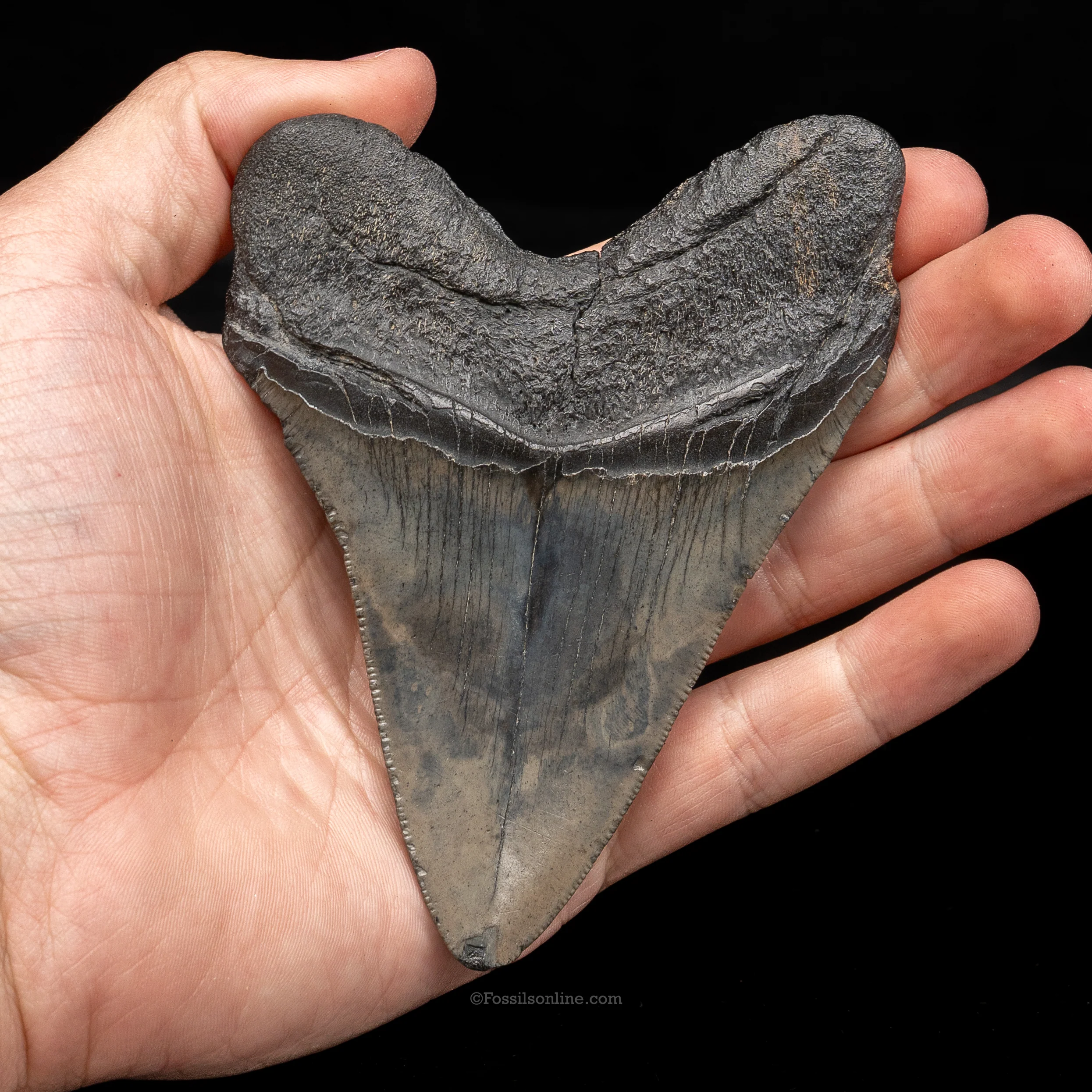
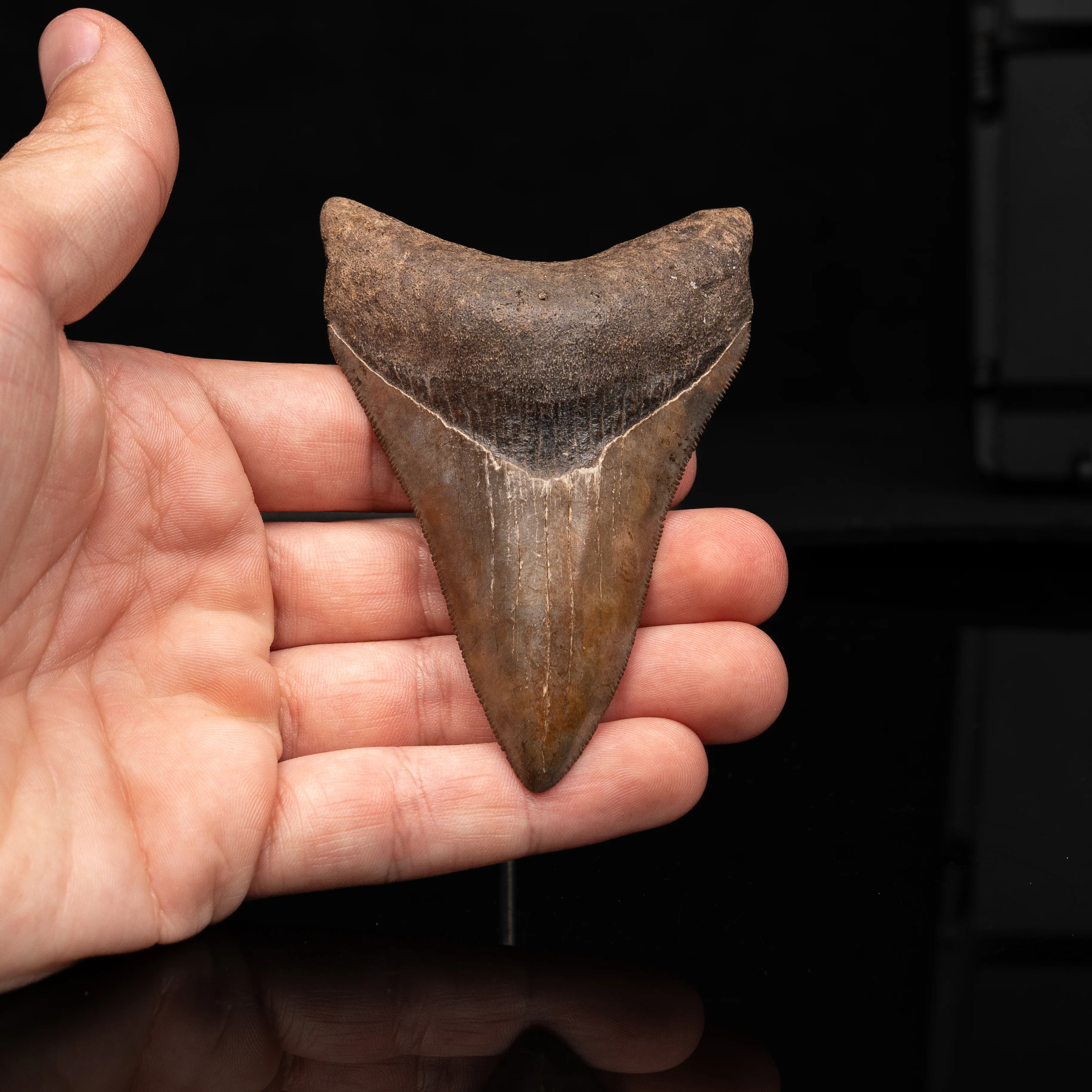
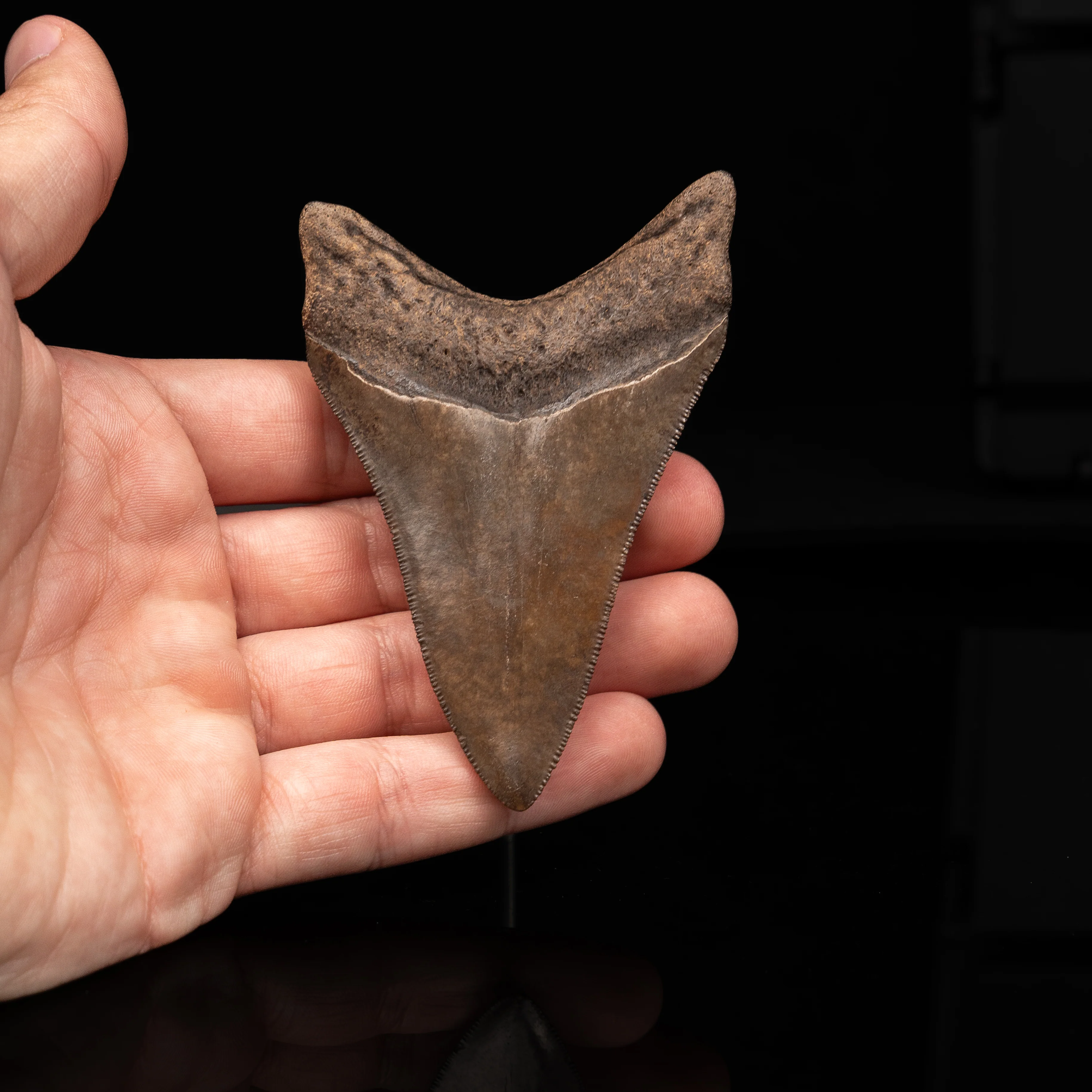
This is a beautiful, dark chocolate-brown Megalodon tooth from the St. Mary’s River. It has a nice symmetrical shape, sharp serrations, and an intact tip. The St. Mary river is known for beautiful brown teeth, like this one.
Otodus megalodon
Otodus megalodon is the largest predatory shark ever known, living from the Miocene into the Pliocene, roughly 23 to 3.6 million years ago. It reached estimated lengths of 50–60 feet or more, making it one of the most powerful marine predators in Earth’s history.
Megalodon occupied oceans worldwide and sat at the very top of the food chain, preying on large marine animals and shaping entire ecosystems.
Diet and habitat
Megalodon lived in warm, coastal and offshore waters across the globe. Fossils have been found on every continent except Antarctica, showing just how widespread it was.
Its diet consisted primarily of:
- Whales and other marine mammals
- Large fish
- Smaller sharks
Its massive size and strength allowed it to hunt some of the largest animals of its time. Bite marks on fossil whale bones show clear evidence of powerful attacks, often targeting flippers, ribs, and tails to disable prey.
Tooth morphology compared to other sharks
Megalodon teeth are among the most recognizable fossils in the world. They are large, triangular, and built for maximum cutting power.
Key features include:
- Thick, broad crowns designed to withstand extreme bite forces
- Fully serrated edges for slicing through flesh and bone
- A distinct bourlette (the darker band between root and enamel)
- Massive roots to anchor the tooth during powerful bites
Compared to other sharks:
- The modern Carcharodon carcharias has similar serrated teeth but much smaller and less robust
- Carcharodon hastalis has smooth-edged teeth for slicing, lacking serrations entirely
- Megalodon’s teeth combine size, serrations, and thickness to create a true bone-cutting tool
These teeth were not just for slicing—they were capable of crushing bone and delivering devastating bites.
Evolutionary importance
Otodus megalodon belongs to the megatooth shark lineage, which evolved increasingly large, serrated teeth over time. Earlier relatives had smoother edges, but as prey grew larger and tougher, serrations developed to improve cutting efficiency.
Megalodon represents the peak of this evolutionary trend—a fully specialized apex predator built to hunt large marine mammals.
Why we mostly find teeth
Like all sharks, Megalodon had a skeleton made primarily of cartilage, which does not preserve well over long periods. Teeth, however, are highly mineralized and extremely durable.
Megalodon continuously replaced its teeth throughout its life, producing thousands over time. Each tooth had the potential to be fossilized, which is why teeth are by far the most common remains found today.
Color and preservation
Megalodon teeth come in a wide range of colors depending on the minerals present in the surrounding sediment during fossilization.
Common colors include:
- Black and gray from phosphate-rich deposits
- Tan and brown from sandy environments
- Blue or green in rarer mineral conditions
Some teeth are heavily worn from movement in sediment, while others retain sharp serrations and pristine tips. Each tooth reflects its own history of burial, exposure, and preservation, making every specimen unique.
Product Information
Product Information
Shipping & Returns
Shipping & Returns
Georgia Megalodon 3.59"
Georgia Megalodon 3.59"
This is a beautiful, dark chocolate-brown Megalodon tooth from the St. Mary’s River. It has a nice symmetrical shape, sharp serrations, and an intact tip. The St. Mary river is known for beautiful brown teeth, like this one.
Otodus megalodon
Otodus megalodon is the largest predatory shark ever known, living from the Miocene into the Pliocene, roughly 23 to 3.6 million years ago. It reached estimated lengths of 50–60 feet or more, making it one of the most powerful marine predators in Earth’s history.
Megalodon occupied oceans worldwide and sat at the very top of the food chain, preying on large marine animals and shaping entire ecosystems.
Diet and habitat
Megalodon lived in warm, coastal and offshore waters across the globe. Fossils have been found on every continent except Antarctica, showing just how widespread it was.
Its diet consisted primarily of:
- Whales and other marine mammals
- Large fish
- Smaller sharks
Its massive size and strength allowed it to hunt some of the largest animals of its time. Bite marks on fossil whale bones show clear evidence of powerful attacks, often targeting flippers, ribs, and tails to disable prey.
Tooth morphology compared to other sharks
Megalodon teeth are among the most recognizable fossils in the world. They are large, triangular, and built for maximum cutting power.
Key features include:
- Thick, broad crowns designed to withstand extreme bite forces
- Fully serrated edges for slicing through flesh and bone
- A distinct bourlette (the darker band between root and enamel)
- Massive roots to anchor the tooth during powerful bites
Compared to other sharks:
- The modern Carcharodon carcharias has similar serrated teeth but much smaller and less robust
- Carcharodon hastalis has smooth-edged teeth for slicing, lacking serrations entirely
- Megalodon’s teeth combine size, serrations, and thickness to create a true bone-cutting tool
These teeth were not just for slicing—they were capable of crushing bone and delivering devastating bites.
Evolutionary importance
Otodus megalodon belongs to the megatooth shark lineage, which evolved increasingly large, serrated teeth over time. Earlier relatives had smoother edges, but as prey grew larger and tougher, serrations developed to improve cutting efficiency.
Megalodon represents the peak of this evolutionary trend—a fully specialized apex predator built to hunt large marine mammals.
Why we mostly find teeth
Like all sharks, Megalodon had a skeleton made primarily of cartilage, which does not preserve well over long periods. Teeth, however, are highly mineralized and extremely durable.
Megalodon continuously replaced its teeth throughout its life, producing thousands over time. Each tooth had the potential to be fossilized, which is why teeth are by far the most common remains found today.
Color and preservation
Megalodon teeth come in a wide range of colors depending on the minerals present in the surrounding sediment during fossilization.
Common colors include:
- Black and gray from phosphate-rich deposits
- Tan and brown from sandy environments
- Blue or green in rarer mineral conditions
Some teeth are heavily worn from movement in sediment, while others retain sharp serrations and pristine tips. Each tooth reflects its own history of burial, exposure, and preservation, making every specimen unique.
Product Information
Product Information
Shipping & Returns
Shipping & Returns
Description
This is a beautiful, dark chocolate-brown Megalodon tooth from the St. Mary’s River. It has a nice symmetrical shape, sharp serrations, and an intact tip. The St. Mary river is known for beautiful brown teeth, like this one.
Otodus megalodon
Otodus megalodon is the largest predatory shark ever known, living from the Miocene into the Pliocene, roughly 23 to 3.6 million years ago. It reached estimated lengths of 50–60 feet or more, making it one of the most powerful marine predators in Earth’s history.
Megalodon occupied oceans worldwide and sat at the very top of the food chain, preying on large marine animals and shaping entire ecosystems.
Diet and habitat
Megalodon lived in warm, coastal and offshore waters across the globe. Fossils have been found on every continent except Antarctica, showing just how widespread it was.
Its diet consisted primarily of:
- Whales and other marine mammals
- Large fish
- Smaller sharks
Its massive size and strength allowed it to hunt some of the largest animals of its time. Bite marks on fossil whale bones show clear evidence of powerful attacks, often targeting flippers, ribs, and tails to disable prey.
Tooth morphology compared to other sharks
Megalodon teeth are among the most recognizable fossils in the world. They are large, triangular, and built for maximum cutting power.
Key features include:
- Thick, broad crowns designed to withstand extreme bite forces
- Fully serrated edges for slicing through flesh and bone
- A distinct bourlette (the darker band between root and enamel)
- Massive roots to anchor the tooth during powerful bites
Compared to other sharks:
- The modern Carcharodon carcharias has similar serrated teeth but much smaller and less robust
- Carcharodon hastalis has smooth-edged teeth for slicing, lacking serrations entirely
- Megalodon’s teeth combine size, serrations, and thickness to create a true bone-cutting tool
These teeth were not just for slicing—they were capable of crushing bone and delivering devastating bites.
Evolutionary importance
Otodus megalodon belongs to the megatooth shark lineage, which evolved increasingly large, serrated teeth over time. Earlier relatives had smoother edges, but as prey grew larger and tougher, serrations developed to improve cutting efficiency.
Megalodon represents the peak of this evolutionary trend—a fully specialized apex predator built to hunt large marine mammals.
Why we mostly find teeth
Like all sharks, Megalodon had a skeleton made primarily of cartilage, which does not preserve well over long periods. Teeth, however, are highly mineralized and extremely durable.
Megalodon continuously replaced its teeth throughout its life, producing thousands over time. Each tooth had the potential to be fossilized, which is why teeth are by far the most common remains found today.
Color and preservation
Megalodon teeth come in a wide range of colors depending on the minerals present in the surrounding sediment during fossilization.
Common colors include:
- Black and gray from phosphate-rich deposits
- Tan and brown from sandy environments
- Blue or green in rarer mineral conditions
Some teeth are heavily worn from movement in sediment, while others retain sharp serrations and pristine tips. Each tooth reflects its own history of burial, exposure, and preservation, making every specimen unique.