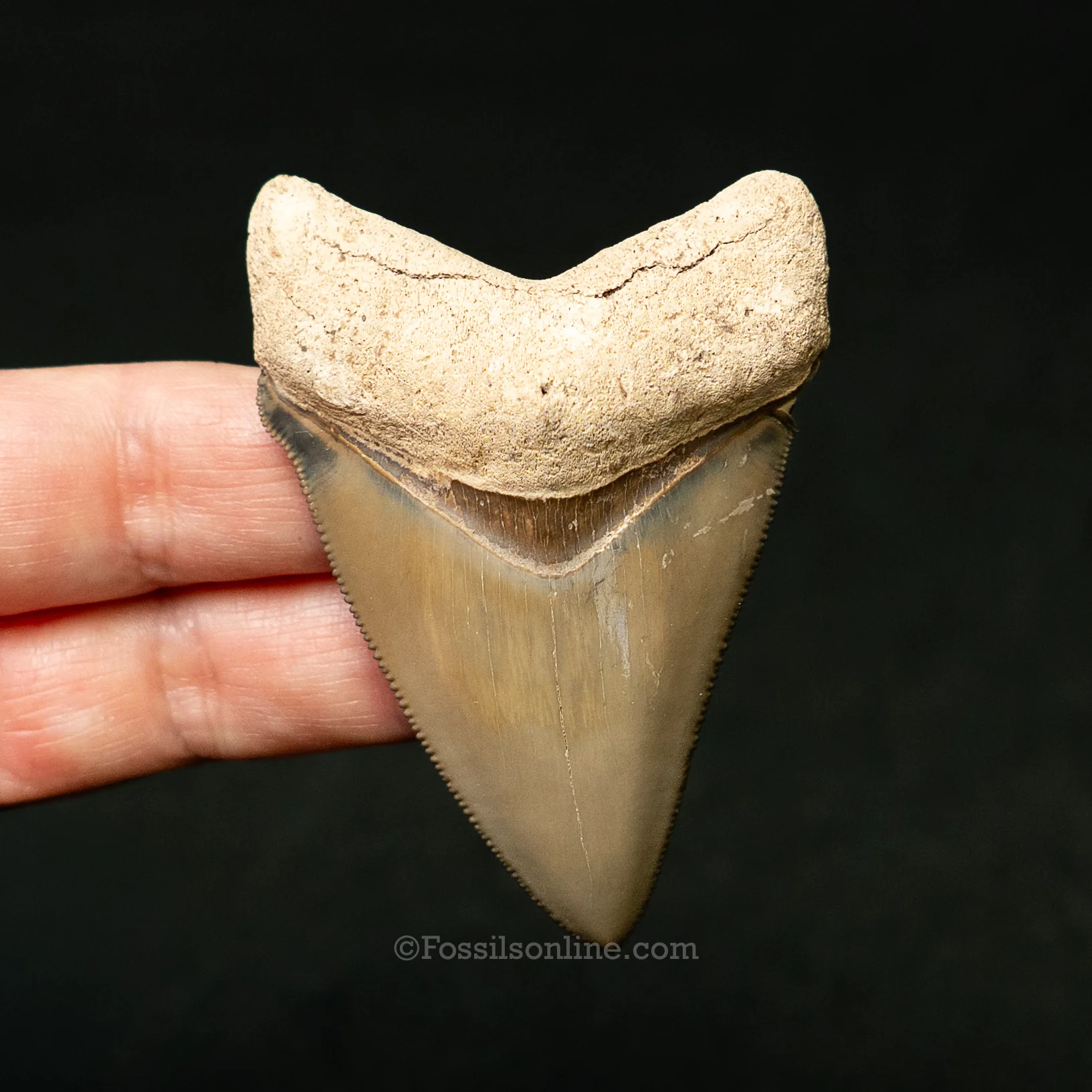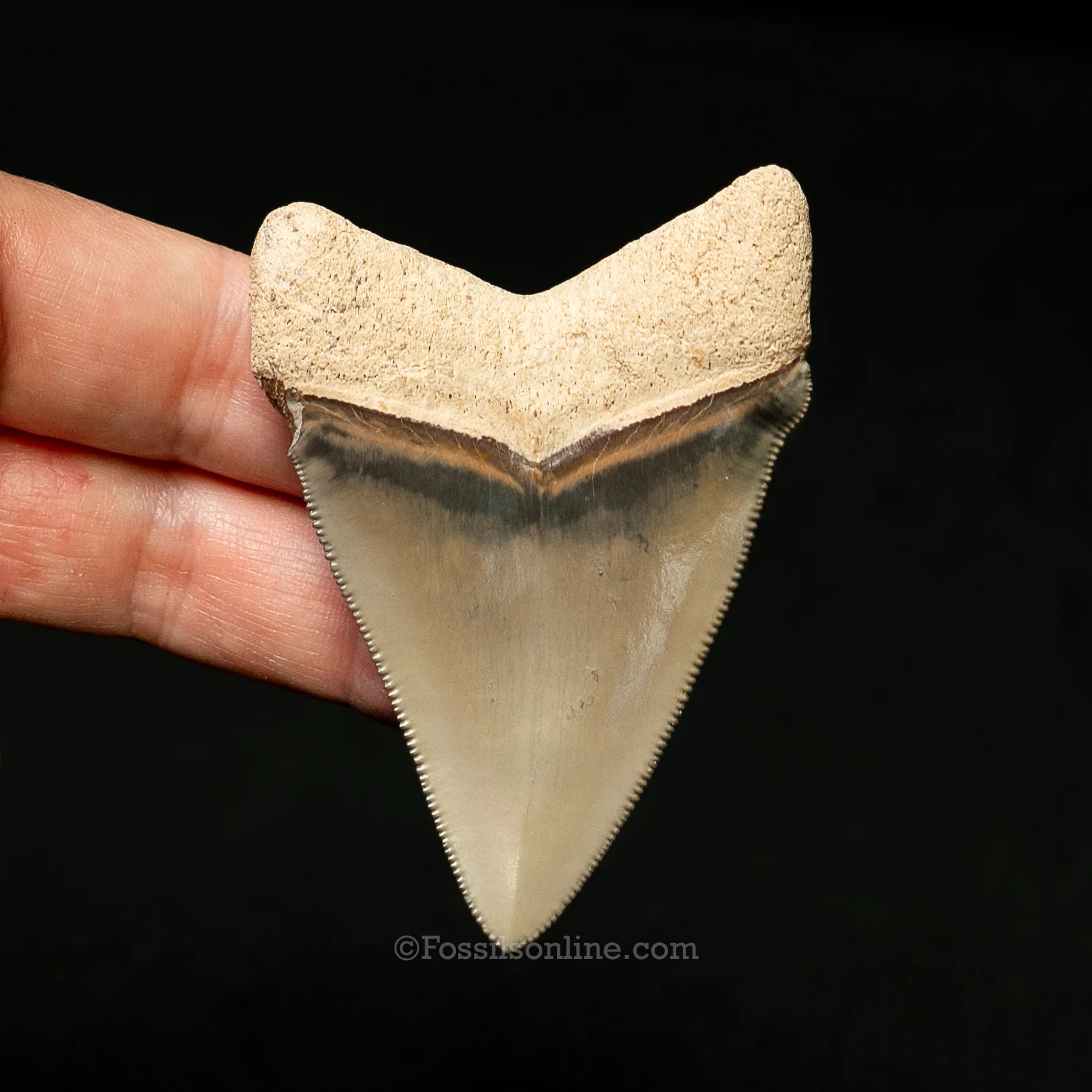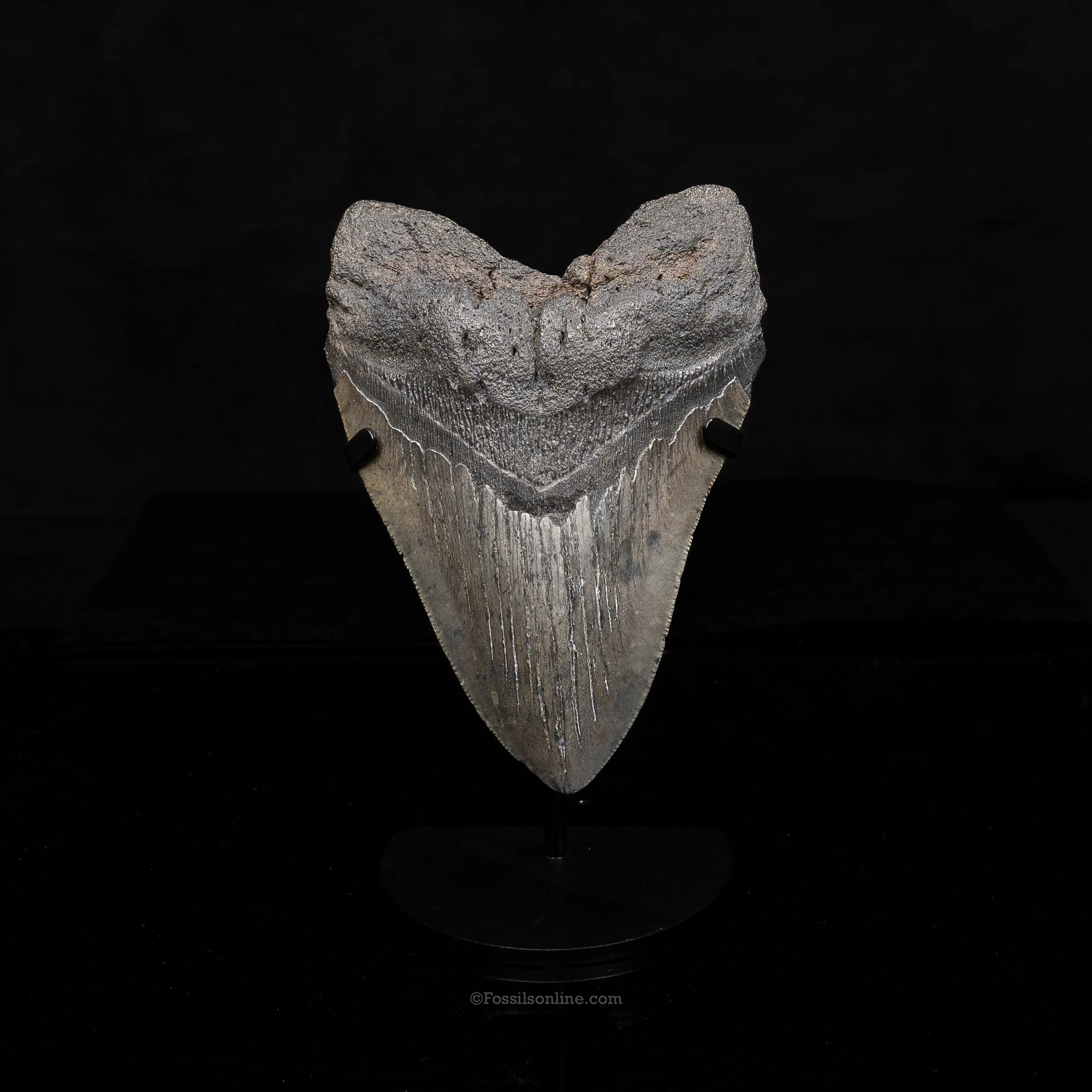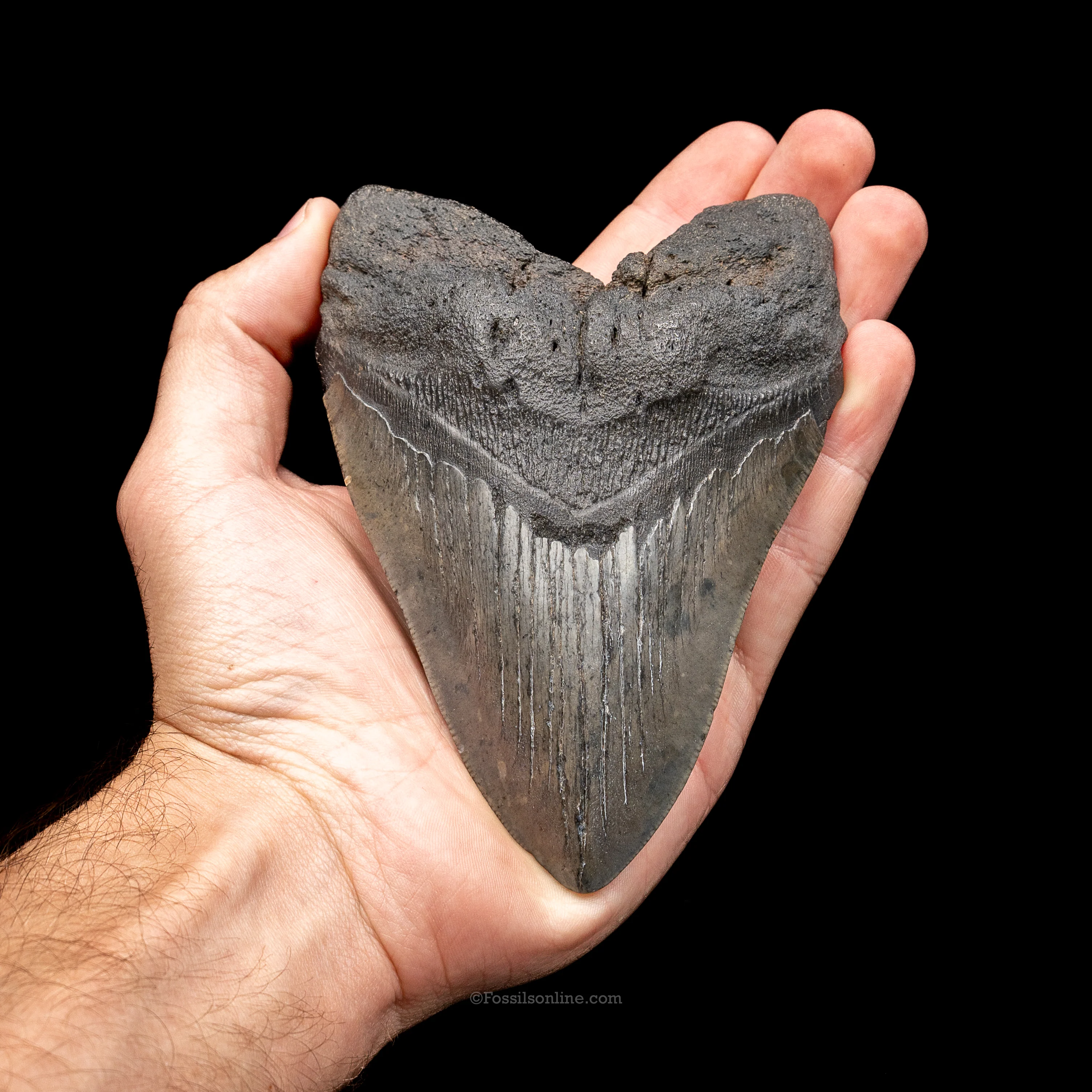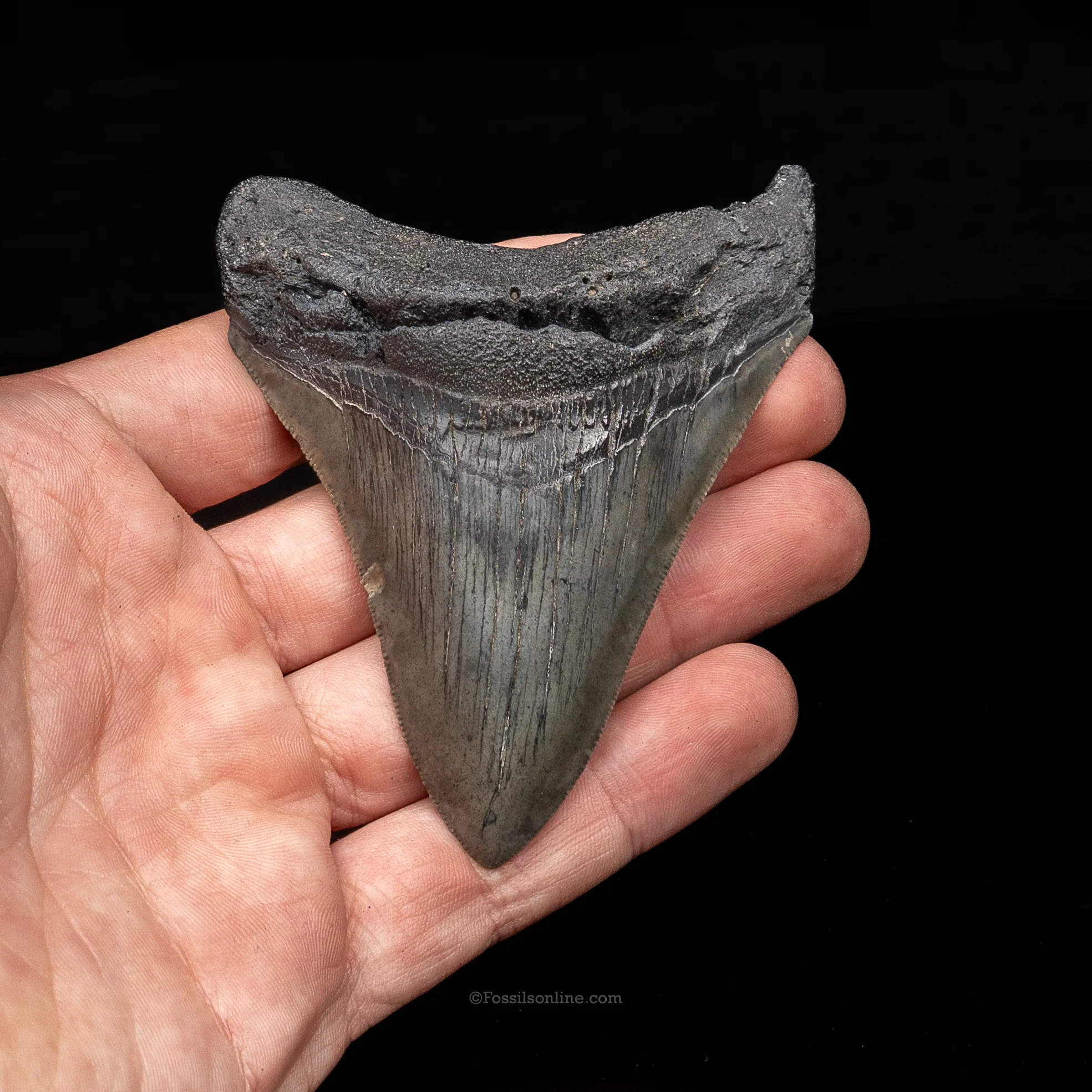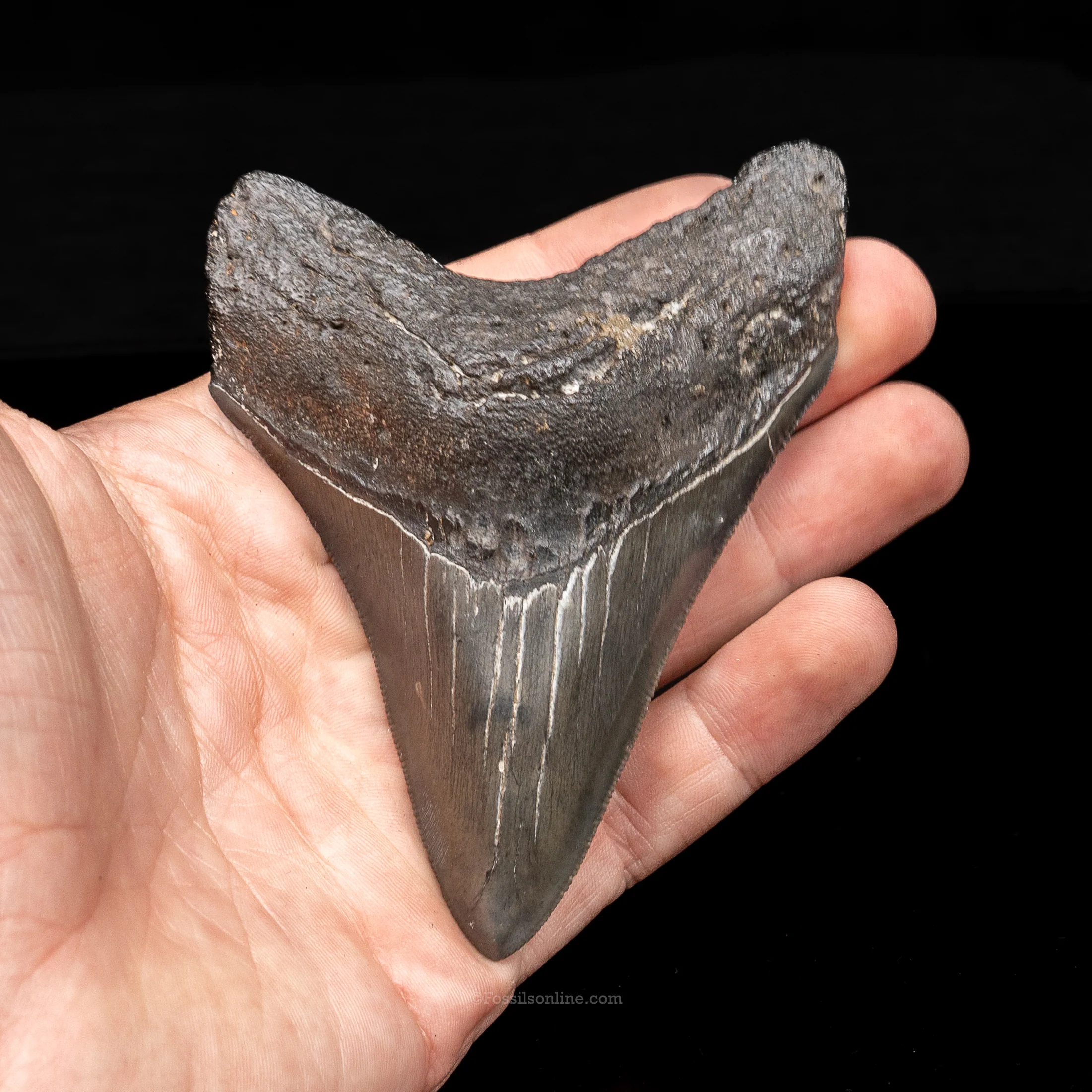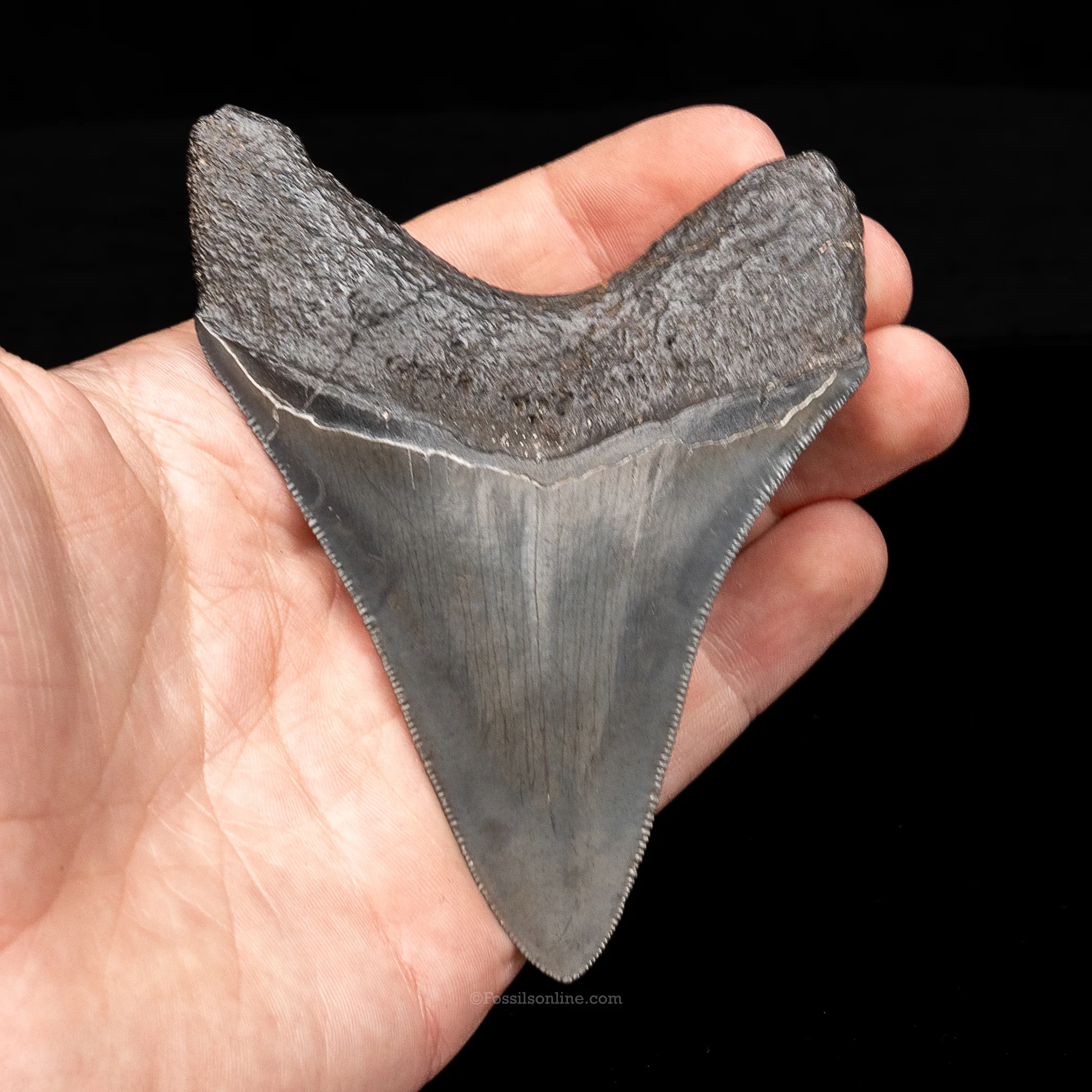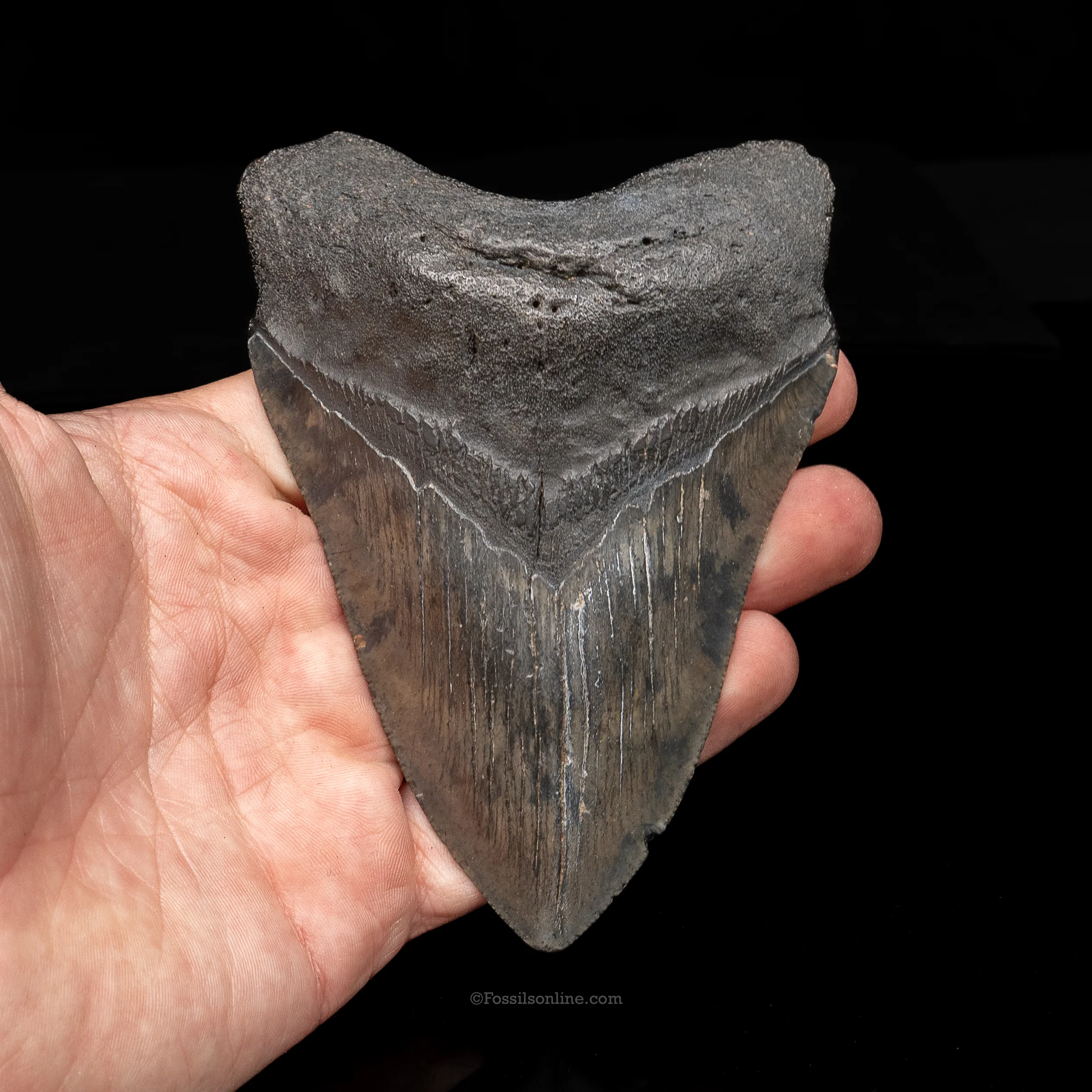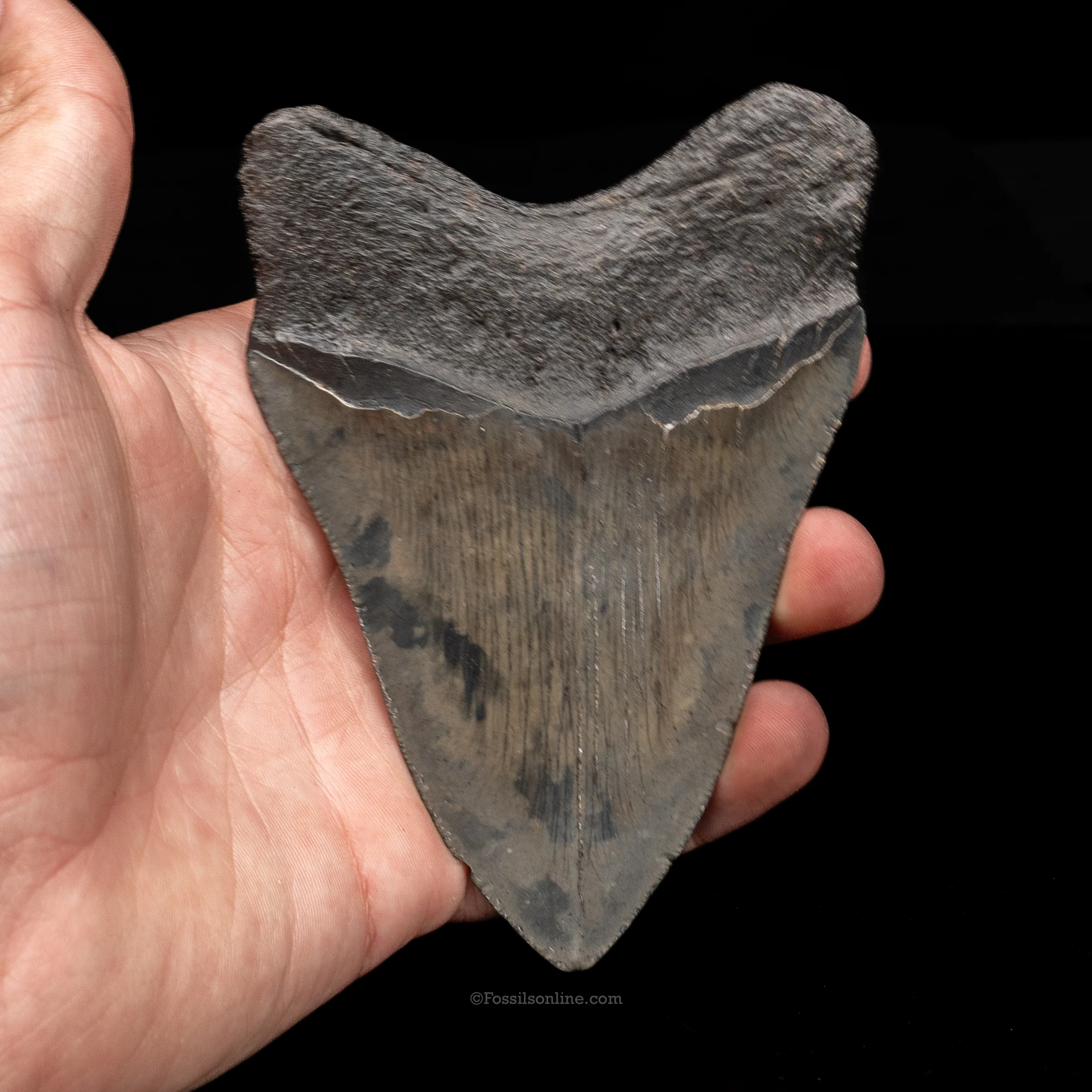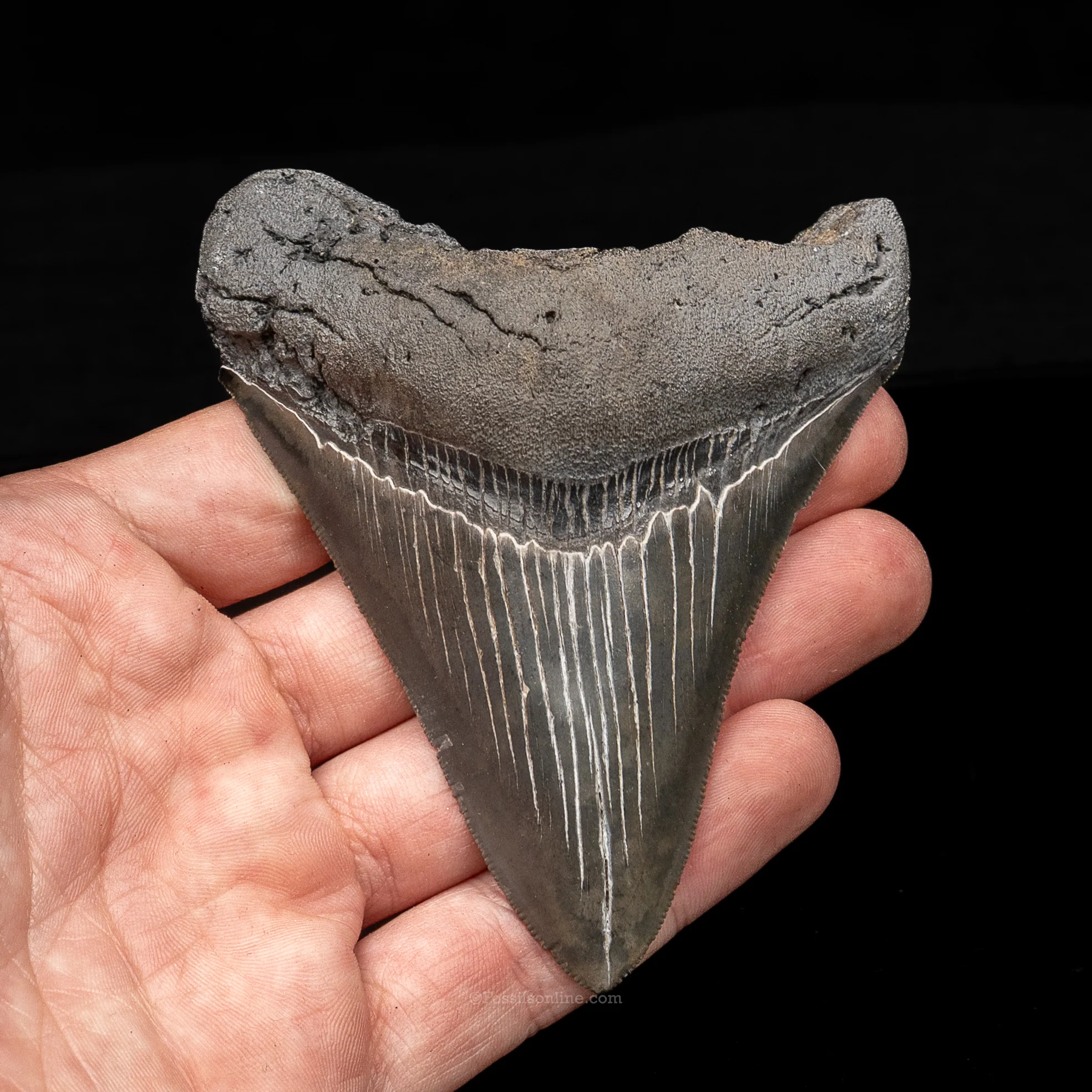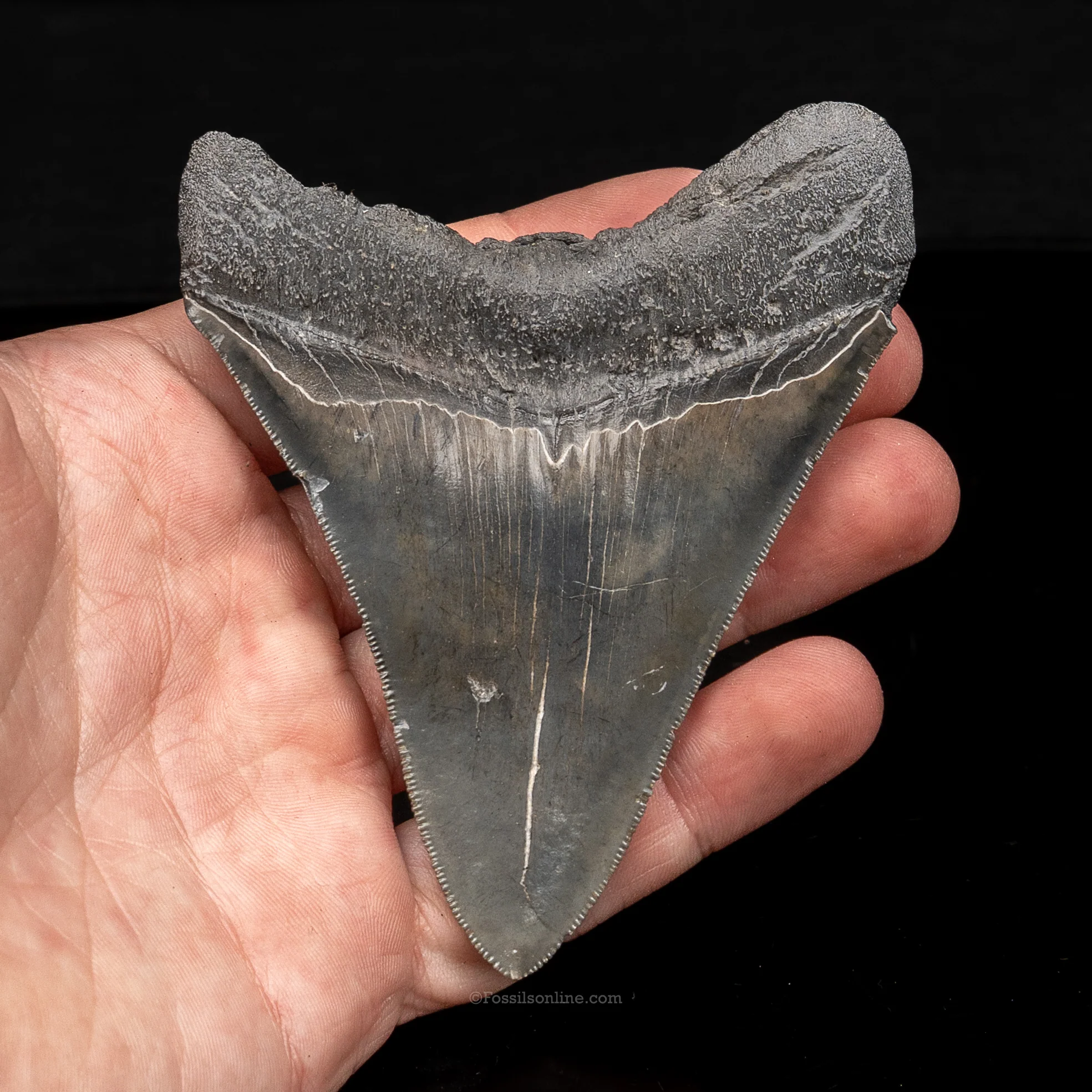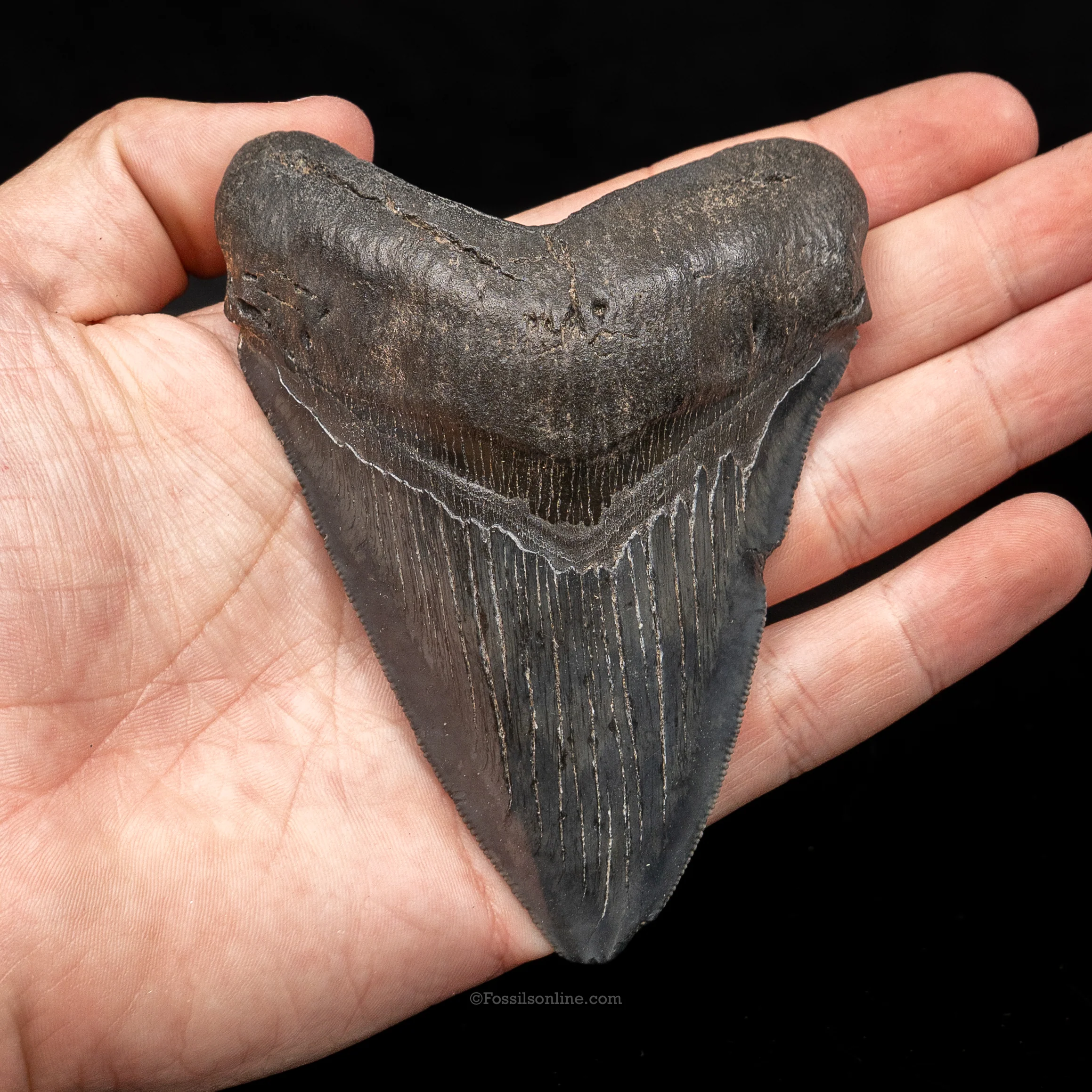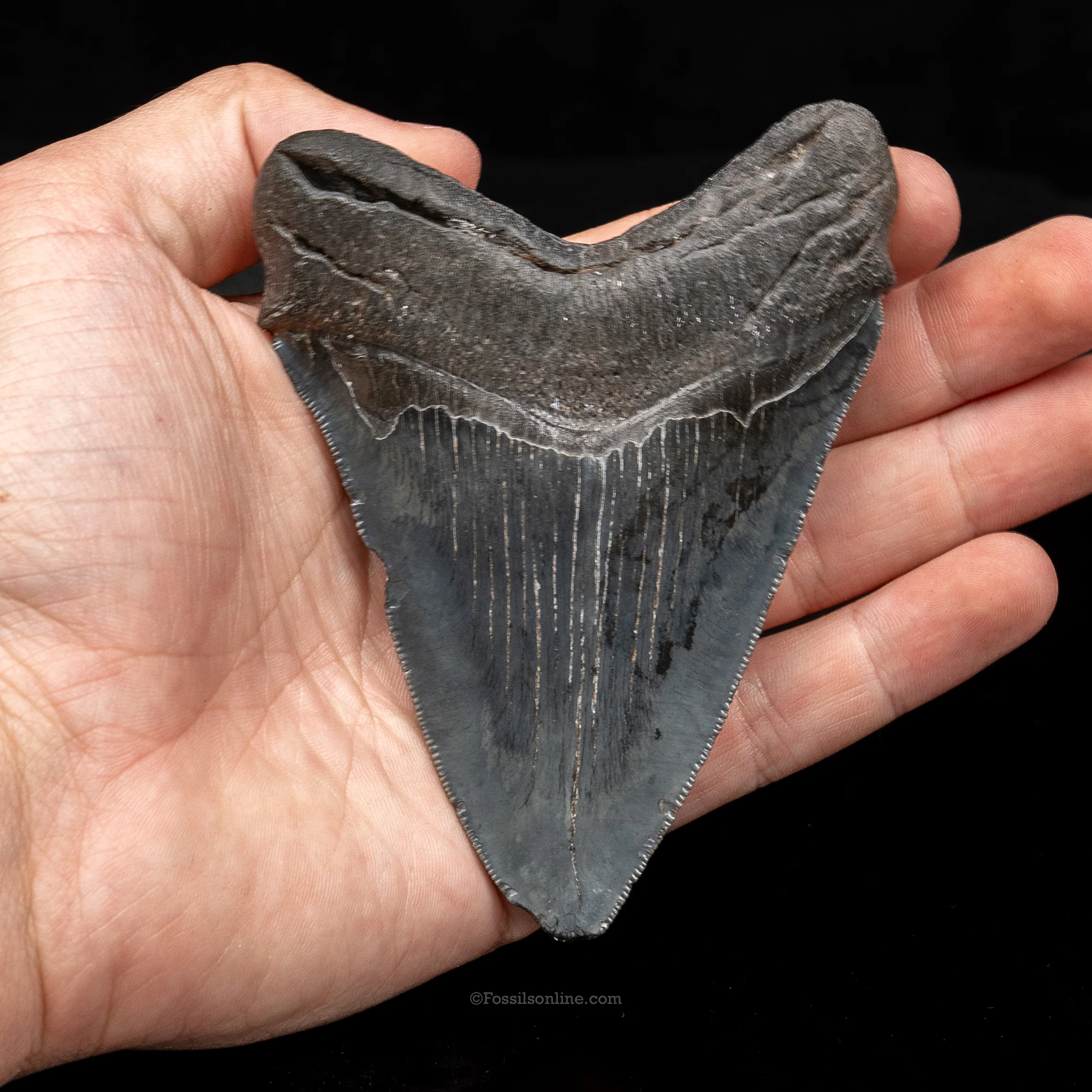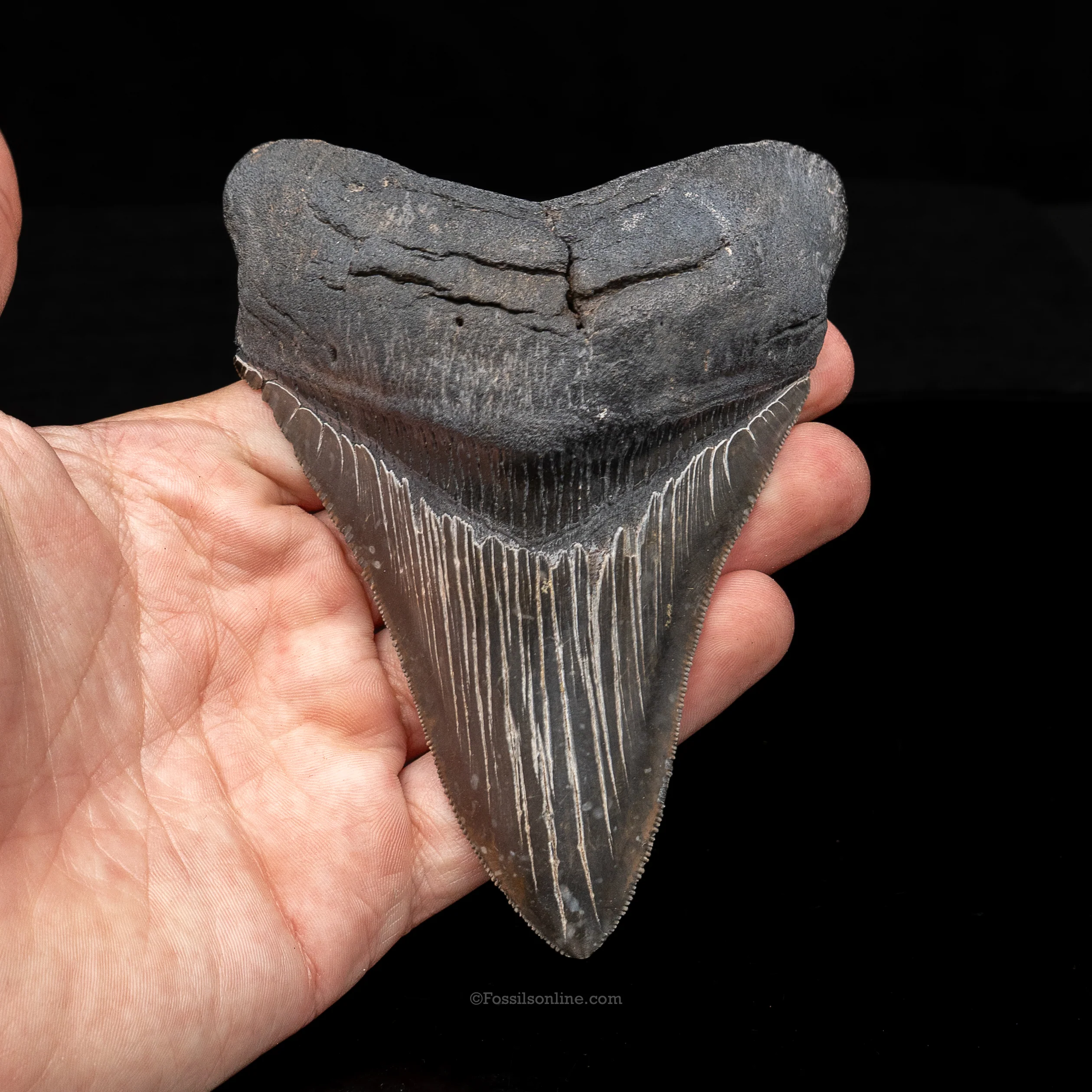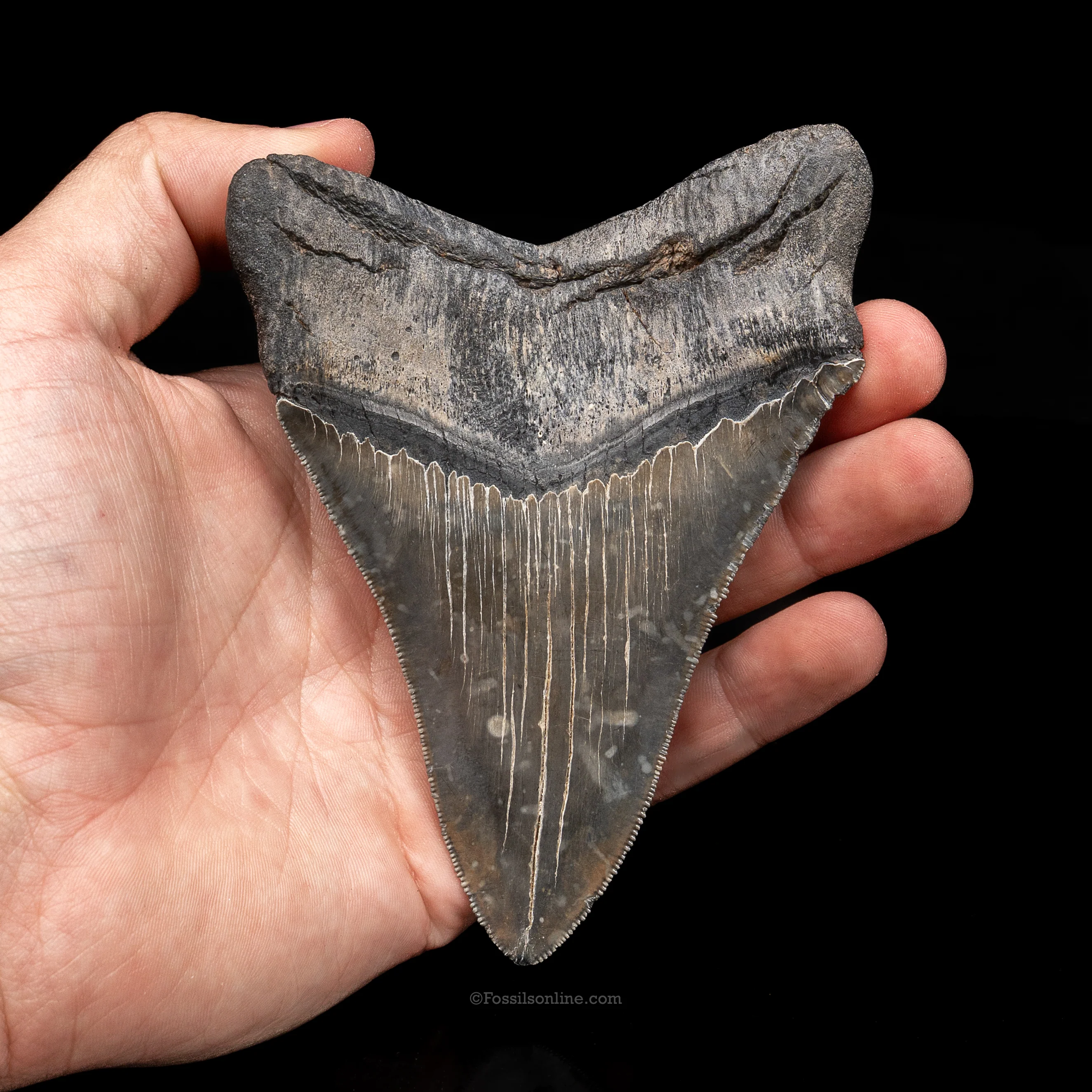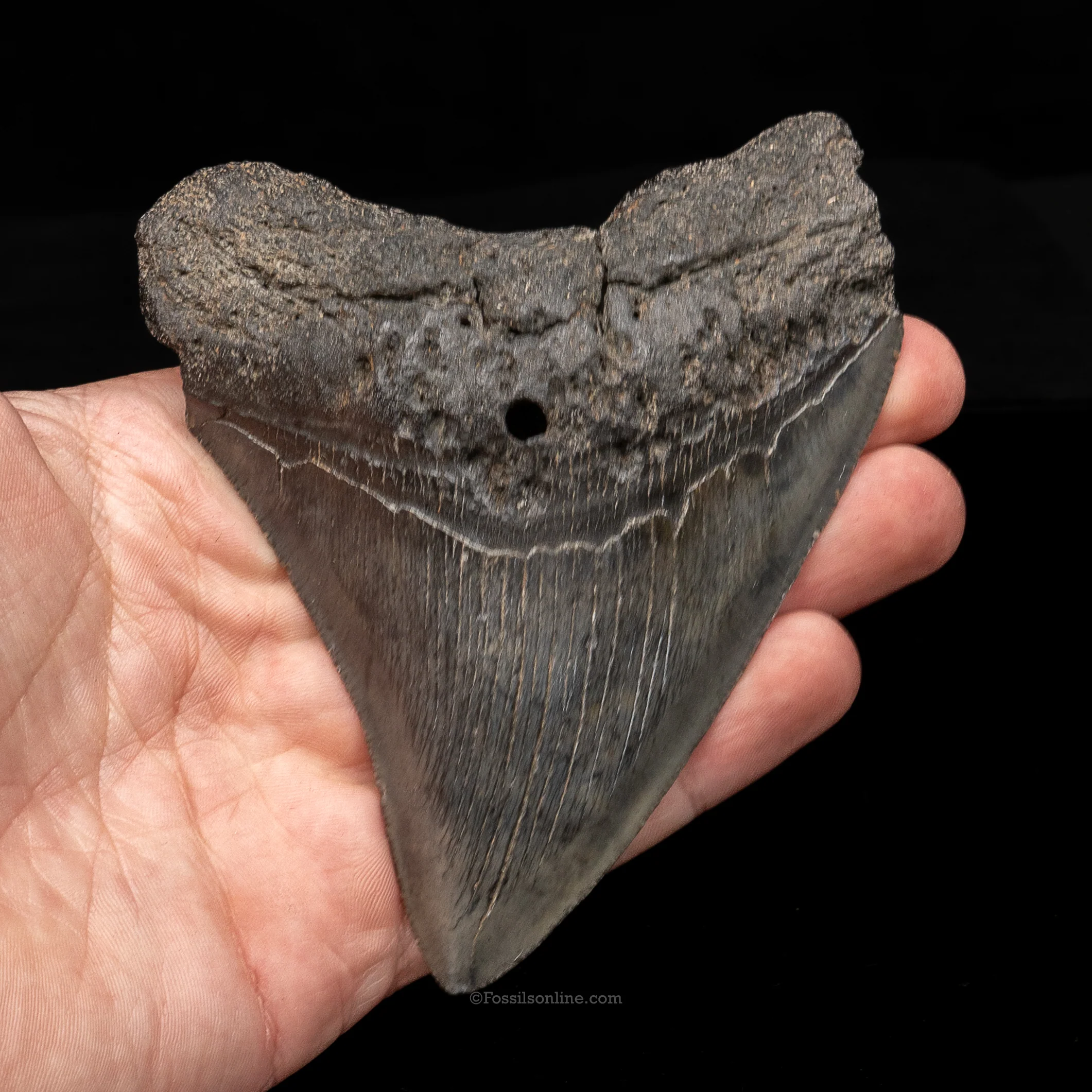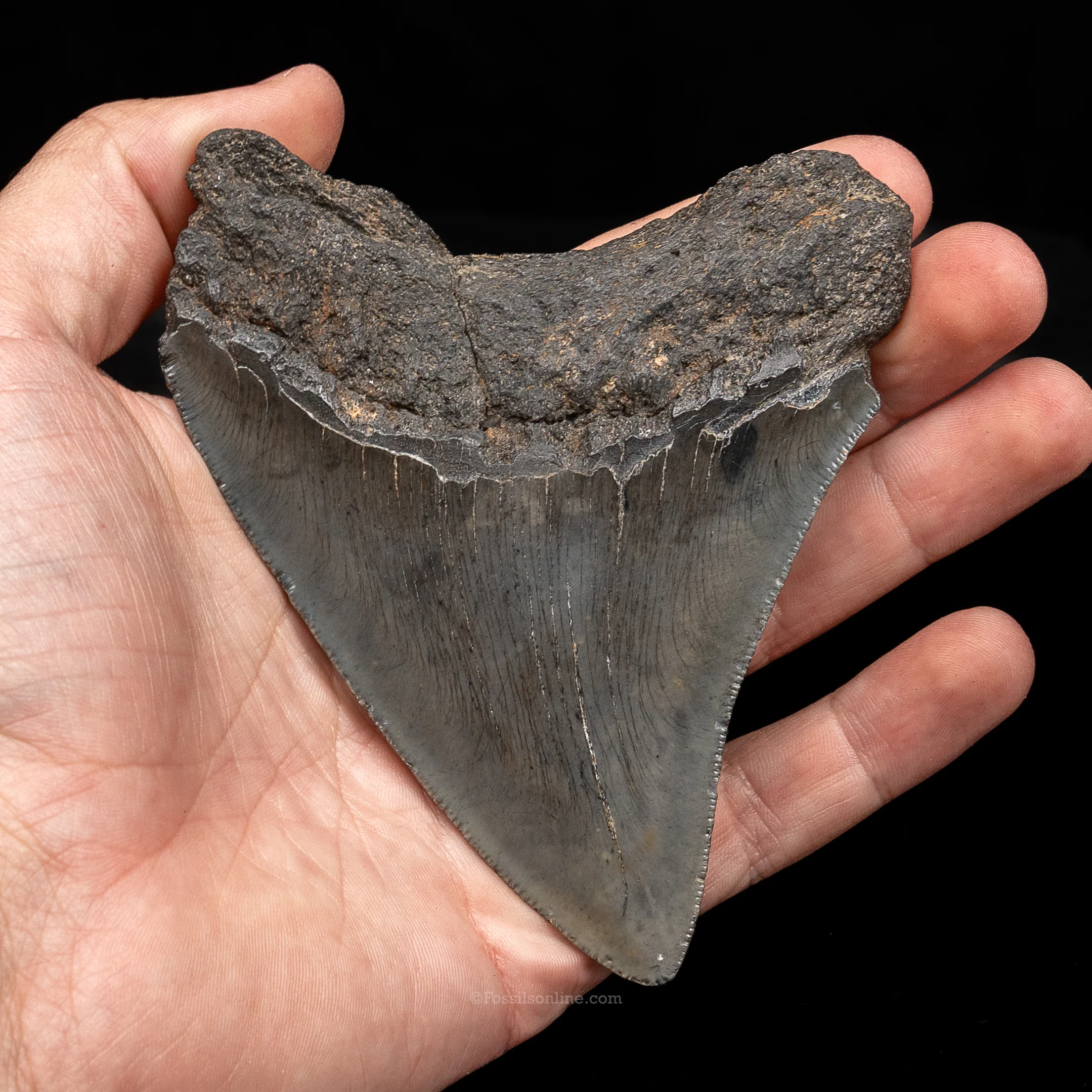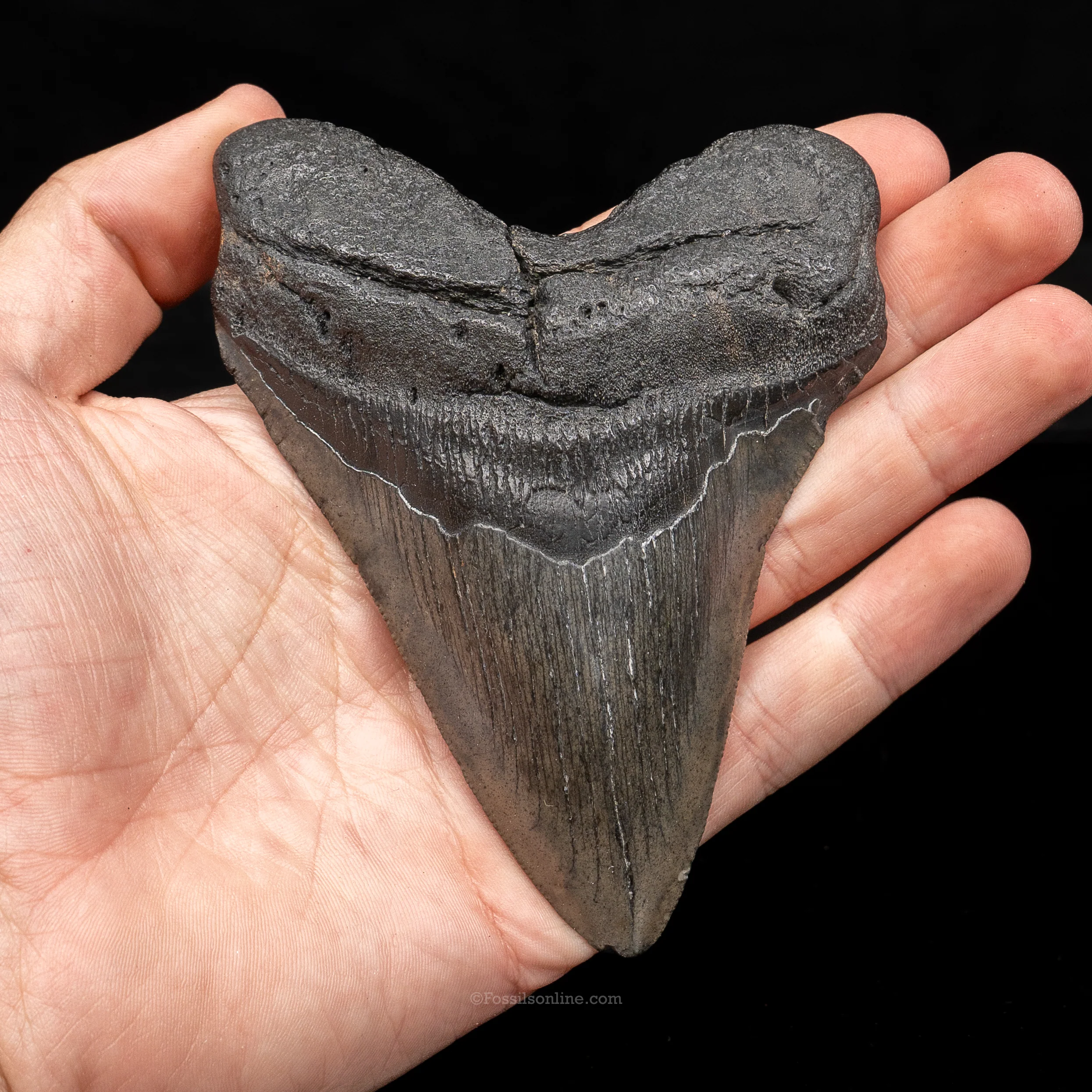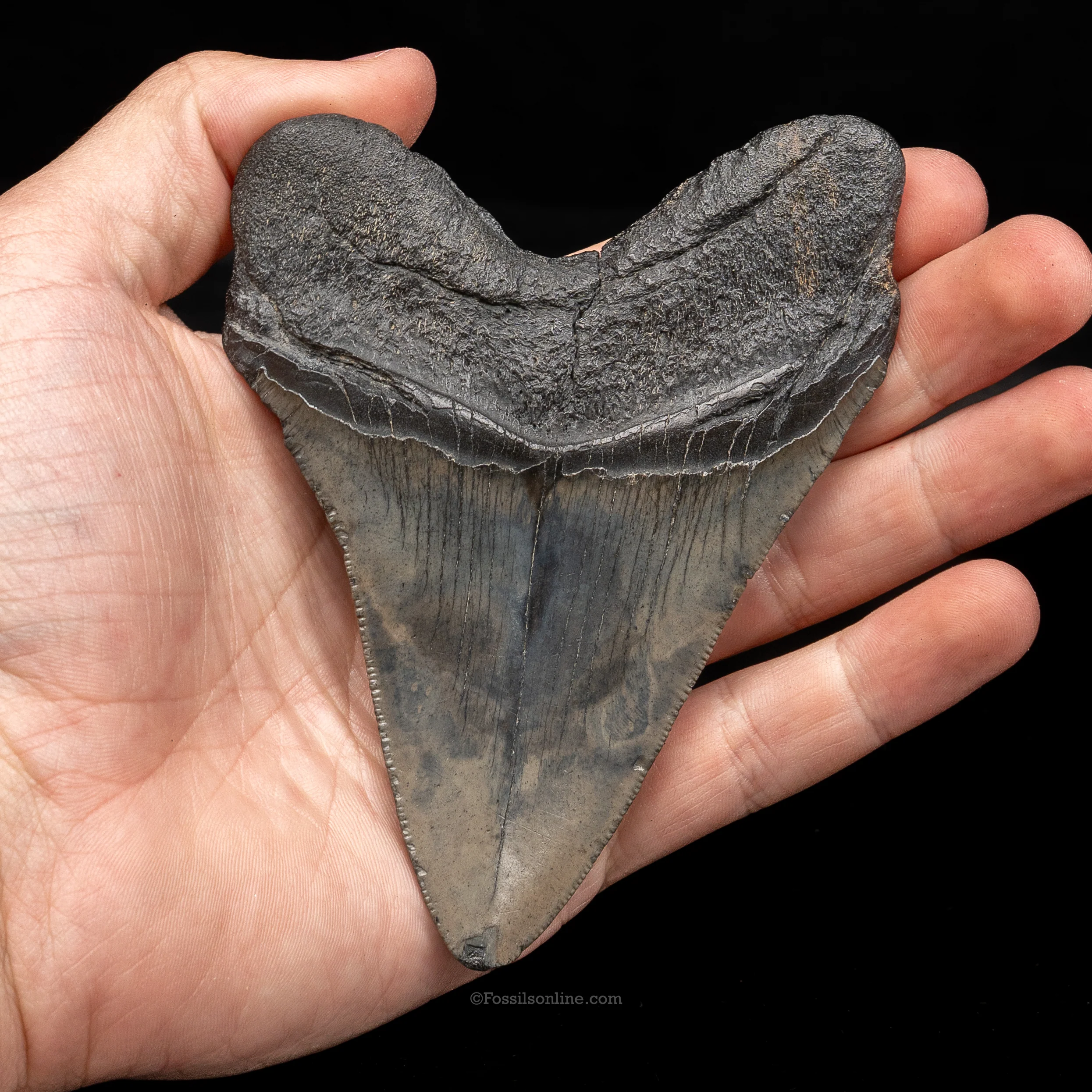
Fine Peace River Chubutensis 2.71"
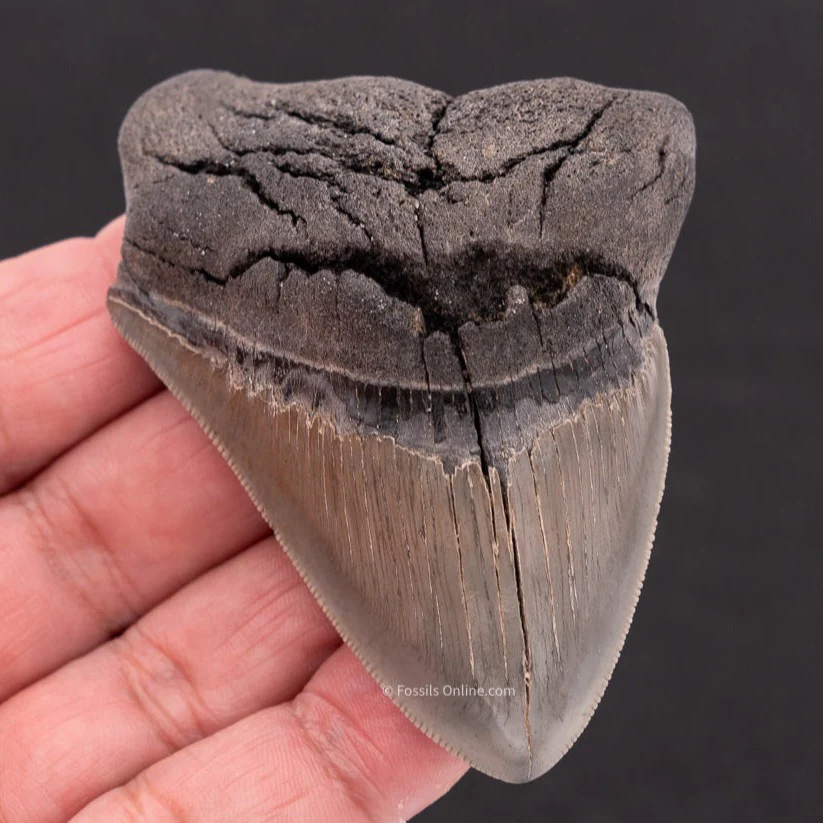
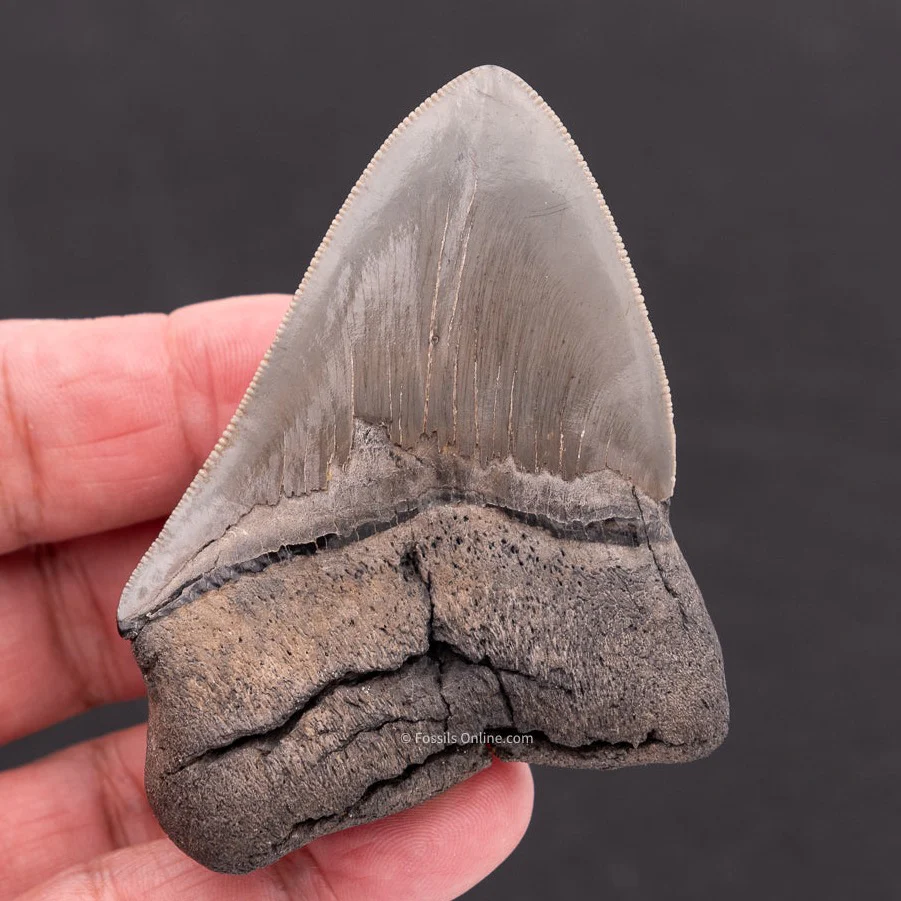
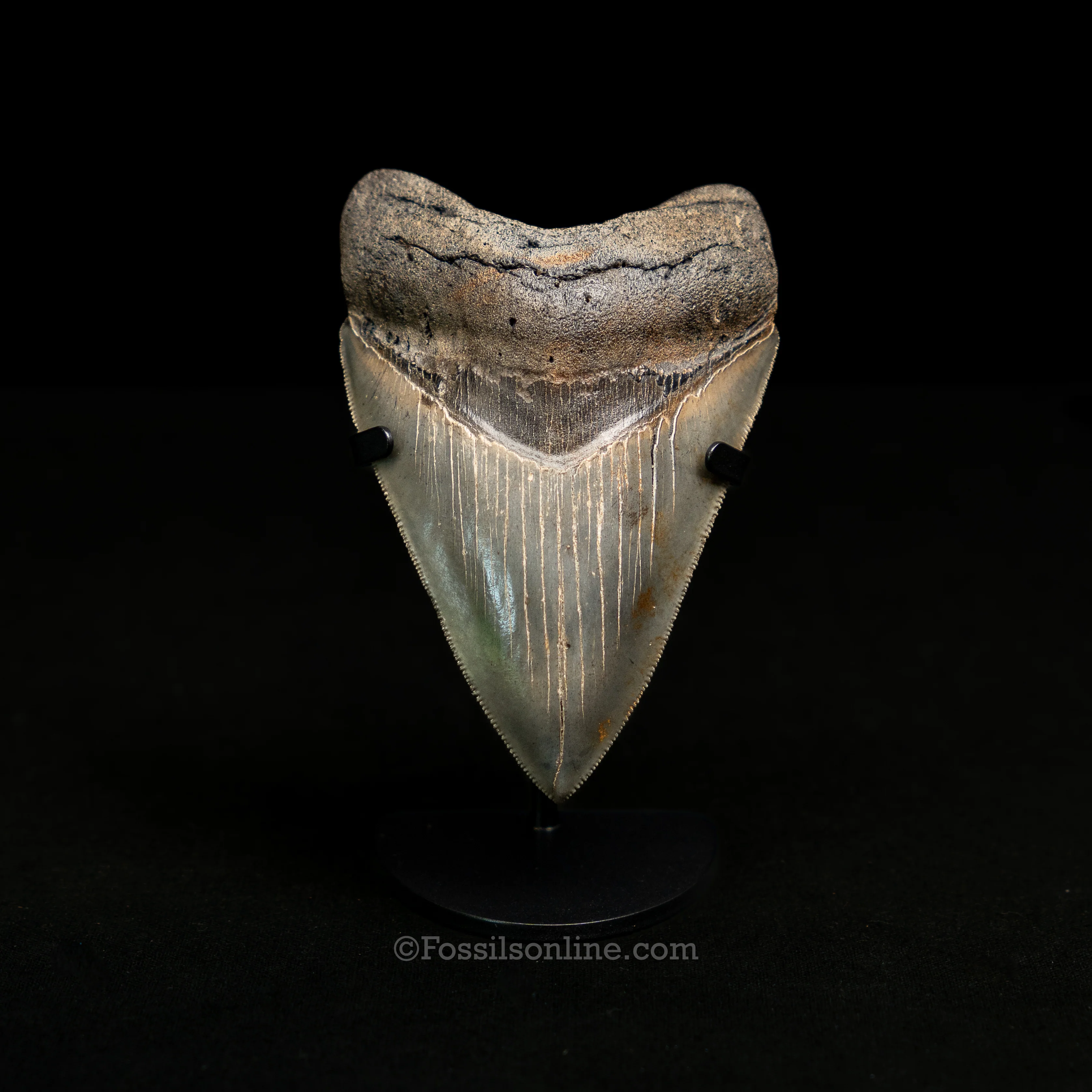
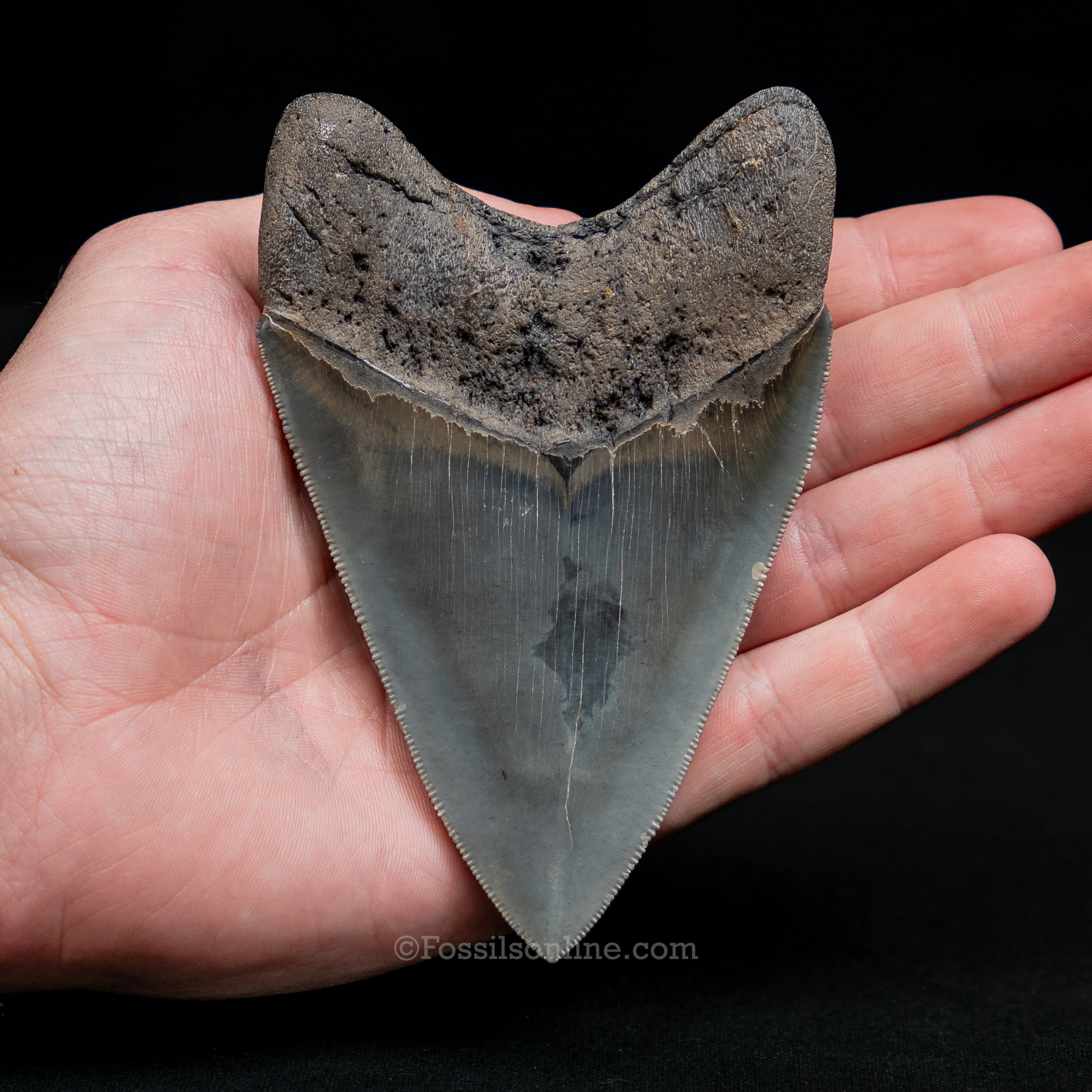
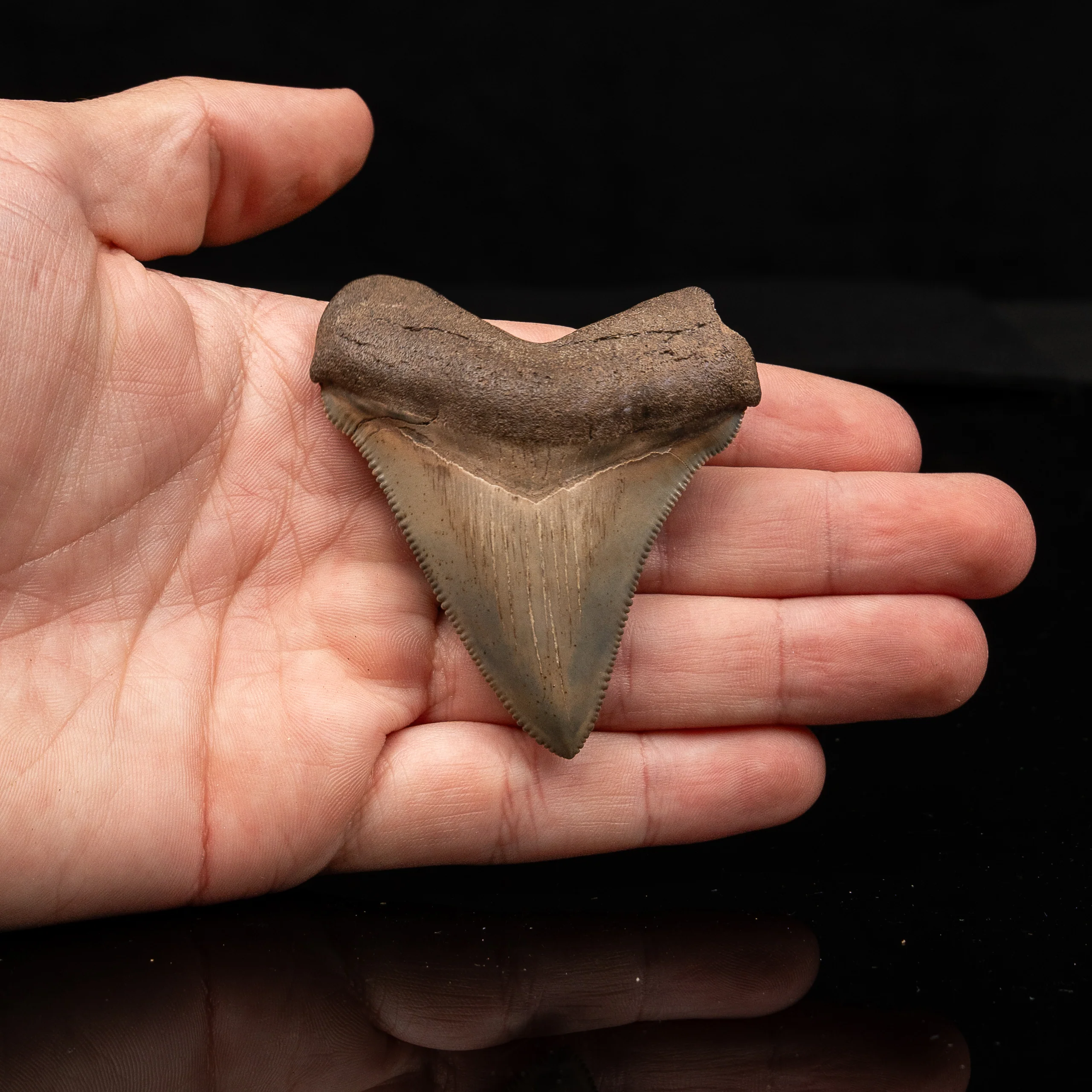
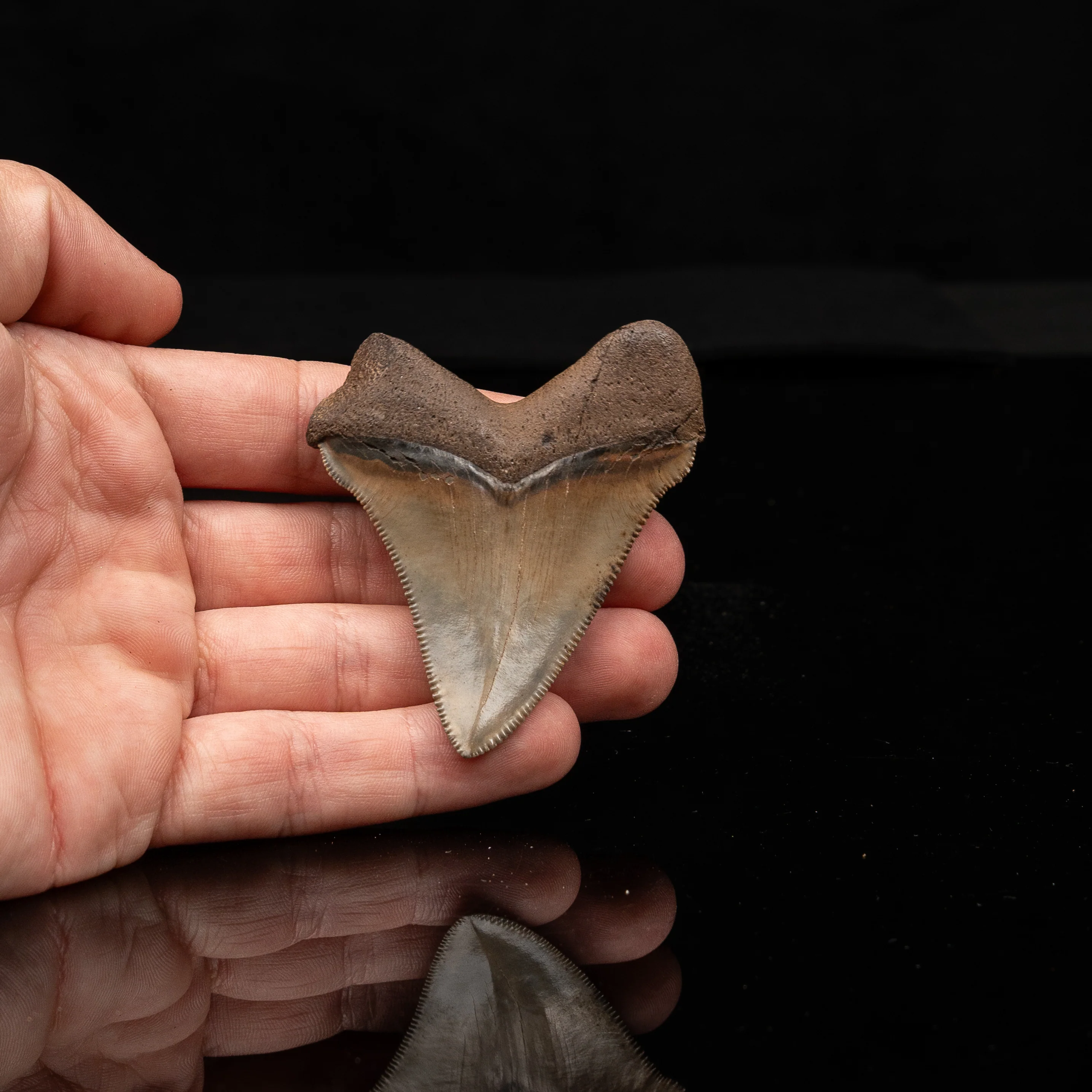
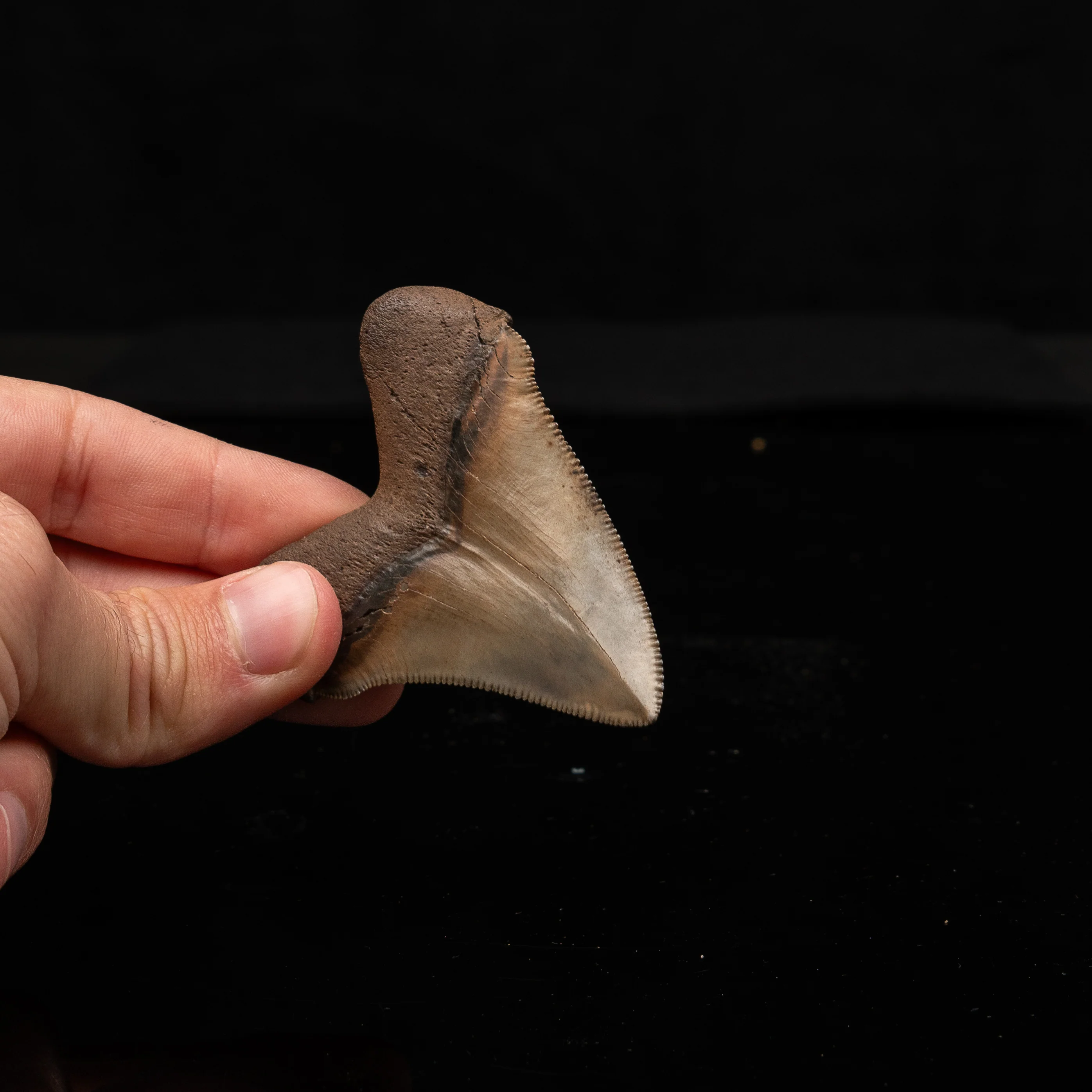
The preservation of this tooth is pristine. Not your everyday Peace River shark tooth. The bourlette and enamel on this tooth show incredible preservation with a rich, chocolatey tone.
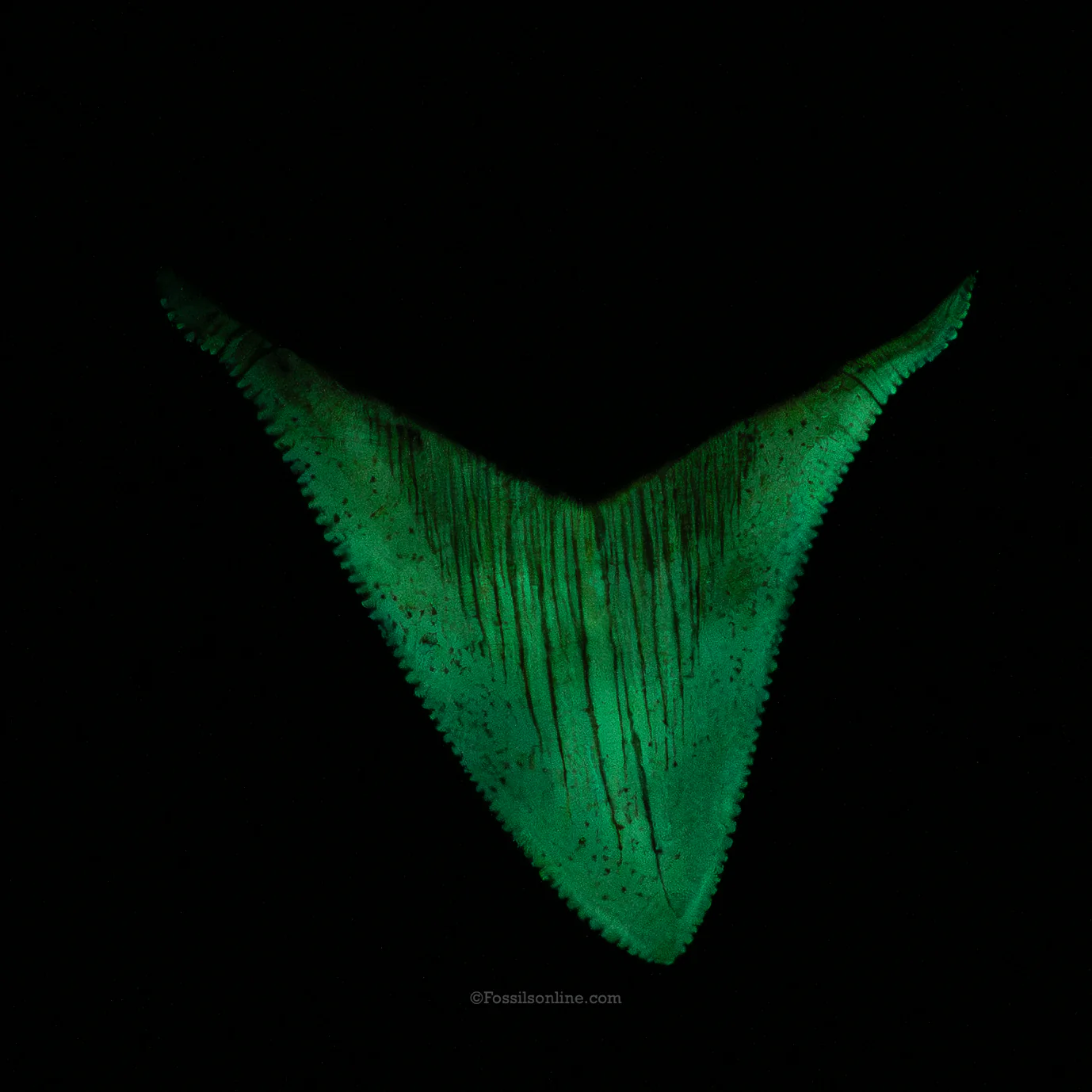
In addition, the tooth features sharp, well-defined cusps that highlight chubutensis characteristics. A minor chip in the root in the top corner is present but does not detract from the overall aesthetic quality of the tooth. It also phosphoresces under UV light due to high concentrations of phosphatic minerals and trace elements, which absorb UV energy and re-release it as visible light.
Otodus chubutensis
Otodus chubutensis is one of the most important species in the evolutionary history of giant predatory sharks. Often described as a transitional form between earlier megatooth sharks and the massive Otodus megalodon, this species provides critical insight into how some of the largest predators in Earth’s history developed. Its fossils are found worldwide and are especially valued for their distinctive combination of primitive and advanced features.
When It Appeared in the Fossil Record
Otodus chubutensis lived during the Miocene Epoch, approximately 23 to 5.3 million years ago. It appears after earlier species like Otodus obliquus and before the emergence of Otodus megalodon, placing it squarely in the middle of the megatooth lineage’s evolutionary timeline.
Fossils attributed to O. chubutensis are most commonly dated to the middle to late Miocene, a time when ocean ecosystems were highly productive and supported a wide range of large marine predators.
Evolutionary Significance
This species is widely regarded as a transitional form because it exhibits features seen in both earlier and later megatooth sharks.
-
Earlier species (like O. obliquus) had large triangular teeth with prominent lateral cusps and little to no serration
-
Later species (O. megalodon) developed fully serrated teeth and lost the lateral cusps entirely
O. chubutensis sits between these extremes:
-
It often retains lateral cusplets near the base of the tooth
-
It shows well-developed serrations along the cutting edges
This combination makes it one of the clearest examples of gradual evolutionary change in the fossil record.
Peak of Its Reign
During the Miocene, Otodus chubutensis was an apex predator in warm, shallow seas around the world. It thrived in environments rich in marine mammals, including early whales, dolphins, and large fish.
At this time, global ocean temperatures were generally warmer than today, and coastal ecosystems were expansive. These conditions allowed large predatory sharks like O. chubutensis to reach impressive sizes and occupy a dominant ecological role.
Size and Physical Characteristics
While not as massive as Otodus megalodon, O. chubutensis was still a very large shark.
-
Estimated body length: 30 to 45 feet (9–14 meters)
-
Teeth: Large, triangular, and robust, often reaching several inches in length
its body would have been streamlined and powerful, similar in general form to modern lamniform sharks, built for speed and efficiency in open water.
Tooth Morphology
The teeth of Otodus chubutensis are its most defining feature and the primary reason it is so well understood.
Key characteristics include:
-
Broad triangular crown
-
Coarse to moderate serrations along the edges
-
Distinct lateral cusplets on either side of the main blade
-
Thick, sturdy root designed to withstand the forces of biting large prey
The presence of both serrations and cusplets is what distinguishes O. chubutensis from both its ancestors and descendants. In some specimens, the cusplets may be reduced or worn, reflecting the gradual evolutionary trend toward their eventual disappearance in O. megalodon.
Diet and Habitat
As a large apex predator, Otodus chubutensis likely fed on:
-
Early whales and marine mammals
-
Large fish
-
Other sharks
Its serrated teeth suggest a feeding strategy similar to later megatooth sharks—biting and slicing chunks of flesh from large prey.
It inhabited:
-
Warm, shallow coastal seas
-
Continental shelf environments
-
Areas with high marine productivity
Fossils have been found on multiple continents, indicating a near-global distribution in suitable marine habitats.
Similarities to Other Megatooth Sharks
Otodus chubutensis shares many traits with other members of the megatooth lineage:
-
Large, triangular teeth adapted for cutting
-
Massive body size relative to most sharks
-
Apex predator status in marine ecosystems
However, it is unique in its intermediate features, making it a key species for understanding the transition from non-serrated to fully serrated megatooth sharks.
Geographic Distribution
Fossils of Otodus chubutensis have been discovered in:
-
North and South America
-
Europe
-
Africa
-
Asia
Notable localities include coastal deposits where Miocene marine sediments are exposed, often yielding well-preserved teeth.
Fossil Preservation
Like other sharks, O. chubutensis is primarily known from its teeth. These fossils are commonly found in:
-
Marine sedimentary deposits
-
Phosphate-rich formations
-
River systems that have reworked older deposits
Teeth often display:
-
Strong mineralization
-
Variations in color depending on the surrounding sediment
-
Excellent preservation of serrations and cusplets
Because of their durability, these teeth are among the most frequently collected large shark fossils.
Peace River Fossils
The Peace River of southwestern Florida is one of the most productive and accessible fossil localities in the southeastern United States. Flowing through Polk, Hardee, DeSoto, and Charlotte counties, the river cuts through layers of sediment that preserve a rich record of life from the late Neogene into the Ice Age. For collectors and paleontology enthusiasts, it offers a rare opportunity to recover scientifically meaningful fossils directly from an active river system.
Geologic Setting
The fossil-bearing sediments of the Peace River are primarily derived from the Hawthorn Group and overlying formations, which include a mix of phosphatic sands, clays, and gravels. These deposits were laid down in marine and estuarine environments millions of years ago and have since been reworked by erosion and river flow.
As the river meanders and floods, it continuously erodes older sediments and concentrates fossils into gravel beds along the river bottom. These lag deposits are where most fossils are found today. Because of this constant reworking, many specimens are not found in their original layer, but instead represent a mixture of ages spanning several million years.
Age of Fossils
Most fossils recovered from the Peace River date to the Pliocene and Pleistocene epochs, roughly 5 million to 11,700 years ago. Some material may be older, originating from Miocene deposits that have been eroded and redeposited.
This time span captures a major transition in Earth’s history, including:
-
The rise of modern marine ecosystems
-
The expansion of large terrestrial mammals
-
The climatic shifts associated with the Ice Ages
Because of this, the Peace River preserves both marine and land animals in the same general collecting areas.
Types of Fossils Found
The diversity of fossils in the Peace River is one of its defining features.
Common finds include:
Shark teeth, especially from species like Carcharodon carcharias (great white), tiger sharks, bull sharks, and extinct forms
-
Ray plates and teeth
-
Marine shells and invertebrates
-
Fossilized bone fragments from land mammals
Ice Age terrestrial fossils are particularly notable and may include:
-
Mammoth and mastodon teeth and bone
-
Horse, bison, and camel remains
-
Giant ground sloth material
-
Occasional rarer finds such as tapir or bear
This mixture reflects Florida’s past as a coastal environment where rivers, estuaries, and shallow seas overlapped with terrestrial habitats.
Fossil Preservation
Fossils from the Peace River often show distinctive preservation due to the region’s mineral-rich sediments.
Typical characteristics include:
-
Dark coloration, ranging from black to deep brown due to phosphate mineralization
-
Smooth, water-worn surfaces from transport within the river
-
Occasional breakage or rounding from reworking
Shark teeth from this area are especially prized for their durability and contrast between enamel and root, often retaining sharp serrations despite their age.
Collecting Environment
Unlike many fossil sites that require excavation into rock layers, the Peace River is an active, surface-collecting locality. Fossils are typically found by:
-
Sifting river gravel through screens
-
Searching exposed gravel bars during low water levels
-
Diving in deeper sections where fossil concentrations can be higher
Water levels play a major role in accessibility. During dry seasons, more gravel beds are exposed, making collecting easier. After heavy rains, fossils may be redistributed, sometimes revealing new material.
Product Information
Product Information
Shipping & Returns
Shipping & Returns
Fine Peace River Chubutensis 2.71"
Fine Peace River Chubutensis 2.71"
The preservation of this tooth is pristine. Not your everyday Peace River shark tooth. The bourlette and enamel on this tooth show incredible preservation with a rich, chocolatey tone.
In addition, the tooth features sharp, well-defined cusps that highlight chubutensis characteristics. A minor chip in the root in the top corner is present but does not detract from the overall aesthetic quality of the tooth. It also phosphoresces under UV light due to high concentrations of phosphatic minerals and trace elements, which absorb UV energy and re-release it as visible light.
Otodus chubutensis
Otodus chubutensis is one of the most important species in the evolutionary history of giant predatory sharks. Often described as a transitional form between earlier megatooth sharks and the massive Otodus megalodon, this species provides critical insight into how some of the largest predators in Earth’s history developed. Its fossils are found worldwide and are especially valued for their distinctive combination of primitive and advanced features.
When It Appeared in the Fossil Record
Otodus chubutensis lived during the Miocene Epoch, approximately 23 to 5.3 million years ago. It appears after earlier species like Otodus obliquus and before the emergence of Otodus megalodon, placing it squarely in the middle of the megatooth lineage’s evolutionary timeline.
Fossils attributed to O. chubutensis are most commonly dated to the middle to late Miocene, a time when ocean ecosystems were highly productive and supported a wide range of large marine predators.
Evolutionary Significance
This species is widely regarded as a transitional form because it exhibits features seen in both earlier and later megatooth sharks.
-
Earlier species (like O. obliquus) had large triangular teeth with prominent lateral cusps and little to no serration
-
Later species (O. megalodon) developed fully serrated teeth and lost the lateral cusps entirely
O. chubutensis sits between these extremes:
-
It often retains lateral cusplets near the base of the tooth
-
It shows well-developed serrations along the cutting edges
This combination makes it one of the clearest examples of gradual evolutionary change in the fossil record.
Peak of Its Reign
During the Miocene, Otodus chubutensis was an apex predator in warm, shallow seas around the world. It thrived in environments rich in marine mammals, including early whales, dolphins, and large fish.
At this time, global ocean temperatures were generally warmer than today, and coastal ecosystems were expansive. These conditions allowed large predatory sharks like O. chubutensis to reach impressive sizes and occupy a dominant ecological role.
Size and Physical Characteristics
While not as massive as Otodus megalodon, O. chubutensis was still a very large shark.
-
Estimated body length: 30 to 45 feet (9–14 meters)
-
Teeth: Large, triangular, and robust, often reaching several inches in length
its body would have been streamlined and powerful, similar in general form to modern lamniform sharks, built for speed and efficiency in open water.
Tooth Morphology
The teeth of Otodus chubutensis are its most defining feature and the primary reason it is so well understood.
Key characteristics include:
-
Broad triangular crown
-
Coarse to moderate serrations along the edges
-
Distinct lateral cusplets on either side of the main blade
-
Thick, sturdy root designed to withstand the forces of biting large prey
The presence of both serrations and cusplets is what distinguishes O. chubutensis from both its ancestors and descendants. In some specimens, the cusplets may be reduced or worn, reflecting the gradual evolutionary trend toward their eventual disappearance in O. megalodon.
Diet and Habitat
As a large apex predator, Otodus chubutensis likely fed on:
-
Early whales and marine mammals
-
Large fish
-
Other sharks
Its serrated teeth suggest a feeding strategy similar to later megatooth sharks—biting and slicing chunks of flesh from large prey.
It inhabited:
-
Warm, shallow coastal seas
-
Continental shelf environments
-
Areas with high marine productivity
Fossils have been found on multiple continents, indicating a near-global distribution in suitable marine habitats.
Similarities to Other Megatooth Sharks
Otodus chubutensis shares many traits with other members of the megatooth lineage:
-
Large, triangular teeth adapted for cutting
-
Massive body size relative to most sharks
-
Apex predator status in marine ecosystems
However, it is unique in its intermediate features, making it a key species for understanding the transition from non-serrated to fully serrated megatooth sharks.
Geographic Distribution
Fossils of Otodus chubutensis have been discovered in:
-
North and South America
-
Europe
-
Africa
-
Asia
Notable localities include coastal deposits where Miocene marine sediments are exposed, often yielding well-preserved teeth.
Fossil Preservation
Like other sharks, O. chubutensis is primarily known from its teeth. These fossils are commonly found in:
-
Marine sedimentary deposits
-
Phosphate-rich formations
-
River systems that have reworked older deposits
Teeth often display:
-
Strong mineralization
-
Variations in color depending on the surrounding sediment
-
Excellent preservation of serrations and cusplets
Because of their durability, these teeth are among the most frequently collected large shark fossils.
Peace River Fossils
The Peace River of southwestern Florida is one of the most productive and accessible fossil localities in the southeastern United States. Flowing through Polk, Hardee, DeSoto, and Charlotte counties, the river cuts through layers of sediment that preserve a rich record of life from the late Neogene into the Ice Age. For collectors and paleontology enthusiasts, it offers a rare opportunity to recover scientifically meaningful fossils directly from an active river system.
Geologic Setting
The fossil-bearing sediments of the Peace River are primarily derived from the Hawthorn Group and overlying formations, which include a mix of phosphatic sands, clays, and gravels. These deposits were laid down in marine and estuarine environments millions of years ago and have since been reworked by erosion and river flow.
As the river meanders and floods, it continuously erodes older sediments and concentrates fossils into gravel beds along the river bottom. These lag deposits are where most fossils are found today. Because of this constant reworking, many specimens are not found in their original layer, but instead represent a mixture of ages spanning several million years.
Age of Fossils
Most fossils recovered from the Peace River date to the Pliocene and Pleistocene epochs, roughly 5 million to 11,700 years ago. Some material may be older, originating from Miocene deposits that have been eroded and redeposited.
This time span captures a major transition in Earth’s history, including:
-
The rise of modern marine ecosystems
-
The expansion of large terrestrial mammals
-
The climatic shifts associated with the Ice Ages
Because of this, the Peace River preserves both marine and land animals in the same general collecting areas.
Types of Fossils Found
The diversity of fossils in the Peace River is one of its defining features.
Common finds include:
Shark teeth, especially from species like Carcharodon carcharias (great white), tiger sharks, bull sharks, and extinct forms
-
Ray plates and teeth
-
Marine shells and invertebrates
-
Fossilized bone fragments from land mammals
Ice Age terrestrial fossils are particularly notable and may include:
-
Mammoth and mastodon teeth and bone
-
Horse, bison, and camel remains
-
Giant ground sloth material
-
Occasional rarer finds such as tapir or bear
This mixture reflects Florida’s past as a coastal environment where rivers, estuaries, and shallow seas overlapped with terrestrial habitats.
Fossil Preservation
Fossils from the Peace River often show distinctive preservation due to the region’s mineral-rich sediments.
Typical characteristics include:
-
Dark coloration, ranging from black to deep brown due to phosphate mineralization
-
Smooth, water-worn surfaces from transport within the river
-
Occasional breakage or rounding from reworking
Shark teeth from this area are especially prized for their durability and contrast between enamel and root, often retaining sharp serrations despite their age.
Collecting Environment
Unlike many fossil sites that require excavation into rock layers, the Peace River is an active, surface-collecting locality. Fossils are typically found by:
-
Sifting river gravel through screens
-
Searching exposed gravel bars during low water levels
-
Diving in deeper sections where fossil concentrations can be higher
Water levels play a major role in accessibility. During dry seasons, more gravel beds are exposed, making collecting easier. After heavy rains, fossils may be redistributed, sometimes revealing new material.
Original: $399.00
-65%$399.00
$139.65Product Information
Product Information
Shipping & Returns
Shipping & Returns
Description
The preservation of this tooth is pristine. Not your everyday Peace River shark tooth. The bourlette and enamel on this tooth show incredible preservation with a rich, chocolatey tone.
In addition, the tooth features sharp, well-defined cusps that highlight chubutensis characteristics. A minor chip in the root in the top corner is present but does not detract from the overall aesthetic quality of the tooth. It also phosphoresces under UV light due to high concentrations of phosphatic minerals and trace elements, which absorb UV energy and re-release it as visible light.
Otodus chubutensis
Otodus chubutensis is one of the most important species in the evolutionary history of giant predatory sharks. Often described as a transitional form between earlier megatooth sharks and the massive Otodus megalodon, this species provides critical insight into how some of the largest predators in Earth’s history developed. Its fossils are found worldwide and are especially valued for their distinctive combination of primitive and advanced features.
When It Appeared in the Fossil Record
Otodus chubutensis lived during the Miocene Epoch, approximately 23 to 5.3 million years ago. It appears after earlier species like Otodus obliquus and before the emergence of Otodus megalodon, placing it squarely in the middle of the megatooth lineage’s evolutionary timeline.
Fossils attributed to O. chubutensis are most commonly dated to the middle to late Miocene, a time when ocean ecosystems were highly productive and supported a wide range of large marine predators.
Evolutionary Significance
This species is widely regarded as a transitional form because it exhibits features seen in both earlier and later megatooth sharks.
-
Earlier species (like O. obliquus) had large triangular teeth with prominent lateral cusps and little to no serration
-
Later species (O. megalodon) developed fully serrated teeth and lost the lateral cusps entirely
O. chubutensis sits between these extremes:
-
It often retains lateral cusplets near the base of the tooth
-
It shows well-developed serrations along the cutting edges
This combination makes it one of the clearest examples of gradual evolutionary change in the fossil record.
Peak of Its Reign
During the Miocene, Otodus chubutensis was an apex predator in warm, shallow seas around the world. It thrived in environments rich in marine mammals, including early whales, dolphins, and large fish.
At this time, global ocean temperatures were generally warmer than today, and coastal ecosystems were expansive. These conditions allowed large predatory sharks like O. chubutensis to reach impressive sizes and occupy a dominant ecological role.
Size and Physical Characteristics
While not as massive as Otodus megalodon, O. chubutensis was still a very large shark.
-
Estimated body length: 30 to 45 feet (9–14 meters)
-
Teeth: Large, triangular, and robust, often reaching several inches in length
its body would have been streamlined and powerful, similar in general form to modern lamniform sharks, built for speed and efficiency in open water.
Tooth Morphology
The teeth of Otodus chubutensis are its most defining feature and the primary reason it is so well understood.
Key characteristics include:
-
Broad triangular crown
-
Coarse to moderate serrations along the edges
-
Distinct lateral cusplets on either side of the main blade
-
Thick, sturdy root designed to withstand the forces of biting large prey
The presence of both serrations and cusplets is what distinguishes O. chubutensis from both its ancestors and descendants. In some specimens, the cusplets may be reduced or worn, reflecting the gradual evolutionary trend toward their eventual disappearance in O. megalodon.
Diet and Habitat
As a large apex predator, Otodus chubutensis likely fed on:
-
Early whales and marine mammals
-
Large fish
-
Other sharks
Its serrated teeth suggest a feeding strategy similar to later megatooth sharks—biting and slicing chunks of flesh from large prey.
It inhabited:
-
Warm, shallow coastal seas
-
Continental shelf environments
-
Areas with high marine productivity
Fossils have been found on multiple continents, indicating a near-global distribution in suitable marine habitats.
Similarities to Other Megatooth Sharks
Otodus chubutensis shares many traits with other members of the megatooth lineage:
-
Large, triangular teeth adapted for cutting
-
Massive body size relative to most sharks
-
Apex predator status in marine ecosystems
However, it is unique in its intermediate features, making it a key species for understanding the transition from non-serrated to fully serrated megatooth sharks.
Geographic Distribution
Fossils of Otodus chubutensis have been discovered in:
-
North and South America
-
Europe
-
Africa
-
Asia
Notable localities include coastal deposits where Miocene marine sediments are exposed, often yielding well-preserved teeth.
Fossil Preservation
Like other sharks, O. chubutensis is primarily known from its teeth. These fossils are commonly found in:
-
Marine sedimentary deposits
-
Phosphate-rich formations
-
River systems that have reworked older deposits
Teeth often display:
-
Strong mineralization
-
Variations in color depending on the surrounding sediment
-
Excellent preservation of serrations and cusplets
Because of their durability, these teeth are among the most frequently collected large shark fossils.
Peace River Fossils
The Peace River of southwestern Florida is one of the most productive and accessible fossil localities in the southeastern United States. Flowing through Polk, Hardee, DeSoto, and Charlotte counties, the river cuts through layers of sediment that preserve a rich record of life from the late Neogene into the Ice Age. For collectors and paleontology enthusiasts, it offers a rare opportunity to recover scientifically meaningful fossils directly from an active river system.
Geologic Setting
The fossil-bearing sediments of the Peace River are primarily derived from the Hawthorn Group and overlying formations, which include a mix of phosphatic sands, clays, and gravels. These deposits were laid down in marine and estuarine environments millions of years ago and have since been reworked by erosion and river flow.
As the river meanders and floods, it continuously erodes older sediments and concentrates fossils into gravel beds along the river bottom. These lag deposits are where most fossils are found today. Because of this constant reworking, many specimens are not found in their original layer, but instead represent a mixture of ages spanning several million years.
Age of Fossils
Most fossils recovered from the Peace River date to the Pliocene and Pleistocene epochs, roughly 5 million to 11,700 years ago. Some material may be older, originating from Miocene deposits that have been eroded and redeposited.
This time span captures a major transition in Earth’s history, including:
-
The rise of modern marine ecosystems
-
The expansion of large terrestrial mammals
-
The climatic shifts associated with the Ice Ages
Because of this, the Peace River preserves both marine and land animals in the same general collecting areas.
Types of Fossils Found
The diversity of fossils in the Peace River is one of its defining features.
Common finds include:
Shark teeth, especially from species like Carcharodon carcharias (great white), tiger sharks, bull sharks, and extinct forms
-
Ray plates and teeth
-
Marine shells and invertebrates
-
Fossilized bone fragments from land mammals
Ice Age terrestrial fossils are particularly notable and may include:
-
Mammoth and mastodon teeth and bone
-
Horse, bison, and camel remains
-
Giant ground sloth material
-
Occasional rarer finds such as tapir or bear
This mixture reflects Florida’s past as a coastal environment where rivers, estuaries, and shallow seas overlapped with terrestrial habitats.
Fossil Preservation
Fossils from the Peace River often show distinctive preservation due to the region’s mineral-rich sediments.
Typical characteristics include:
-
Dark coloration, ranging from black to deep brown due to phosphate mineralization
-
Smooth, water-worn surfaces from transport within the river
-
Occasional breakage or rounding from reworking
Shark teeth from this area are especially prized for their durability and contrast between enamel and root, often retaining sharp serrations despite their age.
Collecting Environment
Unlike many fossil sites that require excavation into rock layers, the Peace River is an active, surface-collecting locality. Fossils are typically found by:
-
Sifting river gravel through screens
-
Searching exposed gravel bars during low water levels
-
Diving in deeper sections where fossil concentrations can be higher
Water levels play a major role in accessibility. During dry seasons, more gravel beds are exposed, making collecting easier. After heavy rains, fossils may be redistributed, sometimes revealing new material.