Bone Valley Rhino tooth
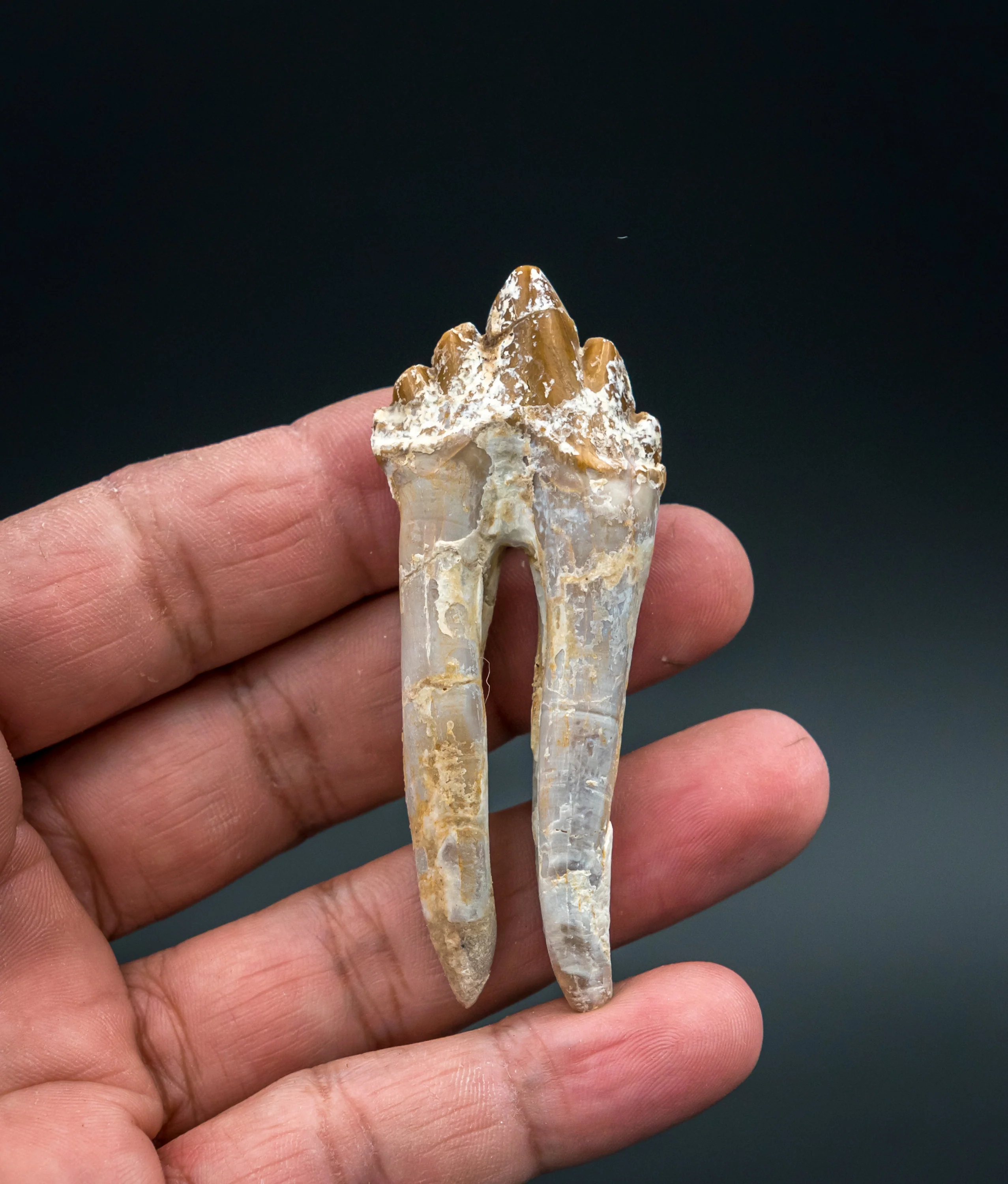
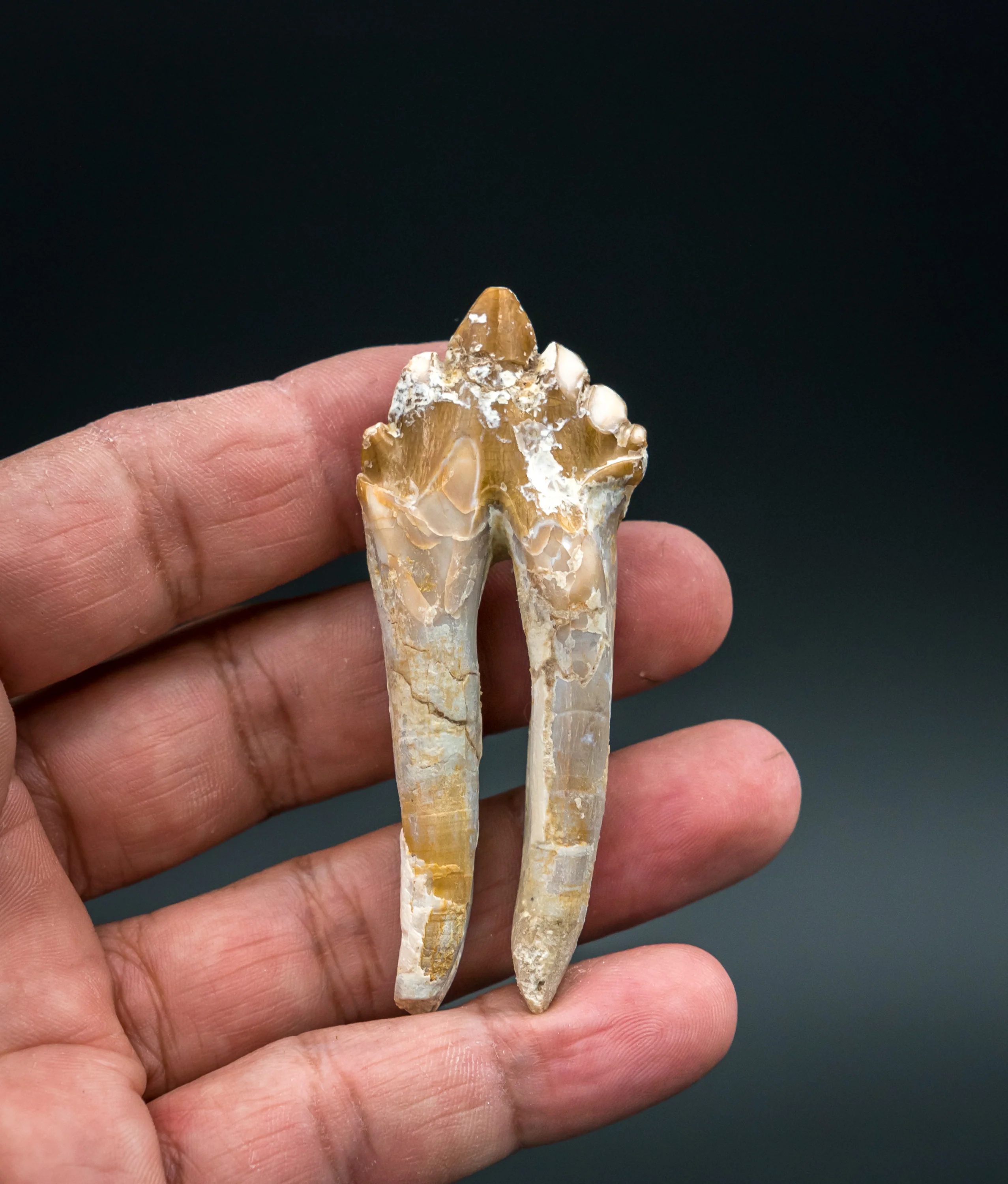
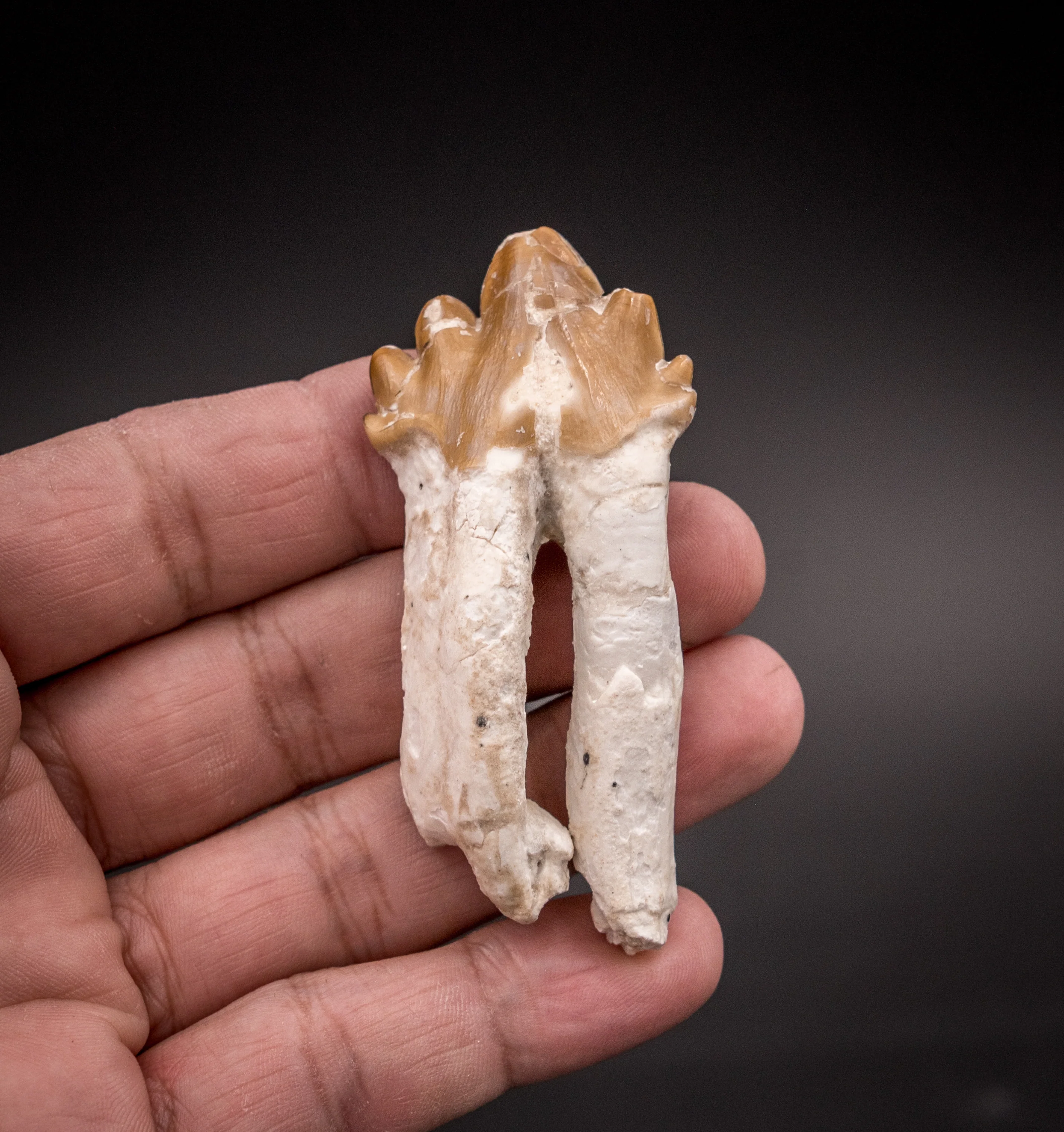
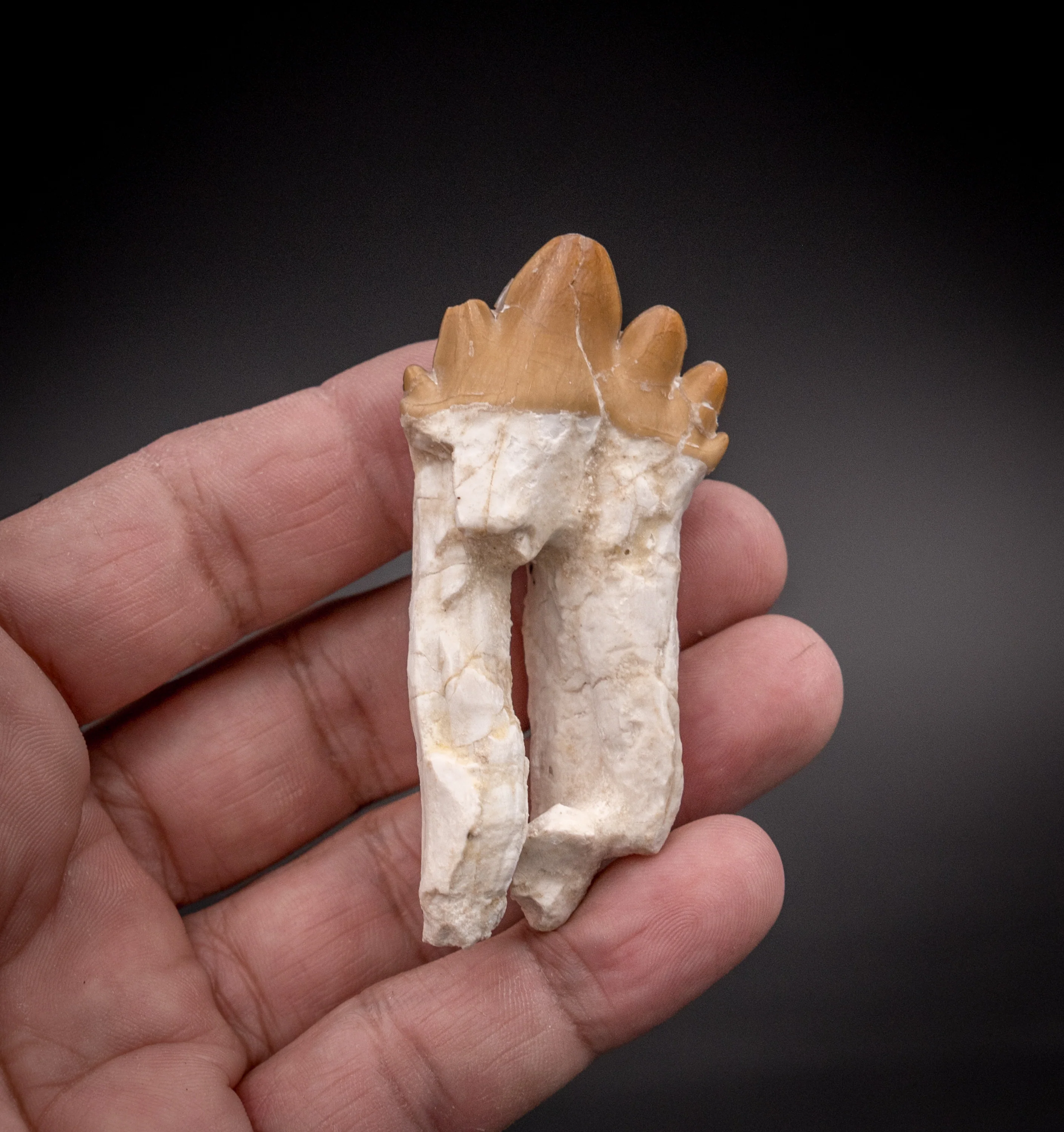
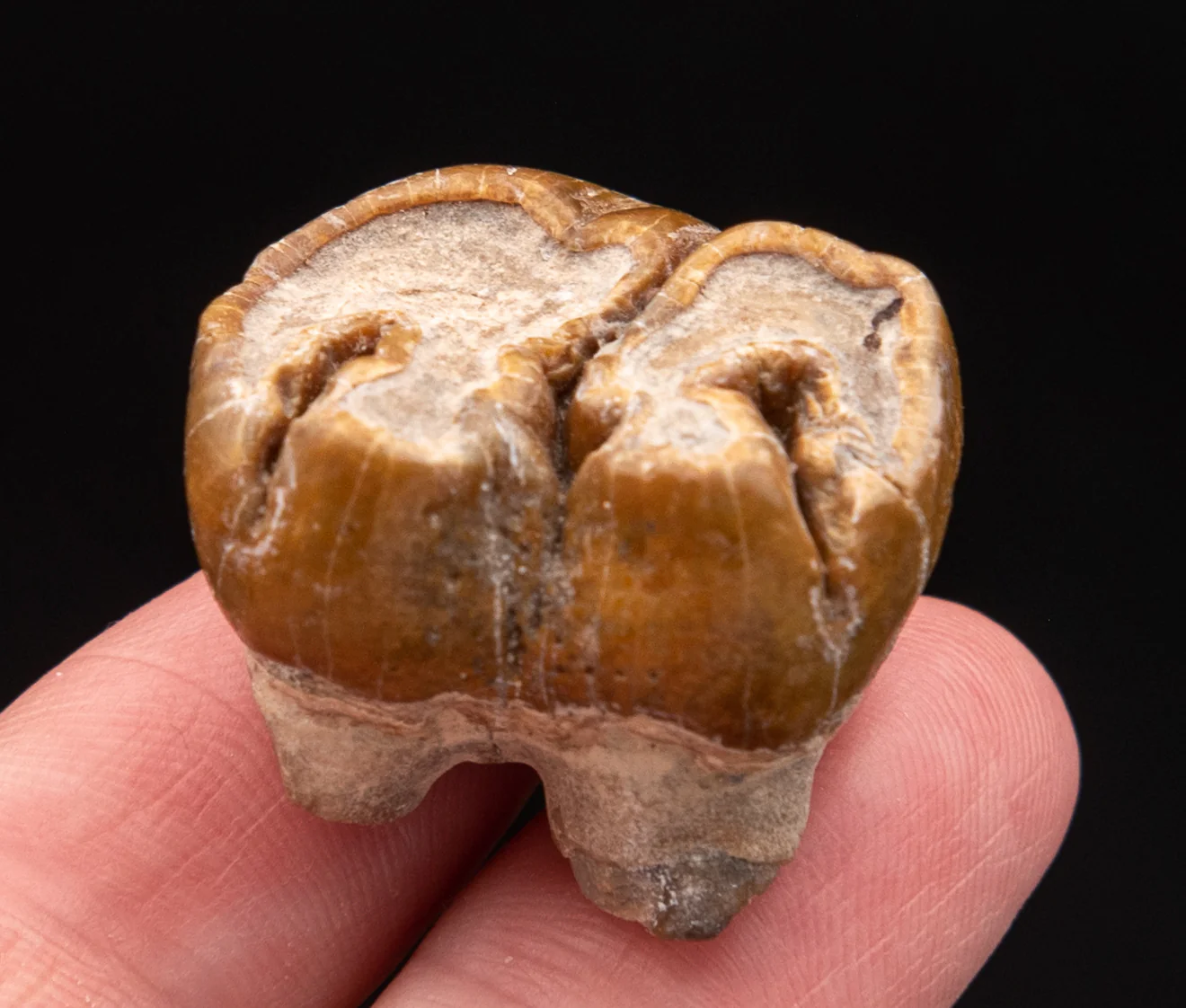
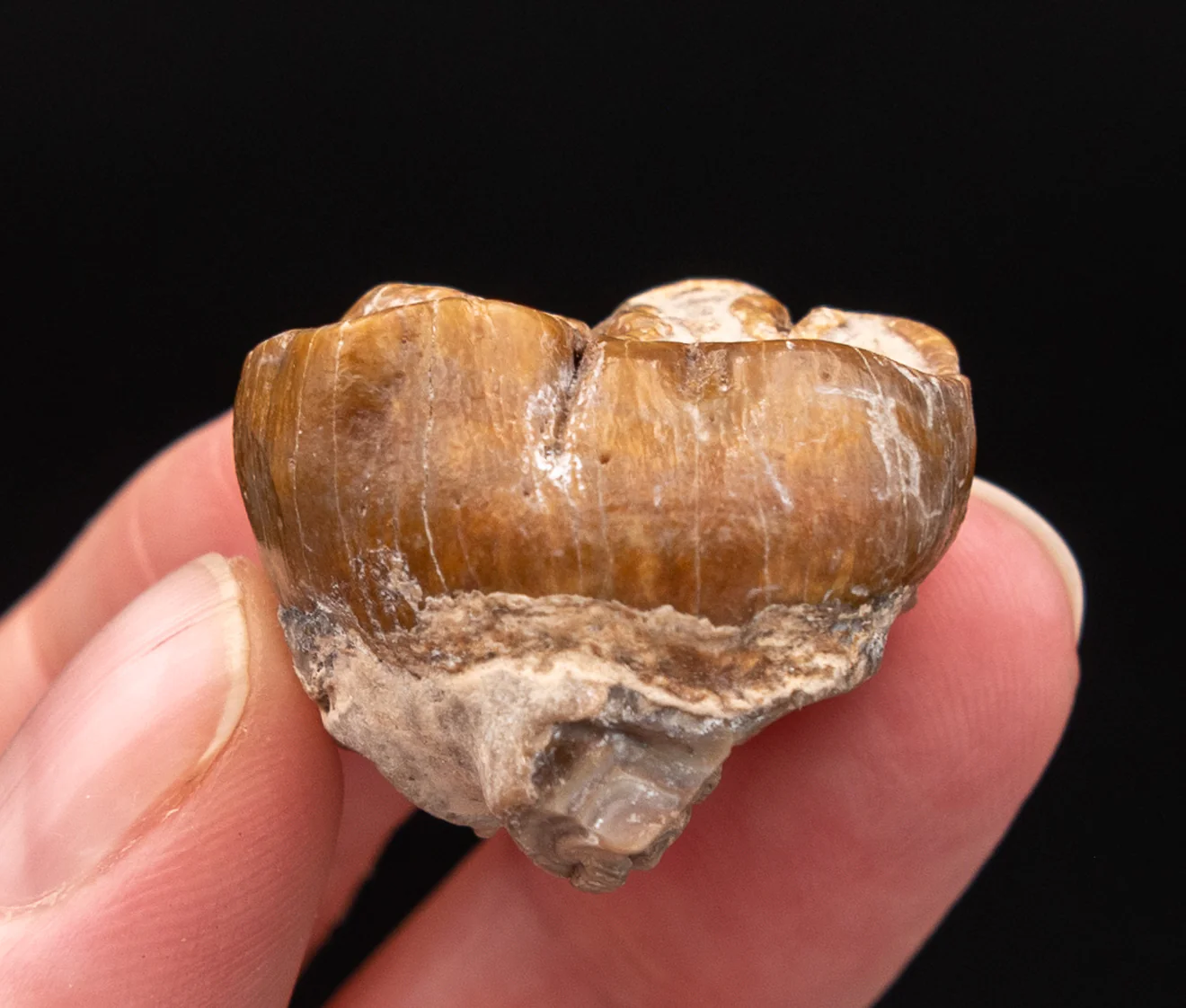
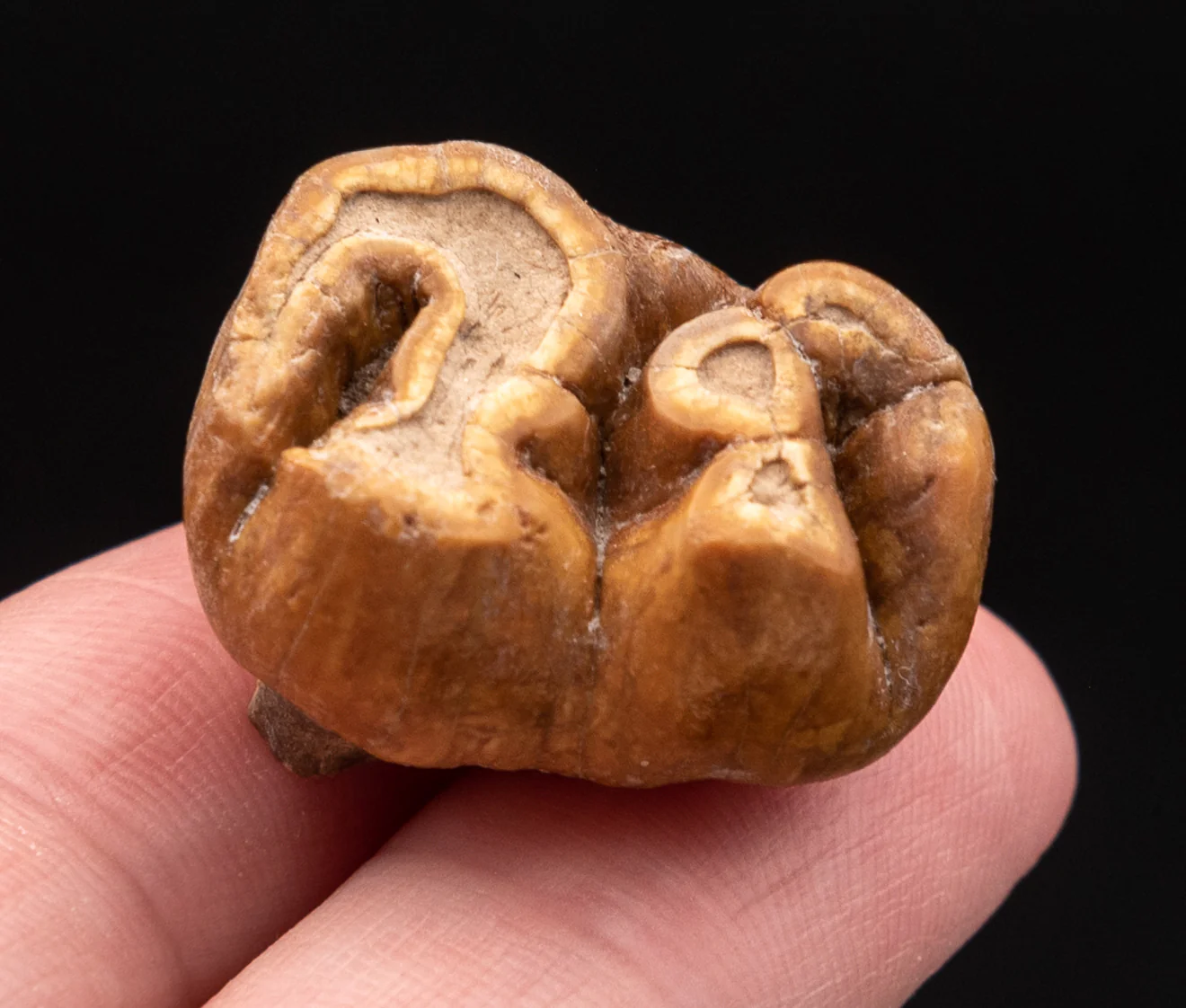
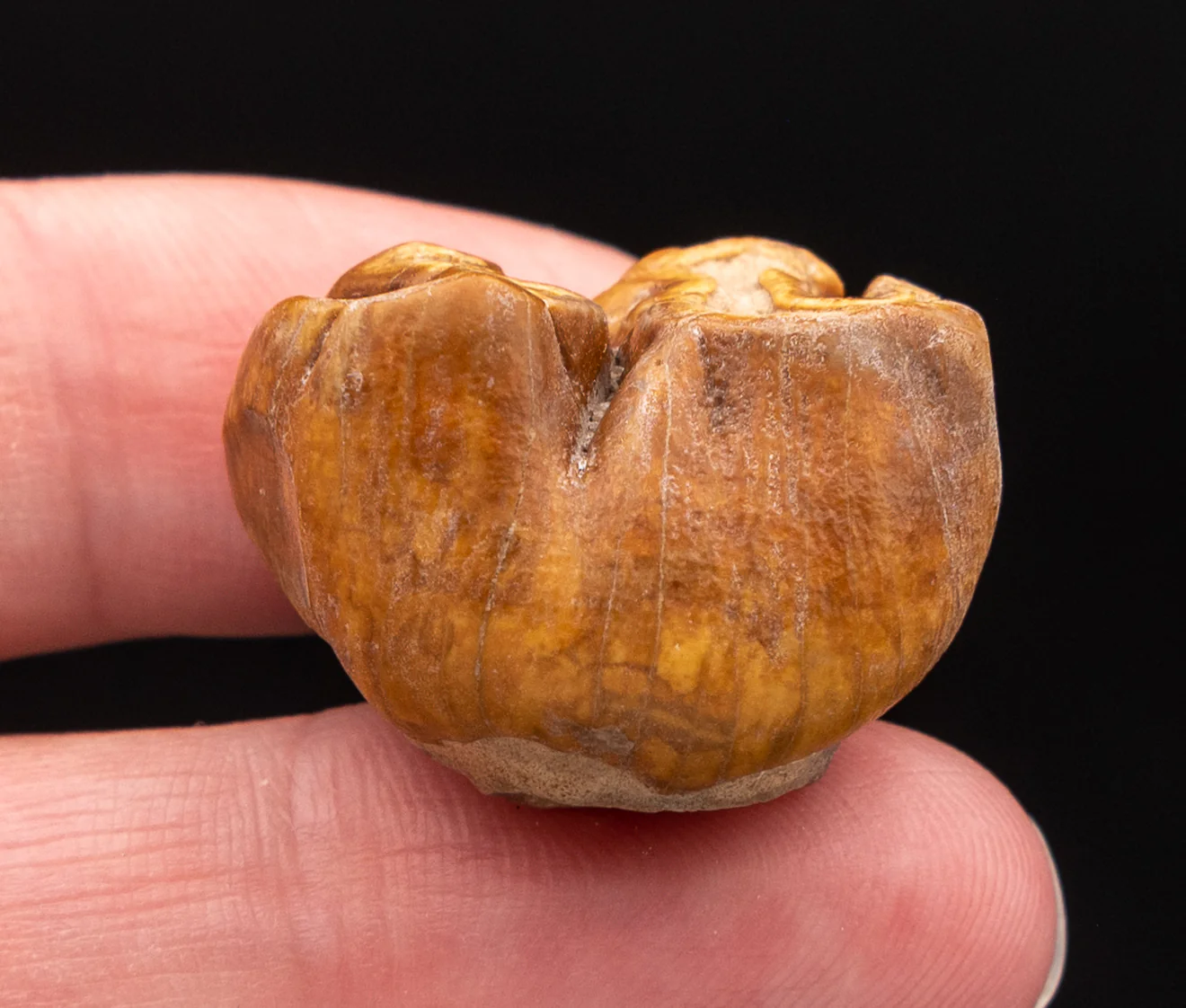
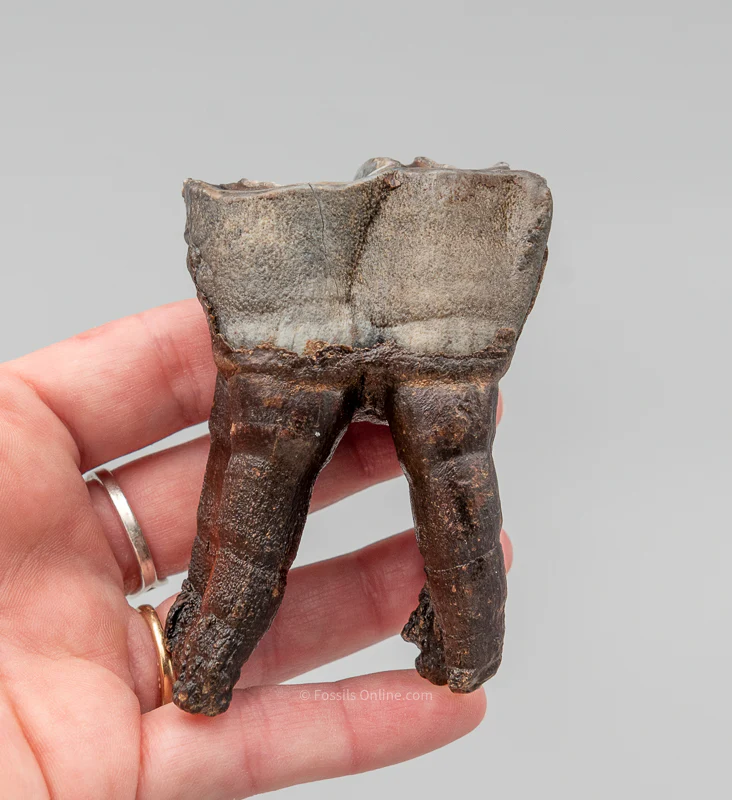
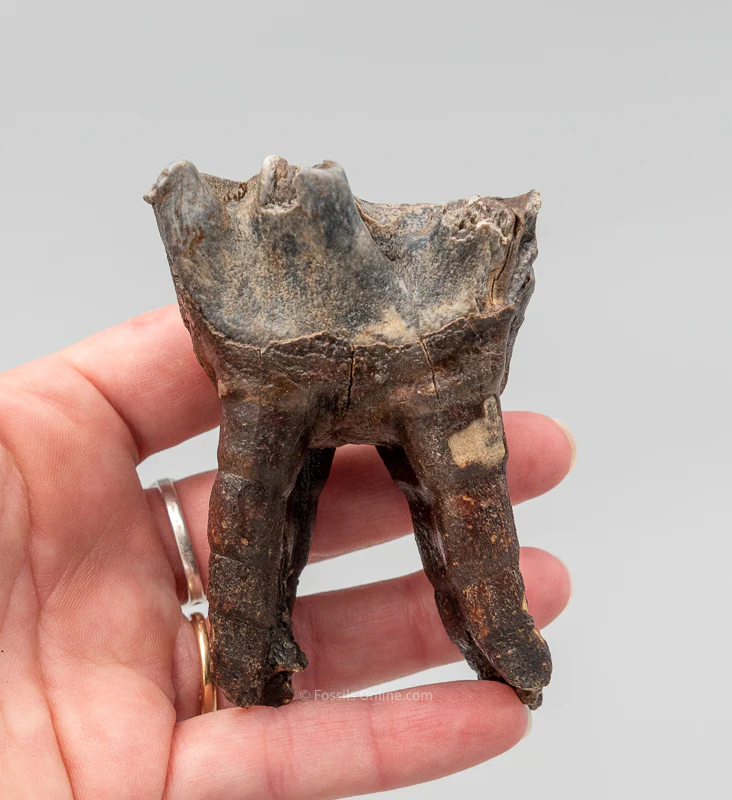
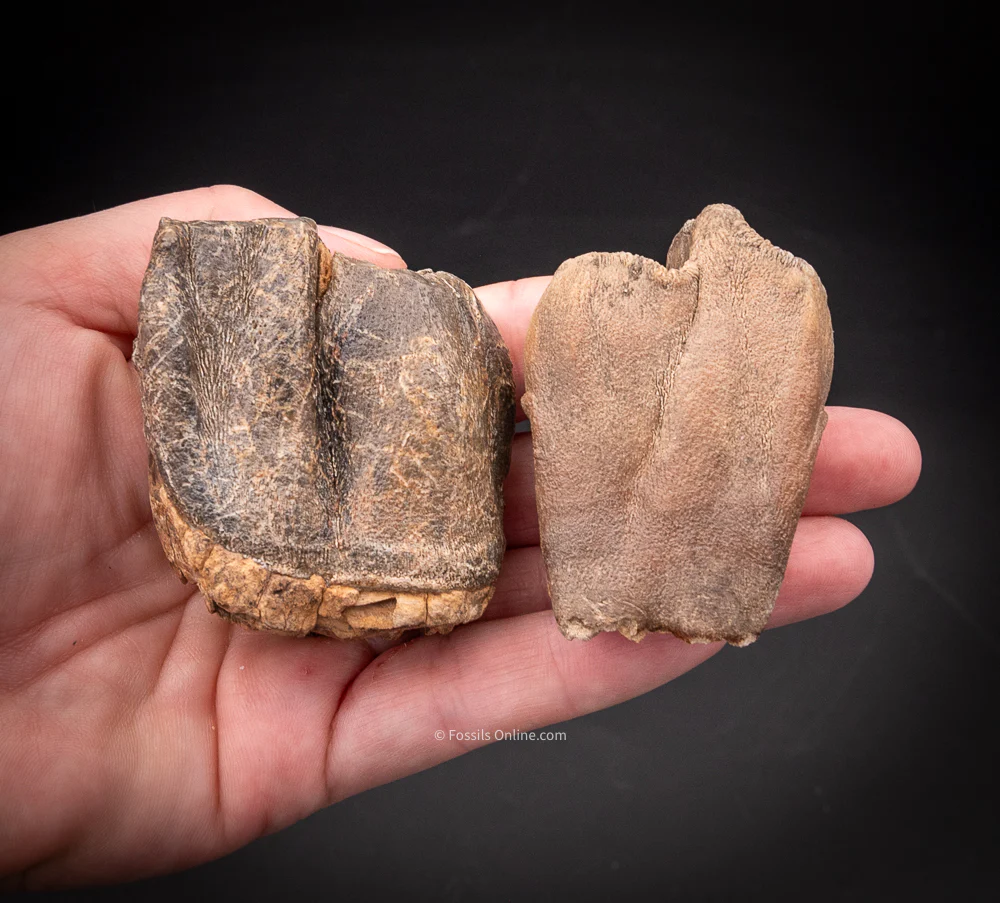
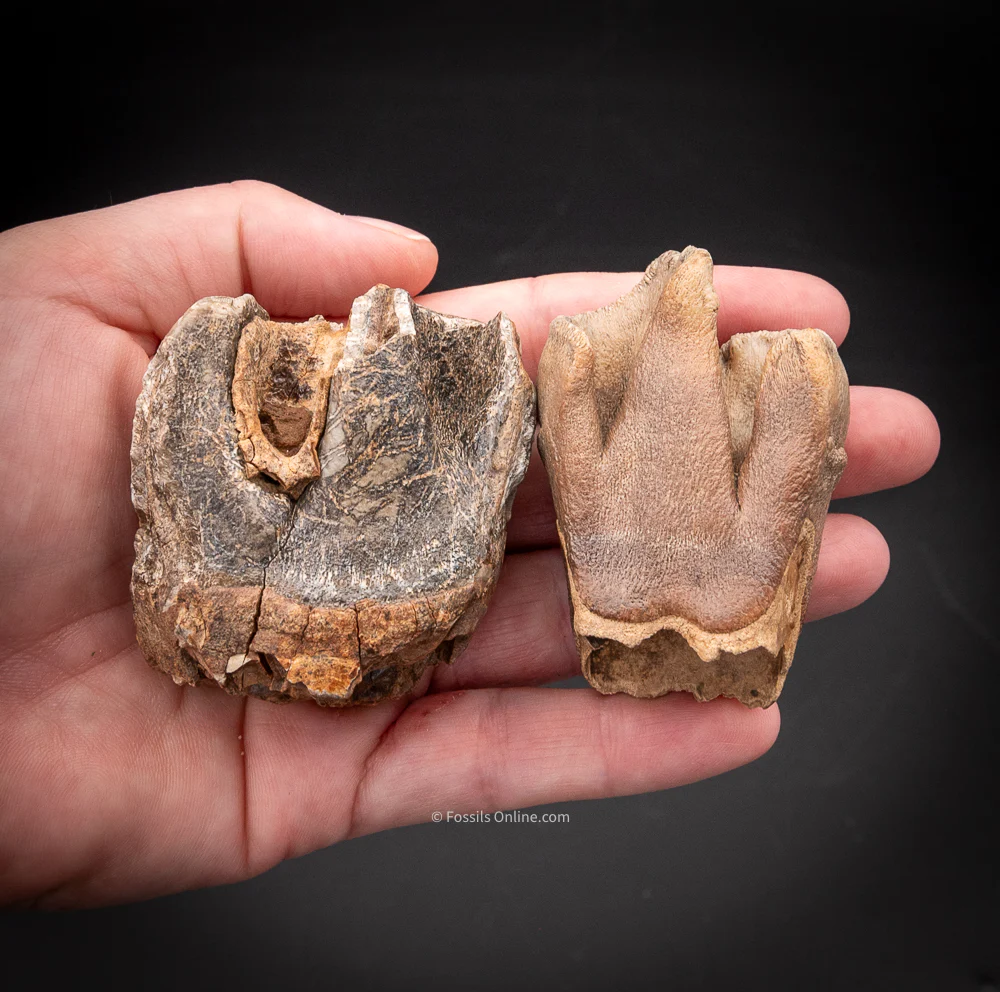
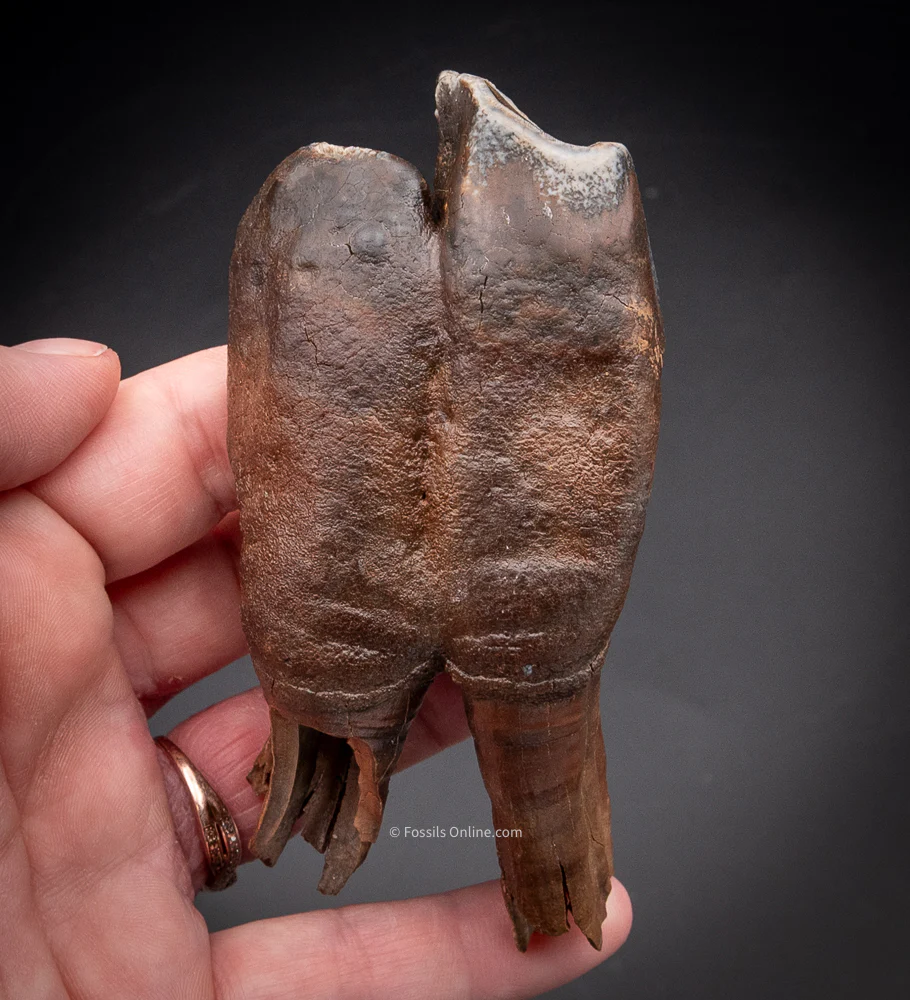
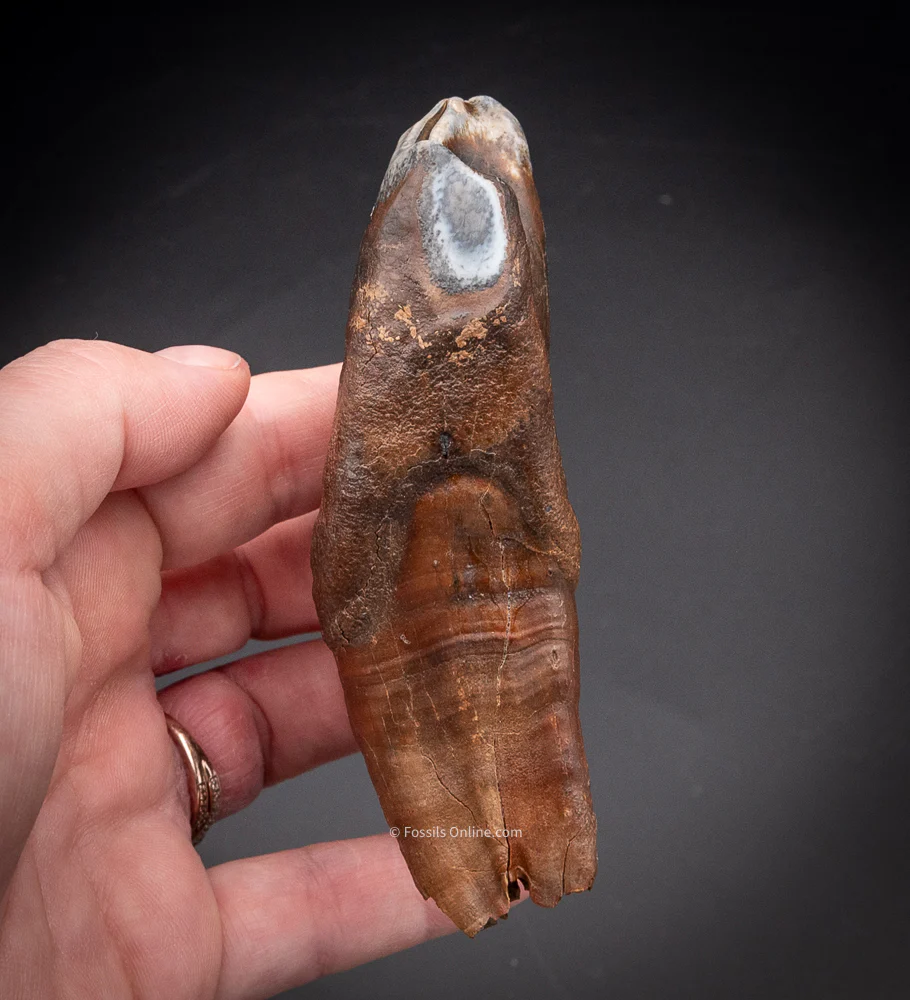
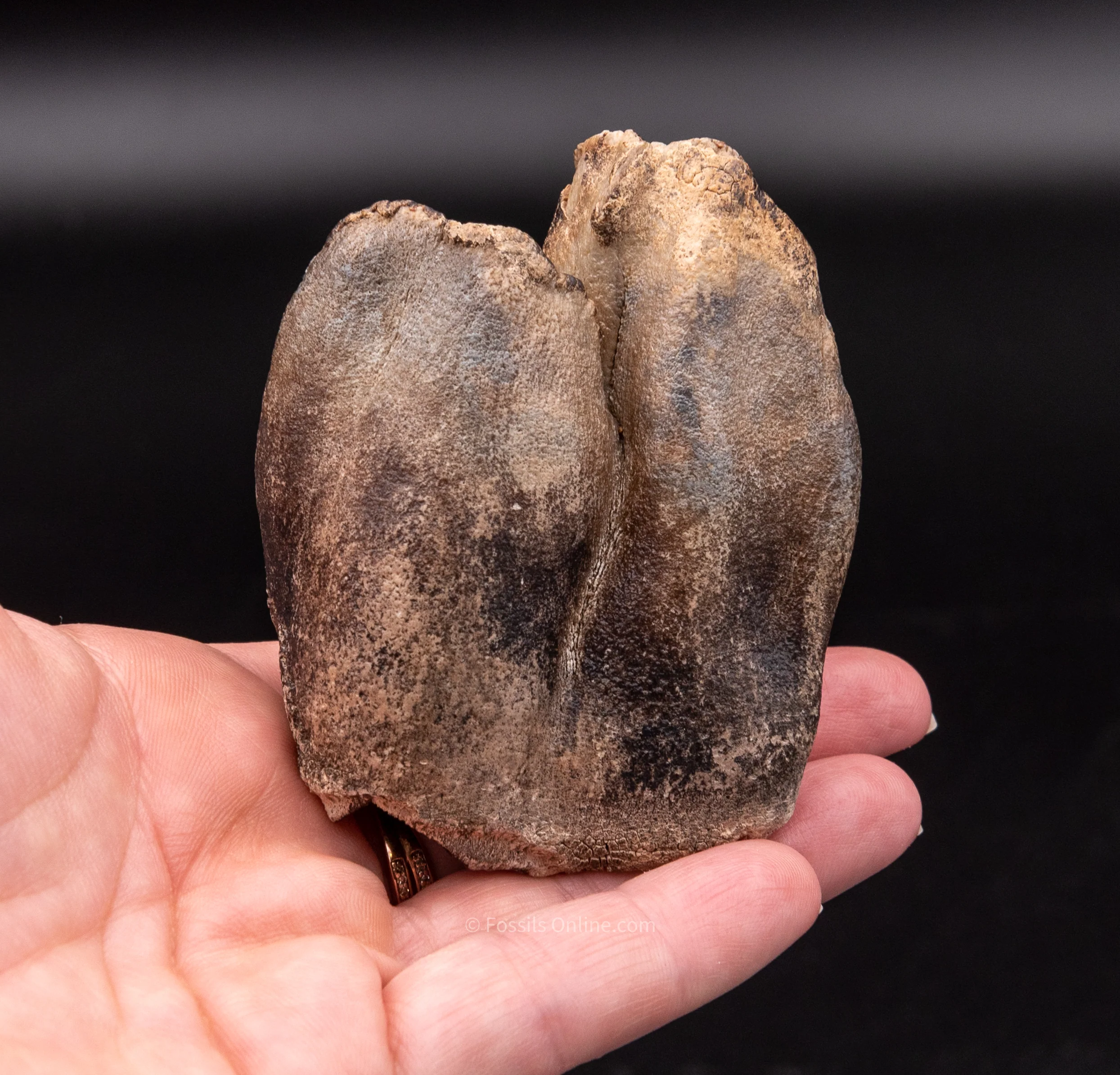
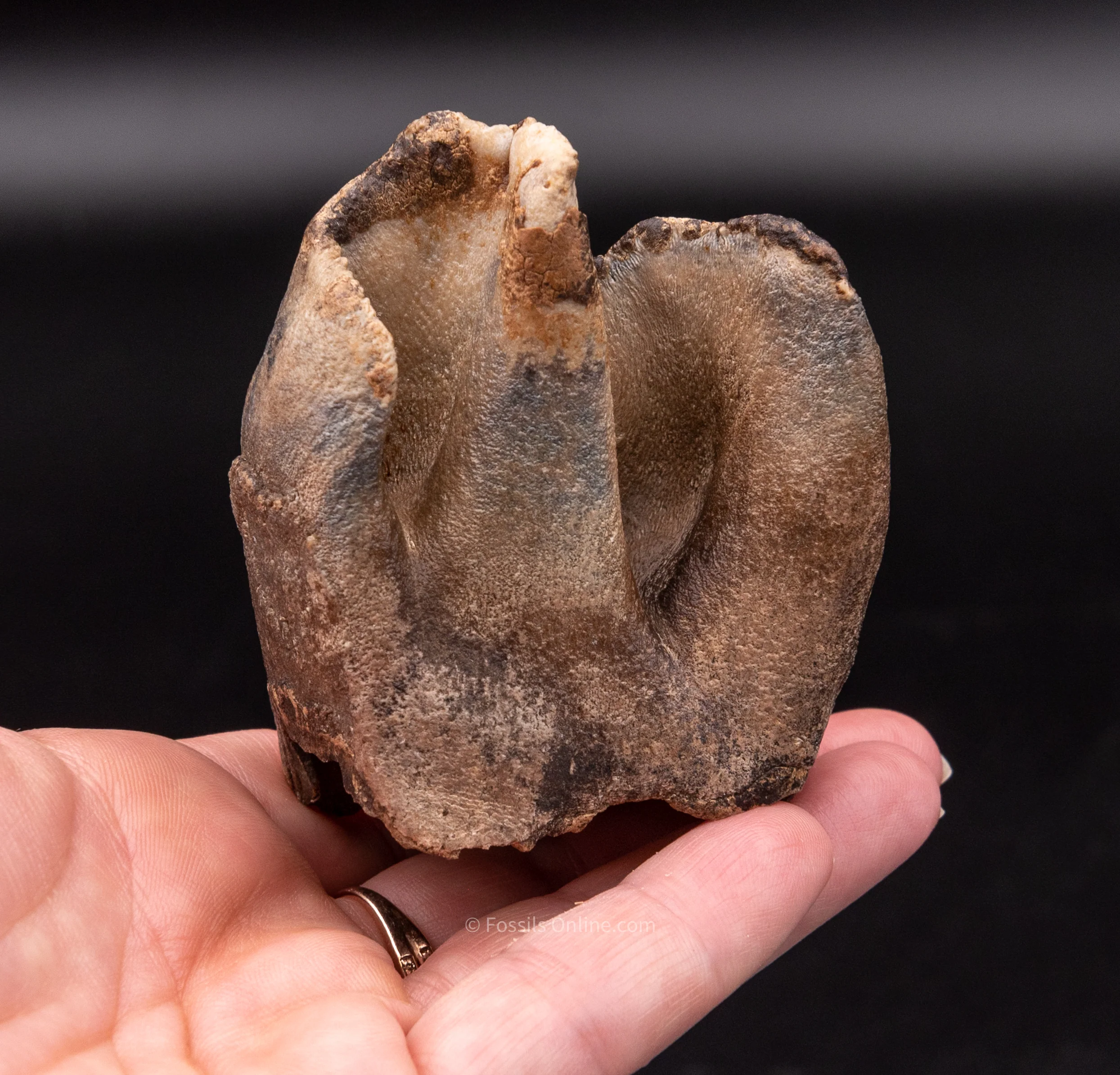
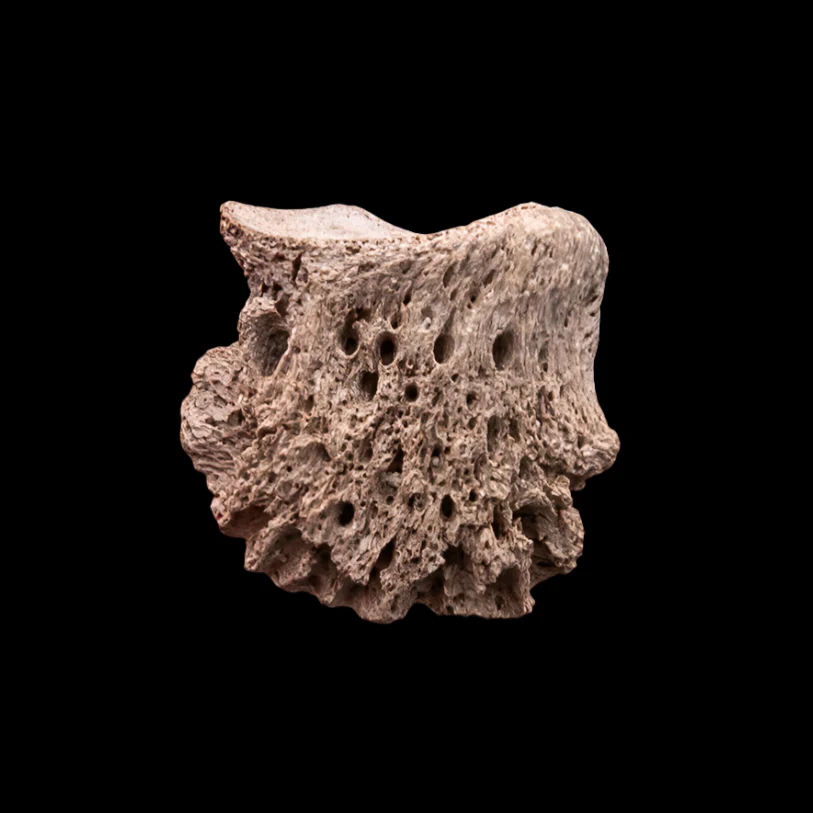
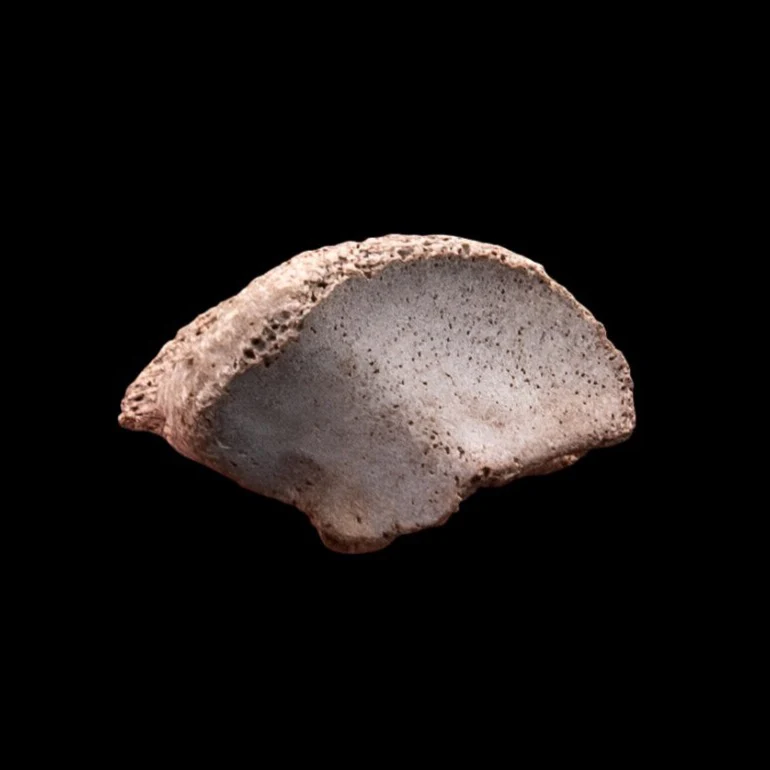
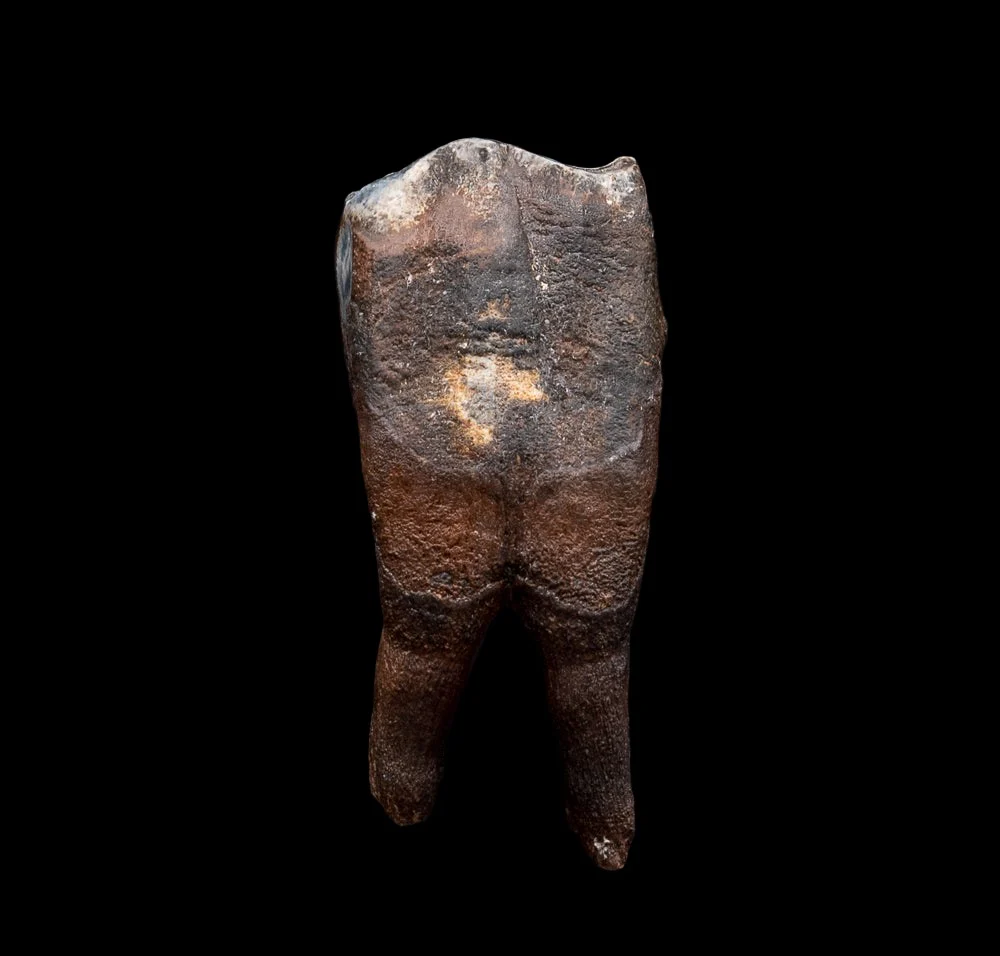
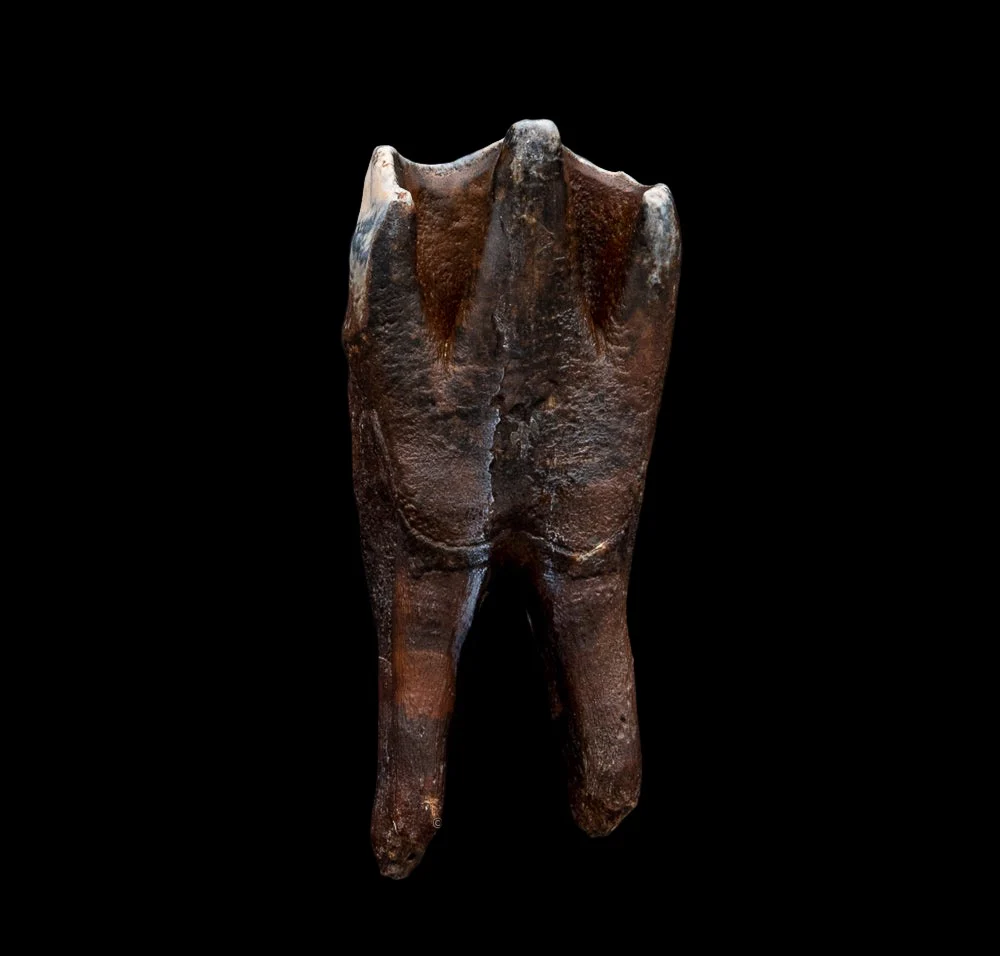
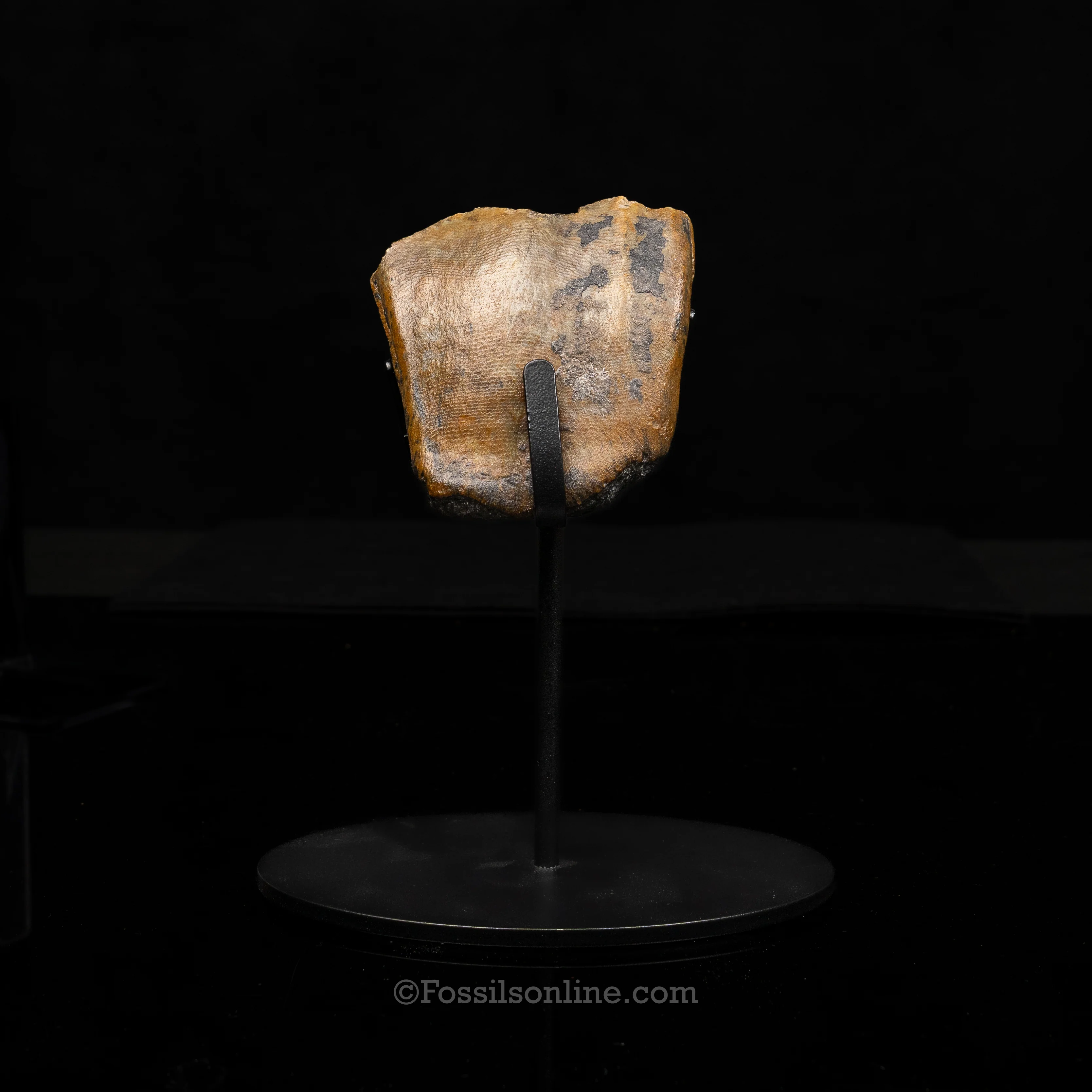
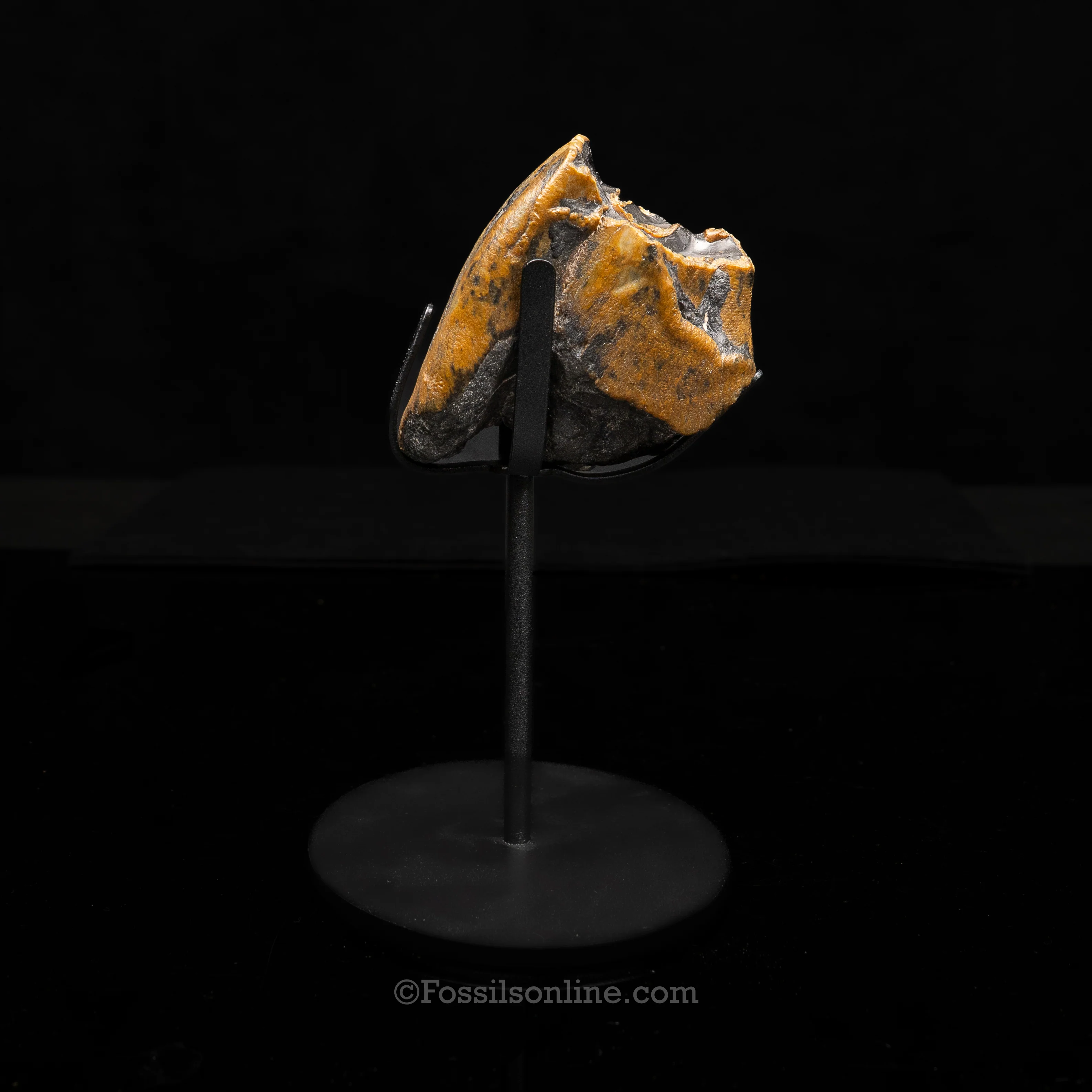
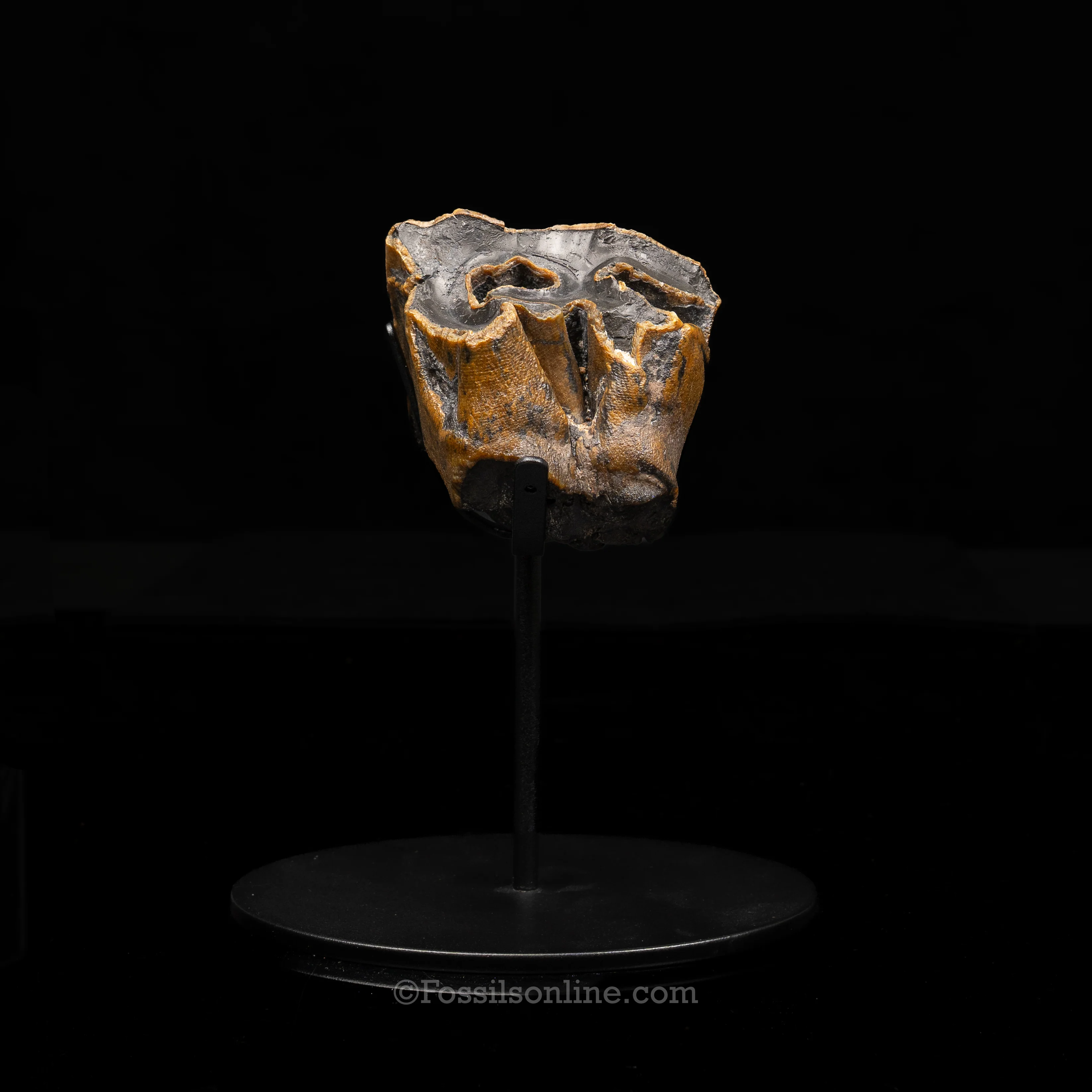
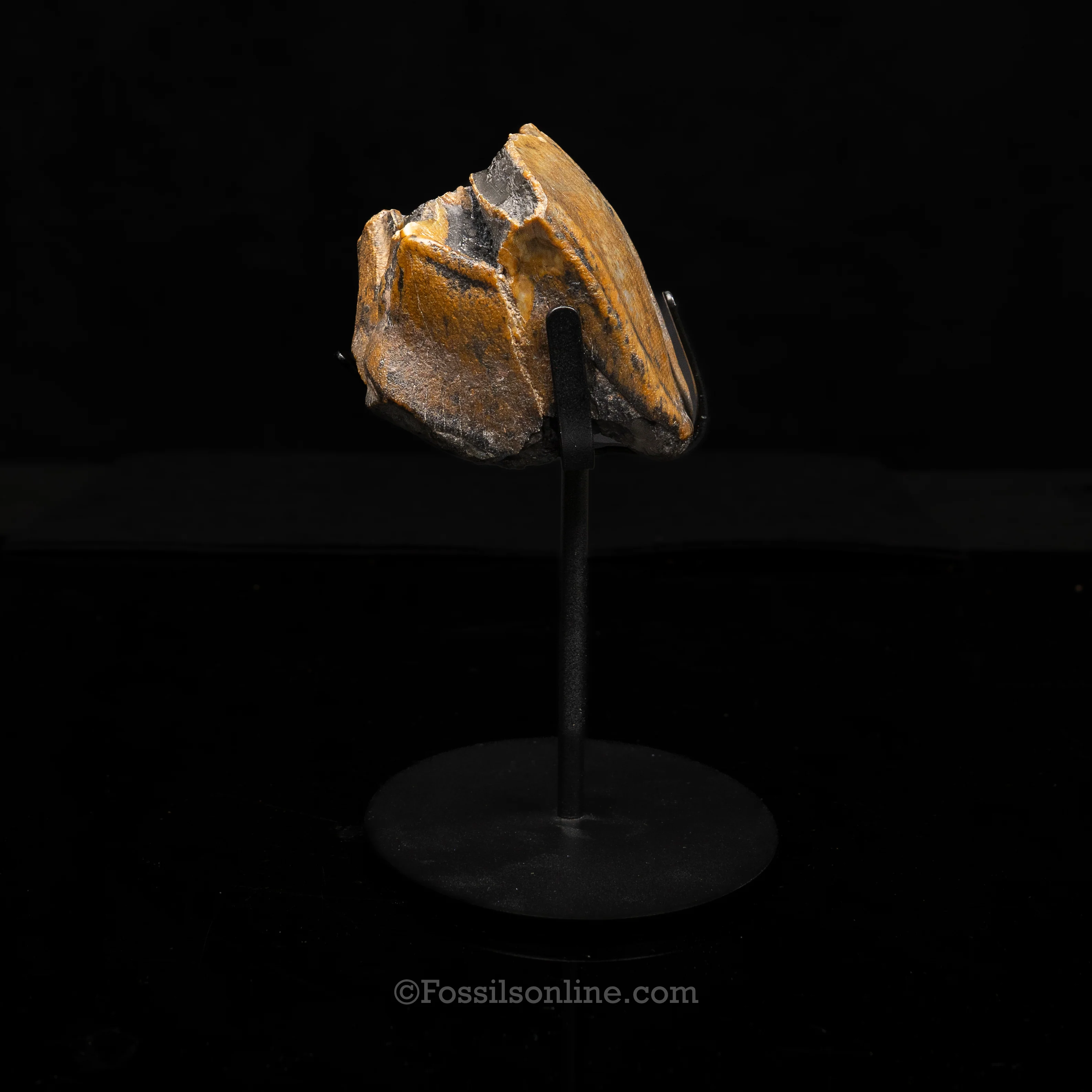
A genuine tooth from one of prehistoric North America's most remarkable large mammals - the short legged barrel bodied rhinoceros Teleoceras proterum, recovered from the legendary Bone Valley Formation of central Florida. It is displayed on our in house made stand.
No repair or restoration.
About the species
Teleoceras proterum ,commonly called the Archer short legged rhino, was a massive, hippo-proportioned rhinoceros that roamed the subtropical lowlands of what is now Florida during the late Miocene epoch, roughly 8 to 9.5 million years ago. Weighing an estimated 615 kg (about 1,350 lbs), it was among the largest land mammals of its time. Despite its outward resemblance to a modern hippopotamus squat, barrel shaped, short limbed, it was a true rhinoceros, related to today's African and Asian rhinos and belonging to the order Perissodactyla alongside horses and tapirs.
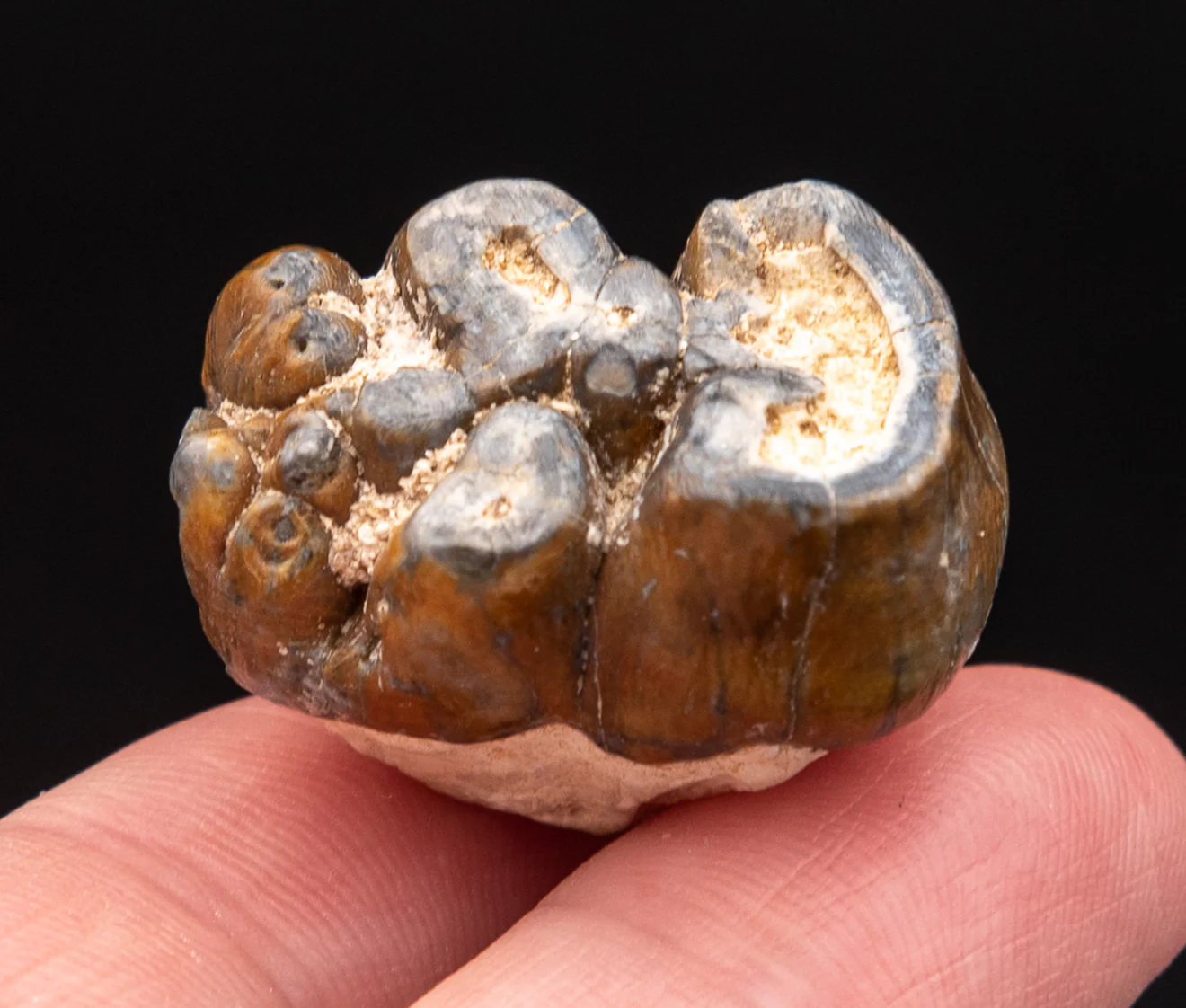
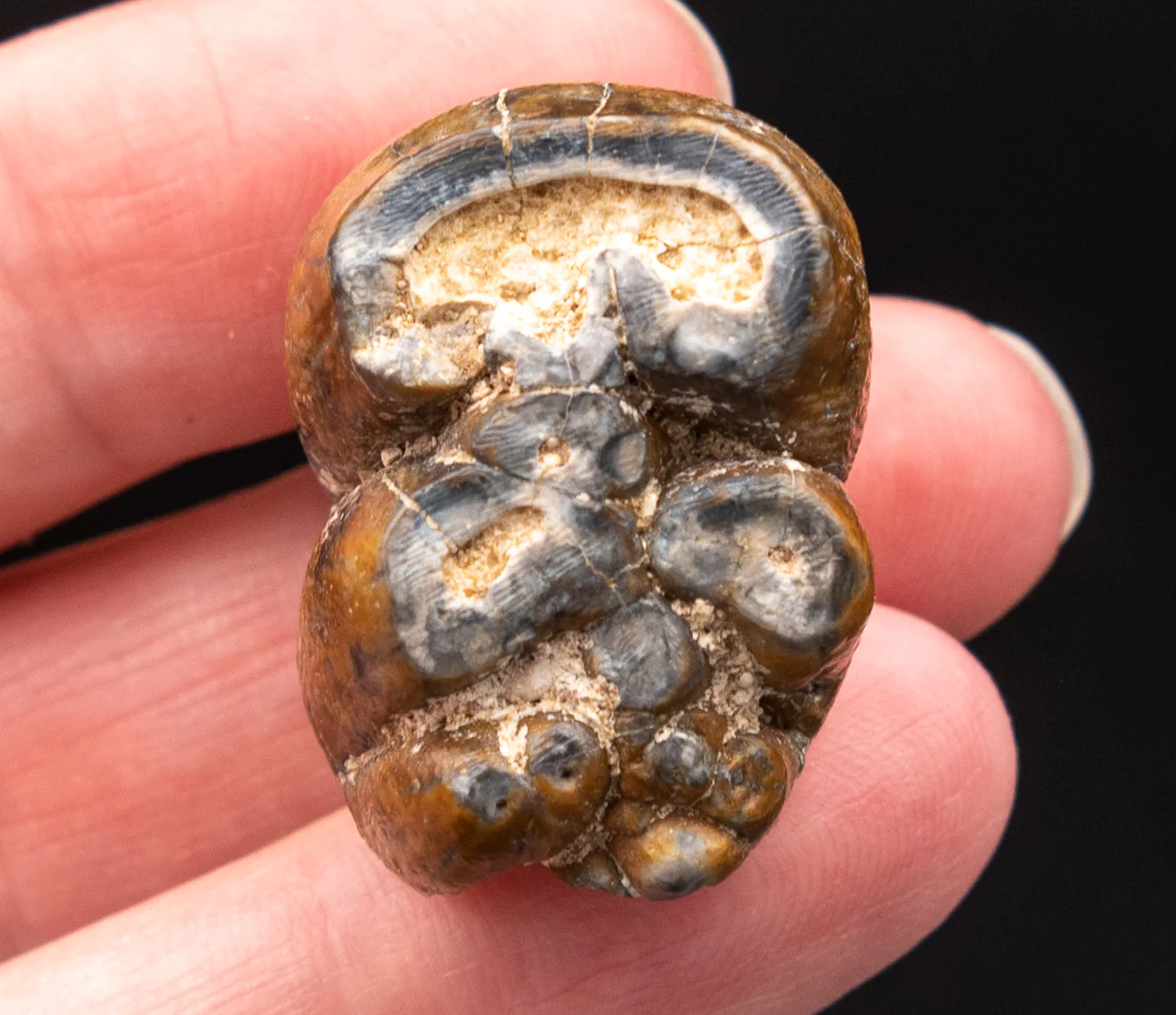
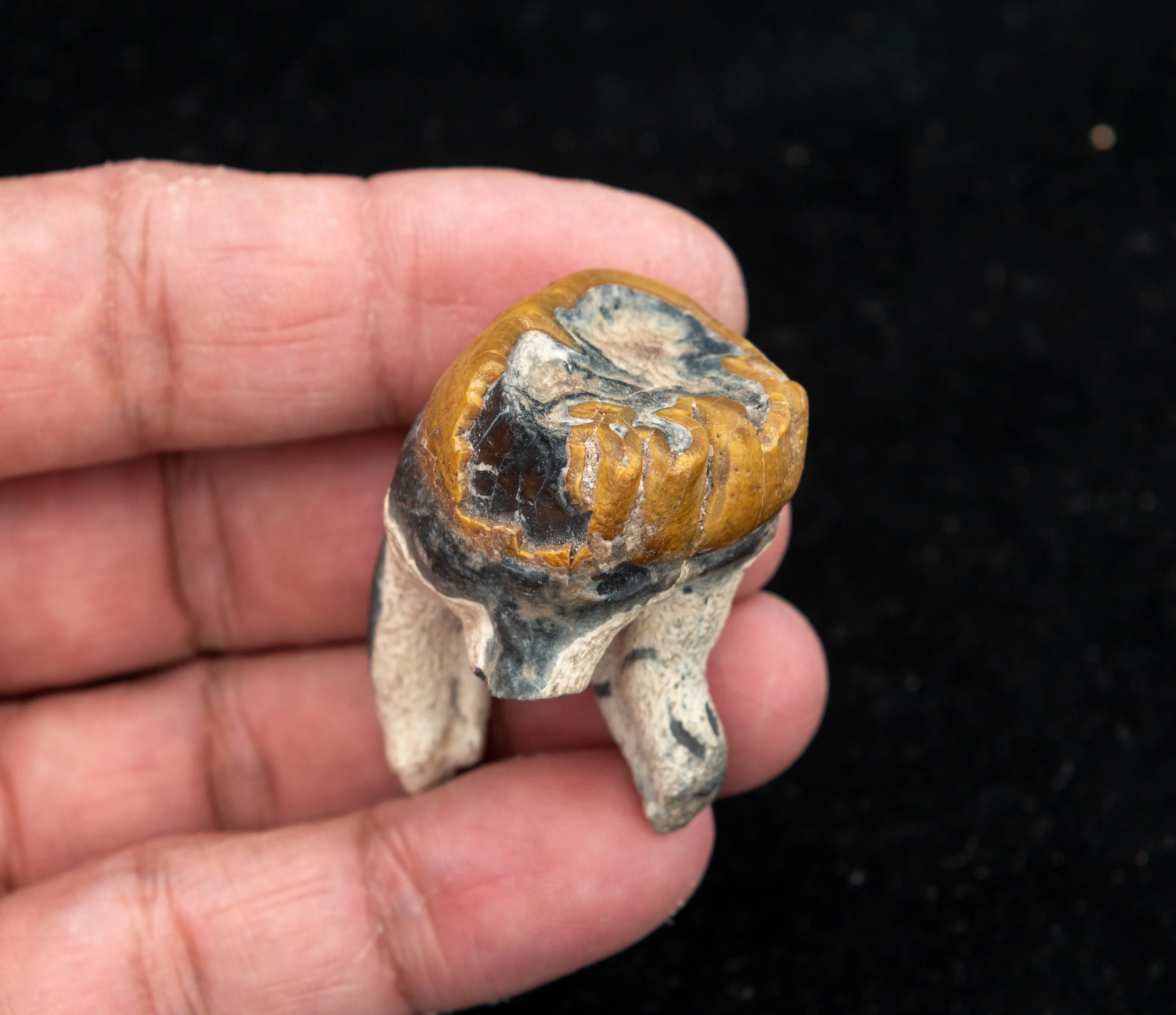
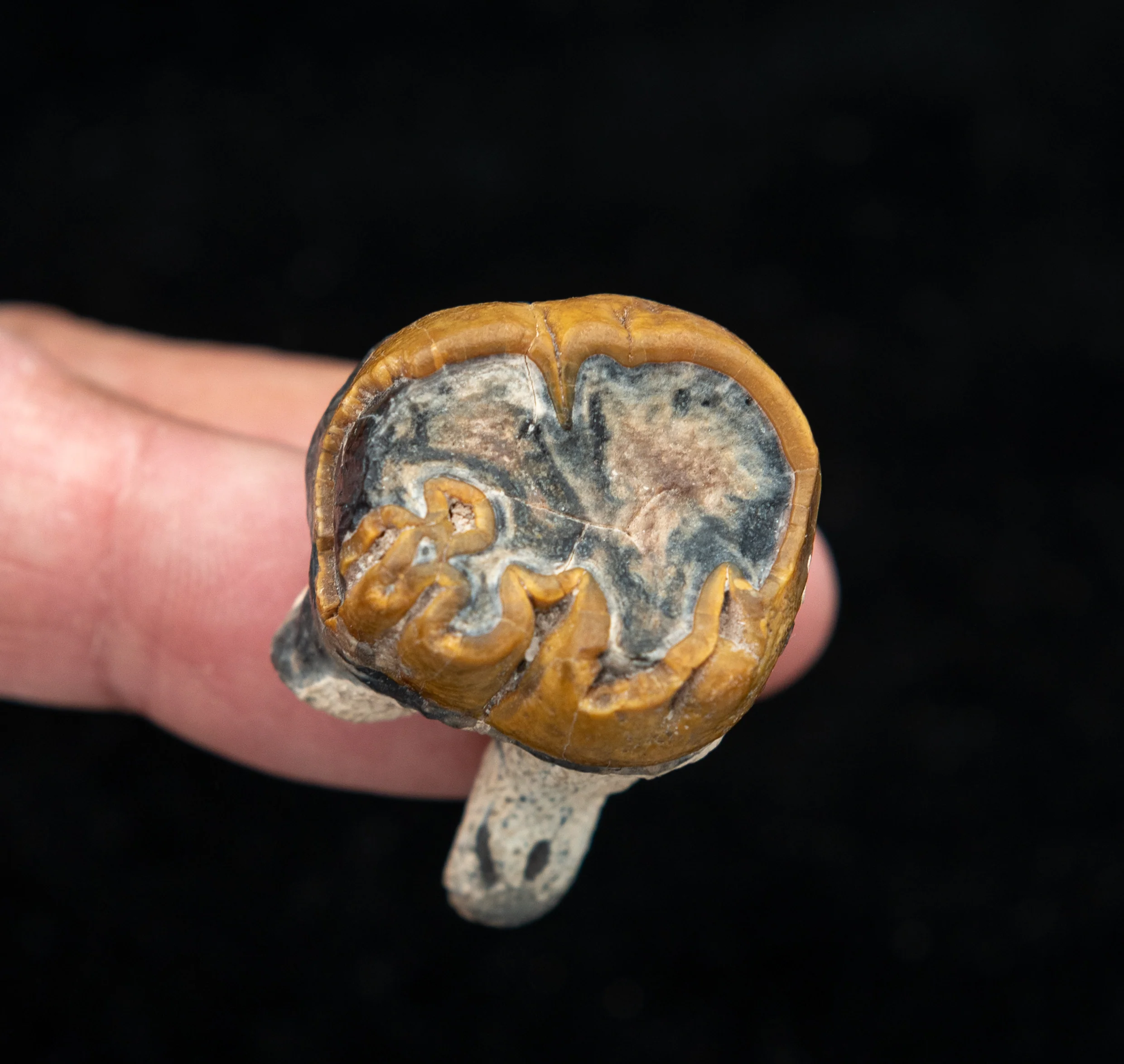
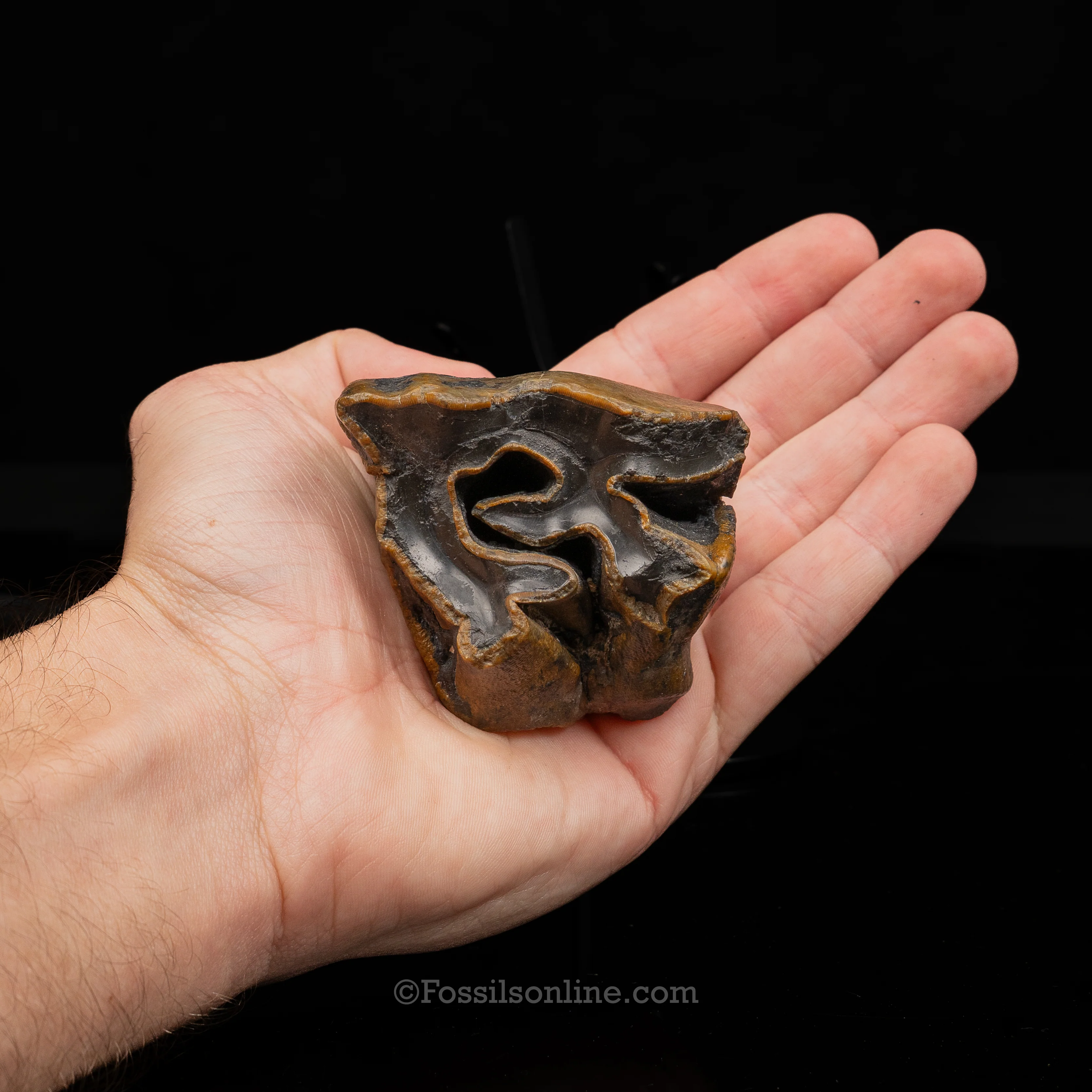
This species is endemic to Florida, meaning it has been found nowhere else in the world, making every specimen a piece of uniquely American natural history. The teeth are distinctive among North American fossil mammals: high crowned, heavily enameled, and bearing a characteristic L-shaped occlusal pattern ,ideally suited to a diet of coarse grasses.
What it ate
Teleoceras proterum was a dedicated grazer. Its hypsodont (high crowned) molars are the primary evidence: teeth evolved this way to resist the relentless wear of tough, silica-rich grasses. The wide, broad rostrum (snout) further supports a grazing lifestyle, allowing the animal to crop large swaths of vegetation close to the ground , much like modern white rhinos in Africa today.
Where it lived
This species inhabited the warm, seasonally wet grasslands and floodplain environments of Miocene Florida, a landscape very different from today. At that time, sea levels were higher, Florida was warmer and more heavily forested along waterways, and broad savannas stretched across the interior. Teleoceras proterum preferred low lying terrain near water sources rivers, ponds, and wetlands, where rich grasses grew abundantly. Fossil evidence from sites like Mixson's Bone Bed (Levy County) and the Love Bone Bed (Alachua County) suggests these animals congregated in large herds.
The Bone Valley Formation of Polk County, where this tooth originates, preserves one of the most diverse Miocene vertebrate faunas in North America, laid down in ancient river channels and phosphate-rich marine sediments formed 5 to 23 million years ago.
Its contemporaries
Sharing the Florida landscape with Teleoceras proterum was a remarkable cast of Miocene megafauna:
- Aphelops malacorhinus — a longer-legged, browser-type rhino that lived alongside Teleoceras, occupying a slightly different ecological niche
- Three-toed horses (Hipparion and related genera) — swift grazers that filled the savanna grasslands
- Gomphotheres — four-tusked, elephant-like proboscideans
- Prehistoric camels — North America was actually the evolutionary birthplace of the camel family
- Giant tortoises and large land-dwelling crocodilians
- Offshore, the warm Miocene seas were patrolled by Otodus megalodon, whose teeth are often found in the same Bone Valley phosphate deposits
How did it go extinct?
The entire Teleoceras lineage disappeared from North America by approximately 4.5 million years ago, with the Florida species vanishing around 8 million years ago as the Miocene gave way to the Pliocene. The precise cause remains debated, but leading factors include: progressive global cooling and drying that transformed lush subtropical habitats into drier, more open environments; increased competition as new immigrant species from South America arrived via the newly formed Central American land bridge; and the gradual replacement of C3 grasses by tougher C4 grasses, which may have stressed populations already adapted to specific vegetation types. No rhino species survived in North America into the Pleistocene.
Fascinating facts
- Male Teleoceras possessed enlarged, tusk-like lower incisor teeth — used in combat and display, much like hippo tusks today
- Thousands of Teleoceras proterum specimens have been recovered in Florida, representing over 117 individuals at a single site — suggesting strongly social, herd-living behavior
- Fossil oxygen isotope studies of their tooth enamel have been used to debate whether they were truly semi-aquatic (like hippos) or primarily terrestrial — the jury is still out
- Rhino teeth from Bone Valley are exceptionally rare compared to the abundant shark teeth found in the same deposits — large terrestrial mammals were heavily underrepresented in the marine-influenced Bone Valley Formation
- The species was first formally described by paleontologist Joseph Leidy in 1885 from specimens found at Mixson's Bone Bed, Florida
About this specimen
This is a genuine fossilized tooth of Teleoceras proterum recovered from the Bone Valley Formation, Polk County, Florida. Fossils from this formation are approximately 5–9 million years old (Late Miocene to Early Pliocene). Each piece comes with a label documenting species identification and provenance. A genuinely rare fossil — large terrestrial mammal teeth are far less commonly encountered in Bone Valley than marine specimens.
Product Information
Product Information
Shipping & Returns
Shipping & Returns
Bone Valley Rhino tooth
Bone Valley Rhino tooth
A genuine tooth from one of prehistoric North America's most remarkable large mammals - the short legged barrel bodied rhinoceros Teleoceras proterum, recovered from the legendary Bone Valley Formation of central Florida. It is displayed on our in house made stand.
No repair or restoration.
About the species
Teleoceras proterum ,commonly called the Archer short legged rhino, was a massive, hippo-proportioned rhinoceros that roamed the subtropical lowlands of what is now Florida during the late Miocene epoch, roughly 8 to 9.5 million years ago. Weighing an estimated 615 kg (about 1,350 lbs), it was among the largest land mammals of its time. Despite its outward resemblance to a modern hippopotamus squat, barrel shaped, short limbed, it was a true rhinoceros, related to today's African and Asian rhinos and belonging to the order Perissodactyla alongside horses and tapirs.
This species is endemic to Florida, meaning it has been found nowhere else in the world, making every specimen a piece of uniquely American natural history. The teeth are distinctive among North American fossil mammals: high crowned, heavily enameled, and bearing a characteristic L-shaped occlusal pattern ,ideally suited to a diet of coarse grasses.
What it ate
Teleoceras proterum was a dedicated grazer. Its hypsodont (high crowned) molars are the primary evidence: teeth evolved this way to resist the relentless wear of tough, silica-rich grasses. The wide, broad rostrum (snout) further supports a grazing lifestyle, allowing the animal to crop large swaths of vegetation close to the ground , much like modern white rhinos in Africa today.
Where it lived
This species inhabited the warm, seasonally wet grasslands and floodplain environments of Miocene Florida, a landscape very different from today. At that time, sea levels were higher, Florida was warmer and more heavily forested along waterways, and broad savannas stretched across the interior. Teleoceras proterum preferred low lying terrain near water sources rivers, ponds, and wetlands, where rich grasses grew abundantly. Fossil evidence from sites like Mixson's Bone Bed (Levy County) and the Love Bone Bed (Alachua County) suggests these animals congregated in large herds.
The Bone Valley Formation of Polk County, where this tooth originates, preserves one of the most diverse Miocene vertebrate faunas in North America, laid down in ancient river channels and phosphate-rich marine sediments formed 5 to 23 million years ago.
Its contemporaries
Sharing the Florida landscape with Teleoceras proterum was a remarkable cast of Miocene megafauna:
- Aphelops malacorhinus — a longer-legged, browser-type rhino that lived alongside Teleoceras, occupying a slightly different ecological niche
- Three-toed horses (Hipparion and related genera) — swift grazers that filled the savanna grasslands
- Gomphotheres — four-tusked, elephant-like proboscideans
- Prehistoric camels — North America was actually the evolutionary birthplace of the camel family
- Giant tortoises and large land-dwelling crocodilians
- Offshore, the warm Miocene seas were patrolled by Otodus megalodon, whose teeth are often found in the same Bone Valley phosphate deposits
How did it go extinct?
The entire Teleoceras lineage disappeared from North America by approximately 4.5 million years ago, with the Florida species vanishing around 8 million years ago as the Miocene gave way to the Pliocene. The precise cause remains debated, but leading factors include: progressive global cooling and drying that transformed lush subtropical habitats into drier, more open environments; increased competition as new immigrant species from South America arrived via the newly formed Central American land bridge; and the gradual replacement of C3 grasses by tougher C4 grasses, which may have stressed populations already adapted to specific vegetation types. No rhino species survived in North America into the Pleistocene.
Fascinating facts
- Male Teleoceras possessed enlarged, tusk-like lower incisor teeth — used in combat and display, much like hippo tusks today
- Thousands of Teleoceras proterum specimens have been recovered in Florida, representing over 117 individuals at a single site — suggesting strongly social, herd-living behavior
- Fossil oxygen isotope studies of their tooth enamel have been used to debate whether they were truly semi-aquatic (like hippos) or primarily terrestrial — the jury is still out
- Rhino teeth from Bone Valley are exceptionally rare compared to the abundant shark teeth found in the same deposits — large terrestrial mammals were heavily underrepresented in the marine-influenced Bone Valley Formation
- The species was first formally described by paleontologist Joseph Leidy in 1885 from specimens found at Mixson's Bone Bed, Florida
About this specimen
This is a genuine fossilized tooth of Teleoceras proterum recovered from the Bone Valley Formation, Polk County, Florida. Fossils from this formation are approximately 5–9 million years old (Late Miocene to Early Pliocene). Each piece comes with a label documenting species identification and provenance. A genuinely rare fossil — large terrestrial mammal teeth are far less commonly encountered in Bone Valley than marine specimens.
Product Information
Product Information
Shipping & Returns
Shipping & Returns
Description
A genuine tooth from one of prehistoric North America's most remarkable large mammals - the short legged barrel bodied rhinoceros Teleoceras proterum, recovered from the legendary Bone Valley Formation of central Florida. It is displayed on our in house made stand.
No repair or restoration.
About the species
Teleoceras proterum ,commonly called the Archer short legged rhino, was a massive, hippo-proportioned rhinoceros that roamed the subtropical lowlands of what is now Florida during the late Miocene epoch, roughly 8 to 9.5 million years ago. Weighing an estimated 615 kg (about 1,350 lbs), it was among the largest land mammals of its time. Despite its outward resemblance to a modern hippopotamus squat, barrel shaped, short limbed, it was a true rhinoceros, related to today's African and Asian rhinos and belonging to the order Perissodactyla alongside horses and tapirs.
This species is endemic to Florida, meaning it has been found nowhere else in the world, making every specimen a piece of uniquely American natural history. The teeth are distinctive among North American fossil mammals: high crowned, heavily enameled, and bearing a characteristic L-shaped occlusal pattern ,ideally suited to a diet of coarse grasses.
What it ate
Teleoceras proterum was a dedicated grazer. Its hypsodont (high crowned) molars are the primary evidence: teeth evolved this way to resist the relentless wear of tough, silica-rich grasses. The wide, broad rostrum (snout) further supports a grazing lifestyle, allowing the animal to crop large swaths of vegetation close to the ground , much like modern white rhinos in Africa today.
Where it lived
This species inhabited the warm, seasonally wet grasslands and floodplain environments of Miocene Florida, a landscape very different from today. At that time, sea levels were higher, Florida was warmer and more heavily forested along waterways, and broad savannas stretched across the interior. Teleoceras proterum preferred low lying terrain near water sources rivers, ponds, and wetlands, where rich grasses grew abundantly. Fossil evidence from sites like Mixson's Bone Bed (Levy County) and the Love Bone Bed (Alachua County) suggests these animals congregated in large herds.
The Bone Valley Formation of Polk County, where this tooth originates, preserves one of the most diverse Miocene vertebrate faunas in North America, laid down in ancient river channels and phosphate-rich marine sediments formed 5 to 23 million years ago.
Its contemporaries
Sharing the Florida landscape with Teleoceras proterum was a remarkable cast of Miocene megafauna:
- Aphelops malacorhinus — a longer-legged, browser-type rhino that lived alongside Teleoceras, occupying a slightly different ecological niche
- Three-toed horses (Hipparion and related genera) — swift grazers that filled the savanna grasslands
- Gomphotheres — four-tusked, elephant-like proboscideans
- Prehistoric camels — North America was actually the evolutionary birthplace of the camel family
- Giant tortoises and large land-dwelling crocodilians
- Offshore, the warm Miocene seas were patrolled by Otodus megalodon, whose teeth are often found in the same Bone Valley phosphate deposits
How did it go extinct?
The entire Teleoceras lineage disappeared from North America by approximately 4.5 million years ago, with the Florida species vanishing around 8 million years ago as the Miocene gave way to the Pliocene. The precise cause remains debated, but leading factors include: progressive global cooling and drying that transformed lush subtropical habitats into drier, more open environments; increased competition as new immigrant species from South America arrived via the newly formed Central American land bridge; and the gradual replacement of C3 grasses by tougher C4 grasses, which may have stressed populations already adapted to specific vegetation types. No rhino species survived in North America into the Pleistocene.
Fascinating facts
- Male Teleoceras possessed enlarged, tusk-like lower incisor teeth — used in combat and display, much like hippo tusks today
- Thousands of Teleoceras proterum specimens have been recovered in Florida, representing over 117 individuals at a single site — suggesting strongly social, herd-living behavior
- Fossil oxygen isotope studies of their tooth enamel have been used to debate whether they were truly semi-aquatic (like hippos) or primarily terrestrial — the jury is still out
- Rhino teeth from Bone Valley are exceptionally rare compared to the abundant shark teeth found in the same deposits — large terrestrial mammals were heavily underrepresented in the marine-influenced Bone Valley Formation
- The species was first formally described by paleontologist Joseph Leidy in 1885 from specimens found at Mixson's Bone Bed, Florida
About this specimen
This is a genuine fossilized tooth of Teleoceras proterum recovered from the Bone Valley Formation, Polk County, Florida. Fossils from this formation are approximately 5–9 million years old (Late Miocene to Early Pliocene). Each piece comes with a label documenting species identification and provenance. A genuinely rare fossil — large terrestrial mammal teeth are far less commonly encountered in Bone Valley than marine specimens.