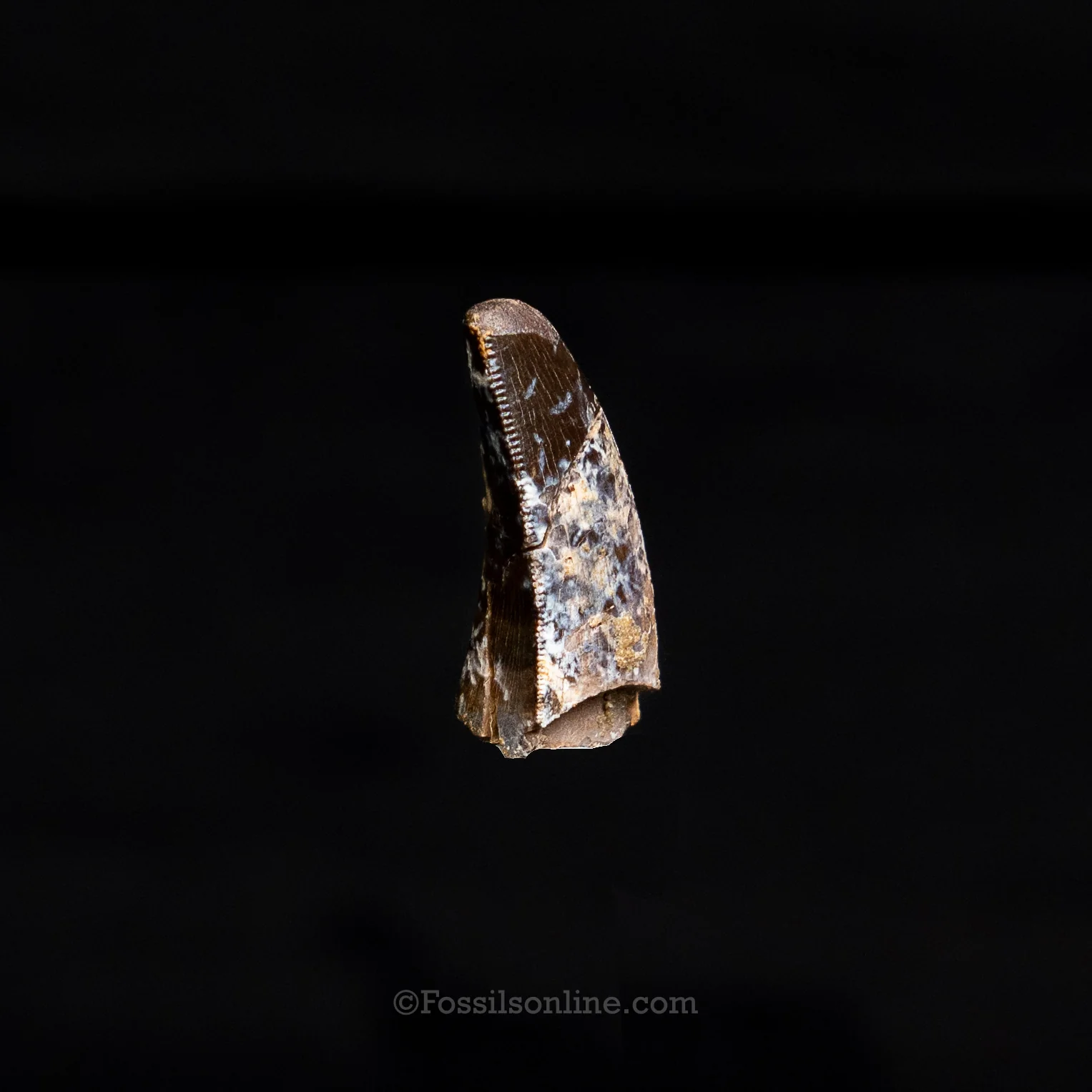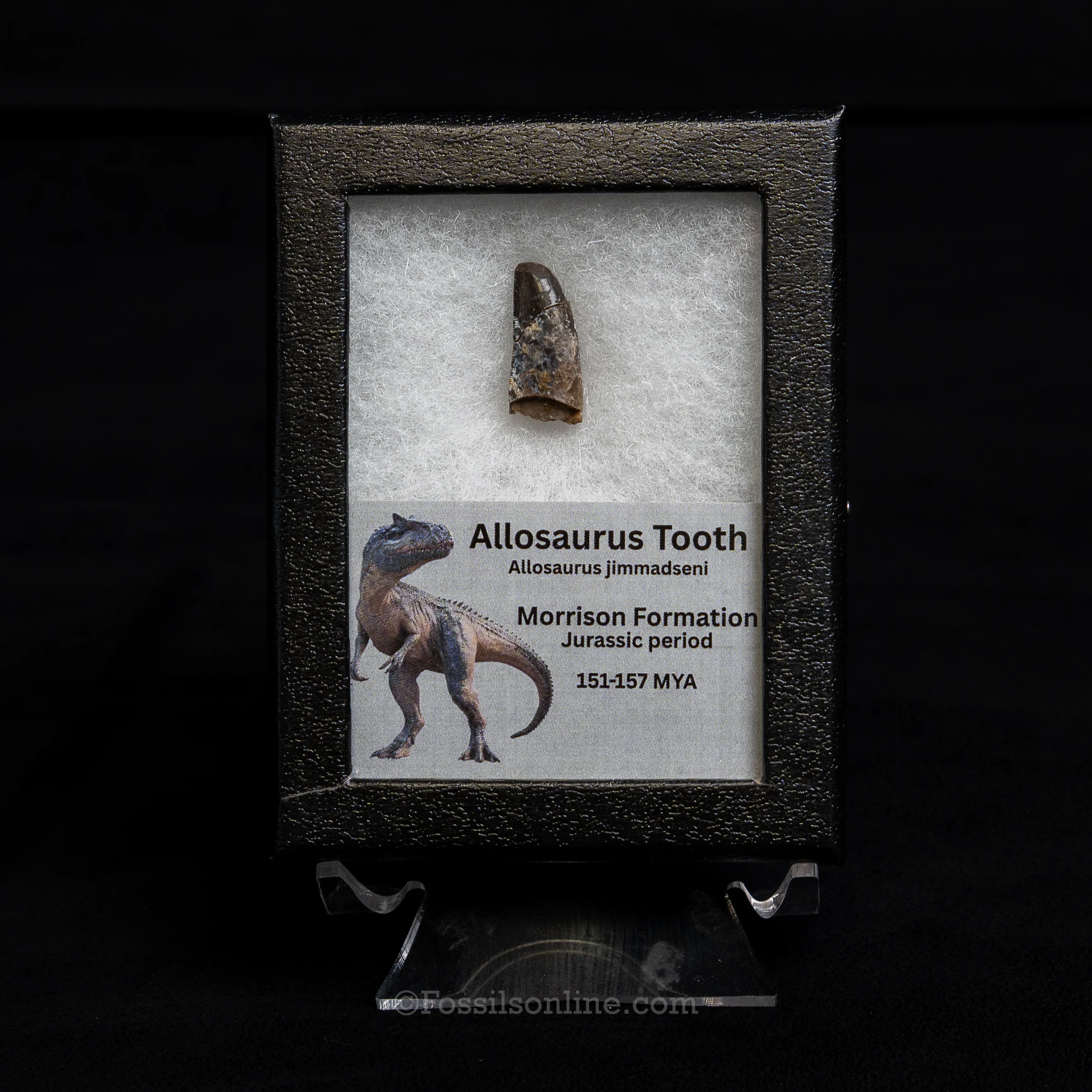
Allosaurus Teeth in Matrix
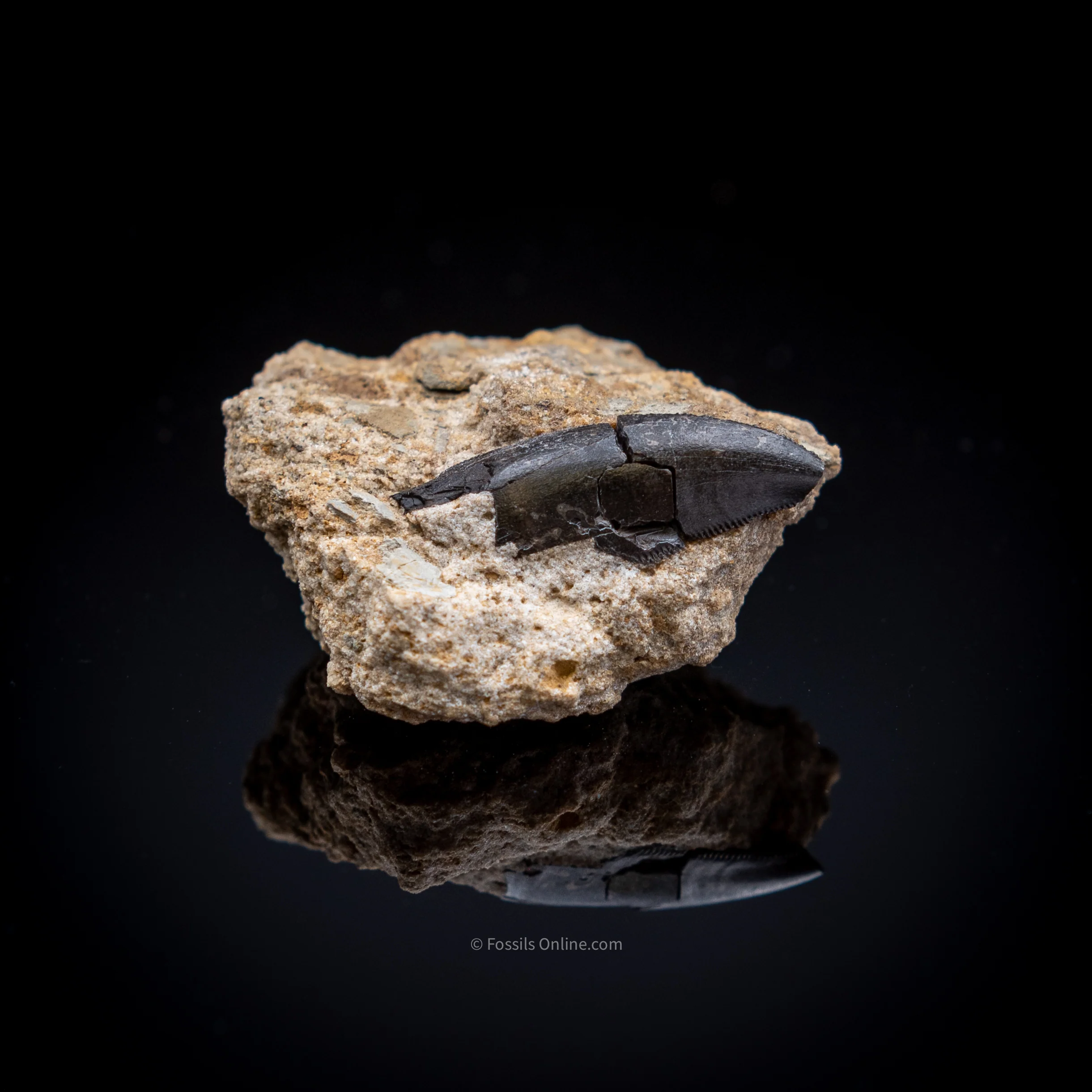
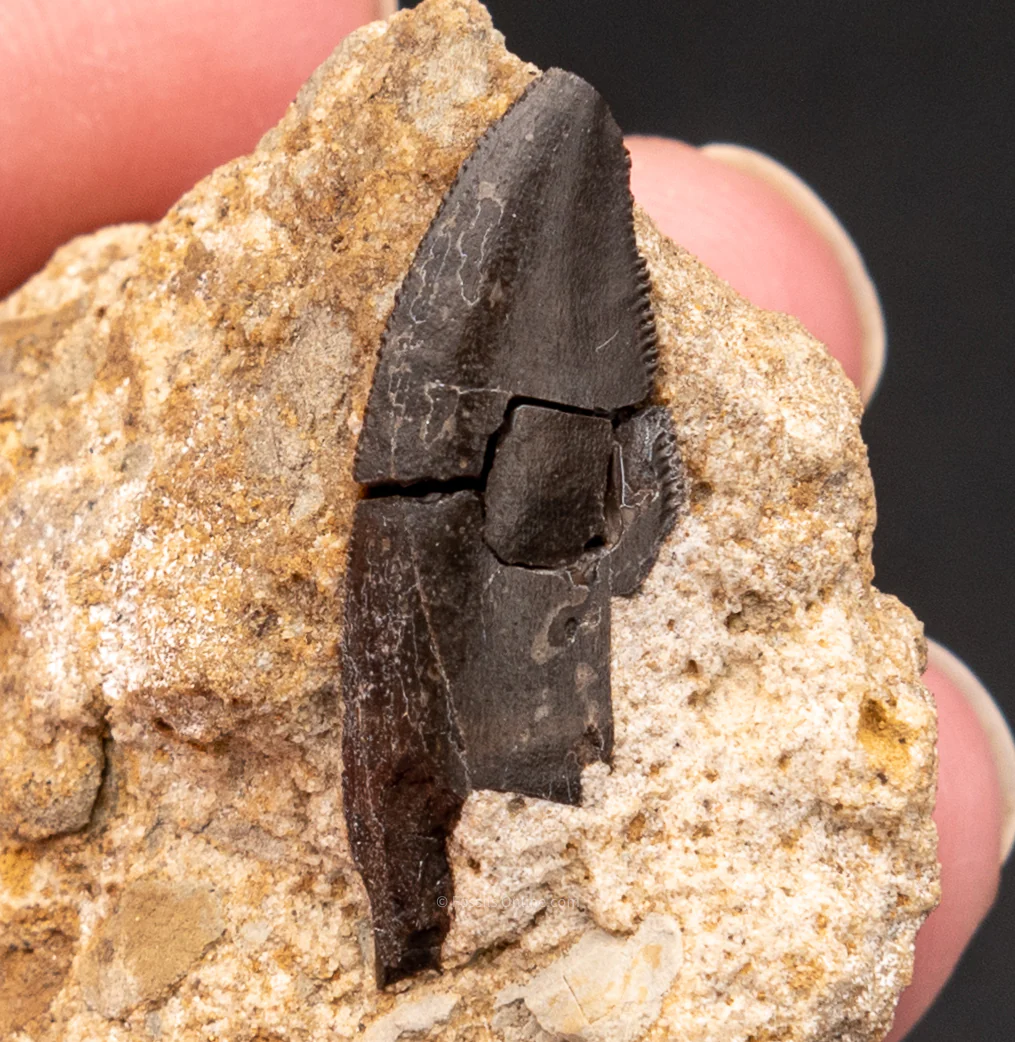
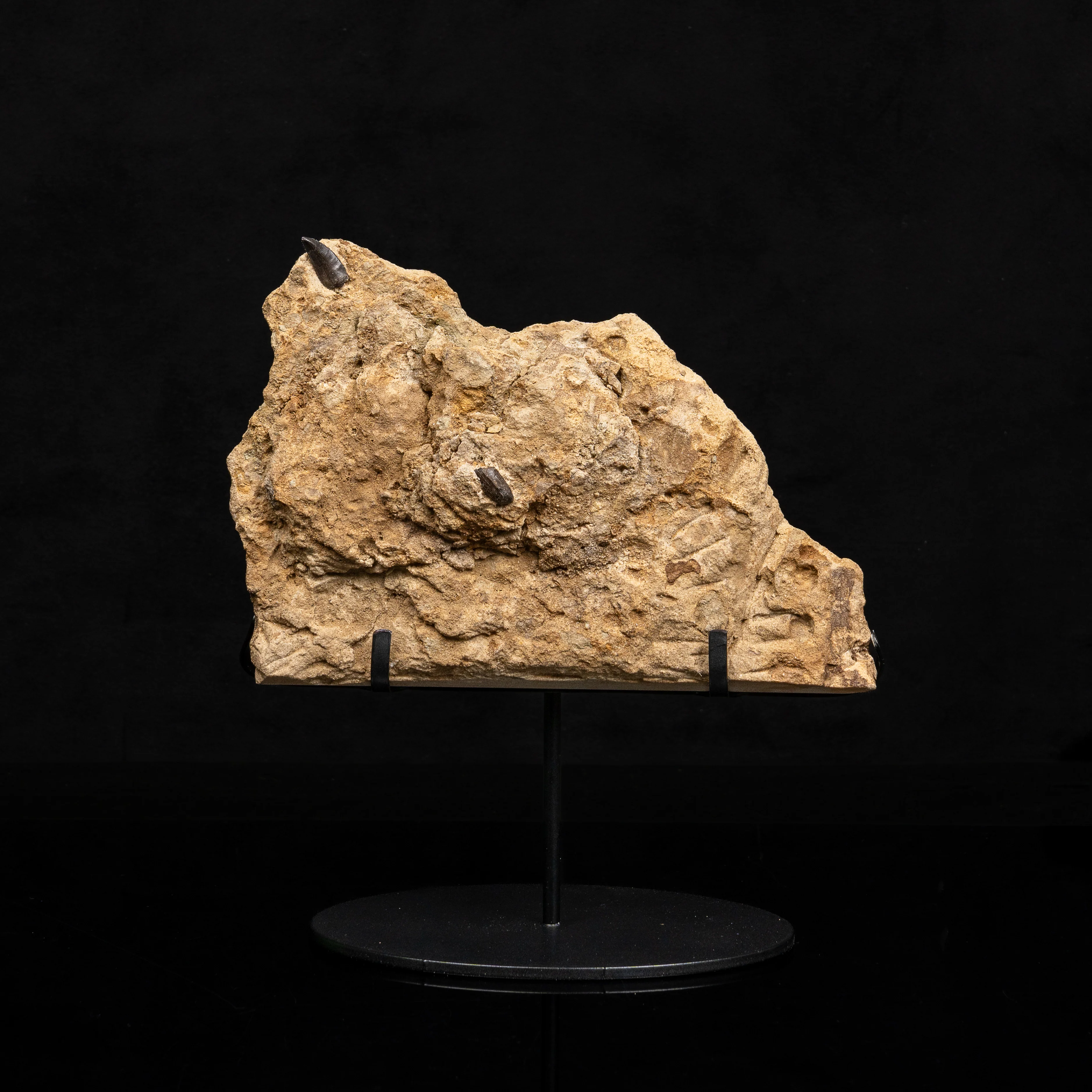
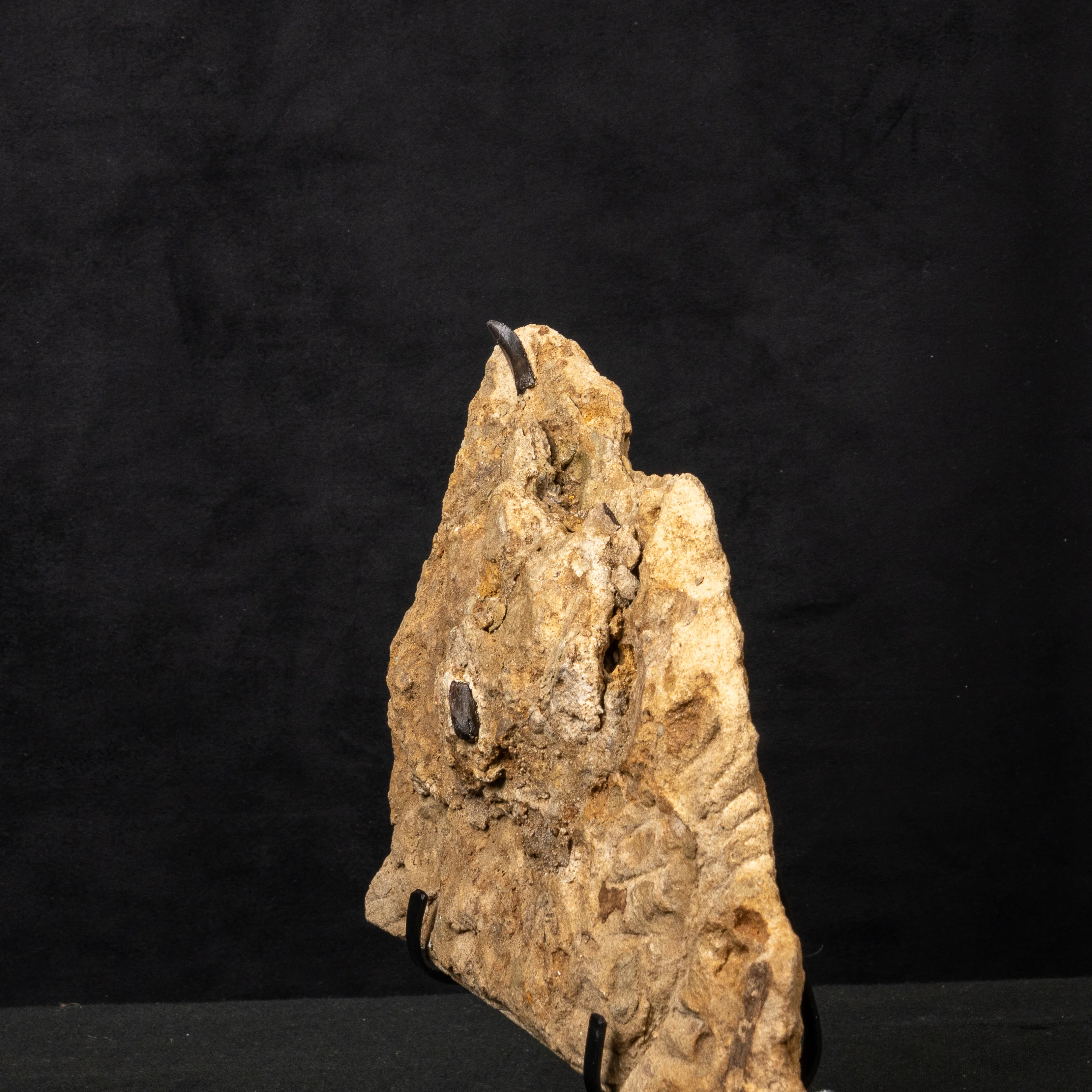
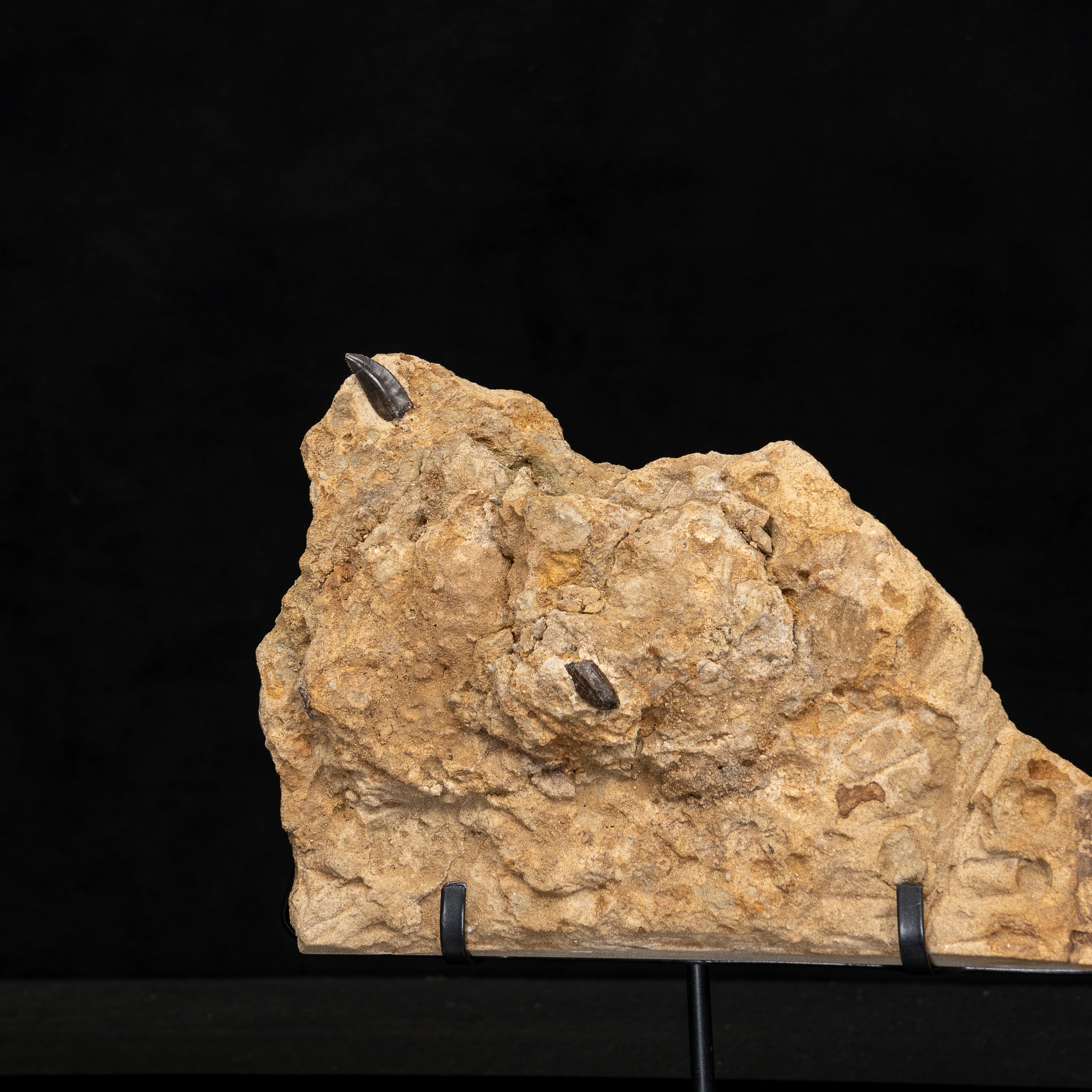
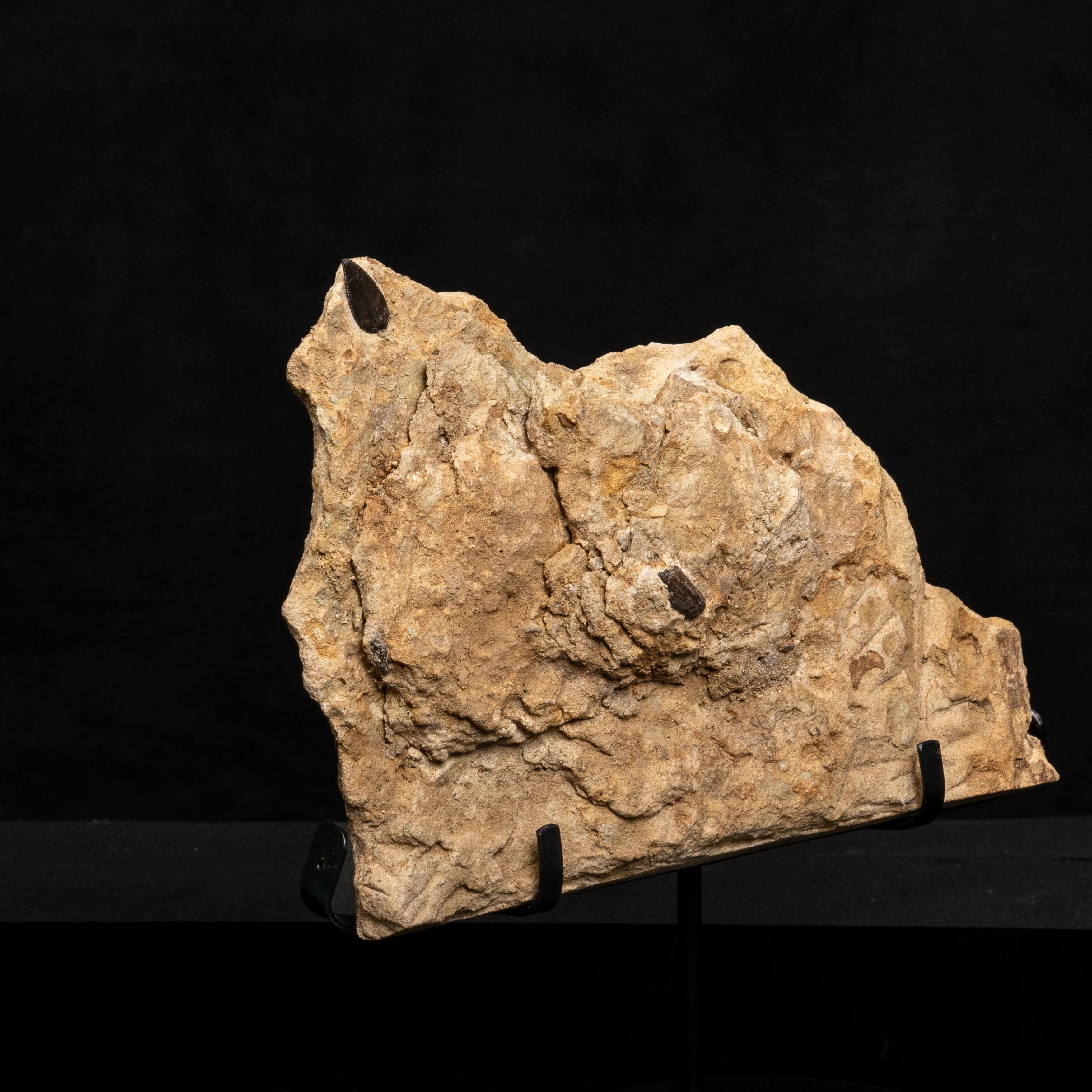
Two Allosaurus teeth in original sandstone matrix ready for display.
At the start of the 2025 digging season in the Paint Rock Quarry, I discovered the tip of a large Allosaurus tooth in a softer matrix above a harder, rock-like layer. After moving the block from the dig site to camp, I noticed the tip of another tooth poking out. I stabilized the softer matrix to prevent separation and began uncovering the second tooth, which proved to be in beautiful condition, with a pointy tip and sharp serrations. Both teeth have been repaired; a common practice for these fragile, 150 million year old fossils, as they often break due to vibrations from breaking apart the hard sandstone slabs that encase them.
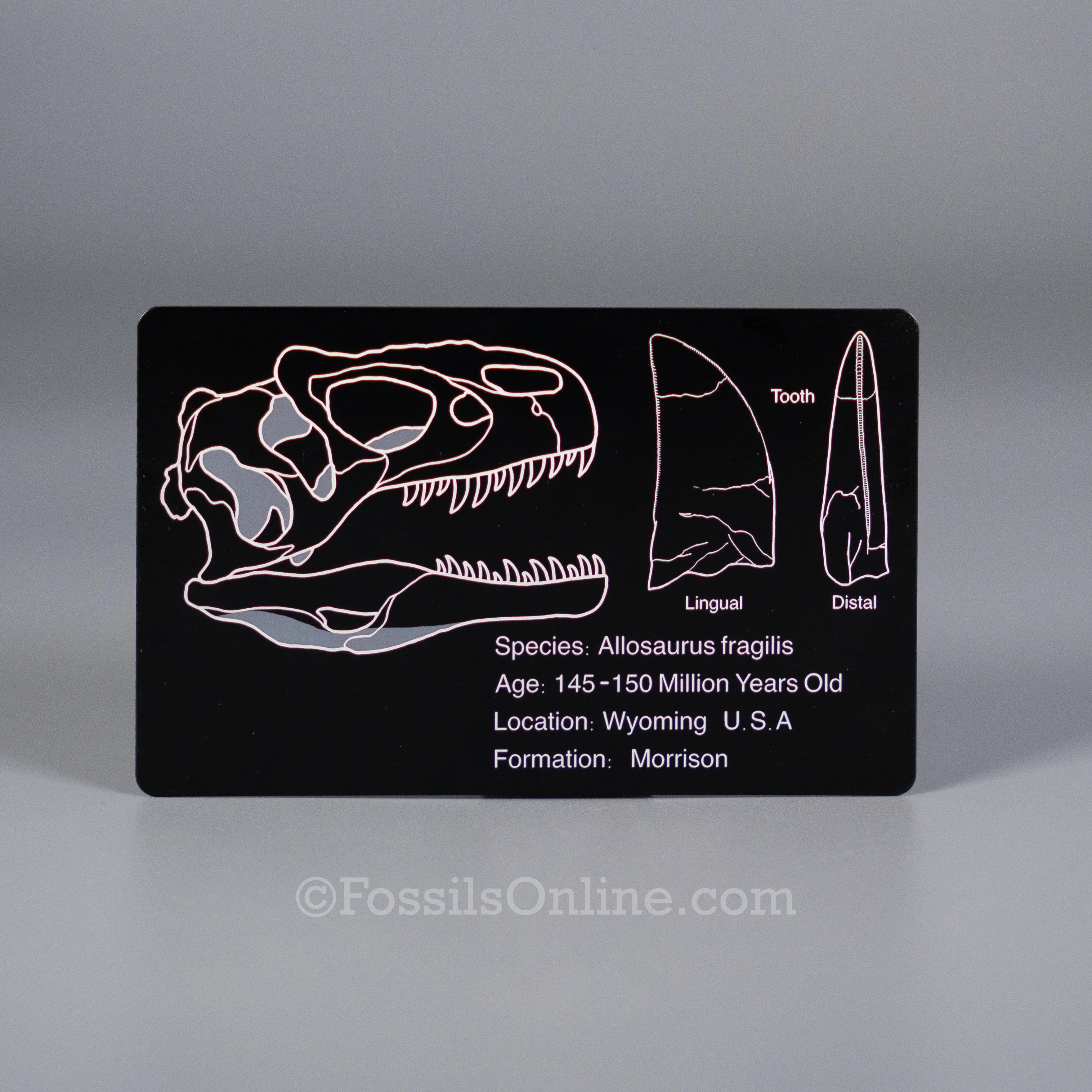
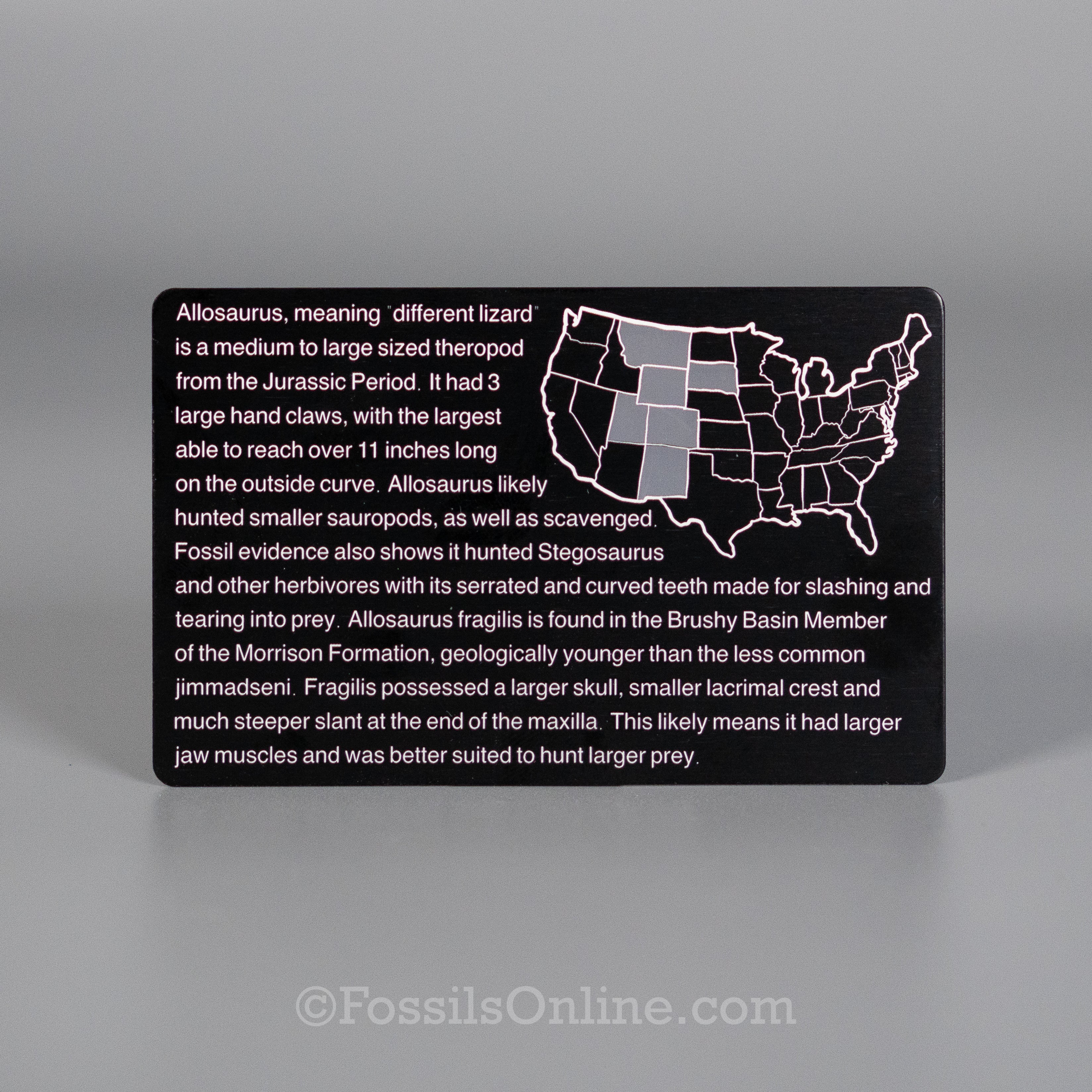
Allosaurus jimmadseni is one of the large predatory dinosaurs people picture when they think of Jurassic carnivores—a long-skulled, lightly built hunter with blade-like teeth, grasping arms, and powerful hind legs. It lived during the Late Jurassic Period, about 155–150 million years ago, in what is now western North America. Its fossils come primarily from the Morrison Formation, a vast series of deposits that preserve one of the richest dinosaur ecosystems ever discovered.
For collectors, Allosaurus represents a classic big theropod: recognizable, more affordable than something like Tyrannosaurus rex, while still carrying real presence and prestige. Owning an Allosaurus jimmadseni tooth or bone means holding a piece of a dominant Jurassic predator that ruled its environment tens of millions of years before the end of the dinosaur age.
Why Allosaurus fossils (especially teeth) are popular
Compared to later apex predators, Allosaurus material is more commonly found, but still highly valued. Key reasons include:
Widespread formation – The Morrison Formation stretches across multiple U.S. states, providing a broader geographic range than many later theropods.
Abundant fossil record – Allosaurus is one of the most common large carnivores in the Morrison ecosystem, meaning more individuals—and more fossils—are preserved.
Not as abundant commercially as some Cretaceous theropods – Despite being common in the fossil record, Allosaurus material is not as widely available on the commercial market as Late Cretaceous dinosaurs like Nanotyrannus or even Tyrannosaurus rex. Differences in collecting history, land access, and the intensity of commercial excavation in certain formations mean that Cretaceous material often appears more frequently for sale.
Tooth replacement – Like other theropods, Allosaurus continually replaced its teeth. Shed teeth are therefore more common than skeletal material.
Collector appeal – It’s a well-known genus with strong scientific backing, making it a favorite entry point for serious fossil collectors.
Even with this relative abundance, well-preserved teeth—especially those with intact serrations and minimal repair—are still highly sought after.
Discovery and scientific importance
Allosaurus was first described in the late 1800s during the famous “Bone Wars,” and it quickly became one of the best-known Jurassic predators. More recent research has clarified that multiple species existed, including Allosaurus jimmadseni and Allosaurus fragilis.
Allosaurus jimmadseni is generally considered the earlier, more lightly built form, while Allosaurus fragilis appears later and is often more robust. These distinctions are based on skull shape, bone structure, and stratigraphic position within the Morrison Formation.
Morrison Formation members – Brushy Basin vs. Salt Wash
The differences between A. jimmadseni and A. fragilis are closely tied to where they are found within the Morrison Formation:
Salt Wash Member (upper Morrison)
- Older deposits
- More sandstone-dominated, representing river channels and floodplains
- Commonly associated with Allosaurus jimmadseni
- Suggests a slightly earlier ecosystem with somewhat different environmental conditions
Brushy Basin Member (upper Morrison)
- Younger deposits
- Rich in mudstones and volcanic ash, indicating wetter floodplain conditions with periodic volcanic influence
- More commonly associated with Allosaurus fragilis
- Represents a later stage of the Morrison ecosystem
This layering shows that Allosaurus species were not all living at the exact same time—they evolved and changed as environments shifted over millions of years.
Size, build, and environment
Allosaurus jimmadseni was a large but relatively agile predator:
- Length: around 8–9 meters (26–30 feet)
- Height: roughly 3 meters (10 feet) at the hips
- Weight: approximately 1.5–2 tons
It lived in a semi-arid environment of floodplains, rivers, and seasonal forests. The Morrison ecosystem included enormous herbivores like Diplodocus, Apatosaurus, and Stegosaurus, along with smaller dinosaurs, crocodilians, and early mammals.
What set Allosaurus apart
Unlike later bone-crushing predators, Allosaurus had a different hunting style:
Long, narrow skull – Lighter and more flexible than that of T. rex, adapted for slashing rather than crushing.
Blade-like teeth – Sharp, serrated teeth designed to slice flesh rather than pulverize bone.
Three-fingered hands – Large, clawed forelimbs likely used for grasping prey.
Hatchet-style bite – Some scientists suggest Allosaurus used its skull like a chopping tool, driving its teeth into prey and pulling back to tear flesh.
This made it more of a cutting predator than a bone crusher—built for inflicting repeated wounds rather than delivering a single devastating bite.
Lifestyle – active predator and opportunist
Evidence suggests Allosaurus jimmadseni was an active predator:
- Bite marks on herbivore bones match Allosaurus teeth.
- Injuries on Allosaurus fossils indicate risky encounters with large prey.
- Its body proportions suggest speed and agility compared to bulkier theropods.
At the same time, like most large carnivores, it likely scavenged when possible. In a competitive ecosystem, wasting an available meal would make little sense.
Teeth – classic Jurassic cutting tools
Allosaurus teeth are among the most recognizable theropod fossils:
- Shape: Laterally compressed and slightly curved
- Edges: Fine serrations on both sides for slicing
- Function: Designed to cut and tear flesh efficiently
These teeth were not built to withstand massive crushing forces, which is why they often broke—either during feeding or after burial. As a result, repaired teeth are very common in the fossil market.
Like other theropods, Allosaurus replaced its teeth throughout life, meaning a single individual could produce dozens of teeth over time.
Growth and variation
Allosaurus jimmadseni represents an earlier species within the genus and shows some differences from later forms like Allosaurus fragilis:
- More gracile (lightly built) skull
- Slightly different tooth proportions
- Subtle skeletal differences tied to evolutionary change and time
Juveniles would have been smaller, faster, and more lightly built, likely targeting different prey than adults.
Allosaurus and its prey
Allosaurus lived alongside some of the most famous herbivores ever discovered:
- Stegosaurus – Armored dinosaurs with spikes; some plates and tails show signs of predator interaction.
- Sauropods like Diplodocus – Massive, long-necked dinosaurs that may have been targeted when young, weak, or injured.
This predator–prey dynamic paints a vivid picture of Jurassic life, where survival depended on speed, strength, and constant adaptation.
Product Information
Product Information
Shipping & Returns
Shipping & Returns
Allosaurus Teeth in Matrix
Allosaurus Teeth in Matrix
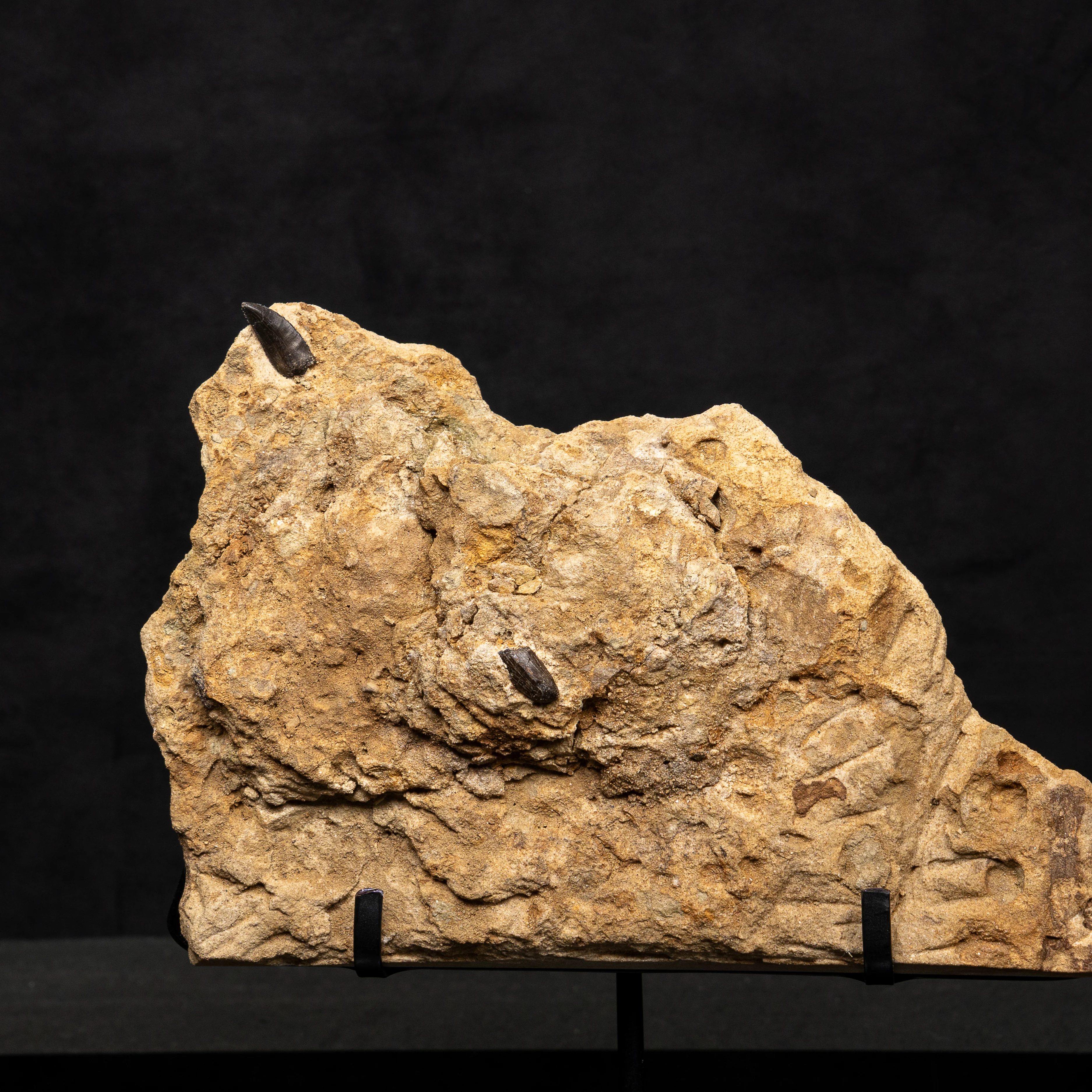
Two Allosaurus teeth in original sandstone matrix ready for display.
At the start of the 2025 digging season in the Paint Rock Quarry, I discovered the tip of a large Allosaurus tooth in a softer matrix above a harder, rock-like layer. After moving the block from the dig site to camp, I noticed the tip of another tooth poking out. I stabilized the softer matrix to prevent separation and began uncovering the second tooth, which proved to be in beautiful condition, with a pointy tip and sharp serrations. Both teeth have been repaired; a common practice for these fragile, 150 million year old fossils, as they often break due to vibrations from breaking apart the hard sandstone slabs that encase them.
Allosaurus jimmadseni is one of the large predatory dinosaurs people picture when they think of Jurassic carnivores—a long-skulled, lightly built hunter with blade-like teeth, grasping arms, and powerful hind legs. It lived during the Late Jurassic Period, about 155–150 million years ago, in what is now western North America. Its fossils come primarily from the Morrison Formation, a vast series of deposits that preserve one of the richest dinosaur ecosystems ever discovered.
For collectors, Allosaurus represents a classic big theropod: recognizable, more affordable than something like Tyrannosaurus rex, while still carrying real presence and prestige. Owning an Allosaurus jimmadseni tooth or bone means holding a piece of a dominant Jurassic predator that ruled its environment tens of millions of years before the end of the dinosaur age.
Why Allosaurus fossils (especially teeth) are popular
Compared to later apex predators, Allosaurus material is more commonly found, but still highly valued. Key reasons include:
Widespread formation – The Morrison Formation stretches across multiple U.S. states, providing a broader geographic range than many later theropods.
Abundant fossil record – Allosaurus is one of the most common large carnivores in the Morrison ecosystem, meaning more individuals—and more fossils—are preserved.
Not as abundant commercially as some Cretaceous theropods – Despite being common in the fossil record, Allosaurus material is not as widely available on the commercial market as Late Cretaceous dinosaurs like Nanotyrannus or even Tyrannosaurus rex. Differences in collecting history, land access, and the intensity of commercial excavation in certain formations mean that Cretaceous material often appears more frequently for sale.
Tooth replacement – Like other theropods, Allosaurus continually replaced its teeth. Shed teeth are therefore more common than skeletal material.
Collector appeal – It’s a well-known genus with strong scientific backing, making it a favorite entry point for serious fossil collectors.
Even with this relative abundance, well-preserved teeth—especially those with intact serrations and minimal repair—are still highly sought after.
Discovery and scientific importance
Allosaurus was first described in the late 1800s during the famous “Bone Wars,” and it quickly became one of the best-known Jurassic predators. More recent research has clarified that multiple species existed, including Allosaurus jimmadseni and Allosaurus fragilis.
Allosaurus jimmadseni is generally considered the earlier, more lightly built form, while Allosaurus fragilis appears later and is often more robust. These distinctions are based on skull shape, bone structure, and stratigraphic position within the Morrison Formation.
Morrison Formation members – Brushy Basin vs. Salt Wash
The differences between A. jimmadseni and A. fragilis are closely tied to where they are found within the Morrison Formation:
Salt Wash Member (upper Morrison)
- Older deposits
- More sandstone-dominated, representing river channels and floodplains
- Commonly associated with Allosaurus jimmadseni
- Suggests a slightly earlier ecosystem with somewhat different environmental conditions
Brushy Basin Member (upper Morrison)
- Younger deposits
- Rich in mudstones and volcanic ash, indicating wetter floodplain conditions with periodic volcanic influence
- More commonly associated with Allosaurus fragilis
- Represents a later stage of the Morrison ecosystem
This layering shows that Allosaurus species were not all living at the exact same time—they evolved and changed as environments shifted over millions of years.
Size, build, and environment
Allosaurus jimmadseni was a large but relatively agile predator:
- Length: around 8–9 meters (26–30 feet)
- Height: roughly 3 meters (10 feet) at the hips
- Weight: approximately 1.5–2 tons
It lived in a semi-arid environment of floodplains, rivers, and seasonal forests. The Morrison ecosystem included enormous herbivores like Diplodocus, Apatosaurus, and Stegosaurus, along with smaller dinosaurs, crocodilians, and early mammals.
What set Allosaurus apart
Unlike later bone-crushing predators, Allosaurus had a different hunting style:
Long, narrow skull – Lighter and more flexible than that of T. rex, adapted for slashing rather than crushing.
Blade-like teeth – Sharp, serrated teeth designed to slice flesh rather than pulverize bone.
Three-fingered hands – Large, clawed forelimbs likely used for grasping prey.
Hatchet-style bite – Some scientists suggest Allosaurus used its skull like a chopping tool, driving its teeth into prey and pulling back to tear flesh.
This made it more of a cutting predator than a bone crusher—built for inflicting repeated wounds rather than delivering a single devastating bite.
Lifestyle – active predator and opportunist
Evidence suggests Allosaurus jimmadseni was an active predator:
- Bite marks on herbivore bones match Allosaurus teeth.
- Injuries on Allosaurus fossils indicate risky encounters with large prey.
- Its body proportions suggest speed and agility compared to bulkier theropods.
At the same time, like most large carnivores, it likely scavenged when possible. In a competitive ecosystem, wasting an available meal would make little sense.
Teeth – classic Jurassic cutting tools
Allosaurus teeth are among the most recognizable theropod fossils:
- Shape: Laterally compressed and slightly curved
- Edges: Fine serrations on both sides for slicing
- Function: Designed to cut and tear flesh efficiently
These teeth were not built to withstand massive crushing forces, which is why they often broke—either during feeding or after burial. As a result, repaired teeth are very common in the fossil market.
Like other theropods, Allosaurus replaced its teeth throughout life, meaning a single individual could produce dozens of teeth over time.
Growth and variation
Allosaurus jimmadseni represents an earlier species within the genus and shows some differences from later forms like Allosaurus fragilis:
- More gracile (lightly built) skull
- Slightly different tooth proportions
- Subtle skeletal differences tied to evolutionary change and time
Juveniles would have been smaller, faster, and more lightly built, likely targeting different prey than adults.
Allosaurus and its prey
Allosaurus lived alongside some of the most famous herbivores ever discovered:
- Stegosaurus – Armored dinosaurs with spikes; some plates and tails show signs of predator interaction.
- Sauropods like Diplodocus – Massive, long-necked dinosaurs that may have been targeted when young, weak, or injured.
This predator–prey dynamic paints a vivid picture of Jurassic life, where survival depended on speed, strength, and constant adaptation.
Original: $1,499.00
-65%$1,499.00
$524.65Product Information
Product Information
Shipping & Returns
Shipping & Returns
Description
Two Allosaurus teeth in original sandstone matrix ready for display.
At the start of the 2025 digging season in the Paint Rock Quarry, I discovered the tip of a large Allosaurus tooth in a softer matrix above a harder, rock-like layer. After moving the block from the dig site to camp, I noticed the tip of another tooth poking out. I stabilized the softer matrix to prevent separation and began uncovering the second tooth, which proved to be in beautiful condition, with a pointy tip and sharp serrations. Both teeth have been repaired; a common practice for these fragile, 150 million year old fossils, as they often break due to vibrations from breaking apart the hard sandstone slabs that encase them.
Allosaurus jimmadseni is one of the large predatory dinosaurs people picture when they think of Jurassic carnivores—a long-skulled, lightly built hunter with blade-like teeth, grasping arms, and powerful hind legs. It lived during the Late Jurassic Period, about 155–150 million years ago, in what is now western North America. Its fossils come primarily from the Morrison Formation, a vast series of deposits that preserve one of the richest dinosaur ecosystems ever discovered.
For collectors, Allosaurus represents a classic big theropod: recognizable, more affordable than something like Tyrannosaurus rex, while still carrying real presence and prestige. Owning an Allosaurus jimmadseni tooth or bone means holding a piece of a dominant Jurassic predator that ruled its environment tens of millions of years before the end of the dinosaur age.
Why Allosaurus fossils (especially teeth) are popular
Compared to later apex predators, Allosaurus material is more commonly found, but still highly valued. Key reasons include:
Widespread formation – The Morrison Formation stretches across multiple U.S. states, providing a broader geographic range than many later theropods.
Abundant fossil record – Allosaurus is one of the most common large carnivores in the Morrison ecosystem, meaning more individuals—and more fossils—are preserved.
Not as abundant commercially as some Cretaceous theropods – Despite being common in the fossil record, Allosaurus material is not as widely available on the commercial market as Late Cretaceous dinosaurs like Nanotyrannus or even Tyrannosaurus rex. Differences in collecting history, land access, and the intensity of commercial excavation in certain formations mean that Cretaceous material often appears more frequently for sale.
Tooth replacement – Like other theropods, Allosaurus continually replaced its teeth. Shed teeth are therefore more common than skeletal material.
Collector appeal – It’s a well-known genus with strong scientific backing, making it a favorite entry point for serious fossil collectors.
Even with this relative abundance, well-preserved teeth—especially those with intact serrations and minimal repair—are still highly sought after.
Discovery and scientific importance
Allosaurus was first described in the late 1800s during the famous “Bone Wars,” and it quickly became one of the best-known Jurassic predators. More recent research has clarified that multiple species existed, including Allosaurus jimmadseni and Allosaurus fragilis.
Allosaurus jimmadseni is generally considered the earlier, more lightly built form, while Allosaurus fragilis appears later and is often more robust. These distinctions are based on skull shape, bone structure, and stratigraphic position within the Morrison Formation.
Morrison Formation members – Brushy Basin vs. Salt Wash
The differences between A. jimmadseni and A. fragilis are closely tied to where they are found within the Morrison Formation:
Salt Wash Member (upper Morrison)
- Older deposits
- More sandstone-dominated, representing river channels and floodplains
- Commonly associated with Allosaurus jimmadseni
- Suggests a slightly earlier ecosystem with somewhat different environmental conditions
Brushy Basin Member (upper Morrison)
- Younger deposits
- Rich in mudstones and volcanic ash, indicating wetter floodplain conditions with periodic volcanic influence
- More commonly associated with Allosaurus fragilis
- Represents a later stage of the Morrison ecosystem
This layering shows that Allosaurus species were not all living at the exact same time—they evolved and changed as environments shifted over millions of years.
Size, build, and environment
Allosaurus jimmadseni was a large but relatively agile predator:
- Length: around 8–9 meters (26–30 feet)
- Height: roughly 3 meters (10 feet) at the hips
- Weight: approximately 1.5–2 tons
It lived in a semi-arid environment of floodplains, rivers, and seasonal forests. The Morrison ecosystem included enormous herbivores like Diplodocus, Apatosaurus, and Stegosaurus, along with smaller dinosaurs, crocodilians, and early mammals.
What set Allosaurus apart
Unlike later bone-crushing predators, Allosaurus had a different hunting style:
Long, narrow skull – Lighter and more flexible than that of T. rex, adapted for slashing rather than crushing.
Blade-like teeth – Sharp, serrated teeth designed to slice flesh rather than pulverize bone.
Three-fingered hands – Large, clawed forelimbs likely used for grasping prey.
Hatchet-style bite – Some scientists suggest Allosaurus used its skull like a chopping tool, driving its teeth into prey and pulling back to tear flesh.
This made it more of a cutting predator than a bone crusher—built for inflicting repeated wounds rather than delivering a single devastating bite.
Lifestyle – active predator and opportunist
Evidence suggests Allosaurus jimmadseni was an active predator:
- Bite marks on herbivore bones match Allosaurus teeth.
- Injuries on Allosaurus fossils indicate risky encounters with large prey.
- Its body proportions suggest speed and agility compared to bulkier theropods.
At the same time, like most large carnivores, it likely scavenged when possible. In a competitive ecosystem, wasting an available meal would make little sense.
Teeth – classic Jurassic cutting tools
Allosaurus teeth are among the most recognizable theropod fossils:
- Shape: Laterally compressed and slightly curved
- Edges: Fine serrations on both sides for slicing
- Function: Designed to cut and tear flesh efficiently
These teeth were not built to withstand massive crushing forces, which is why they often broke—either during feeding or after burial. As a result, repaired teeth are very common in the fossil market.
Like other theropods, Allosaurus replaced its teeth throughout life, meaning a single individual could produce dozens of teeth over time.
Growth and variation
Allosaurus jimmadseni represents an earlier species within the genus and shows some differences from later forms like Allosaurus fragilis:
- More gracile (lightly built) skull
- Slightly different tooth proportions
- Subtle skeletal differences tied to evolutionary change and time
Juveniles would have been smaller, faster, and more lightly built, likely targeting different prey than adults.
Allosaurus and its prey
Allosaurus lived alongside some of the most famous herbivores ever discovered:
- Stegosaurus – Armored dinosaurs with spikes; some plates and tails show signs of predator interaction.
- Sauropods like Diplodocus – Massive, long-necked dinosaurs that may have been targeted when young, weak, or injured.
This predator–prey dynamic paints a vivid picture of Jurassic life, where survival depended on speed, strength, and constant adaptation.